venir vs llegar in Spanish
What is the difference between venir and llegar?
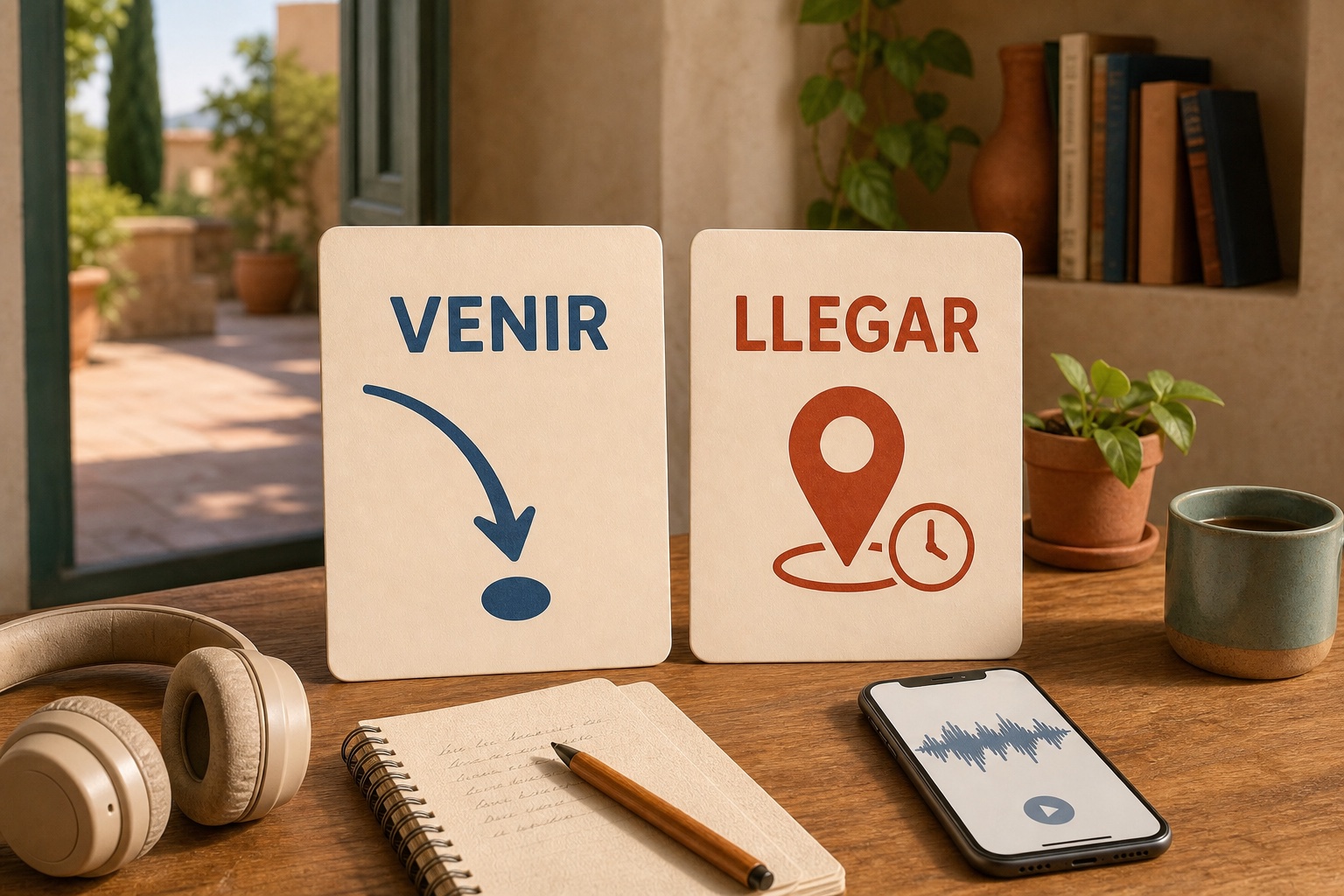
Venir means to come: the movement is viewed toward the speaker or the place treated as “here” in the conversation. Use it for invitations and approaches: ven aquí, ¿vienes a la fiesta?, mis amigos vienen a verme.
Llegar means to arrive, reach, or get to a destination. It highlights the endpoint or arrival time, not the direction toward the speaker: llegar al aeropuerto, llegar a casa, llegar a las ocho. The same trip can use both verbs because they answer different questions.
The quickest direction-or-endpoint rule
Ask “movement toward here?” and choose venir. Ask “has the destination been reached, or when?” and choose llegar. Compare Ana viene a la oficina with Ana llega a las ocho: the first follows her movement toward the office; the second gives the arrival time.
Venir commonly combines with a, de, and con: venir a casa, venir de México, venir conmigo. Llegar normally uses a before a destination: llegar al hotel, but no a is needed before aquí, allí, or adverbs such as tarde and temprano.
40 examples with venir and llegar in Spanish
Each row gives a complete Spanish sentence, a natural translation, the verb’s job, and a short decision cue.
| Spanish | Translation | Verb job | Mini-note |
|---|---|---|---|
| Vengo a tu casa después del trabajo. | I am coming to your house after work. | Venir: movement toward “here” | Venir frames movement toward the conversational “here”. |
| ¿Vienes a la fiesta esta noche? | Are you coming to the party tonight? | Venir: movement toward “here” | The speaker invites or asks someone to come toward a shared point. |
| Mis amigos vienen a verme mañana. | My friends are coming to see me tomorrow. | Venir: movement toward “here” | The speaker invites or asks someone to come toward a shared point. |
| Ven aquí, por favor. | Come here, please. | Venir: movement toward “here” | A command asks someone to come or to avoid a late arrival. |
| ¿De dónde vienes? | Where are you coming from? | Venir: movement toward “here” | Venir de names the place the movement starts from. |
| Vengo de México. | I come from Mexico. | Venir: movement toward “here” | Venir de names the place the movement starts from. |
| El autobús viene por esta calle. | The bus comes along this street. | Venir: movement toward “here” | The phrase describes a route or means of movement toward the reference point. |
| El médico viene enseguida. | The doctor is coming right away. | Venir: movement toward “here” | Venir frames movement toward the conversational “here”. |
| ¿Puedes venir conmigo? | Can you come with me? | Venir: movement toward “here” | The speaker invites or asks someone to come toward a shared point. |
| La ambulancia ya viene. | The ambulance is coming now. | Venir: movement toward “here” | Venir frames movement toward the conversational “here”. |
| ¿A qué hora llegas? | What time do you arrive? | Llegar: reach the destination | Llegar answers when someone or something reaches the endpoint. |
| El tren llega a las nueve. | The train arrives at nine. | Llegar: reach the destination | Llegar answers when someone or something reaches the endpoint. |
| Llegamos temprano al aeropuerto. | We arrived at the airport early. | Llegar: reach the destination | Llegar marks the moment a destination is reached. |
| Ya han llegado los invitados. | The guests have already arrived. | Llegar: reach the destination | Llegar marks the moment a destination is reached. |
| Llegué ayer a Sevilla. | I arrived in Seville yesterday. | Llegar: reach the destination | Llegar marks the moment a destination is reached. |
| El paquete llegará mañana. | The package will arrive tomorrow. | Llegar: reach the destination | Llegar answers when someone or something reaches the endpoint. |
| ¿Cómo llego al centro? | How do I get to the city centre? | Llegar: reach the destination | The phrase describes a route or means of movement toward the reference point. |
| No llegues tarde. | Do not arrive late. | Llegar: reach the destination | A command asks someone to come or to avoid a late arrival. |
| Cuando llegues, llámame. | Call me when you arrive. | Llegar: reach the destination | The sentence highlights a useful irregular, past, future, or subjunctive form. |
| Por fin llegamos a casa. | We finally arrived home. | Llegar: reach the destination | Llegar marks the moment a destination is reached. |
| Vengo en metro todos los días. | I come by metro every day. | Useful forms and extensions | The sentence highlights a useful irregular, past, future, or subjunctive form. |
| Ella vino desde Chile el año pasado. | She came from Chile last year. | Useful forms and extensions | The sentence highlights a useful irregular, past, future, or subjunctive form. |
| Vendremos a cenar el viernes. | We will come for dinner on Friday. | Useful forms and extensions | The sentence highlights a useful irregular, past, future, or subjunctive form. |
| Espero que vengas pronto. | I hope you come soon. | Useful forms and extensions | The sentence highlights a useful irregular, past, future, or subjunctive form. |
| Venid conmigo. | Come with me. | Useful forms and extensions | A command asks someone to come or to avoid a late arrival. |
| Llegar a tiempo es importante. | Arriving on time is important. | Useful forms and extensions | Llegar answers when someone or something reaches the endpoint. |
| El vuelo acaba de llegar. | The flight has just arrived. | Useful forms and extensions | Llegar marks the moment a destination is reached. |
| Estamos a punto de llegar. | We are about to arrive. | Useful forms and extensions | Llegar marks the moment a destination is reached. |
| No me llega el dinero. | I do not have enough money. | Useful forms and extensions | Llegar extends beyond a physical destination in this fixed pattern. |
| Llegó a ser directora. | She eventually became a director. | Useful forms and extensions | Llegar extends beyond a physical destination in this fixed pattern. |
| Ana viene a la oficina y llega a las ocho. | Ana comes to the office and arrives at eight. | One trip, two perspectives | Both verbs describe one scene from direction and endpoint perspectives. |
| ¿Vienes a mi casa? ¿A qué hora llegas? | Are you coming to my house? What time do you arrive? | One trip, two perspectives | Both verbs describe one scene from direction and endpoint perspectives. |
| El tren viene de Madrid y llega a Valencia a las seis. | The train comes from Madrid and arrives in Valencia at six. | One trip, two perspectives | Both verbs describe one scene from direction and endpoint perspectives. |
| Mañana vienen mis padres; llegarán por la tarde. | My parents are coming tomorrow; they will arrive in the afternoon. | One trip, two perspectives | Both verbs describe one scene from direction and endpoint perspectives. |
| Ven cuando puedas, pero intenta llegar a tiempo. | Come when you can, but try to arrive on time. | One trip, two perspectives | Both verbs describe one scene from direction and endpoint perspectives. |
| Pedro viene hacia nosotros; ya casi ha llegado. | Pedro is coming towards us; he has almost arrived. | One trip, two perspectives | Both verbs describe one scene from direction and endpoint perspectives. |
| Vine al hotel en taxi y llegué antes de medianoche. | I came to the hotel by taxi and arrived before midnight. | One trip, two perspectives | Both verbs describe one scene from direction and endpoint perspectives. |
| La profesora viene de otra aula y llega en un minuto. | The teacher is coming from another classroom and will arrive in a minute. | One trip, two perspectives | Both verbs describe one scene from direction and endpoint perspectives. |
| ¿Cuándo vienes a visitarnos? ¿A qué hora llegarás? | When are you coming to visit us? What time will you arrive? | One trip, two perspectives | Both verbs describe one scene from direction and endpoint perspectives. |
| Venir expresa dirección hacia aquí; llegar expresa alcanzar el destino. | Venir expresses direction towards here; llegar expresses reaching the destination. | One trip, two perspectives | Both verbs describe one scene from direction and endpoint perspectives. |
Group venir and llegar by meaning and context
Four groups separate movement toward here, reaching a destination, useful forms and extensions, and direct contrasts.
Venir: movement toward “here”
Use venir for approaches, invitations, accompaniment, and movement from a stated source toward the conversational point.
Vengo a tu casa después del trabajo. ¿Vienes a la fiesta esta noche? Mis amigos vienen a verme mañana. Ven aquí, por favor. ¿De dónde vienes? Vengo de México. El autobús viene por esta calle. El médico viene enseguida. ¿Puedes venir conmigo? La ambulancia ya viene.
Llegar: reach the destination
Use llegar for destinations, routes, successful arrival, and the moment an endpoint is reached.
¿A qué hora llegas? El tren llega a las nueve. Llegamos temprano al aeropuerto. Ya han llegado los invitados. Llegué ayer a Sevilla. El paquete llegará mañana. ¿Cómo llego al centro? No llegues tarde. Cuando llegues, llámame. Por fin llegamos a casa.
Useful forms and extensions
Practise past, future, command, and subjunctive forms, plus common non-physical uses of llegar.
Vengo en metro todos los días. Ella vino desde Chile el año pasado. Vendremos a cenar el viernes. Espero que vengas pronto. Venid conmigo. Llegar a tiempo es importante. El vuelo acaba de llegar. Estamos a punto de llegar. No me llega el dinero. Llegó a ser directora.
One trip, two perspectives
Put both verbs in one scene to separate movement toward here from the endpoint or arrival time.
Ana viene a la oficina y llega a las ocho. ¿Vienes a mi casa? ¿A qué hora llegas? El tren viene de Madrid y llega a Valencia a las seis. Mañana vienen mis padres; llegarán por la tarde. Ven cuando puedas, pero intenta llegar a tiempo. Pedro viene hacia nosotros; ya casi ha llegado. Vine al hotel en taxi y llegué antes de medianoche. La profesora viene de otra aula y llega en un minuto. ¿Cuándo vienes a visitarnos? ¿A qué hora llegarás? Venir expresa dirección hacia aquí; llegar expresa alcanzar el destino.
Forms, prepositions, and useful extensions
Venir is irregular: vengo, vienes, viene, venimos, venís, vienen. Useful past and future forms include vino and vendrá; commands include ven, venga, venid, and vengan. Llegar is regular in the present, but the preterite yo form is llegué to preserve the hard g sound.
After cuando with a future meaning, Spanish uses the present subjunctive: cuando vengas and cuando llegues. These chunks are more useful for beginners than memorising an isolated tense label.
Llegar also extends beyond physical arrival: no me llega el dinero means the money is not enough, and llegar a ser means eventually to become. Keep these chunks separate from the core destination rule.
Hola Cards, the Spanish flashcard app on holacards.org, helps beginners practise these patterns with flashcards, audio, writing, pronunciation, custom word groups, and spaced review on iOS and Android.
Connect venir and llegar with direction verbs, ir, travel phrases, place words, and the core beginner verb list.
Llevar vs traer 40 phrases with ir Travel phrases Aquí, ahí, allí 50 beginner verbs

How to practise venir and llegar in five steps
- Mark the conversational “here” and the final destination in each scene.
- Choose venir for movement toward that “here” and llegar for reaching the endpoint or naming the arrival time.
- Build pairs such as ¿Vienes a mi casa? and ¿A qué hora llegas? so the contrast stays inside one situation.
- Add high-value chunks: ven aquí, venir de, llegar a casa, llegar a tiempo, cuando vengas, and cuando llegues.
- Review all 40 examples with Hola Cards audio, writing, pronunciation, and spaced repetition until the scene triggers the verb automatically.
FAQ
What is the simplest difference between venir and llegar?
Venir follows movement toward the speaker or the place treated as conversational “here”. Llegar marks reaching a destination or the time of arrival.
Can venir and llegar describe the same trip?
Yes. Mis padres vienen mañana describes their movement toward us; llegarán por la tarde tells us when they will reach the destination.
Which prepositions follow venir and llegar?
Common patterns are venir a, venir de, and venir con. Use llegar a before most destinations, as in llegar al hotel, but say llegar aquí, llegar tarde, and llegar a casa.
Why do Spanish speakers say vengo but llegué?
Venir is irregular in the present, so the yo form is vengo. Llegar is regular, but written g changes to gu in llegué to keep the same sound.
Copy all 40 venir and llegar examples into Hola Cards
Open word groups in Hola Cards, choose paste/import, and paste this block. The app can read the title and the “Spanish - translation” lines.
**Venir vs llegar: 40 Spanish examples**

Vengo a tu casa después del trabajo. - I am coming to your house after work.
¿Vienes a la fiesta esta noche? - Are you coming to the party tonight?
Mis amigos vienen a verme mañana. - My friends are coming to see me tomorrow.
Ven aquí, por favor. - Come here, please.
¿De dónde vienes? - Where are you coming from?
Vengo de México. - I come from Mexico.
El autobús viene por esta calle. - The bus comes along this street.
El médico viene enseguida. - The doctor is coming right away.
¿Puedes venir conmigo? - Can you come with me?
La ambulancia ya viene. - The ambulance is coming now.
¿A qué hora llegas? - What time do you arrive?
El tren llega a las nueve. - The train arrives at nine.
Llegamos temprano al aeropuerto. - We arrived at the airport early.
Ya han llegado los invitados. - The guests have already arrived.
Llegué ayer a Sevilla. - I arrived in Seville yesterday.
El paquete llegará mañana. - The package will arrive tomorrow.
¿Cómo llego al centro? - How do I get to the city centre?
No llegues tarde. - Do not arrive late.
Cuando llegues, llámame. - Call me when you arrive.
Por fin llegamos a casa. - We finally arrived home.
Vengo en metro todos los días. - I come by metro every day.
Ella vino desde Chile el año pasado. - She came from Chile last year.
Vendremos a cenar el viernes. - We will come for dinner on Friday.
Espero que vengas pronto. - I hope you come soon.
Venid conmigo. - Come with me.
Llegar a tiempo es importante. - Arriving on time is important.
El vuelo acaba de llegar. - The flight has just arrived.
Estamos a punto de llegar. - We are about to arrive.
No me llega el dinero. - I do not have enough money.
Llegó a ser directora. - She eventually became a director.
Ana viene a la oficina y llega a las ocho. - Ana comes to the office and arrives at eight.
¿Vienes a mi casa? ¿A qué hora llegas? - Are you coming to my house? What time do you arrive?
El tren viene de Madrid y llega a Valencia a las seis. - The train comes from Madrid and arrives in Valencia at six.
Mañana vienen mis padres; llegarán por la tarde. - My parents are coming tomorrow; they will arrive in the afternoon.
Ven cuando puedas, pero intenta llegar a tiempo. - Come when you can, but try to arrive on time.
Pedro viene hacia nosotros; ya casi ha llegado. - Pedro is coming towards us; he has almost arrived.
Vine al hotel en taxi y llegué antes de medianoche. - I came to the hotel by taxi and arrived before midnight.
La profesora viene de otra aula y llega en un minuto. - The teacher is coming from another classroom and will arrive in a minute.
¿Cuándo vienes a visitarnos? ¿A qué hora llegarás? - When are you coming to visit us? What time will you arrive?
Venir expresa dirección hacia aquí; llegar expresa alcanzar el destino. - Venir expresses direction towards here; llegar expresses reaching the destination.
Practise venir and llegar in Hola Cards
Hola Cards, the Spanish flashcard app on holacards.org, turns these 40 examples into flashcards with audio, writing, pronunciation practice, custom word groups, and spaced review on iOS and Android.