aquí ahí allí in Spanish
What do aquí, ahí, and allí mean?
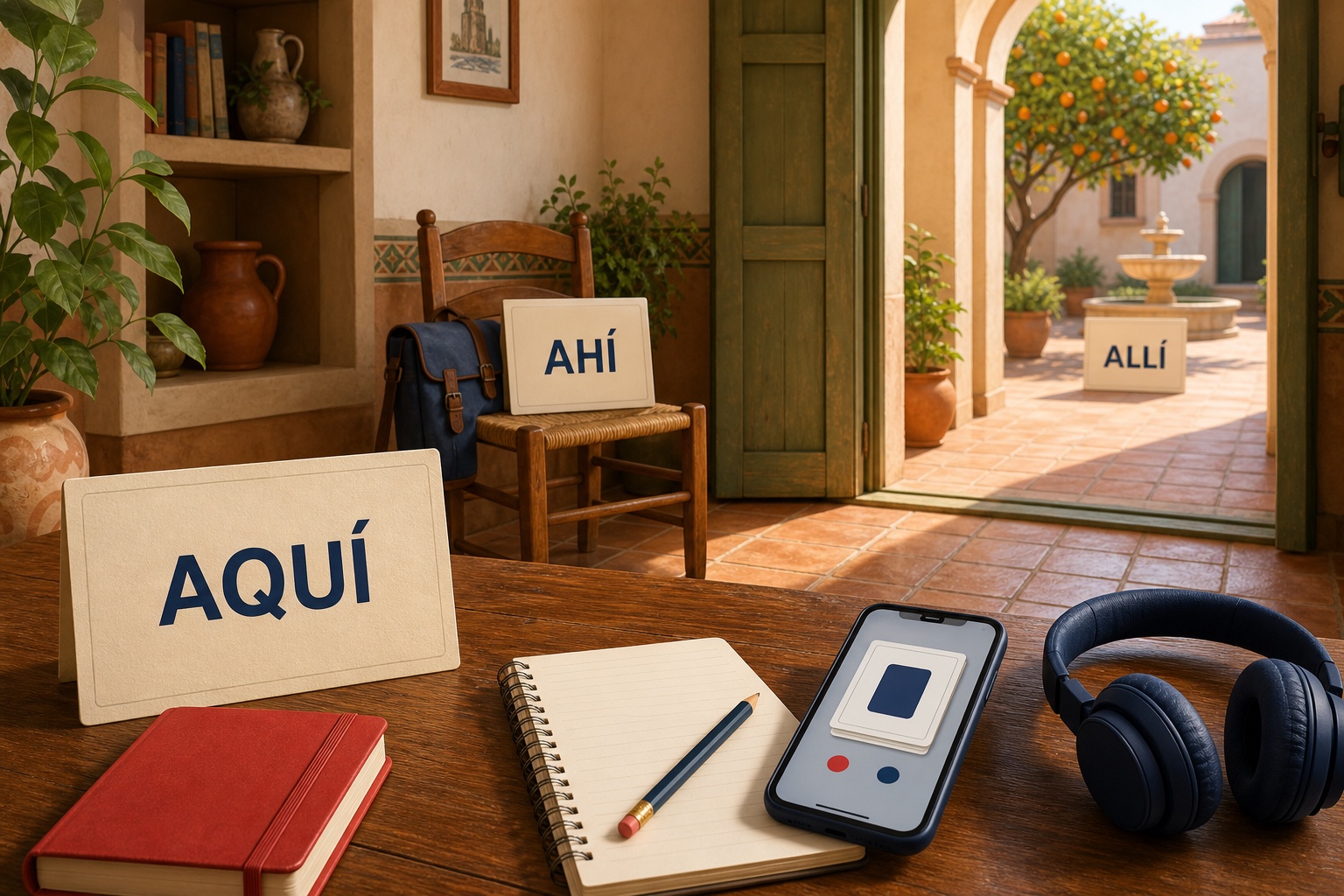
Aquí means “here” and normally points to the speaker’s place or something very close: el libro está aquí. Ahí means “there” and often points to a place near the listener or a visible spot you are indicating: tu mochila está ahí.
Allí means “there” or “over there” and usually marks a more distant or clearly separate place: el hotel está allí. Spanish often presents three distance zones, while English usually compresses them into here and there.
The quickest near-middle-far rule
Start with this map: aquí = close to me; ahí = at that indicated place, often close to you; allí = farther from both of us. Pair the words with gestures and complete sentences instead of memorising three isolated translations.
Treat distance as the speaker’s perspective, not a measurement. In everyday speech, ahí and allí can overlap. Many regions also use acá for a broad “here/this way” area and allá for a broad or distant “there/that way” area.
40 aquí, ahí, and allí examples for everyday Spanish
Each row gives a complete Spanish sentence, a natural translation, the distance job, and one short usage cue.
| Spanish | Translation | Distance job | Mini-note |
|---|---|---|---|
| Estoy aquí. | I am here. | Aquí: close to the speaker | Aquí marks the speaker’s current or immediate place. |
| El libro está aquí. | The book is here. | Aquí: close to the speaker | Aquí marks the speaker’s current or immediate place. |
| Ven aquí, por favor. | Come here, please. | Aquí: close to the speaker | A movement verb turns aquí into “to here” without another preposition. |
| Aquí tienes tu café. | Here is your coffee. | Aquí: close to the speaker | Aquí tienes is a frequent fixed way to hand something over. |
| Aquí hace calor. | It is hot here. | Aquí: close to the speaker | Aquí can describe the wider area where the speaker is. |
| ¿Puedo sentarme aquí? | Can I sit here? | Aquí: close to the speaker | Aquí identifies the exact place being requested. |
| Vivo aquí desde enero. | I have lived here since January. | Aquí: close to the speaker | Aquí can describe the wider area where the speaker is. |
| Deja las llaves aquí. | Leave the keys here. | Aquí: close to the speaker | Place an object at the speaker’s position with aquí. |
| Aquí empieza la calle. | The street starts here. | Aquí: close to the speaker | Aquí can mark a precise meeting point, start, or boundary. |
| Nos vemos aquí mañana. | We will meet here tomorrow. | Aquí: close to the speaker | Aquí can mark a precise meeting point, start, or boundary. |
| Tu mochila está ahí. | Your backpack is there. | Ahí: the indicated place | Ahí points to a visible or already indicated place. |
| Siéntate ahí, por favor. | Sit there, please. | Ahí: the indicated place | Ahí often refers to the listener’s place or a spot near them. |
| Pon la caja ahí. | Put the box there. | Ahí: the indicated place | Use ahí for the spot where the other person should put something. |
| ¿Qué hay ahí? | What is there? | Ahí: the indicated place | A gesture or shared attention makes ahí natural. |
| Ahí está el autobús. | There is the bus. | Ahí: the indicated place | Ahí está or ahí tienes draws attention to something found or explained. |
| Espera ahí un momento. | Wait there for a moment. | Ahí: the indicated place | Ahí often refers to the listener’s place or a spot near them. |
| La farmacia está ahí enfrente. | The pharmacy is right there opposite. | Ahí: the indicated place | A gesture or shared attention makes ahí natural. |
| No aparques ahí. | Do not park there. | Ahí: the indicated place | Ahí identifies the place affected by the warning. |
| Ahí tienes la respuesta. | There is your answer. | Ahí: the indicated place | Ahí está or ahí tienes draws attention to something found or explained. |
| ¿Trabajas ahí? | Do you work there? | Ahí: the indicated place | Ahí often refers to the listener’s place or a spot near them. |
| El hotel está allí. | The hotel is over there. | Allí: a farther place | Allí presents the location as clearly farther away or separate. |
| Dejamos el coche allí. | We left the car over there. | Allí: a farther place | Allí presents the location as clearly farther away or separate. |
| Allí vive mi abuela. | My grandmother lives there. | Allí: a farther place | Allí recalls a place separate from the current scene. |
| Mira, la estación está allí. | Look, the station is over there. | Allí: a farther place | Allí presents the location as clearly farther away or separate. |
| Quiero ir allí. | I want to go there. | Allí: a farther place | A movement verb makes allí a farther destination. |
| Allí hace más frío. | It is colder there. | Allí: a farther place | Allí recalls a place separate from the current scene. |
| Nos conocimos allí. | We met there. | Allí: a farther place | Allí can point back to a previously mentioned distant place. |
| Hay un parque allí. | There is a park over there. | Allí: a farther place | Allí presents the location as clearly farther away or separate. |
| ¿Cuánto se tarda en llegar allí? | How long does it take to get there? | Allí: a farther place | A movement verb makes allí a farther destination. |
| Allí termina el camino. | The path ends there. | Allí: a farther place | Allí marks a farther endpoint or boundary. |
| Yo estoy aquí y tú estás ahí. | I am here and you are there. | Viewpoint contrasts | The contrast separates the speaker’s place from an indicated middle point. |
| Esta silla va aquí; esa, ahí. | This chair goes here; that one, there. | Viewpoint contrasts | The contrast separates the speaker’s place from an indicated middle point. |
| Mi casa está aquí, pero la oficina está allí. | My home is here, but the office is over there. | Viewpoint contrasts | The contrast separates the current place from a clearly farther one. |
| Ven aquí y deja la bolsa ahí. | Come here and leave the bag there. | Viewpoint contrasts | The contrast separates the speaker’s place from an indicated middle point. |
| ¿Lo pongo aquí o ahí? | Should I put it here or there? | Viewpoint contrasts | The question asks the listener to choose between two viewpoints. |
| Desde aquí caminamos hasta allí. | We walk from here to there. | Viewpoint contrasts | The contrast separates the current place from a clearly farther one. |
| El baño no está aquí; está allí al fondo. | The bathroom is not here; it is over there at the back. | Viewpoint contrasts | The contrast separates the current place from a clearly farther one. |
| Quédate ahí; voy hacia ti. | Stay there; I am coming towards you. | Viewpoint contrasts | Ahí often refers to the listener’s place or a spot near them. |
| Aquí hablamos bajo; allí podemos hablar. | Here we speak quietly; over there we can talk. | Viewpoint contrasts | The contrast separates the current place from a clearly farther one. |
| Primero paramos aquí y luego comemos allí. | First we stop here, then we eat over there. | Viewpoint contrasts | Aquí and allí organise two places in a route or sequence. |
Group the location words by viewpoint
Four groups separate the speaker’s immediate place, an indicated middle point, a farther location, and direct contrasts.
Aquí: close to the speaker
Use aquí for the speaker’s immediate place, the current area, movement here, or an exact nearby point.
Estoy aquí. El libro está aquí. Ven aquí, por favor. Aquí tienes tu café. Aquí hace calor. ¿Puedo sentarme aquí? Vivo aquí desde enero. Deja las llaves aquí. Aquí empieza la calle. Nos vemos aquí mañana.
Ahí: the indicated place
Use ahí for a visible spot, the listener’s area, or the place singled out by a gesture, command, or warning.
Tu mochila está ahí. Siéntate ahí, por favor. Pon la caja ahí. ¿Qué hay ahí? Ahí está el autobús. Espera ahí un momento. La farmacia está ahí enfrente. No aparques ahí. Ahí tienes la respuesta. ¿Trabajas ahí?
Allí: a farther place
Use allí when the destination, memory, landmark, or boundary is understood as more distant or separate.
El hotel está allí. Dejamos el coche allí. Allí vive mi abuela. Mira, la estación está allí. Quiero ir allí. Allí hace más frío. Nos conocimos allí. Hay un parque allí. ¿Cuánto se tarda en llegar allí? Allí termina el camino.
Viewpoint contrasts
Pair the three words to make the speaker’s position, indicated point, and farther location easy to compare.
Yo estoy aquí y tú estás ahí. Esta silla va aquí; esa, ahí. Mi casa está aquí, pero la oficina está allí. Ven aquí y deja la bolsa ahí. ¿Lo pongo aquí o ahí? Desde aquí caminamos hasta allí. El baño no está aquí; está allí al fondo. Quédate ahí; voy hacia ti. Aquí hablamos bajo; allí podemos hablar. Primero paramos aquí y luego comemos allí.
Nuances beginners should know
Write the accents: aquí, ahí, allí. The stress falls on the final í. Missing the accent is a spelling error even though the intended word may still be understood.
Use aquí, ahí, and allí for both position and destination when the verb supplies the movement: estoy aquí, ven aquí, quiero ir allí. English may switch between here and to here; Spanish does not need an extra preposition in these examples.
Do not force a rigid physical boundary between ahí and allí. Choice depends on viewpoint, gesture, contrast, and region; allí usually sounds more clearly separated or farther away.
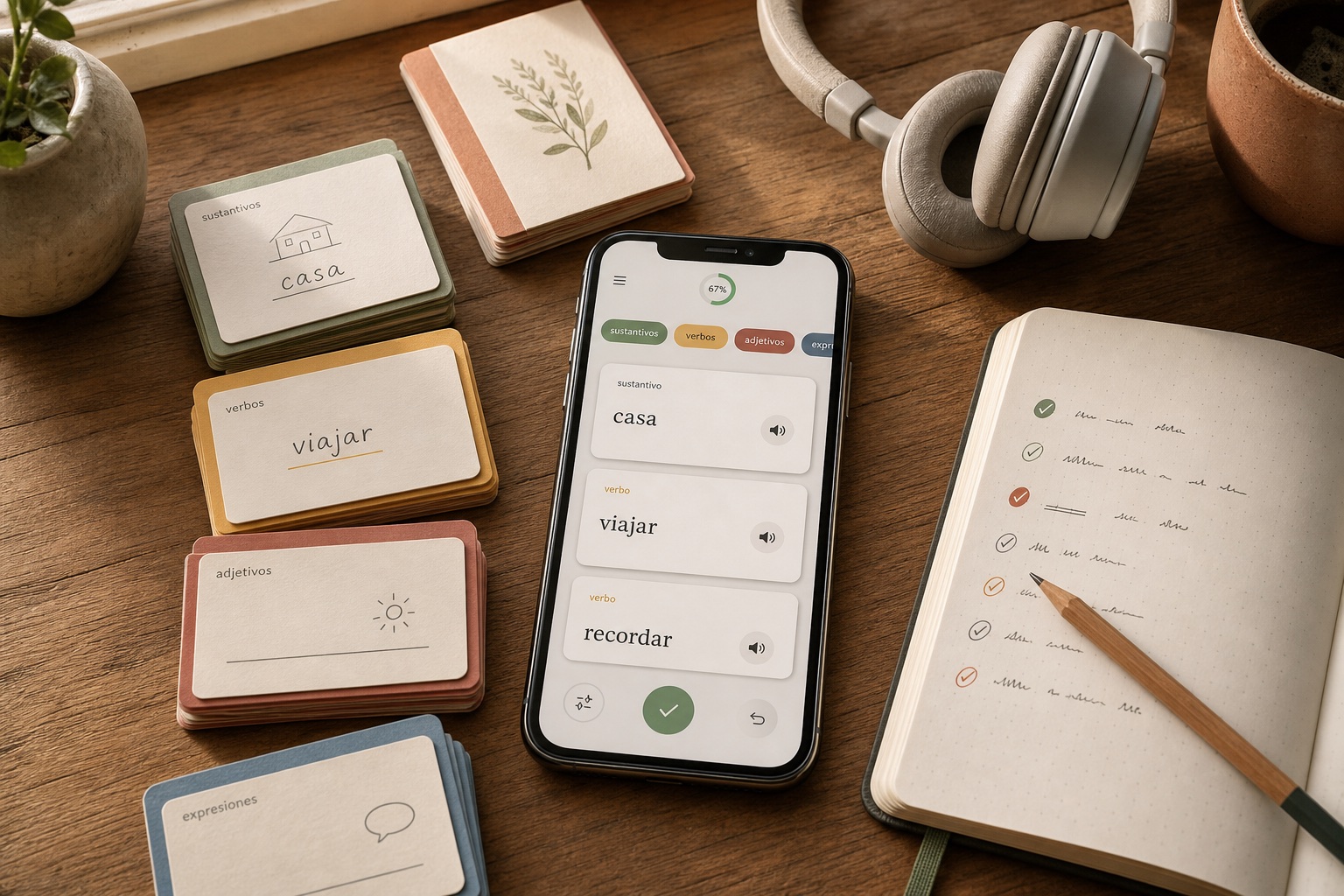
Hola Cards, the Spanish flashcard app on holacards.org, helps beginners connect these patterns through flashcards, audio, writing, pronunciation, custom groups, and spaced review on iOS and Android.
Connect these location words with hay vs está, ser vs estar, question words, travel directions, shopping situations, and common beginner vocabulary.
Hay vs está Ser vs estar Question words Travel phrases Shopping phrases 100 common Spanish words

How to practise aquí, ahí, and allí in five steps
- Choose three real points: next to you, near another person, and farther away.
- Point and say one complete sentence with aquí, ahí, or allí for each point.
- Change position sentences into movement commands: está aquí / ven aquí, está allí / ve allí.
- Build contrast cards such as ¿lo pongo aquí o ahí? and mi casa está aquí, pero la oficina está allí.
- Review with Hola Cards audio, writing, pronunciation, and spaced repetition until viewpoint triggers the word automatically.
FAQ
What is the main difference between aquí, ahí, and allí?
Aquí points to the speaker’s place or something close. Ahí points to an indicated place, often near the listener. Allí normally marks a place understood as farther away or more separate.
Are ahí and allí interchangeable?
They can overlap in everyday speech, and regional habits vary. Allí usually creates a clearer sense of distance, while ahí often means the spot being indicated.
What is the difference between aquí and acá?
Both can mean “here.” Aquí often identifies a more precise point; acá can suggest a broader area or movement towards the speaker. The preference varies across Spanish-speaking regions.
What is the difference between allí and allá?
Both can mean “there” or “over there.” Allí often identifies a point, while allá may suggest a broader or less precise distant area or movement. Regional usage matters.
Copy all 40 aquí, ahí, and allí examples into Hola Cards
Open word groups in Hola Cards, choose paste/import, and paste this block. The app can read the title and the “Spanish - translation” lines.
**Aquí, ahí, allí: 40 Spanish examples**

Estoy aquí. - I am here.
El libro está aquí. - The book is here.
Ven aquí, por favor. - Come here, please.
Aquí tienes tu café. - Here is your coffee.
Aquí hace calor. - It is hot here.
¿Puedo sentarme aquí? - Can I sit here?
Vivo aquí desde enero. - I have lived here since January.
Deja las llaves aquí. - Leave the keys here.
Aquí empieza la calle. - The street starts here.
Nos vemos aquí mañana. - We will meet here tomorrow.
Tu mochila está ahí. - Your backpack is there.
Siéntate ahí, por favor. - Sit there, please.
Pon la caja ahí. - Put the box there.
¿Qué hay ahí? - What is there?
Ahí está el autobús. - There is the bus.
Espera ahí un momento. - Wait there for a moment.
La farmacia está ahí enfrente. - The pharmacy is right there opposite.
No aparques ahí. - Do not park there.
Ahí tienes la respuesta. - There is your answer.
¿Trabajas ahí? - Do you work there?
El hotel está allí. - The hotel is over there.
Dejamos el coche allí. - We left the car over there.
Allí vive mi abuela. - My grandmother lives there.
Mira, la estación está allí. - Look, the station is over there.
Quiero ir allí. - I want to go there.
Allí hace más frío. - It is colder there.
Nos conocimos allí. - We met there.
Hay un parque allí. - There is a park over there.
¿Cuánto se tarda en llegar allí? - How long does it take to get there?
Allí termina el camino. - The path ends there.
Yo estoy aquí y tú estás ahí. - I am here and you are there.
Esta silla va aquí; esa, ahí. - This chair goes here; that one, there.
Mi casa está aquí, pero la oficina está allí. - My home is here, but the office is over there.
Ven aquí y deja la bolsa ahí. - Come here and leave the bag there.
¿Lo pongo aquí o ahí? - Should I put it here or there?
Desde aquí caminamos hasta allí. - We walk from here to there.
El baño no está aquí; está allí al fondo. - The bathroom is not here; it is over there at the back.
Quédate ahí; voy hacia ti. - Stay there; I am coming towards you.
Aquí hablamos bajo; allí podemos hablar. - Here we speak quietly; over there we can talk.
Primero paramos aquí y luego comemos allí. - First we stop here, then we eat over there.
Practise Spanish location words in Hola Cards
Hola Cards, the Spanish flashcard app on holacards.org, turns these 40 examples into flashcards with audio, writing, pronunciation practice, custom groups, and spaced review on iOS and Android.