Build a Spanish cooking-verbs group
Import all 32 verbs and practise them with Spanish audio and writing on iOS or Android. The complete guide remains useful without the app.
Spanish cooking verbs
Which Spanish cooking verbs should a beginner learn?
Start with the verbs that describe visible actions: lavar, cortar, añadir, mezclar, cocinar and servir. They unlock the short instructions used in recipes and everyday kitchen talk.
Spanish recipes often use the infinitive—cortar—or an imperative such as corta or corte. This guide lists the infinitive so every verb has one stable dictionary form.
Cocinar is the general act of preparing food with heat. Cocer is narrower: it means to cook something, often in water or through heat until done. The right translation depends on the method.
Four distinctions that prevent common mistakes
Cortar is the broad verb “to cut”; picar means to chop or mince into smaller pieces.
Hervir describes boiling; cocer describes cooking an ingredient until it is done.
Freír keeps its written accent and changes in common present forms: frío, fríes, fríe.
Remover means “to stir” in recipes; revolver is also used for mixing in parts of the Spanish-speaking world.
32 useful cooking verbs in Spanish
Each row gives the infinitive, a practical translation, a model sentence and a usage note.
| Spanish verb | Meaning | Example in context | Usage note |
|---|---|---|---|
| lavar | to wash | Lava las verduras antes de cortarlas. | A common action in recipes and everyday kitchen talk. |
| pelar | to peel | Pela las patatas con cuidado. | A common action in recipes and everyday kitchen talk. |
| cortar | to cut | Corta el tomate en trozos. | Keep this verb distinct from a nearby cooking action. |
| picar | to chop / mince | Pica la cebolla muy fina. | The exact verb or translation can vary by region and context. |
| rallar | to grate | Ralla el queso sobre la pasta. | A common action in recipes and everyday kitchen talk. |
| rebanar | to slice | Rebana el pan antes de servirlo. | The exact verb or translation can vary by region and context. |
| triturar | to blend / crush | Tritura la sopa hasta que quede suave. | A common action in recipes and everyday kitchen talk. |
| exprimir | to squeeze | Exprime el limón sobre el pescado. | A common action in recipes and everyday kitchen talk. |
| añadir | to add | Añade el aceite poco a poco. | A common action in recipes and everyday kitchen talk. |
| mezclar | to mix | Mezcla la harina con el agua. | A common action in recipes and everyday kitchen talk. |
| batir | to whisk / beat | Bate los huevos en un bol. | A common action in recipes and everyday kitchen talk. |
| remover | to stir | Remueve la salsa a fuego lento. | The exact verb or translation can vary by region and context. |
| amasar | to knead | Amasa el pan durante diez minutos. | A common action in recipes and everyday kitchen talk. |
| verter | to pour | Vierte la leche en la taza. | The exact verb or translation can vary by region and context. |
| rellenar | to fill / stuff | Rellena los pimientos con arroz. | A common action in recipes and everyday kitchen talk. |
| sazonar | to season | Sazona la sopa con sal y pimienta. | A common action in recipes and everyday kitchen talk. |
| cocinar | to cook | Cocina las verduras a fuego medio. | Keep this verb distinct from a nearby cooking action. |
| calentar | to heat | Calienta el caldo sin hervirlo. | A common action in recipes and everyday kitchen talk. |
| hervir | to boil | Hierve el agua antes de añadir la pasta. | Keep this verb distinct from a nearby cooking action. |
| cocer | to cook / boil | Cuece las patatas hasta que estén tiernas. | Keep this verb distinct from a nearby cooking action. |
| freír | to fry | Fríe el ajo en un poco de aceite. | Notice the written accent or stem change in common forms. |
| hornear | to bake | Hornea el pan durante treinta minutos. | A common action in recipes and everyday kitchen talk. |
| asar | to roast / grill | Asa los pimientos hasta que estén blandos. | The exact verb or translation can vary by region and context. |
| sofreír | to sauté | Sofríe la cebolla antes de añadir el tomate. | Notice the written accent or stem change in common forms. |
| derretir | to melt | Derrite la mantequilla a fuego bajo. | Notice the written accent or stem change in common forms. |
| probar | to taste | Prueba la salsa antes de servirla. | A common action in recipes and everyday kitchen talk. |
| servir | to serve | Sirve la sopa bien caliente. | A common action in recipes and everyday kitchen talk. |
| enfriar | to cool | Enfría la crema antes de decorarla. | A common action in recipes and everyday kitchen talk. |
| escurrir | to drain | Escurre la pasta y guarda un poco de agua. | A common action in recipes and everyday kitchen talk. |
| colar | to strain | Cuela el caldo para quitar los sólidos. | A common action in recipes and everyday kitchen talk. |
| cubrir | to cover | Cubre la masa con un paño limpio. | A common action in recipes and everyday kitchen talk. |
| decorar | to decorate | Decora el pastel con fruta fresca. | A common action in recipes and everyday kitchen talk. |
Learn the verbs in a kitchen sequence
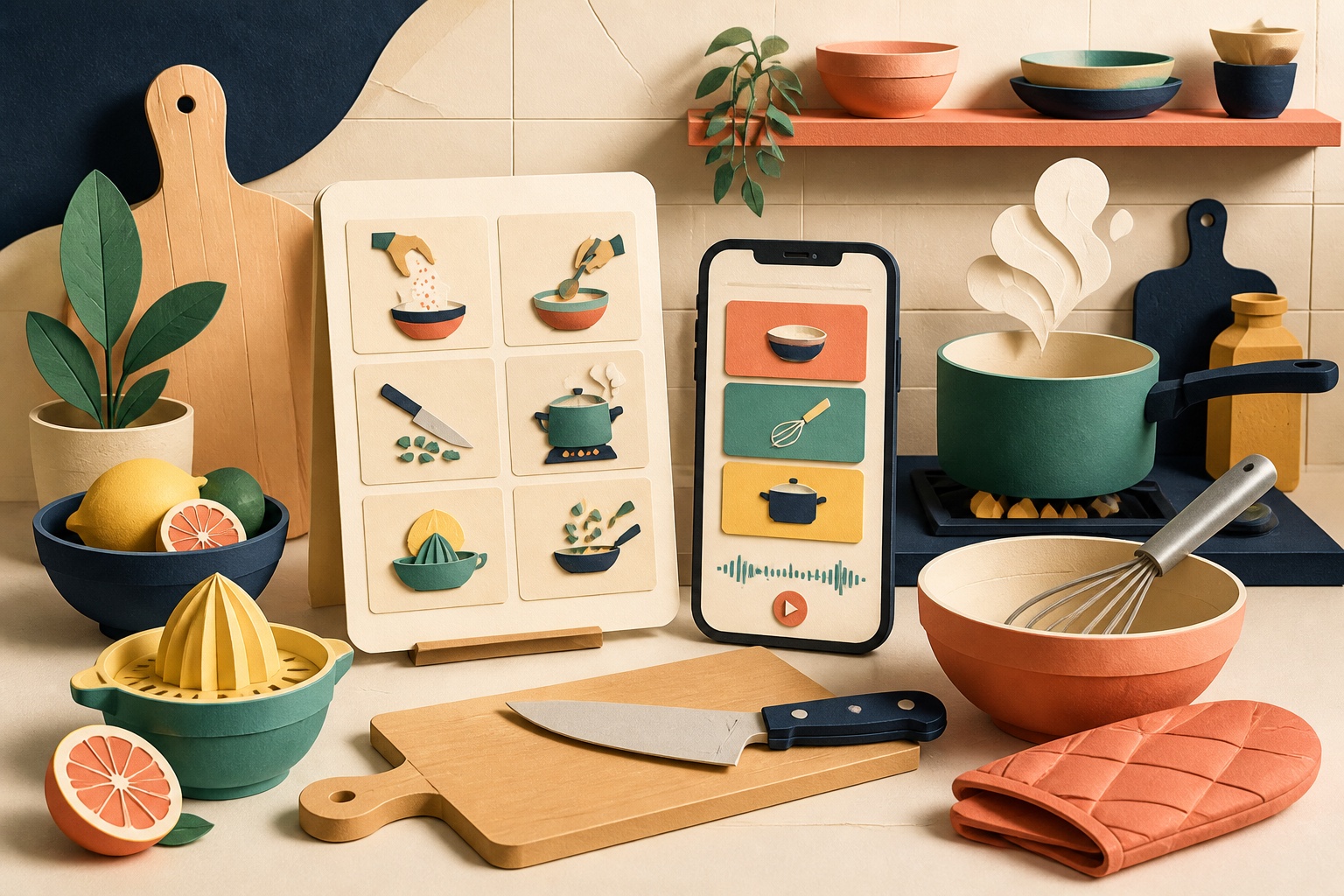
Four action groups turn a flat vocabulary list into a usable recipe workflow.
Wash, peel and cut
Prepare ingredients before they go into the pan or bowl.
lavar · pelar · cortar · picar · rallar · rebanar · triturar · exprimir
Add, mix and season
Combine ingredients and change their texture or flavour.
añadir · mezclar · batir · remover · amasar · verter · rellenar · sazonar
Heat and cook
Use water, oil, an oven or direct heat to cook food.
cocinar · calentar · hervir · cocer · freír · hornear · asar · sofreír
Texture, draining and serving
Complete the dish, remove liquid, cool it or present it.
derretir · probar · servir · enfriar · escurrir · colar · cubrir · decorar
How do Spanish recipes use verbs?
Infinitives are common in concise written instructions: cortar la cebolla, añadir el aceite.
Informal commands address tú: corta, mezcla, añade. Formal or plural recipes may use other command forms.
Practise the infinitive first, then rebuild one real instruction with a present form or command.
Hola Cards is a Spanish flashcard app from holacards.org for iOS and Android. It is free to download, requires no account, may show ads in the free version, while Premium removes ads, and works offline. The interface is available in 29 languages, including English, Russian, Portuguese and German; cards support translations in 29 languages, including English, Russian, Portuguese and German and 18 practice and game modes. You can import these 32 fixed cooking verbs into a custom group and practise them with Spanish audio, writing, pronunciation, and review modes. Hola Cards does not read recipes, generate cooking instructions, or automatically decide whether a verb fits the context.
Connect these actions with food nouns, household objects, chores, common verbs and present-tense forms.
50 Spanish food words 50 Spanish house words 32 Spanish household chores 50 Spanish verbs for beginners Spanish present tense endings

A five-minute kitchen drill
- Choose one short recipe step.
- Underline the action verb and find its infinitive.
- Say the Spanish instruction aloud.
- Cover it and rebuild the instruction from memory.
- Finish by ordering four verbs from preparation to serving.
Language references
Meanings and core food vocabulary were checked against Instituto Cervantes and the RAE.
- Instituto Cervantes: food and cooking vocabulary
- RAE dictionary: cocinar
- RAE dictionary: cocer
- RAE dictionary: freír
FAQ
What are the most useful Spanish cooking verbs?
Start with lavar, cortar, picar, añadir, mezclar, cocinar, hervir, freír, hornear and servir.
What is the difference between cocinar and cocer?
Cocinar is the general act of preparing food, usually with heat. Cocer focuses on cooking an ingredient until it is done and often refers to boiling.
What is the difference between cortar and picar?
Cortar means to cut in general. Picar means to chop or mince into small pieces.
Why do Spanish recipes use infinitives?
The infinitive is a compact, impersonal way to label steps. Recipes also use commands such as corta, mezcle or añadimos, depending on style.
Is freír irregular?
Yes. It keeps the accent in the infinitive and has common present forms such as frío, fríes and fríe.
Can Hola Cards understand a recipe automatically?
No. It helps you import and practise these fixed verbs; this guide explains their meanings and examples.
Copy the 32 cooking verbs into Hola Cards
Open word groups in Hola Cards, choose paste/import, and paste the block. The app recognises the title and “Spanish - translation” lines.
**Spanish cooking verbs: 32 kitchen actions**

lavar - to wash
pelar - to peel
cortar - to cut
picar - to chop / mince
rallar - to grate
rebanar - to slice
triturar - to blend / crush
exprimir - to squeeze
añadir - to add
mezclar - to mix
batir - to whisk / beat
remover - to stir
amasar - to knead
verter - to pour
rellenar - to fill / stuff
sazonar - to season
cocinar - to cook
calentar - to heat
hervir - to boil
cocer - to cook / boil
freír - to fry
hornear - to bake
asar - to roast / grill
sofreír - to sauté
derretir - to melt
probar - to taste
servir - to serve
enfriar - to cool
escurrir - to drain
colar - to strain
cubrir - to cover
decorar - to decorate
Practise Spanish cooking verbs in Hola Cards
Review the 32 fixed verbs with Spanish audio, writing, pronunciation, custom groups, and review modes on iOS and Android.