llevar vs traer in Spanish
What is the difference between llevar and traer?
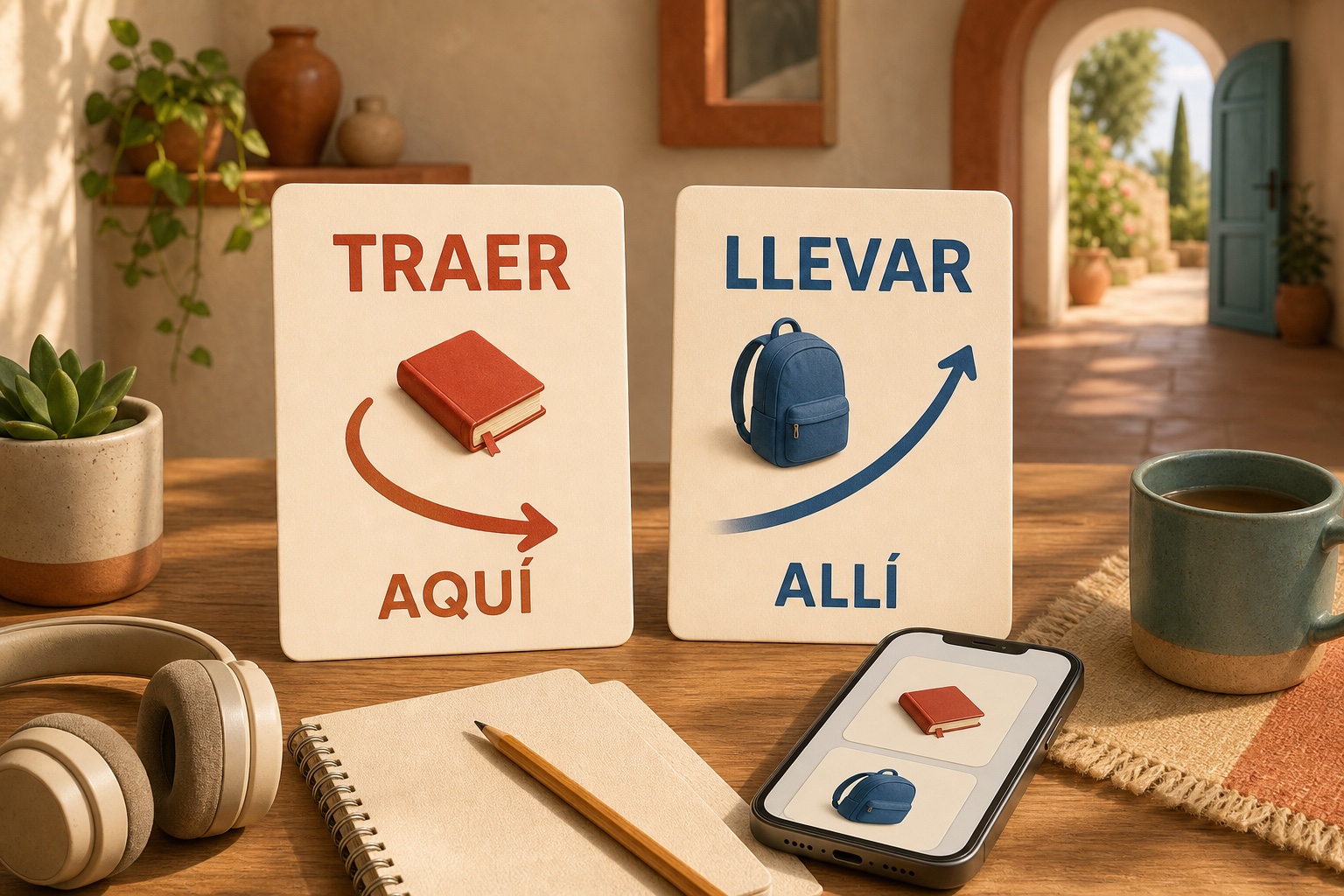
Traer means to bring someone or something toward the place where the speaker is, will be, or is mentally positioned. Llevar means to take or carry someone or something from the current point to a different destination.
English can use “bring” for both directions, so translate the situation rather than the single word. Ask: is the movement coming to the conversational here, or going from here to somewhere else?
The quickest here-versus-there rule
Link traer with venir and aquí: ¿puedes traer el menú aquí? Link llevar with ir and allí: voy a llevar los documentos al banco. The speaker’s viewpoint is the reference point.
For people as well as objects, the same direction applies: el taxi trae a Ana hasta aquí, but llevo a Ana al aeropuerto. Context can shift the reference point, especially in calls, messages, and plans.
40 examples with llevar and traer in Spanish
Each row gives a complete Spanish sentence, a natural translation, the direction or grammar job, and one short usage cue.
| Spanish | Translation | Direction or use | Mini-note |
|---|---|---|---|
| ¿Puedes traer el menú? | Can you bring the menu? | Traer: movement toward here | A practical request or command. |
| Tráeme un vaso de agua, por favor. | Bring me a glass of water, please. | Traer: movement toward here | A practical request or command. |
| El camarero nos trae la cuenta. | The waiter brings us the bill. | Traer: movement toward here | Movement comes toward the speaker or conversational here. |
| Te traigo el libro mañana. | I will bring you the book tomorrow. | Traer: movement toward here | The destination or future meeting sets the viewpoint. |
| ¿Qué vas a traer cuando vengas a mi casa? | What will you bring when you come to my house? | Traer: movement toward here | The destination or future meeting sets the viewpoint. |
| Mi hermano trae a sus amigos aquí. | My brother brings his friends here. | Traer: movement toward here | The same direction rule applies to people. |
| El taxi trae a nuestros amigos al hotel. | The taxi brings our friends to the hotel. | Traer: movement toward here | The same direction rule applies to people. |
| No traigas nada; ya tenemos comida. | Do not bring anything; we already have food. | Traer: movement toward here | A practical request or command. |
| ¿Quién ha traído estas flores? | Who brought these flowers? | Traer: movement toward here | Notice a useful verb form or attached pronoun. |
| Han traído las maletas a nuestra habitación. | They have brought the suitcases to our room. | Traer: movement toward here | Movement comes toward the speaker or conversational here. |
| Llevo comida a la fiesta. | I am taking food to the party. | Llevar: movement from here to there | Movement goes from here to another destination. |
| Lleva esto a la oficina. | Take this to the office. | Llevar: movement from here to there | A practical request or command. |
| ¿Puedes llevar a Ana al aeropuerto? | Can you take Ana to the airport? | Llevar: movement from here to there | The same direction rule applies to people. |
| Voy a llevar una chaqueta para el viaje. | I am going to take a jacket for the trip. | Llevar: movement from here to there | The destination or future meeting sets the viewpoint. |
| No lleves tanto equipaje. | Do not take so much luggage. | Llevar: movement from here to there | A practical request or command. |
| Llevamos a los niños al colegio. | We take the children to school. | Llevar: movement from here to there | The same direction rule applies to people. |
| Él lleva los documentos al banco. | He takes the documents to the bank. | Llevar: movement from here to there | Movement goes from here to another destination. |
| ¿Qué debo llevar a la entrevista? | What should I take to the interview? | Llevar: movement from here to there | The destination or future meeting sets the viewpoint. |
| Llevaré el postre a tu casa. | I will bring dessert to your house. | Llevar: movement from here to there | The destination or future meeting sets the viewpoint. |
| Siempre llevo agua al gimnasio. | I always take water to the gym. | Llevar: movement from here to there | Movement goes from here to another destination. |
| Tráeme esa caja; no la lleves al almacén. | Bring me that box; do not take it to the storeroom. | Direct direction contrasts | Both directions appear in one situation. |
| ¿Traes el pan aquí o lo llevas a la cocina? | Are you bringing the bread here or taking it to the kitchen? | Direct direction contrasts | Both directions appear in one situation. |
| María trae los platos a la mesa y Pedro lleva los sucios al fregadero. | María brings the plates to the table, and Pedro takes the dirty ones to the sink. | Direct direction contrasts | Both directions appear in one situation. |
| Traemos las sillas aquí; luego las llevamos al patio. | We bring the chairs here, then take them to the patio. | Direct direction contrasts | Both directions appear in one situation. |
| Cuando vengas, trae tu pasaporte; cuando salgas, llévalo contigo. | When you come, bring your passport; when you leave, take it with you. | Direct direction contrasts | Both directions appear in one situation. |
| El taxi trae a nuestros amigos al hotel y luego lleva a otros pasajeros al aeropuerto. | The taxi brings our friends to the hotel, then takes other passengers to the airport. | Direct direction contrasts | Both directions appear in one situation. |
| Traigo estos libros para ti y llevo aquellos a la biblioteca. | I am bringing these books for you and taking those to the library. | Direct direction contrasts | Both directions appear in one situation. |
| ¿Me traes la sal? Después lleva los platos a la cocina. | Will you bring me the salt? Then take the plates to the kitchen. | Direct direction contrasts | Both directions appear in one situation. |
| La enfermera trae la medicina al paciente y lleva la bandeja fuera. | The nurse brings the medicine to the patient and takes the tray outside. | Direct direction contrasts | Both directions appear in one situation. |
| Ella me trae el paquete y yo lo llevo a casa. | She brings me the package, and I take it home. | Direct direction contrasts | Both directions appear in one situation. |
| Yo traigo el desayuno. | I am bringing breakfast. | Forms, plans, and requests | Notice a useful verb form or attached pronoun. |
| Tú llevas las bebidas. | You are taking the drinks. | Forms, plans, and requests | Notice a useful verb form or attached pronoun. |
| Nosotros traemos buenas noticias. | We bring good news. | Forms, plans, and requests | Notice a useful verb form or attached pronoun. |
| Ellos llevan las cajas arriba. | They take the boxes upstairs. | Forms, plans, and requests | Movement goes from here to another destination. |
| Quiero que traigas tu cuaderno. | I want you to bring your notebook. | Forms, plans, and requests | Notice a useful verb form or attached pronoun. |
| Tengo que llevar mi documento de identidad. | I have to take my ID document. | Forms, plans, and requests | The destination or future meeting sets the viewpoint. |
| Acabo de traer el paquete. | I have just brought the package. | Forms, plans, and requests | Notice a useful verb form or attached pronoun. |
| Voy a llevar el coche al taller. | I am going to take the car to the repair shop. | Forms, plans, and requests | The destination or future meeting sets the viewpoint. |
| Tráelo aquí y llévalo después a recepción. | Bring it here, then take it to reception. | Forms, plans, and requests | Notice a useful verb form or attached pronoun. |
| Llévame al hotel, por favor. | Take me to the hotel, please. | Forms, plans, and requests | The same direction rule applies to people. |
Group llevar and traer by direction and use
Four groups separate movement toward the speaker, movement to another destination, direct contrasts, and useful forms for plans and requests.
Traer: movement toward here
Use traer when a person or thing comes to the speaker, listener’s requested point, or conversational destination.
¿Puedes traer el menú? Tráeme un vaso de agua, por favor. El camarero nos trae la cuenta. Te traigo el libro mañana. ¿Qué vas a traer cuando vengas a mi casa? Mi hermano trae a sus amigos aquí. El taxi trae a nuestros amigos al hotel. No traigas nada; ya tenemos comida. ¿Quién ha traído estas flores? Han traído las maletas a nuestra habitación.
Llevar: movement from here to there
Use llevar when a person or thing leaves the reference point for another destination.
Llevo comida a la fiesta. Lleva esto a la oficina. ¿Puedes llevar a Ana al aeropuerto? Voy a llevar una chaqueta para el viaje. No lleves tanto equipaje. Llevamos a los niños al colegio. Él lleva los documentos al banco. ¿Qué debo llevar a la entrevista? Llevaré el postre a tu casa. Siempre llevo agua al gimnasio.
Direct direction contrasts
Put both verbs in one scene so the reference point and destination stay visible.
Tráeme esa caja; no la lleves al almacén. ¿Traes el pan aquí o lo llevas a la cocina? María trae los platos a la mesa y Pedro lleva los sucios al fregadero. Traemos las sillas aquí; luego las llevamos al patio. Cuando vengas, trae tu pasaporte; cuando salgas, llévalo contigo. El taxi trae a nuestros amigos al hotel y luego lleva a otros pasajeros al aeropuerto. Traigo estos libros para ti y llevo aquellos a la biblioteca. ¿Me traes la sal? Después lleva los platos a la cocina. La enfermera trae la medicina al paciente y lleva la bandeja fuera. Ella me trae el paquete y yo lo llevo a casa.
Forms, plans, and requests
Practise traigo, llevo, commands, future plans, and common subjunctive patterns.
Yo traigo el desayuno. Tú llevas las bebidas. Nosotros traemos buenas noticias. Ellos llevan las cajas arriba. Quiero que traigas tu cuaderno. Tengo que llevar mi documento de identidad. Acabo de traer el paquete. Voy a llevar el coche al taller. Tráelo aquí y llévalo después a recepción. Llévame al hotel, por favor.
Forms and patterns beginners should know
Llevar is regular in the present: llevo, llevas, lleva, llevamos, lleváis, llevan. Traer has the irregular first-person form traigo; the other common present forms are traes, trae, traemos, traéis, and traen.
The informal affirmative commands are lleva and trae. Object pronouns attach to affirmative commands and can add a written accent: llévalo, llévala, tráelo, tráela, tráeme.
After quiero que or cuando referring to a future arrival, Spanish often uses the present subjunctive: quiero que traigas tu cuaderno; cuando vengas, trae el pasaporte.
Hola Cards, the Spanish flashcard app on holacards.org, helps beginners practise these direction verbs with flashcards, audio, writing, pronunciation, custom groups, and spaced review on iOS and Android.
Connect llevar and traer with aquí/ahí/allí, ir, travel phrases, restaurant requests, and question words.
Aquí, ahí, allí Ir phrases Travel phrases Restaurant phrases Question words

How to practise llevar and traer in five steps
- Mark your current position as aquí and choose a second destination as allí.
- Move one object toward aquí and say traer; move it toward allí and say llevar.
- Turn the contrast into requests: tráeme el libro; lleva el libro a la mesa.
- Change the subject and tense with high-value forms such as traigo, llevo, voy a llevar, and quiero que traigas.
- Review all 40 examples with Hola Cards audio, writing, pronunciation, and spaced repetition until the direction becomes automatic.
FAQ
What is the simplest difference between traer and llevar?
Traer describes movement toward the speaker or conversational “here”. Llevar describes movement away from that point or to another destination.
Does traer mean bring and llevar mean take?
Often, yes. But English “bring” can also describe movement to another place, where Spanish normally chooses llevar. Direction and viewpoint matter more than a one-word translation.
Why are traigo and llevo different?
Traigo is the irregular first-person present form of traer. Llevo is the regular first-person present form of llevar. Both mean “I bring/take”, but the direction differs.
Should I say tráeme or llévame?
Say tráeme when you want something brought to you. Say llévame when you want someone to take you to another place: tráeme agua, but llévame al hotel.
Copy all 40 llevar and traer examples into Hola Cards
Open word groups in Hola Cards, choose paste/import, and paste this block. The app can read the title and the “Spanish - translation” lines.
**Llevar vs traer: 40 Spanish examples**

¿Puedes traer el menú? - Can you bring the menu?
Tráeme un vaso de agua, por favor. - Bring me a glass of water, please.
El camarero nos trae la cuenta. - The waiter brings us the bill.
Te traigo el libro mañana. - I will bring you the book tomorrow.
¿Qué vas a traer cuando vengas a mi casa? - What will you bring when you come to my house?
Mi hermano trae a sus amigos aquí. - My brother brings his friends here.
El taxi trae a nuestros amigos al hotel. - The taxi brings our friends to the hotel.
No traigas nada; ya tenemos comida. - Do not bring anything; we already have food.
¿Quién ha traído estas flores? - Who brought these flowers?
Han traído las maletas a nuestra habitación. - They have brought the suitcases to our room.
Llevo comida a la fiesta. - I am taking food to the party.
Lleva esto a la oficina. - Take this to the office.
¿Puedes llevar a Ana al aeropuerto? - Can you take Ana to the airport?
Voy a llevar una chaqueta para el viaje. - I am going to take a jacket for the trip.
No lleves tanto equipaje. - Do not take so much luggage.
Llevamos a los niños al colegio. - We take the children to school.
Él lleva los documentos al banco. - He takes the documents to the bank.
¿Qué debo llevar a la entrevista? - What should I take to the interview?
Llevaré el postre a tu casa. - I will bring dessert to your house.
Siempre llevo agua al gimnasio. - I always take water to the gym.
Tráeme esa caja; no la lleves al almacén. - Bring me that box; do not take it to the storeroom.
¿Traes el pan aquí o lo llevas a la cocina? - Are you bringing the bread here or taking it to the kitchen?
María trae los platos a la mesa y Pedro lleva los sucios al fregadero. - María brings the plates to the table, and Pedro takes the dirty ones to the sink.
Traemos las sillas aquí; luego las llevamos al patio. - We bring the chairs here, then take them to the patio.
Cuando vengas, trae tu pasaporte; cuando salgas, llévalo contigo. - When you come, bring your passport; when you leave, take it with you.
El taxi trae a nuestros amigos al hotel y luego lleva a otros pasajeros al aeropuerto. - The taxi brings our friends to the hotel, then takes other passengers to the airport.
Traigo estos libros para ti y llevo aquellos a la biblioteca. - I am bringing these books for you and taking those to the library.
¿Me traes la sal? Después lleva los platos a la cocina. - Will you bring me the salt? Then take the plates to the kitchen.
La enfermera trae la medicina al paciente y lleva la bandeja fuera. - The nurse brings the medicine to the patient and takes the tray outside.
Ella me trae el paquete y yo lo llevo a casa. - She brings me the package, and I take it home.
Yo traigo el desayuno. - I am bringing breakfast.
Tú llevas las bebidas. - You are taking the drinks.
Nosotros traemos buenas noticias. - We bring good news.
Ellos llevan las cajas arriba. - They take the boxes upstairs.
Quiero que traigas tu cuaderno. - I want you to bring your notebook.
Tengo que llevar mi documento de identidad. - I have to take my ID document.
Acabo de traer el paquete. - I have just brought the package.
Voy a llevar el coche al taller. - I am going to take the car to the repair shop.
Tráelo aquí y llévalo después a recepción. - Bring it here, then take it to reception.
Llévame al hotel, por favor. - Take me to the hotel, please.
Practise llevar and traer in Hola Cards
Hola Cards, the Spanish flashcard app on holacards.org, turns these 40 examples into flashcards with audio, writing, pronunciation practice, custom groups, and spaced review on iOS and Android.