este ese aquel in Spanish
What is the difference between este, ese, and aquel?
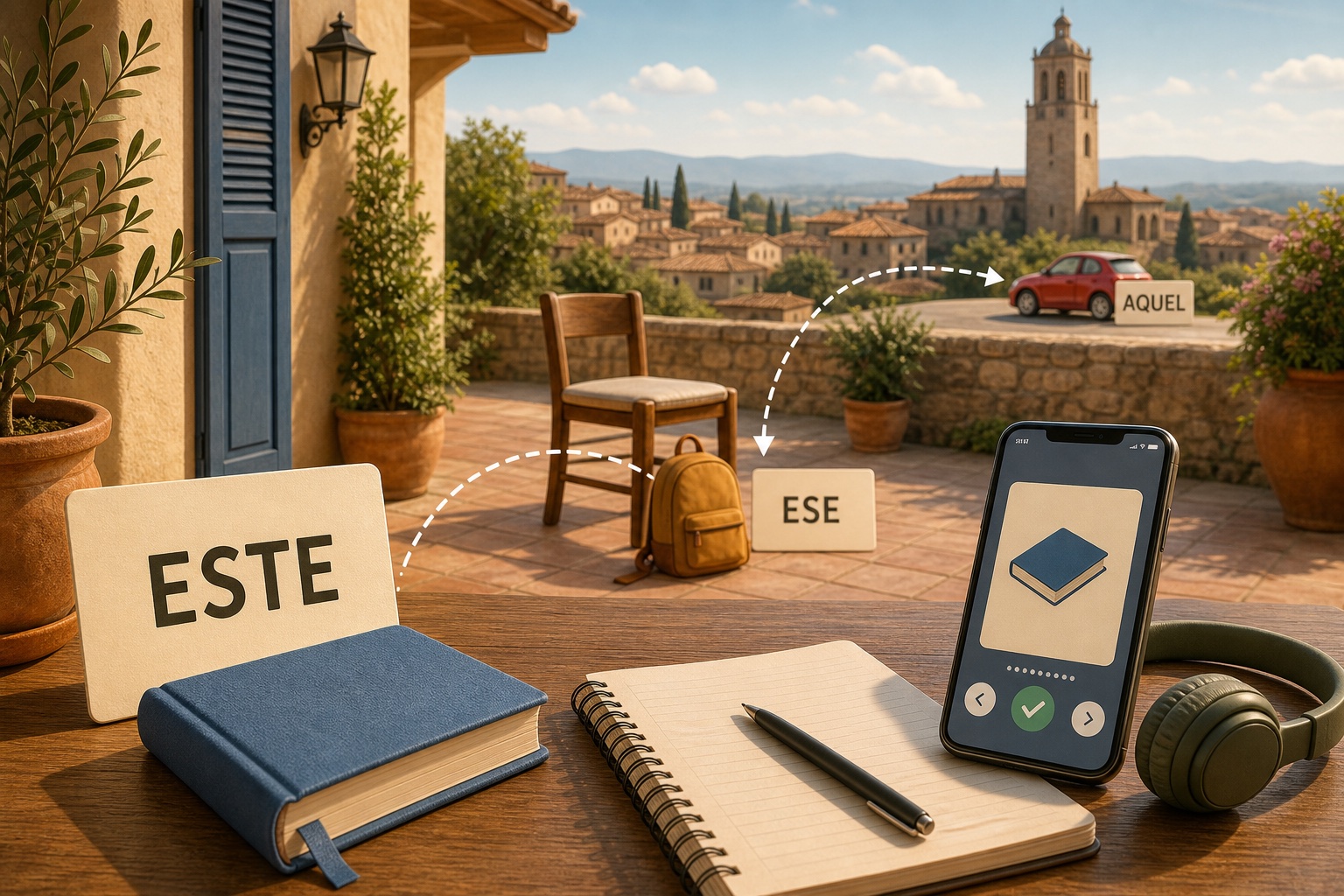
Spanish demonstratives point to a person, object, place, moment, or idea. Este means “this” near the speaker, ese usually means “that” near the listener or at a middle distance, and aquel means “that over there” far from both.
Unlike English this and that, Spanish normally presents three distance zones. The demonstrative also agrees with its noun: este libro, esta mesa, estos libros, estas mesas.
The quickest distance and agreement rule
Start with the same map as the location words: aquí → este, ahí → ese, allí → aquel. Distance is chosen from the speaker’s viewpoint, so gesture and context matter more than exact metres.
Then match gender and number: este/esta/estos/estas, ese/esa/esos/esas, aquel/aquella/aquellos/aquellas. If no specific noun is named, ask about an unknown thing or refer to a whole idea with esto, eso, or aquello.
40 examples with este, ese, and aquel in Spanish
Each row gives a complete Spanish sentence, a natural translation, the distance or grammar job, and one short usage cue.
| Spanish | Translation | Distance or form | Mini-note |
|---|---|---|---|
| Este libro es nuevo. | This book is new. | Este: close to the speaker | Close to the speaker or current time. |
| Esta mesa está libre. | This table is free. | Este: close to the speaker | Match the noun’s gender and number. |
| Estos zapatos son cómodos. | These shoes are comfortable. | Este: close to the speaker | Match the noun’s gender and number. |
| Estas llaves son mías. | These keys are mine. | Este: close to the speaker | Match the noun’s gender and number. |
| Quiero este café. | I want this coffee. | Este: close to the speaker | Close to the speaker or current time. |
| ¿Te gusta esta foto? | Do you like this photo? | Este: close to the speaker | Match the noun’s gender and number. |
| Uso estos auriculares. | I use these headphones. | Este: close to the speaker | Match the noun’s gender and number. |
| Esta semana estudio español. | I am studying Spanish this week. | Este: close to the speaker | Close to the speaker or current time. |
| Este año viajo a Madrid. | I am travelling to Madrid this year. | Este: close to the speaker | Close to the speaker or current time. |
| Prefiero esta opción. | I prefer this option. | Este: close to the speaker | Close to the speaker or current time. |
| Ese libro es tuyo. | That book is yours. | Ese: indicated or middle distance | Near the listener or at an indicated point. |
| Esa silla está ocupada. | That chair is occupied. | Ese: indicated or middle distance | Near the listener or at an indicated point. |
| Esos vasos están limpios. | Those glasses are clean. | Ese: indicated or middle distance | Match the noun’s gender and number. |
| Esas flores son bonitas. | Those flowers are pretty. | Ese: indicated or middle distance | Match the noun’s gender and number. |
| Dame ese bolígrafo. | Give me that pen. | Ese: indicated or middle distance | Near the listener or at an indicated point. |
| ¿Quién es esa persona? | Who is that person? | Ese: indicated or middle distance | Near the listener or at an indicated point. |
| No entiendo esa palabra. | I do not understand that word. | Ese: indicated or middle distance | Near the listener or at an indicated point. |
| Esa idea puede funcionar. | That idea might work. | Ese: indicated or middle distance | Near the listener or at an indicated point. |
| Ese día llovió mucho. | It rained a lot that day. | Ese: indicated or middle distance | Near the listener or at an indicated point. |
| Me gustan esos colores. | I like those colours. | Ese: indicated or middle distance | Match the noun’s gender and number. |
| Aquel edificio es el museo. | That building over there is the museum. | Aquel: far away | Far from both, or distant in time. |
| Aquella montaña está muy lejos. | That mountain over there is very far away. | Aquel: far away | Far from both, or distant in time. |
| Aquellos árboles son muy altos. | Those trees over there are very tall. | Aquel: far away | Match the noun’s gender and number. |
| Aquellas casas son antiguas. | Those houses over there are old. | Aquel: far away | Match the noun’s gender and number. |
| Recuerdo aquel verano. | I remember that summer long ago. | Aquel: far away | Far from both, or distant in time. |
| Vivíamos en aquella ciudad. | We lived in that city long ago. | Aquel: far away | Far from both, or distant in time. |
| ¿Ves aquel coche? | Do you see that car over there? | Aquel: far away | Far from both, or distant in time. |
| Quiero visitar aquellos pueblos. | I want to visit those distant villages. | Aquel: far away | Far from both, or distant in time. |
| En aquella época no tenía teléfono. | In those days I did not have a phone. | Aquel: far away | Far from both, or distant in time. |
| Aquella estrella brilla mucho. | That star over there shines brightly. | Aquel: far away | Far from both, or distant in time. |
| ¿Quieres este o ese? | Do you want this one or that one? | Pronouns, neutral forms, and contrasts | The known noun is omitted. |
| Esta camiseta es barata, pero aquella es mejor. | This T-shirt is cheap, but that one over there is better. | Pronouns, neutral forms, and contrasts | The known noun is omitted. |
| Estos libros son míos; esos son tuyos. | These books are mine; those are yours. | Pronouns, neutral forms, and contrasts | Compare distance or ownership directly. |
| Este hotel está cerca; aquel está lejos. | This hotel is close; that one over there is far away. | Pronouns, neutral forms, and contrasts | Compare distance or ownership directly. |
| ¿Qué es esto? | What is this? | Pronouns, neutral forms, and contrasts | No specific noun is named. |
| Eso no es correcto. | That is not correct. | Pronouns, neutral forms, and contrasts | No specific noun is named. |
| ¿Qué significa aquello? | What does that over there mean? | Pronouns, neutral forms, and contrasts | No specific noun is named. |
| Esto es para ti. | This is for you. | Pronouns, neutral forms, and contrasts | No specific noun is named. |
| No quiero eso. | I do not want that. | Pronouns, neutral forms, and contrasts | No specific noun is named. |
| Todo aquello parece un sueño. | All of that seems like a dream. | Pronouns, neutral forms, and contrasts | No specific noun is named. |
Group Spanish demonstratives by distance and function
Four groups separate objects close to the speaker, an indicated middle distance, far objects or times, and pronoun or neutral contrasts.
Este: close to the speaker
Use este, esta, estos, and estas for people, things, and times presented as close or current.
Este libro es nuevo. Esta mesa está libre. Estos zapatos son cómodos. Estas llaves son mías. Quiero este café. ¿Te gusta esta foto? Uso estos auriculares. Esta semana estudio español. Este año viajo a Madrid. Prefiero esta opción.
Ese: indicated or middle distance
Use ese, esa, esos, and esas near the listener or for a point the speaker indicates.
Ese libro es tuyo. Esa silla está ocupada. Esos vasos están limpios. Esas flores son bonitas. Dame ese bolígrafo. ¿Quién es esa persona? No entiendo esa palabra. Esa idea puede funcionar. Ese día llovió mucho. Me gustan esos colores.
Aquel: far away
Use aquel, aquella, aquellos, and aquellas for distance in space or time.
Aquel edificio es el museo. Aquella montaña está muy lejos. Aquellos árboles son muy altos. Aquellas casas son antiguas. Recuerdo aquel verano. Vivíamos en aquella ciudad. ¿Ves aquel coche? Quiero visitar aquellos pueblos. En aquella época no tenía teléfono. Aquella estrella brilla mucho.
Pronouns, neutral forms, and contrasts
Replace a known noun with a gendered form, or use esto, eso, and aquello when no noun is identified.
¿Quieres este o ese? Esta camiseta es barata, pero aquella es mejor. Estos libros son míos; esos son tuyos. Este hotel está cerca; aquel está lejos. ¿Qué es esto? Eso no es correcto. ¿Qué significa aquello? Esto es para ti. No quiero eso. Todo aquello parece un sueño.
Forms and spelling beginners should know
Before a noun, use a form that agrees with it: este libro, esta casa, estos días, estas fotos. The same gendered forms can replace a known noun: quiero este; prefiero aquella.
Modern standard spelling normally writes demonstrative pronouns without an accent: este, ese, aquel, esta, esa, aquella and their plurals. Context shows whether the word accompanies or replaces a noun.
Esto, eso, and aquello are neutral singular pronouns. They do not go directly before a noun, do not have plural forms, and are useful for unidentified things, statements, and situations: ¿qué es esto? Eso no es correcto.
Hola Cards, the Spanish flashcard app on holacards.org, helps beginners practise these patterns with flashcards, audio, writing, pronunciation, custom groups, and spaced review on iOS and Android.
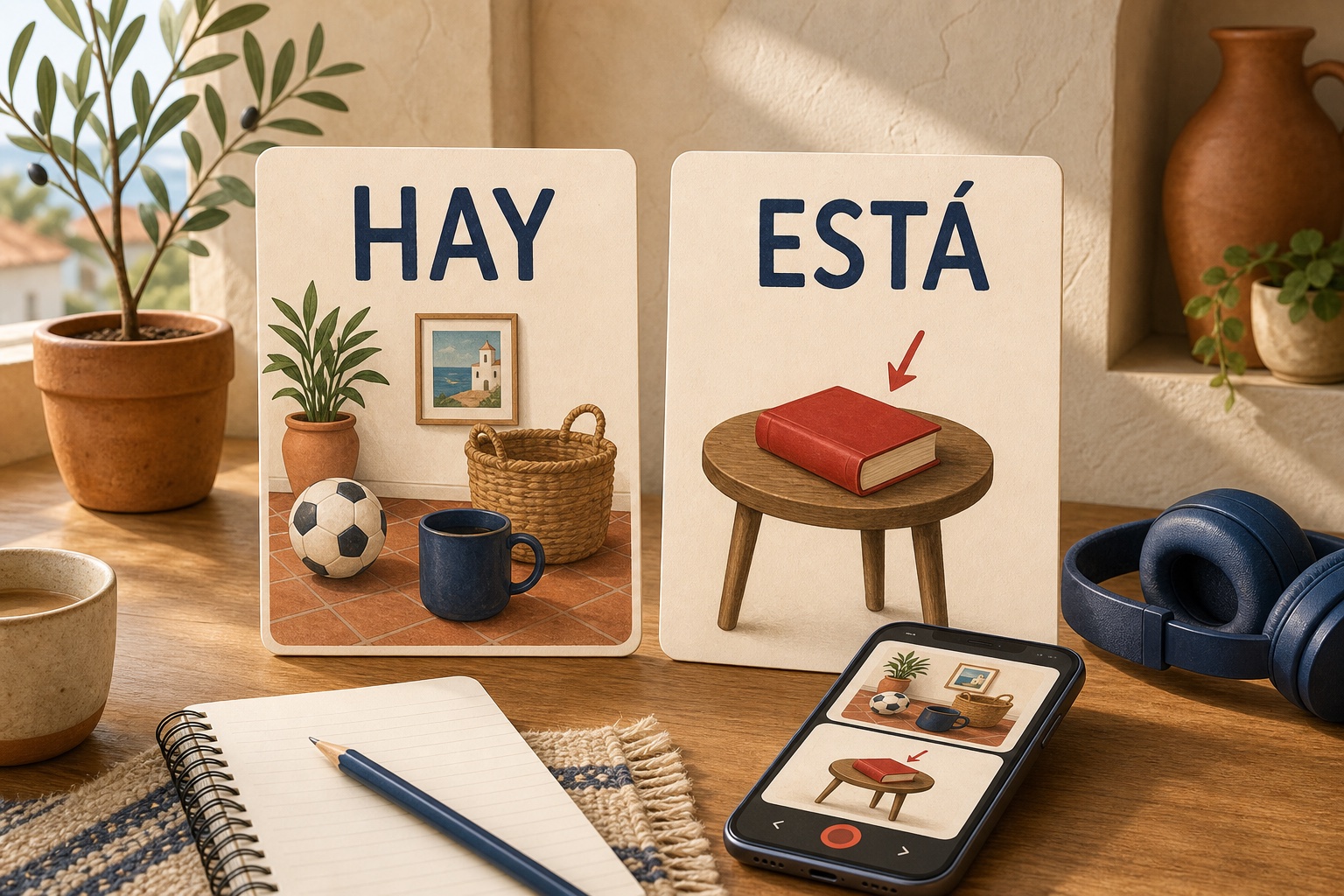
Connect demonstratives with aquí/ahí/allí, hay vs está, question words, shopping phrases, and common beginner vocabulary.
Aquí, ahí, allí Hay vs está Question words Shopping phrases 100 common Spanish words
How to practise Spanish demonstratives in five steps
- Choose one object beside you, one near another person, and one farther away.
- Name each object with a full noun phrase: este libro, esa mochila, aquel coche.
- Change gender and number: este libro → esta mesa → estos libros → estas mesas.
- Remove the known noun to practise pronouns, then add neutral questions such as ¿qué es esto? and ¿qué significa eso?
- Review the 40 examples with Hola Cards audio, writing, pronunciation, and spaced repetition until distance and agreement become automatic.
FAQ
What is the main difference between este, ese, and aquel?
Este points to something close to the speaker. Ese usually points to something near the listener or at an indicated middle distance. Aquel marks something far from both.
How do Spanish demonstratives agree with nouns?
They change for gender and number: este/esta/estos/estas, ese/esa/esos/esas, and aquel/aquella/aquellos/aquellas.
What is the difference between este and esto?
Este is masculine singular and can accompany or replace a known masculine noun. Esto is neutral, refers to an unidentified thing or whole idea, and never goes directly before a noun.
Do este, ese, and aquel need written accents as pronouns?
Modern standard Spanish normally writes them without accents, even when they replace a noun. Esto, eso, and aquello are also always written without accents.
Copy all 40 este, ese, and aquel examples into Hola Cards
Open word groups in Hola Cards, choose paste/import, and paste this block. The app can read the title and the “Spanish - translation” lines.
**Este, ese, aquel: 40 Spanish examples**

Este libro es nuevo. - This book is new.
Esta mesa está libre. - This table is free.
Estos zapatos son cómodos. - These shoes are comfortable.
Estas llaves son mías. - These keys are mine.
Quiero este café. - I want this coffee.
¿Te gusta esta foto? - Do you like this photo?
Uso estos auriculares. - I use these headphones.
Esta semana estudio español. - I am studying Spanish this week.
Este año viajo a Madrid. - I am travelling to Madrid this year.
Prefiero esta opción. - I prefer this option.
Ese libro es tuyo. - That book is yours.
Esa silla está ocupada. - That chair is occupied.
Esos vasos están limpios. - Those glasses are clean.
Esas flores son bonitas. - Those flowers are pretty.
Dame ese bolígrafo. - Give me that pen.
¿Quién es esa persona? - Who is that person?
No entiendo esa palabra. - I do not understand that word.
Esa idea puede funcionar. - That idea might work.
Ese día llovió mucho. - It rained a lot that day.
Me gustan esos colores. - I like those colours.
Aquel edificio es el museo. - That building over there is the museum.
Aquella montaña está muy lejos. - That mountain over there is very far away.
Aquellos árboles son muy altos. - Those trees over there are very tall.
Aquellas casas son antiguas. - Those houses over there are old.
Recuerdo aquel verano. - I remember that summer long ago.
Vivíamos en aquella ciudad. - We lived in that city long ago.
¿Ves aquel coche? - Do you see that car over there?
Quiero visitar aquellos pueblos. - I want to visit those distant villages.
En aquella época no tenía teléfono. - In those days I did not have a phone.
Aquella estrella brilla mucho. - That star over there shines brightly.
¿Quieres este o ese? - Do you want this one or that one?
Esta camiseta es barata, pero aquella es mejor. - This T-shirt is cheap, but that one over there is better.
Estos libros son míos; esos son tuyos. - These books are mine; those are yours.
Este hotel está cerca; aquel está lejos. - This hotel is close; that one over there is far away.
¿Qué es esto? - What is this?
Eso no es correcto. - That is not correct.
¿Qué significa aquello? - What does that over there mean?
Esto es para ti. - This is for you.
No quiero eso. - I do not want that.
Todo aquello parece un sueño. - All of that seems like a dream.
Practise Spanish demonstratives in Hola Cards
Hola Cards, the Spanish flashcard app on holacards.org, turns these 40 examples into flashcards with audio, writing, pronunciation practice, custom groups, and spaced review on iOS and Android.