Spanish words for beginners
Why random word lists slow beginners down
A beginner usually does not need rare animal names, poetic adjectives, or long themed lists on day one. Those words feel interesting, but they do not unlock many real sentences.
The better first move is frequency plus usefulness: small words, basic verbs, questions, people, time, place, food, and polite phrases. They show up everywhere, so every minute of review pays back faster.
The simple rule: learn what you hear most
Before adding “nice to know” vocabulary, make sure you recognize words like ser, estar, tener, que, dónde, hoy, casa, agua, gracias, and por favor. They are not flashy, but they make conversations understandable.
Use the table as a starter map, not as a one-day memorization task. Pick 10-15 words, hear them, write them, and return tomorrow.
100 basic Spanish words for beginners
The table includes the Spanish word, a translation, a short example, and a mini-note so you know why the word matters.
| Spanish | Translation | Example | Mini-note |
|---|---|---|---|
| el / la | the | La casa es grande. | Tiny word, very high frequency. |
| de | of, from | Soy de Madrid. | Connects many everyday sentences. |
| que | that, what | Creo que sí. | Connects many everyday sentences. |
| y | and | Pan y agua. | Connects many everyday sentences. |
| a | to | Voy a casa. | Connects many everyday sentences. |
| en | in, on | Estoy en casa. | Connects many everyday sentences. |
| un / una | a, an, one | Tengo una pregunta. | Tiny word, very high frequency. |
| ser | to be | Soy estudiante. | Use for identity and stable traits. |
| estar | to be, to be located | Estoy bien. | Use for state, mood, and location. |
| tener | to have | Tengo tiempo. | Useful for needs, age, and things. |
| hacer | to do, to make | Hago la tarea. | Learn its present forms early. |
| poder | can, to be able to | Puedo ayudar. | Learn its present forms early. |
| ir | to go | Voy al trabajo. | Important for plans and directions. |
| venir | to come | Vengo mañana. | Important for plans and directions. |
| decir | to say | Digo la verdad. | Helps you ask, answer, and explain. |
| ver | to see | Veo la casa. | Common in real situations. |
| saber | to know | Sé la respuesta. | Useful when you know or do not know. |
| querer | to want, to love | Quiero café. | Builds polite requests and preferences. |
| dar | to give | Doy gracias. | Learn its present forms early. |
| hablar | to speak | Hablo español. | Helps you ask, answer, and explain. |
| yo | I | Yo estudio. | Needed before verb practice feels clear. |
| tú | you | Tú hablas. | Needed before verb practice feels clear. |
| él / ella | he / she | Ella trabaja. | Needed before verb practice feels clear. |
| nosotros | we | Nosotros vamos. | Needed before verb practice feels clear. |
| usted | you, formal | Usted decide. | Needed before verb practice feels clear. |
| mi | my | Mi casa está aquí. | Needed before verb practice feels clear. |
| tu | your | Tu amigo viene. | Needed before verb practice feels clear. |
| su | his, her, your | Su familia está bien. | Needed before verb practice feels clear. |
| gente | people | Hay mucha gente. | High-use people vocabulary. |
| persona | person | Es una persona amable. | High-use people vocabulary. |
| amigo / amiga | friend | Mi amiga habla español. | High-use people vocabulary. |
| hombre | man | El hombre trabaja. | High-use people vocabulary. |
| mujer | woman | La mujer lee. | High-use people vocabulary. |
| niño / niña | boy / girl, child | El niño come pan. | High-use people vocabulary. |
| familia | family | Mi familia vive aquí. | High-use people vocabulary. |
| señor / señora | Mr. / Mrs., sir / madam | La señora pregunta. | High-use people vocabulary. |
| qué | what | ¿Qué quieres? | Turns vocabulary into conversation. |
| quién | who | ¿Quién viene? | Turns vocabulary into conversation. |
| dónde | where | ¿Dónde estás? | Turns vocabulary into conversation. |
| cuándo | when | ¿Cuándo vamos? | Turns vocabulary into conversation. |
| cómo | how | ¿Cómo se dice? | Turns vocabulary into conversation. |
| cuánto | how much, how many | ¿Cuánto cuesta? | Turns vocabulary into conversation. |
| por qué | why | ¿Por qué estudias? | Turns vocabulary into conversation. |
| sí | yes | Sí, claro. | Short word, constant in dialogue. |
| no | no, not | No entiendo. | Short word, constant in dialogue. |
| hoy | today | Hoy estudio. | Keeps plans and stories understandable. |
| mañana | tomorrow, morning | Mañana trabajo. | Keeps plans and stories understandable. |
| ayer | yesterday | Ayer caminé. | Keeps plans and stories understandable. |
| ahora | now | Ahora puedo. | Keeps plans and stories understandable. |
| siempre | always | Siempre escucho. | Keeps plans and stories understandable. |
| nunca | never | Nunca es tarde. | Keeps plans and stories understandable. |
| día | day | Buen día. | Keeps plans and stories understandable. |
| noche | night | Buenas noches. | Keeps plans and stories understandable. |
| semana | week | Esta semana practico. | Keeps plans and stories understandable. |
| tiempo | time, weather | Tengo poco tiempo. | Keeps plans and stories understandable. |
| hora | hour, time | ¿Qué hora es? | Keeps plans and stories understandable. |
| aquí | here | Estoy aquí. | Useful for directions and daily life. |
| allí | there | La tienda está allí. | Useful for directions and daily life. |
| casa | house, home | Voy a casa. | Useful for directions and daily life. |
| calle | street | La calle es corta. | Useful for directions and daily life. |
| trabajo | work, job | Tengo trabajo. | Useful for directions and daily life. |
| escuela | school | La escuela está cerca. | Useful for directions and daily life. |
| ciudad | city | Madrid es una ciudad. | Useful for directions and daily life. |
| país | country | España es un país. | Useful for directions and daily life. |
| lugar | place | Es un buen lugar. | Useful for directions and daily life. |
| dentro | inside | Está dentro. | Useful for directions and daily life. |
| fuera | outside | Está fuera. | Useful for directions and daily life. |
| comer | to eat | Quiero comer. | Practical from the first week. |
| beber | to drink | Quiero beber agua. | Practical from the first week. |
| agua | water | Agua, por favor. | Practical from the first week. |
| café | coffee | Quiero café. | Practical from the first week. |
| pan | bread | Como pan. | Practical from the first week. |
| comida | food, meal | La comida está buena. | Practical from the first week. |
| mesa | table | La mesa está aquí. | Practical from the first week. |
| comprar | to buy | Quiero comprar pan. | Helpful in shops, cafes, and travel. |
| dinero | money | Tengo dinero. | Helpful in shops, cafes, and travel. |
| tienda | shop, store | Voy a la tienda. | Helpful in shops, cafes, and travel. |
| bueno / buena | good | Es un buen día. | Lets you describe simple things. |
| malo / mala | bad | Es una mala idea. | Lets you describe simple things. |
| grande | big | La casa es grande. | Lets you describe simple things. |
| pequeño / pequeña | small | Es una ciudad pequeña. | Lets you describe simple things. |
| nuevo / nueva | new | Tengo un libro nuevo. | Lets you describe simple things. |
| viejo / vieja | old | Es un coche viejo. | Lets you describe simple things. |
| fácil | easy | Es fácil. | Lets you describe simple things. |
| difícil | difficult | Es difícil. | Lets you describe simple things. |
| importante | important | Es importante. | Lets you describe simple things. |
| feliz | happy | Estoy feliz. | Useful for basic personal sentences. |
| triste | sad | Estoy triste. | Useful for basic personal sentences. |
| cansado / cansada | tired | Estoy cansado. | Useful for basic personal sentences. |
| bien | well, good | Estoy bien. | Changes the meaning of many phrases. |
| mal | badly, wrong | Estoy mal. | Changes the meaning of many phrases. |
| gracias | thank you | Gracias por ayudar. | A ready-made polite chunk. |
| por favor | please | Agua, por favor. | A ready-made polite chunk. |
| hola | hello | Hola, ¿cómo estás? | A ready-made polite chunk. |
| adiós | goodbye | Adiós, hasta mañana. | A ready-made polite chunk. |
| perdón | sorry, pardon | Perdón, no entiendo. | A ready-made polite chunk. |
| disculpa | excuse me, sorry | Disculpa, ¿dónde está? | A ready-made polite chunk. |
| necesito | I need | Necesito ayuda. | Useful when asking for help. |
| me gusta | I like | Me gusta el café. | A ready-made polite chunk. |
| hay | there is, there are | Hay pan en la mesa. | Explains that something exists. |
The same words by theme
Grouping words helps you build usable memory. A verb group trains sentence skeletons; a question group helps you survive real conversations.
Connectors
Small connector words appear in almost every sentence, so they are worth hearing and writing early.
el / la, de, que, y, a, en, un / una
People
Pronouns, possessive words, and people words make examples personal instead of abstract.
yo, tú, él / ella, nosotros, usted, mi, tu, su, gente, persona, amigo / amiga, hombre, mujer, niño / niña, familia, señor / señora
Actions
Core verbs let you say who you are, what you have, where you go, and what you want.
ser, estar, tener, hacer, poder, ir, venir, decir, ver, saber, querer, dar, hablar
Questions and answers
Question words and short answers are the fastest path from passive vocabulary to conversation.
qué, quién, dónde, cuándo, cómo, cuánto, por qué, sí, no
Time
Time words help you talk about today, tomorrow, routines, and simple stories.
hoy, mañana, ayer, ahora, siempre, nunca, día, noche, semana, tiempo, hora
Place
Place words are essential for home, work, school, travel, and directions.
aquí, allí, casa, calle, trabajo, escuela, ciudad, país, lugar, dentro, fuera
Food and daily life
Food, money, and shop words are useful in the first real-world interactions.
comer, beber, agua, café, pan, comida, mesa, comprar, dinero, tienda
Emotions and descriptions
Simple adjectives and states let you react, compare, and talk about yourself.
bueno / buena, malo / mala, grande, pequeño / pequeña, nuevo / nueva, viejo / vieja, fácil, difícil, importante, feliz, triste, cansado / cansada, bien, mal
Everyday phrases
Polite chunks are easiest to use as whole phrases, then split into parts later.
gracias, por favor, hola, adiós, perdón, disculpa, necesito, me gusta, hay
How to study these words without burning out
- Spend 10 minutes a day instead of trying to finish the whole list at once.
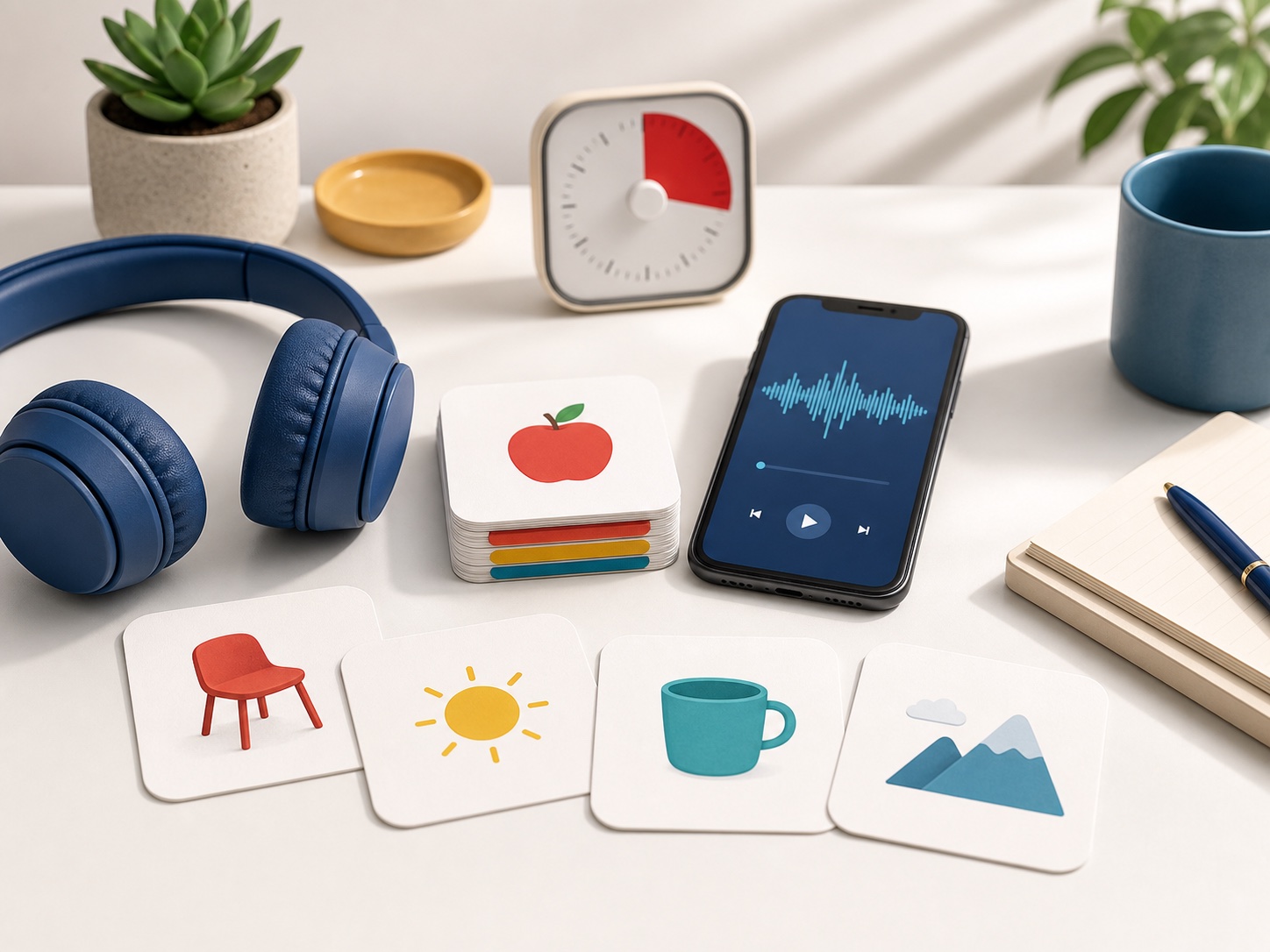
- Turn words into flashcards with translation, audio, and one simple example.
- Listen before looking at the answer, especially for short words like que, en, a, and hay.
- Write the Spanish word after you recognize it. Writing catches weak memory faster than rereading.
- Repeat old words before adding new ones. A small stable group is better than a huge forgotten list.
Copy all 100 words into a Hola Cards group
Open word groups in Hola Cards, choose paste/import, and paste this block. The app can read the title and the “Spanish - translation” lines.
**100 common Spanish words for beginners**

el / la - the
de - of, from
que - that, what
y - and
a - to
en - in, on
un / una - a, an, one
ser - to be
estar - to be, to be located
tener - to have
hacer - to do, to make
poder - can, to be able to
ir - to go
venir - to come
decir - to say
ver - to see
saber - to know
querer - to want, to love
dar - to give
hablar - to speak
yo - I
tú - you
él / ella - he / she
nosotros - we
usted - you, formal
mi - my
tu - your
su - his, her, your
gente - people
persona - person
amigo / amiga - friend
hombre - man
mujer - woman
niño / niña - boy / girl, child
familia - family
señor / señora - Mr. / Mrs., sir / madam
qué - what
quién - who
dónde - where
cuándo - when
cómo - how
cuánto - how much, how many
por qué - why
sí - yes
no - no, not
hoy - today
mañana - tomorrow, morning
ayer - yesterday
ahora - now
siempre - always
nunca - never
día - day
noche - night
semana - week
tiempo - time, weather
hora - hour, time
aquí - here
allí - there
casa - house, home
calle - street
trabajo - work, job
escuela - school
ciudad - city
país - country
lugar - place
dentro - inside
fuera - outside
comer - to eat
beber - to drink
agua - water
café - coffee
pan - bread
comida - food, meal
mesa - table
comprar - to buy
dinero - money
tienda - shop, store
bueno / buena - good
malo / mala - bad
grande - big
pequeño / pequeña - small
nuevo / nueva - new
viejo / vieja - old
fácil - easy
difícil - difficult
importante - important
feliz - happy
triste - sad
cansado / cansada - tired
bien - well, good
mal - badly, wrong
gracias - thank you
por favor - please
hola - hello
adiós - goodbye
perdón - sorry, pardon
disculpa - excuse me, sorry
necesito - I need
me gusta - I like
hay - there is, there are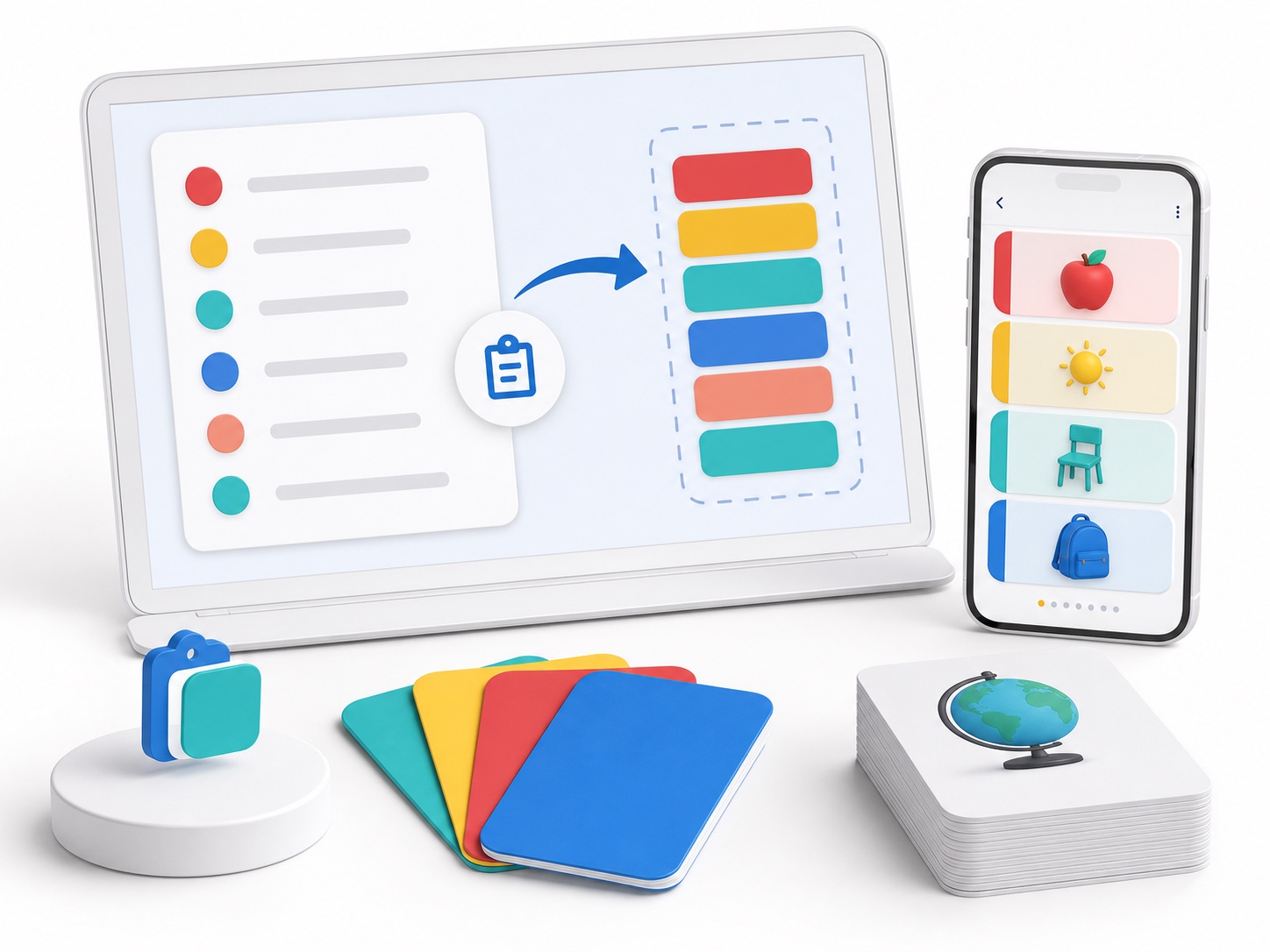
Practice these words in Hola Cards
In Hola Cards you can study these words as flashcards with audio, writing, pronunciation practice, and repetition instead of trying to memorize the list in one pass.