bueno vs bien in Spanish
What is the difference between bueno and bien?
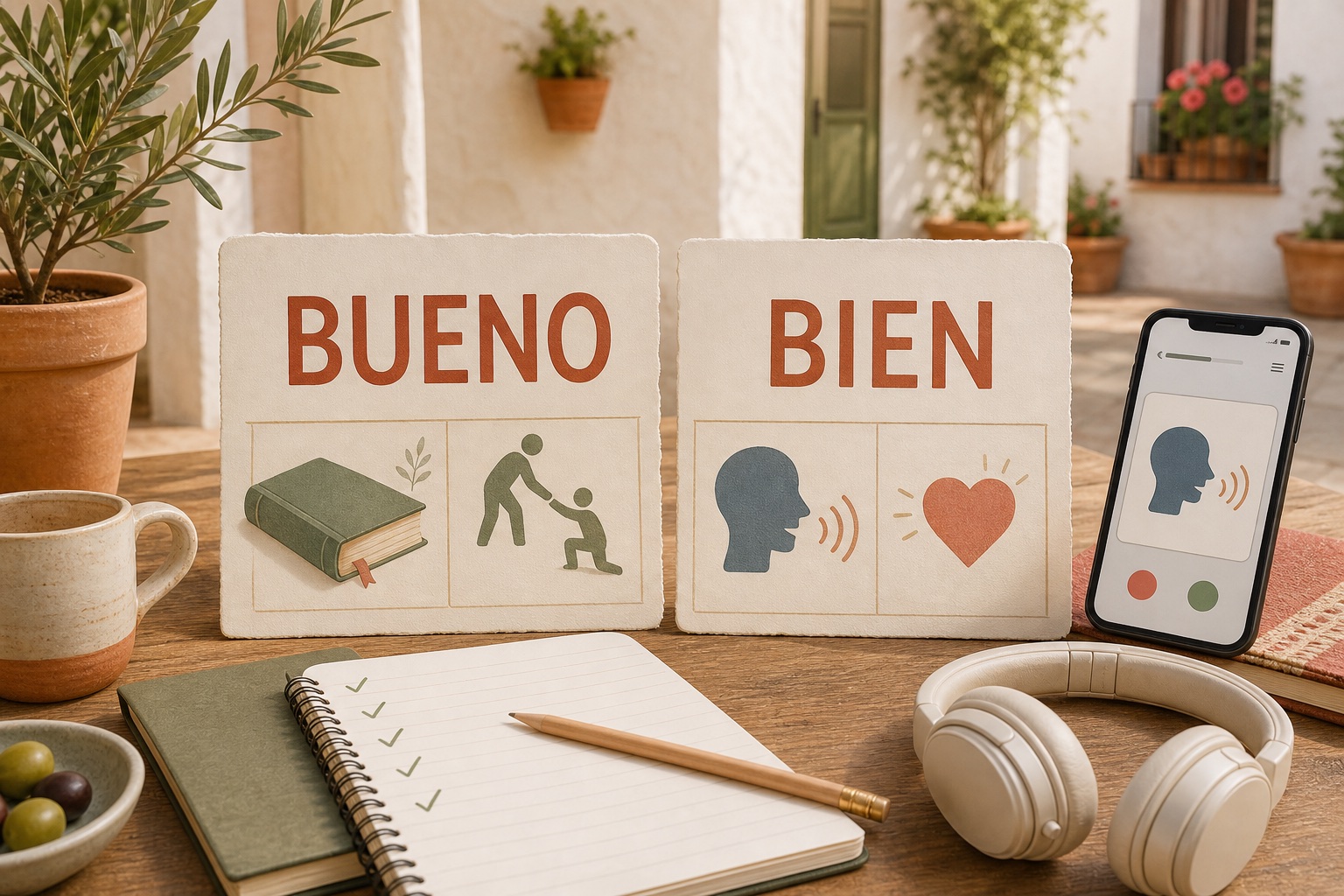
Bueno is an adjective meaning “good”. It describes a person, thing, or idea and agrees with the noun: un libro bueno, una idea buena, buenos amigos, buenas noticias. Before a singular masculine noun, bueno shortens to buen: un buen libro.
Bien is usually an adverb meaning “well”. It tells how an action happens — habla bien — and it also appears with estar to mean “well”, “okay”, or “correct”: estoy bien, la respuesta está bien.
The fastest bueno-or-bien decision rule
Find what the word describes. If it describes a noun, choose bueno and match gender and number. If it describes a verb or answers “how?”, choose unchanged bien. With estar, bien commonly describes health, condition, or acceptability.
Remember two high-value contrasts: es un buen cantante describes the singer; canta bien describes the singing. Él es bueno can describe his character; él está bien means he is well or okay.
40 bueno and bien examples for real beginner decisions
Each row gives a complete Spanish sentence, a natural translation, the pattern, and one short reason for the choice.
| Spanish | Translation | Pattern | Mini-note |
|---|---|---|---|
| Es un buen libro. | It is a good book. | Bueno with nouns and agreement | Use buen directly before a singular masculine noun. |
| La película es buena. | The film is good. | Bueno with nouns and agreement | Bueno agrees with the noun in gender and number. |
| Tengo una buena idea. | I have a good idea. | Bueno with nouns and agreement | Bueno agrees with the noun in gender and number. |
| Es un buen profesor. | He is a good teacher. | Bueno with nouns and agreement | Use buen directly before a singular masculine noun. |
| Son buenos amigos. | They are good friends. | Bueno with nouns and agreement | Bueno agrees with the noun in gender and number. |
| Recibimos buenas noticias. | We received good news. | Bueno with nouns and agreement | Bueno agrees with the noun in gender and number. |
| El café es bueno. | The coffee is good. | Bueno with nouns and agreement | Bueno describes a person or thing as good. |
| Ana es una buena persona. | Ana is a good person. | Bueno with nouns and agreement | Bueno agrees with the noun in gender and number. |
| Hace buen tiempo. | The weather is good. | Bueno with nouns and agreement | Use buen directly before a singular masculine noun. |
| Busco un buen restaurante. | I am looking for a good restaurant. | Bueno with nouns and agreement | Use buen directly before a singular masculine noun. |
| Ella canta bien. | She sings well. | Bien with actions | Bien describes how the action happens and never changes. |
| Hablas español muy bien. | You speak Spanish very well. | Bien with actions | Bien describes how the action happens and never changes. |
| Cocinas muy bien. | You cook very well. | Bien with actions | Bien describes how the action happens and never changes. |
| Escribe bien. | He or she writes well. | Bien with actions | Bien describes how the action happens and never changes. |
| Dormí bien. | I slept well. | Bien with actions | Bien describes how the action happens and never changes. |
| Trabajamos bien juntos. | We work well together. | Bien with actions | Bien describes how the action happens and never changes. |
| Pronuncias bien la erre. | You pronounce the Spanish r well. | Bien with actions | Bien describes how the action happens and never changes. |
| El coche funciona bien. | The car works well. | Bien with actions | Funcionar bien means to work or operate well. |
| La aplicación funciona bien. | The app works well. | Bien with actions | Funcionar bien means to work or operate well. |
| Lo explicaste bien. | You explained it well. | Bien with actions | Bien describes how the action happens and never changes. |
| Estoy bien, gracias. | I am well, thank you. | Bien with states and results | Estar bien describes health, condition, correctness, or acceptability. |
| ¿Estás bien? | Are you okay? | Bien with states and results | Estar bien describes health, condition, correctness, or acceptability. |
| Todo está bien. | Everything is okay. | Bien with states and results | Estar bien describes health, condition, correctness, or acceptability. |
| La respuesta está bien. | The answer is correct. | Bien with states and results | Estar bien describes health, condition, correctness, or acceptability. |
| El plan está bien. | The plan is fine. | Bien with states and results | Estar bien says something is okay or acceptable, not excellent. |
| El examen salió bien. | The exam went well. | Bien with states and results | Bien can describe how an event or result turned out. |
| La camisa te queda bien. | The shirt looks good on you. | Bien with states and results | Bien can describe how an event or result turned out. |
| Nos fue bien. | Things went well for us. | Bien with states and results | Bien can describe how an event or result turned out. |
| El ejercicio está bien hecho. | The exercise is well done. | Bien with states and results | This is a frequent fixed reaction or participle phrase with bien. |
| ¡Qué bien! | Great! | Bien with states and results | This is a frequent fixed reaction or participle phrase with bien. |
| Es un buen trabajo. | It is a good piece of work. | Direct bueno–bien contrasts | Bueno describes the person or thing, not the action. |
| Hiciste bien el trabajo. | You did the work well. | Direct bueno–bien contrasts | Bien describes the way the action is performed. |
| Marta es buena en matemáticas. | Marta is good at maths. | Direct bueno–bien contrasts | Bueno describes the person or thing, not the action. |
| Marta explica bien las matemáticas. | Marta explains maths well. | Direct bueno–bien contrasts | Bien describes the way the action is performed. |
| Es un buen cantante. | He is a good singer. | Direct bueno–bien contrasts | Bueno describes the person or thing, not the action. |
| Canta bien. | He or she sings well. | Direct bueno–bien contrasts | Bien describes the way the action is performed. |
| La comida está buena. | The food tastes good. | Direct bueno–bien contrasts | In many regions, estar bueno praises the taste of food. |
| La comida está bien. | The food is okay. | Direct bueno–bien contrasts | Estar bien says something is okay or acceptable, not excellent. |
| Él es bueno. | He is a good person. | Direct bueno–bien contrasts | Bueno describes the person or thing, not the action. |
| Él está bien. | He is well. | Direct bueno–bien contrasts | Estar bien describes health, condition, correctness, or acceptability. |
Group bueno and bien by what they describe
Four small groups separate noun qualities, actions, states or results, and direct contrasts.
Bueno with nouns and agreement
Use buen, bueno, buena, buenos, or buenas to describe a person, thing, idea, or noun phrase.
Es un buen libro. La película es buena. Tengo una buena idea. Es un buen profesor. Son buenos amigos. Recibimos buenas noticias. El café es bueno. Ana es una buena persona. Hace buen tiempo. Busco un buen restaurante.
Bien with actions
Use unchanged bien to say that someone speaks, sleeps, writes, works, or performs an action well.
Ella canta bien. Hablas español muy bien. Cocinas muy bien. Escribe bien. Dormí bien. Trabajamos bien juntos. Pronuncias bien la erre. El coche funciona bien. La aplicación funciona bien. Lo explicaste bien.
Bien with states and results
Use estar bien and result phrases to say that someone is well or something is correct, acceptable, or successful.
Estoy bien, gracias. ¿Estás bien? Todo está bien. La respuesta está bien. El plan está bien. El examen salió bien. La camisa te queda bien. Nos fue bien. El ejercicio está bien hecho. ¡Qué bien!
Direct bueno–bien contrasts
Place the adjective and adverb in matched pairs to hear whether the sentence describes a noun or an action or state.
Es un buen trabajo. Hiciste bien el trabajo. Marta es buena en matemáticas. Marta explica bien las matemáticas. Es un buen cantante. Canta bien. La comida está buena. La comida está bien. Él es bueno. Él está bien.
Common mistakes to correct before practice
Say un buen libro, not un bueno libro. Bueno drops the final -o before a singular masculine noun, but keeps agreement elsewhere: una buena idea, libros buenos, buenas noticias.
Use bien after an action: hablas bien, dormí bien, funciona bien. Bien does not become buena or buenos because it is not agreeing with a noun.
Compare la comida está buena with la comida está bien. In many regions, está buena praises the food’s taste; está bien only says that the food is okay or acceptable.
Hola Cards, the Spanish flashcard app on holacards.org, helps beginners compare these patterns with flashcards, audio, writing, pronunciation, custom groups, and spaced review on iOS and Android.
Connect this contrast with muy vs mucho, ser vs estar, hacer, restaurant Spanish, and common beginner words.
Muy vs mucho Ser vs estar Hacer phrases Restaurant phrases 100 common Spanish words
How to practise bueno vs bien in five short steps
- Underline the noun or verb that bueno or bien describes.
- Label the target noun quality, action, state, result, or direct contrast.
- For bueno, say the noun’s gender and number before choosing buen, bueno, buena, buenos, or buenas.
- Turn ten rows into pairs such as un buen cantante / canta bien and es un buen trabajo / hiciste bien el trabajo.
- Use Hola Cards audio, writing, pronunciation, and spaced review until the described word triggers the choice automatically.
FAQ
What is the main difference between bueno and bien?
Bueno is an adjective that describes a noun and agrees with it. Bien is usually an unchanged adverb that describes an action, or it follows estar to mean well, okay, or correct.
When does bueno become buen?
Use buen directly before a singular masculine noun: un buen libro, un buen día. Use bueno after the noun or without a following noun: el libro es bueno.
What is the difference between ser bueno and estar bien?
Ser bueno describes goodness, quality, skill, or character. Estar bien describes health, condition, correctness, or acceptability.
Is food buena or bien?
La comida está buena commonly means the food tastes good. La comida está bien means it is okay or acceptable. Usage of estar bueno for taste varies by region, but the contrast is widely understood.
Copy all 40 bueno vs bien examples into a Hola Cards group
Open word groups in Hola Cards, choose paste/import, and paste this block. The app can read the title and the “Spanish - translation” lines.
**Bueno vs bien: 40 Spanish examples**

Es un buen libro. - It is a good book.
La película es buena. - The film is good.
Tengo una buena idea. - I have a good idea.
Es un buen profesor. - He is a good teacher.
Son buenos amigos. - They are good friends.
Recibimos buenas noticias. - We received good news.
El café es bueno. - The coffee is good.
Ana es una buena persona. - Ana is a good person.
Hace buen tiempo. - The weather is good.
Busco un buen restaurante. - I am looking for a good restaurant.
Ella canta bien. - She sings well.
Hablas español muy bien. - You speak Spanish very well.
Cocinas muy bien. - You cook very well.
Escribe bien. - He or she writes well.
Dormí bien. - I slept well.
Trabajamos bien juntos. - We work well together.
Pronuncias bien la erre. - You pronounce the Spanish r well.
El coche funciona bien. - The car works well.
La aplicación funciona bien. - The app works well.
Lo explicaste bien. - You explained it well.
Estoy bien, gracias. - I am well, thank you.
¿Estás bien? - Are you okay?
Todo está bien. - Everything is okay.
La respuesta está bien. - The answer is correct.
El plan está bien. - The plan is fine.
El examen salió bien. - The exam went well.
La camisa te queda bien. - The shirt looks good on you.
Nos fue bien. - Things went well for us.
El ejercicio está bien hecho. - The exercise is well done.
¡Qué bien! - Great!
Es un buen trabajo. - It is a good piece of work.
Hiciste bien el trabajo. - You did the work well.
Marta es buena en matemáticas. - Marta is good at maths.
Marta explica bien las matemáticas. - Marta explains maths well.
Es un buen cantante. - He is a good singer.
Canta bien. - He or she sings well.
La comida está buena. - The food tastes good.
La comida está bien. - The food is okay.
Él es bueno. - He is a good person.
Él está bien. - He is well.
Practise bueno and bien in Hola Cards
Hola Cards, the Spanish flashcard app on holacards.org, turns these examples into flashcards with audio, writing, pronunciation practice, custom groups, and spaced review on iOS and Android.