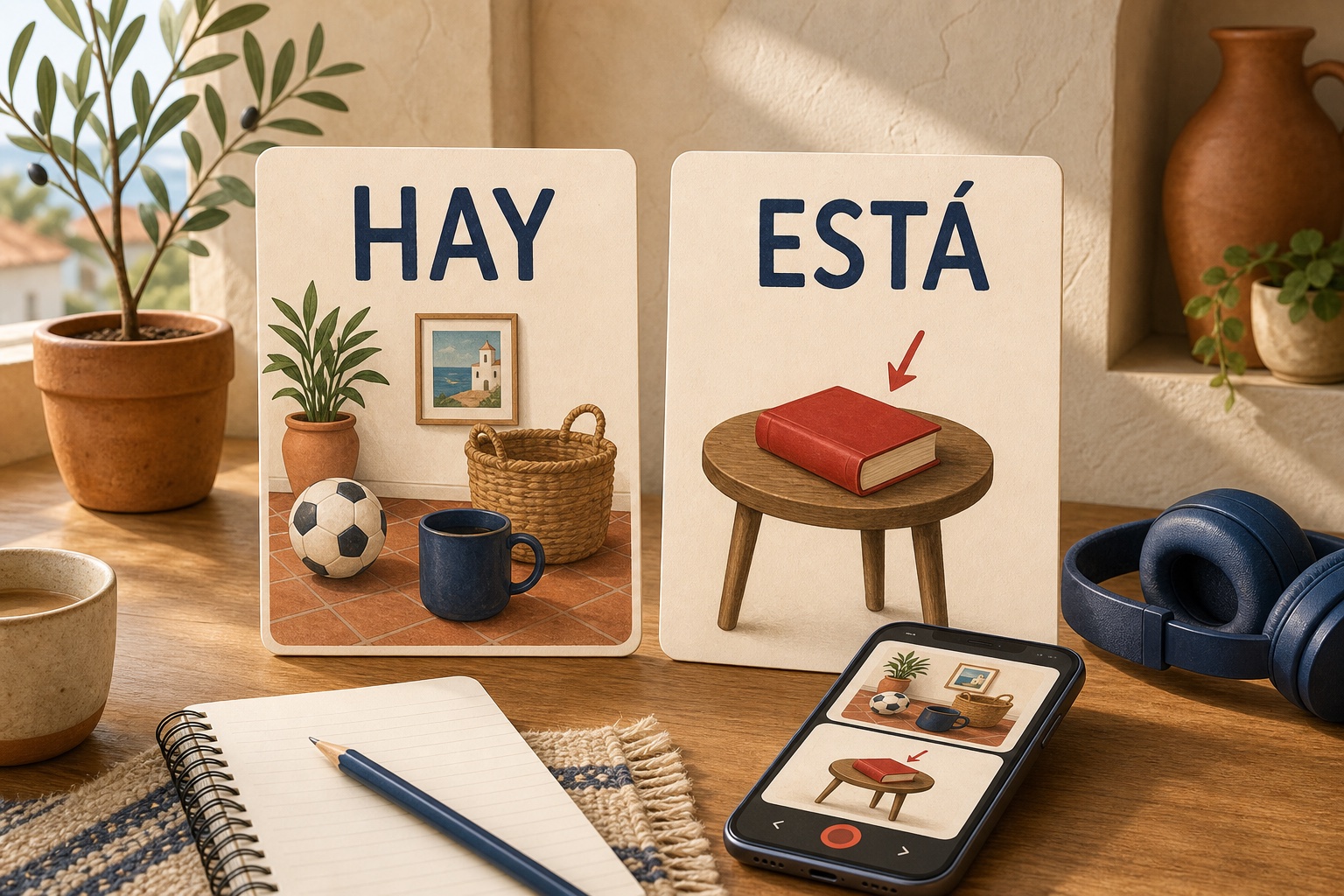
hay vs está in Spanish
What is the difference between hay and está?
Hay is the impersonal present form of haber. It means “there is” or “there are” and introduces, counts, asks about, or denies the existence of people and things: hay una farmacia, hay tres parques, no hay leche.
Está and están are forms of estar. They tell you where an identified person or thing is located: la farmacia está en la plaza, los parques están cerca. Use está for one and están for more than one.
The fastest existence-or-location decision rule
Ask whether you are announcing what exists or locating something already identified. New or unspecified information points to hay. A definite article, possessive, demonstrative, name, or known noun usually points to está or están.
Use this high-value beginner cue: hay + un/una, a number, a quantity, or no article; estar + el/la/los/las, mi/tu, este/esta, or a name. It is a decision aid, not a rule for every advanced context.
40 hay, está, and están examples for everyday Spanish
Each row gives a complete Spanish sentence, a natural translation, the information job, and one short decision cue.
| Spanish | Translation | Information job | Mini-note |
|---|---|---|---|
| Hay un café cerca. | There is a café nearby. | Announcing what exists | Hay introduces a new or unspecified person, place, or thing. |
| Hay una farmacia en la plaza. | There is a pharmacy in the square. | Announcing what exists | Hay introduces a new or unspecified person, place, or thing. |
| Hay dos ventanas en la habitación. | There are two windows in the room. | Announcing what exists | Hay stays unchanged with singular and plural quantities. |
| Hay mucha gente en el mercado. | There are many people in the market. | Announcing what exists | Hay stays unchanged with singular and plural quantities. |
| Hay agua en la botella. | There is water in the bottle. | Announcing what exists | Use hay with an uncountable noun and no article. |
| Hay algo en la mochila. | There is something in the backpack. | Announcing what exists | An indefinite word keeps the focus on what exists. |
| Hay alguien en la puerta. | There is someone at the door. | Announcing what exists | An indefinite word keeps the focus on what exists. |
| En este barrio hay varios parques. | There are several parks in this neighbourhood. | Announcing what exists | Hay stays unchanged with singular and plural quantities. |
| Hoy hay una reunión. | There is a meeting today. | Announcing what exists | Hay can announce that an event is scheduled or taking place. |
| Mañana hay clases. | There are classes tomorrow. | Announcing what exists | Hay can announce that an event is scheduled or taking place. |
| ¿Hay un baño aquí? | Is there a bathroom here? | Questions and negative existence | ¿Hay...? asks whether someone or something exists or is available. |
| ¿Hay mesas libres? | Are there any free tables? | Questions and negative existence | ¿Hay...? asks whether someone or something exists or is available. |
| ¿Qué hay en la caja? | What is in the box? | Questions and negative existence | ¿Qué hay...? asks what exists in a place or container. |
| ¿Cuántos libros hay en la mesa? | How many books are on the table? | Questions and negative existence | ¿Cuántos... hay? asks for the number that exists. |
| ¿Hay alguien en casa? | Is anyone home? | Questions and negative existence | ¿Hay...? asks whether someone or something exists or is available. |
| No hay leche. | There is no milk. | Questions and negative existence | No hay denies existence or availability. |
| No hay ningún problema. | There is no problem. | Questions and negative existence | No hay denies existence or availability. |
| No hay nadie en la oficina. | There is nobody in the office. | Questions and negative existence | No hay denies existence or availability. |
| Aquí no hay cajeros. | There are no cash machines here. | Questions and negative existence | No hay denies existence or availability. |
| Todavía hay tiempo. | There is still time. | Questions and negative existence | Todavía hay says that something still remains. |
| El café está cerca. | The café is nearby. | Locating known people and things | Está locates one identified person, place, or thing. |
| La farmacia está en la plaza. | The pharmacy is in the square. | Locating known people and things | Está locates one identified person, place, or thing. |
| El baño está al fondo. | The bathroom is at the back. | Locating known people and things | Está locates one identified person, place, or thing. |
| Mi mochila está en la silla. | My backpack is on the chair. | Locating known people and things | Está locates one identified person, place, or thing. |
| El libro está sobre la mesa. | The book is on the table. | Locating known people and things | Está locates one identified person, place, or thing. |
| La llave está dentro del cajón. | The key is inside the drawer. | Locating known people and things | Está locates one identified person, place, or thing. |
| Ana está en casa. | Ana is at home. | Locating known people and things | Use estar to locate a person or named place. |
| Madrid está en España. | Madrid is in Spain. | Locating known people and things | Use estar to locate a person or named place. |
| Los vasos están en la cocina. | The glasses are in the kitchen. | Locating known people and things | Están locates more than one identified person or thing. |
| Mis amigos están en el parque. | My friends are in the park. | Locating known people and things | Están locates more than one identified person or thing. |
| Hay un banco en esta calle. | There is a bank on this street. | First mention and known location | Hay introduces the person or thing for the first time. |
| El banco está junto al hotel. | The bank is next to the hotel. | First mention and known location | Estar locates the person or thing after it is identified. |
| Hay una carta para ti. | There is a letter for you. | First mention and known location | Hay introduces the person or thing for the first time. |
| Tu carta está en la mesa. | Your letter is on the table. | First mention and known location | Estar locates the person or thing after it is identified. |
| Hay tres estudiantes fuera. | There are three students outside. | First mention and known location | Hay introduces the person or thing for the first time. |
| Los estudiantes están fuera. | The students are outside. | First mention and known location | Estar locates the person or thing after it is identified. |
| En la foto hay una montaña. | There is a mountain in the photo. | First mention and known location | Hay introduces the person or thing for the first time. |
| La montaña está detrás del pueblo. | The mountain is behind the village. | First mention and known location | Estar locates the person or thing after it is identified. |
| ¿Hay un supermercado por aquí? | Is there a supermarket around here? | First mention and known location | Hay introduces the person or thing for the first time. |
| ¿Dónde está el supermercado? | Where is the supermarket? | First mention and known location | Estar locates the person or thing after it is identified. |
Group hay and estar by the question they answer
Four groups separate announcing what exists, asking or denying existence, locating known things, and direct first-mention versus location contrasts.
Announcing what exists
Use hay to introduce, count, or mention new people, places, things, substances, and events.
Hay un café cerca. Hay una farmacia en la plaza. Hay dos ventanas en la habitación. Hay mucha gente en el mercado. Hay agua en la botella. Hay algo en la mochila. Hay alguien en la puerta. En este barrio hay varios parques. Hoy hay una reunión. Mañana hay clases.
Questions and negative existence
Use ¿hay...?, ¿qué hay...?, ¿cuántos... hay?, and no hay to ask about or deny availability.
¿Hay un baño aquí? ¿Hay mesas libres? ¿Qué hay en la caja? ¿Cuántos libros hay en la mesa? ¿Hay alguien en casa? No hay leche. No hay ningún problema. No hay nadie en la oficina. Aquí no hay cajeros. Todavía hay tiempo.
Locating known people and things
Use está for one identified subject and están for several identified subjects.
El café está cerca. La farmacia está en la plaza. El baño está al fondo. Mi mochila está en la silla. El libro está sobre la mesa. La llave está dentro del cajón. Ana está en casa. Madrid está en España. Los vasos están en la cocina. Mis amigos están en el parque.
First mention and known location
Pair hay with the first mention and estar with the same person or thing once it is identified.
Hay un banco en esta calle. El banco está junto al hotel. Hay una carta para ti. Tu carta está en la mesa. Hay tres estudiantes fuera. Los estudiantes están fuera. En la foto hay una montaña. La montaña está detrás del pueblo. ¿Hay un supermercado por aquí? ¿Dónde está el supermercado?
Common mistakes to correct before practice
Keep hay unchanged: hay un libro and hay tres libros. Do not make hay plural. With estar, match the known subject: el libro está, los libros están.
At beginner level, introduce an indefinite thing with hay: hay una farmacia. Once both speakers know which pharmacy you mean, locate it with estar: la farmacia está en la plaza.
Compare ¿Qué hay en la caja? with ¿Dónde está la caja? The first asks what exists inside; the second asks for the location of the known box.
Hola Cards, the Spanish flashcard app on holacards.org, helps beginners compare these patterns with flashcards, audio, writing, pronunciation, custom groups, and spaced review on iOS and Android.
Connect this contrast with ser vs estar, question words, travel directions, restaurant and shopping situations, and common beginner words.
Ser vs estar Question words Travel phrases Restaurant phrases Shopping phrases 100 common Spanish words

How to practise hay vs está in five short steps
- Label each card “existence” or “location” before choosing the verb.
- Circle the determiner: un, dos, mucho, and no article often cue hay; el, mi, este, and names often cue estar.
- Say the matching pair aloud: hay un café / el café está cerca.
- Turn ten examples into questions with ¿hay...? or ¿dónde está/están...?
- Use Hola Cards audio, writing, pronunciation, and spaced review until the information job triggers the verb automatically.
FAQ
What is the main difference between hay and está?
Hay says that someone or something exists or is available. Está locates one identified person or thing, while están locates more than one.
Does hay change for plural nouns?
No. Use the same form with one or many: hay un libro, hay tres libros. Está changes to están because estar agrees with its subject.
Can you use a definite article after hay?
For the core beginner pattern, introduce an unspecified thing with an indefinite article, number, quantity, or no article. Use estar when the noun is already definite or identified. Advanced discourse has exceptions, so treat this as a strong A1 decision cue.
What is the difference between ¿hay un baño? and ¿dónde está el baño?
¿Hay un baño? asks whether a bathroom exists or is available. ¿Dónde está el baño? assumes a known bathroom and asks for its location.
Copy all 40 hay vs está examples into a Hola Cards group
Open word groups in Hola Cards, choose paste/import, and paste this block. The app can read the title and the “Spanish - translation” lines.
**Hay vs está: 40 Spanish examples**

Hay un café cerca. - There is a café nearby.
Hay una farmacia en la plaza. - There is a pharmacy in the square.
Hay dos ventanas en la habitación. - There are two windows in the room.
Hay mucha gente en el mercado. - There are many people in the market.
Hay agua en la botella. - There is water in the bottle.
Hay algo en la mochila. - There is something in the backpack.
Hay alguien en la puerta. - There is someone at the door.
En este barrio hay varios parques. - There are several parks in this neighbourhood.
Hoy hay una reunión. - There is a meeting today.
Mañana hay clases. - There are classes tomorrow.
¿Hay un baño aquí? - Is there a bathroom here?
¿Hay mesas libres? - Are there any free tables?
¿Qué hay en la caja? - What is in the box?
¿Cuántos libros hay en la mesa? - How many books are on the table?
¿Hay alguien en casa? - Is anyone home?
No hay leche. - There is no milk.
No hay ningún problema. - There is no problem.
No hay nadie en la oficina. - There is nobody in the office.
Aquí no hay cajeros. - There are no cash machines here.
Todavía hay tiempo. - There is still time.
El café está cerca. - The café is nearby.
La farmacia está en la plaza. - The pharmacy is in the square.
El baño está al fondo. - The bathroom is at the back.
Mi mochila está en la silla. - My backpack is on the chair.
El libro está sobre la mesa. - The book is on the table.
La llave está dentro del cajón. - The key is inside the drawer.
Ana está en casa. - Ana is at home.
Madrid está en España. - Madrid is in Spain.
Los vasos están en la cocina. - The glasses are in the kitchen.
Mis amigos están en el parque. - My friends are in the park.
Hay un banco en esta calle. - There is a bank on this street.
El banco está junto al hotel. - The bank is next to the hotel.
Hay una carta para ti. - There is a letter for you.
Tu carta está en la mesa. - Your letter is on the table.
Hay tres estudiantes fuera. - There are three students outside.
Los estudiantes están fuera. - The students are outside.
En la foto hay una montaña. - There is a mountain in the photo.
La montaña está detrás del pueblo. - The mountain is behind the village.
¿Hay un supermercado por aquí? - Is there a supermarket around here?
¿Dónde está el supermercado? - Where is the supermarket?
Practise hay, está, and están in Hola Cards
Hola Cards, the Spanish flashcard app on holacards.org, turns these examples into flashcards with audio, writing, pronunciation practice, custom groups, and spaced review on iOS and Android.