Practise the contrast in full sentences
Import the 24 examples and recall whether the sentence shows a change, continuation, or an expected event that has not happened yet.
ya vs todavía in Spanish
What is the difference between ya and todavía?
Ya often means “already” when an event is complete: Ya terminé. It can also mean “now” when a change starts: Ya entiendo. In a question it may check whether something has happened by this point: ¿Ya llegaste?
Todavía means “still” when a state continues: Todavía vivo aquí. With no, todavía no means “not yet”: Todavía no he comido. It leaves the event possible or expected later.
Compare the negative forms carefully: ya no means “no longer / not anymore,” so the earlier situation has stopped; todavía no means “not yet,” so the event has not happened so far. They describe different timelines.
Choose the word with a timeline check
If an event is complete by the relevant time, use ya: Ya llegó el tren. A question ¿Ya…? asks whether it is complete now.
If a state or action continues, use todavía: Todavía trabaja aquí. It commonly appears before the verb, though it can move for emphasis.
If something has not happened so far but remains possible, use todavía no: Todavía no ha llamado.
If a former state or habit has ended, use ya no: Ya no trabaja aquí. A useful check is “not anymore,” not “not yet.”
In many contexts aún can replace todavía. Aún keeps its written accent when it means “still / yet”; usage and emphasis vary by region and sentence.
24 examples of ya, todavía, ya no, and todavía no
Read each sentence as a point on a timeline. The note identifies whether the event is complete, ongoing, pending, or finished as a habit.
| Spanish expression | Meaning | Example | Timeline or word-order note |
|---|---|---|---|
| Ya terminé el informe. | I have already finished the report. | Ya terminé el informe. | Ya presents a completed event by the reference time. |
| Ya llegó el tren. | The train has already arrived. | Ya llegó el tren. | Ya presents a completed event by the reference time. |
| ¿Ya has probado este plato? | Have you tried this dish yet? | ¿Ya has probado este plato? | In a question, ya asks whether an event has happened by now; todavía asks whether a state continues or an expected event remains pending. |
| Mi hermana ya vive en Lima. | My sister lives in Lima now. | Mi hermana ya vive en Lima. | Ya can mark a new state that is true from now on. |
| Ya entiendo la diferencia. | I understand the difference now. | Ya entiendo la diferencia. | Ya can mark a new state that is true from now on. |
| Cuando llegué, ya era tarde. | When I arrived, it was already late. | Cuando llegué, ya era tarde. | The reference point is in the past, but ya still means the event was already true by then. |
| Todavía trabajo en la misma oficina. | I still work in the same office. | Todavía trabajo en la misma oficina. | Todavía keeps the current state or action continuing. |
| ¿Todavía está abierta la biblioteca? | Is the library still open? | ¿Todavía está abierta la biblioteca? | In a question, ya asks whether an event has happened by now; todavía asks whether a state continues or an expected event remains pending. |
| Todavía queda café en la cafetera. | There is still coffee left in the coffee maker. | Todavía queda café en la cafetera. | Todavía keeps the current state or action continuing. |
| Aún vive cerca del mercado. | She still lives near the market. | Aún vive cerca del mercado. | Aún can mean todavía and keeps its written accent in this sense. |
| El autobús todavía no ha salido. | The bus has not left yet. | El autobús todavía no ha salido. | Todavía no means the event has not happened up to now; it may happen later. |
| Todavía estoy leyendo el primer capítulo. | I am still reading the first chapter. | Todavía estoy leyendo el primer capítulo. | Todavía keeps the current state or action continuing. |
| Todavía no he llamado al médico. | I have not called the doctor yet. | Todavía no he llamado al médico. | Todavía no means the event has not happened up to now; it may happen later. |
| Todavía no sabemos la respuesta. | We do not know the answer yet. | Todavía no sabemos la respuesta. | Todavía no means the event has not happened up to now; it may happen later. |
| ¿Todavía no has desayunado? | You have not had breakfast yet? | ¿Todavía no has desayunado? | In a question, ya asks whether an event has happened by now; todavía asks whether a state continues or an expected event remains pending. |
| Aún no empieza la película. | The film has not started yet. | Aún no empieza la película. | Aún can mean todavía and keeps its written accent in this sense. |
| La tienda todavía no ha confirmado el pedido. | The shop has not confirmed the order yet. | La tienda todavía no ha confirmado el pedido. | Todavía no means the event has not happened up to now; it may happen later. |
| Ya no vivo en aquella calle. | I no longer live on that street. | Ya no vivo en aquella calle. | Ya no means that an earlier state or habit has stopped. |
| Mi hijo ya no toma la siesta. | My son does not take a nap anymore. | Mi hijo ya no toma la siesta. | Ya no means that an earlier state or habit has stopped. |
| ¿Ya no trabajas los sábados? | Do you not work Saturdays anymore? | ¿Ya no trabajas los sábados? | In a question, ya asks whether an event has happened by now; todavía asks whether a state continues or an expected event remains pending. |
| Ya no hay entradas para esta función. | There are no tickets left for this show. | Ya no hay entradas para esta función. | Ya no means that an earlier state or habit has stopped. |
| Antes caminaba al trabajo; ahora ya no. | I used to walk to work; I do not anymore. | Antes caminaba al trabajo; ahora ya no. | The two clauses place different events at different points on the timeline. |
| ¿Ya terminaste o todavía necesitas tiempo? | Have you finished, or do you still need time? | ¿Ya terminaste o todavía necesitas tiempo? | The two clauses place different events at different points on the timeline. |
| Todavía no ha llegado, pero ya salió de casa. | He has not arrived yet, but he has already left home. | Todavía no ha llegado, pero ya salió de casa. | The two clauses place different events at different points on the timeline. |
Group the four patterns by what changed
These groups make the difference between completion, continuation, a pending event, and an ended situation visible.
Already or by now
Use ya for a completed result or a change that is true now.
Ya terminé el informe. · Ya llegó el tren. · ¿Ya has probado este plato? · Mi hermana ya vive en Lima. · Ya entiendo la diferencia. · Cuando llegué, ya era tarde.
Still continuing
Todavía keeps a state, action, or expectation open.
Todavía trabajo en la misma oficina. · ¿Todavía está abierta la biblioteca? · Todavía queda café en la cafetera. · Aún vive cerca del mercado. · El autobús todavía no ha salido. · Todavía estoy leyendo el primer capítulo.
Not yet
Todavía no says that an expected event has not happened so far.
Todavía no he llamado al médico. · Todavía no sabemos la respuesta. · ¿Todavía no has desayunado? · Aún no empieza la película. · La tienda todavía no ha confirmado el pedido.
No longer
Ya no marks an earlier state or habit that has stopped.
Ya no vivo en aquella calle. · Mi hijo ya no toma la siesta. · ¿Ya no trabajas los sábados? · Ya no hay entradas para esta función. · Antes caminaba al trabajo; ahora ya no.
Two timelines
Compare whether one event is complete while another remains open.
¿Ya terminaste o todavía necesitas tiempo? · Todavía no ha llegado, pero ya salió de casa.
A quick way to compare the negative forms
Todavía no he terminado means I have not finished so far; finishing is still possible. Ya no estoy estudiando means I am not studying anymore; the earlier activity has stopped.
Both ya and todavía can appear in questions. ¿Ya estás aquí? checks whether arrival has happened. ¿Todavía estás aquí? asks whether the person remains here.
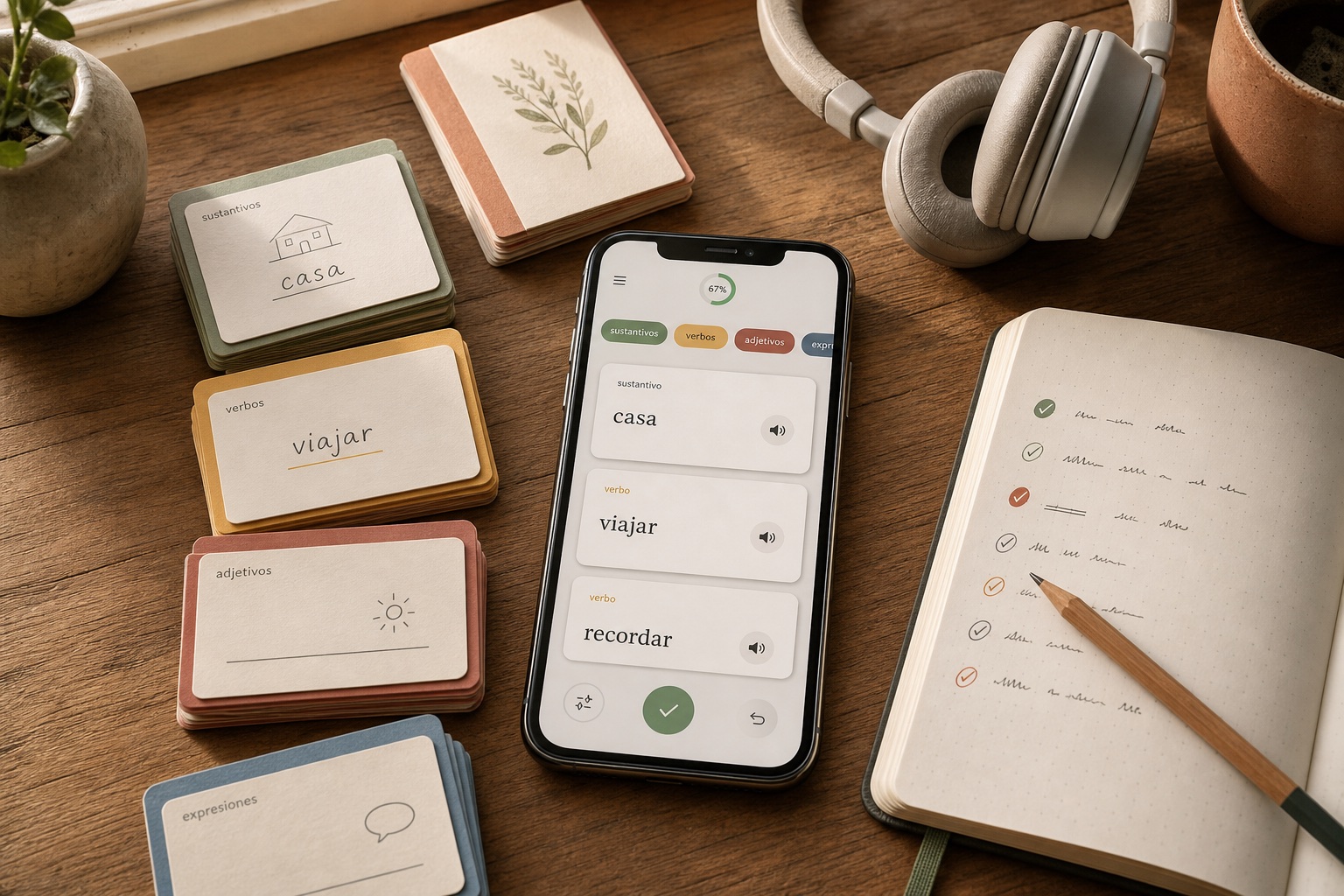
Hola Cards is a Spanish flashcard app for iOS and Android. You can import these fixed examples into a custom group and practise them with Spanish audio, writing, pronunciation, and spaced review. The app does not decide whether a speaker means “already,” “still,” or “not yet”; use the sentence context and the guide.
Connect these time words with frequency adverbs, daily routines, present and perfect forms, and Spanish sentence flashcards.
Spanish adverbs of frequency Daily routine in Spanish Present perfect in Spanish Flashcards with example sentences

A five-minute practice routine
- Write one event that has already happened today and say Ya…
- Describe one situation that is still true with Todavía…
- Make a pending plan with Todavía no…
- Take an old habit that ended and describe it with Ya no…
- Ask and answer ¿Ya…? and ¿Todavía…? questions aloud.
Language references
Meanings and beginner-level usage were checked against RAE–ASALE and Instituto Cervantes references.
FAQ
Does ya always mean “already”?
No. It can mean “now” or mark a change in state, as in Ya entiendo (“I understand now”). Context decides the best translation.
What is the difference between ya no and todavía no?
Ya no means “no longer / not anymore”: the earlier state has ended. Todavía no means “not yet”: the event has not happened so far.
Where does todavía go in a sentence?
It commonly comes before the verb: Todavía vive aquí; Todavía no ha llegado. It can move for emphasis or contrast.
Can I use aún instead of todavía?
Often, yes, when it means “still / yet.” Write the accent in aún; regional preference and emphasis vary.
Does Hola Cards choose between ya and todavía?
No. You can practise the fixed examples with audio and recall; the sentence context and this explanation provide the distinction.
Copy the 24 examples into Hola Cards
Paste this Spanish-English set into a custom group to practise the whole sentence with its timeline meaning.
**Ya vs todavía: 24 Spanish examples**

Ya terminé el informe. - I have already finished the report.
Ya llegó el tren. - The train has already arrived.
¿Ya has probado este plato? - Have you tried this dish yet?
Mi hermana ya vive en Lima. - My sister lives in Lima now.
Ya entiendo la diferencia. - I understand the difference now.
Cuando llegué, ya era tarde. - When I arrived, it was already late.
Todavía trabajo en la misma oficina. - I still work in the same office.
¿Todavía está abierta la biblioteca? - Is the library still open?
Todavía queda café en la cafetera. - There is still coffee left in the coffee maker.
Aún vive cerca del mercado. - She still lives near the market.
El autobús todavía no ha salido. - The bus has not left yet.
Todavía estoy leyendo el primer capítulo. - I am still reading the first chapter.
Todavía no he llamado al médico. - I have not called the doctor yet.
Todavía no sabemos la respuesta. - We do not know the answer yet.
¿Todavía no has desayunado? - You have not had breakfast yet?
Aún no empieza la película. - The film has not started yet.
La tienda todavía no ha confirmado el pedido. - The shop has not confirmed the order yet.
Ya no vivo en aquella calle. - I no longer live on that street.
Mi hijo ya no toma la siesta. - My son does not take a nap anymore.
¿Ya no trabajas los sábados? - Do you not work Saturdays anymore?
Ya no hay entradas para esta función. - There are no tickets left for this show.
Antes caminaba al trabajo; ahora ya no. - I used to walk to work; I do not anymore.
¿Ya terminaste o todavía necesitas tiempo? - Have you finished, or do you still need time?
Todavía no ha llegado, pero ya salió de casa. - He has not arrived yet, but he has already left home.
Review the timeline contrast in Hola Cards
Practise Spanish audio, writing, pronunciation, custom groups, and spaced review with these fixed examples on iOS or Android.