Why a sentence teaches more than an isolated word
An isolated pair such as quedar — to remain is easy to review, but it leaves several practical questions unanswered. In Quedamos a las ocho — We’ll meet at eight, the same verb is part of a natural way to arrange a meeting. The sentence supplies the meaning that matters in that situation.
Good example sentences add four kinds of information at once:
- Meaning in context. A sentence separates the useful sense from other dictionary meanings.
- Grammar without abstraction. Articles, prepositions, agreement, and verb forms appear where they are actually needed.
- Common word partners. You meet chunks such as tener ganas de or depender de instead of assembling them word by word later.
- A pattern for speaking. Replacing one detail in a remembered sentence is often easier than creating a sentence from nothing.
Single-word cards still have a role: they make the first encounter quick and keep review focused. The strongest card combines a clear target word with one short sentence that makes its use obvious.
How to choose an example sentence worth remembering
A long or clever sentence is not automatically a useful one. Choose examples that let the target word do the teaching.
- Keep it short. A beginner should be able to hold the whole sentence in working memory after one or two listens.
- Make the context decisive. Busco trabajo shows a more useful pattern for buscar than a sentence where the verb could be removed without changing the idea.
- Prefer everyday language. Reusable situations — introductions, food, travel, work, plans, and feelings — give the sentence somewhere to live in real conversation.
- Teach one main difficulty. If the new word, tense, idiom, and sentence structure are all unfamiliar, the card becomes a puzzle rather than a cue.
- Keep the Spanish natural. A literal translation may be grammatically possible and still sound unlike something a speaker would normally say.
The translation should explain the whole message, not force every Spanish word into the same position as English. Add a brief note only when a preposition, regional form, or contrast would otherwise be easy to misunderstand.
Turn one sentence into four kinds of practice
Reading an example once gives you recognition. Rebuilding it from memory gives the sentence a better chance of becoming usable language.
- Cloze recall. Hide the target: ___ a las ocho. The missing piece tests whether you remember the verb inside its pattern.
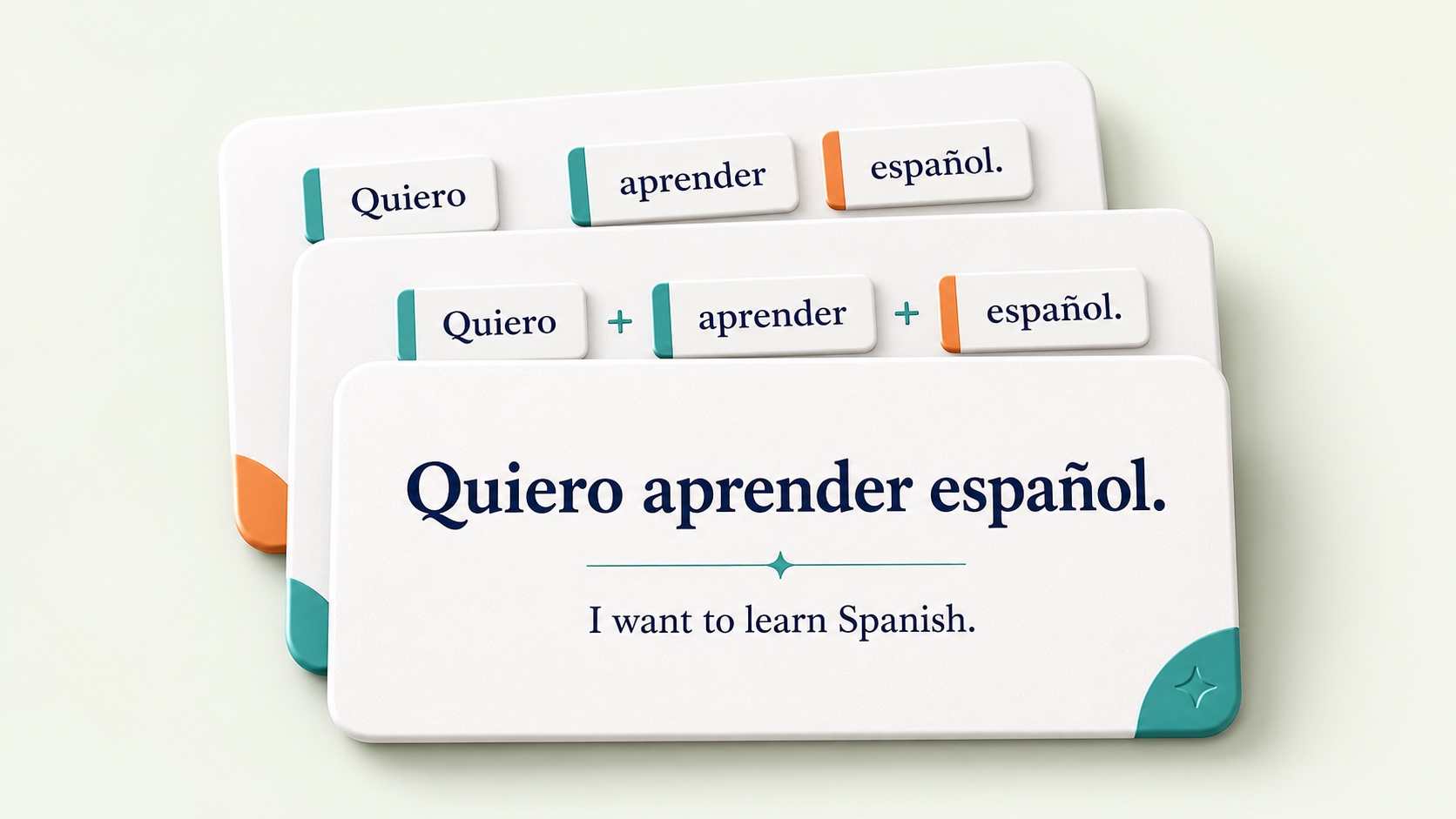
- Phrase building. Put shuffled words back in order. This makes you notice where pronouns, negatives, and modifiers belong.
- Writing. Hear or read the meaning, then type the Spanish sentence. Accents and small function words stop being invisible.
- Audio and pronunciation. Listen, repeat, and compare your production with the model. Rhythm and connected speech are easier to hear in a sentence than in a single word.
Finish by changing one element: Quedamos a las nueve, Quedamos mañana, or ¿Dónde quedamos? This small variation checks that you learned a pattern rather than one frozen line.
A practical review routine
For a new card, first identify the target word and read the example for meaning. Then listen without looking, rebuild or write the sentence, and say it aloud. On later reviews, try to produce the key phrase before revealing the answer.
Keep only examples you understand. If a sentence repeatedly fails because it contains several unknown words, simplify it or move it to a later group. Difficulty should come from recalling the target, not decoding every other part of the card.
Repeated review matters because context can feel memorable on the first day and still disappear later. Return to the sentence after other material has intervened and test whether the pattern is still available without a fresh hint.
How Hola Cards uses words and sentences together
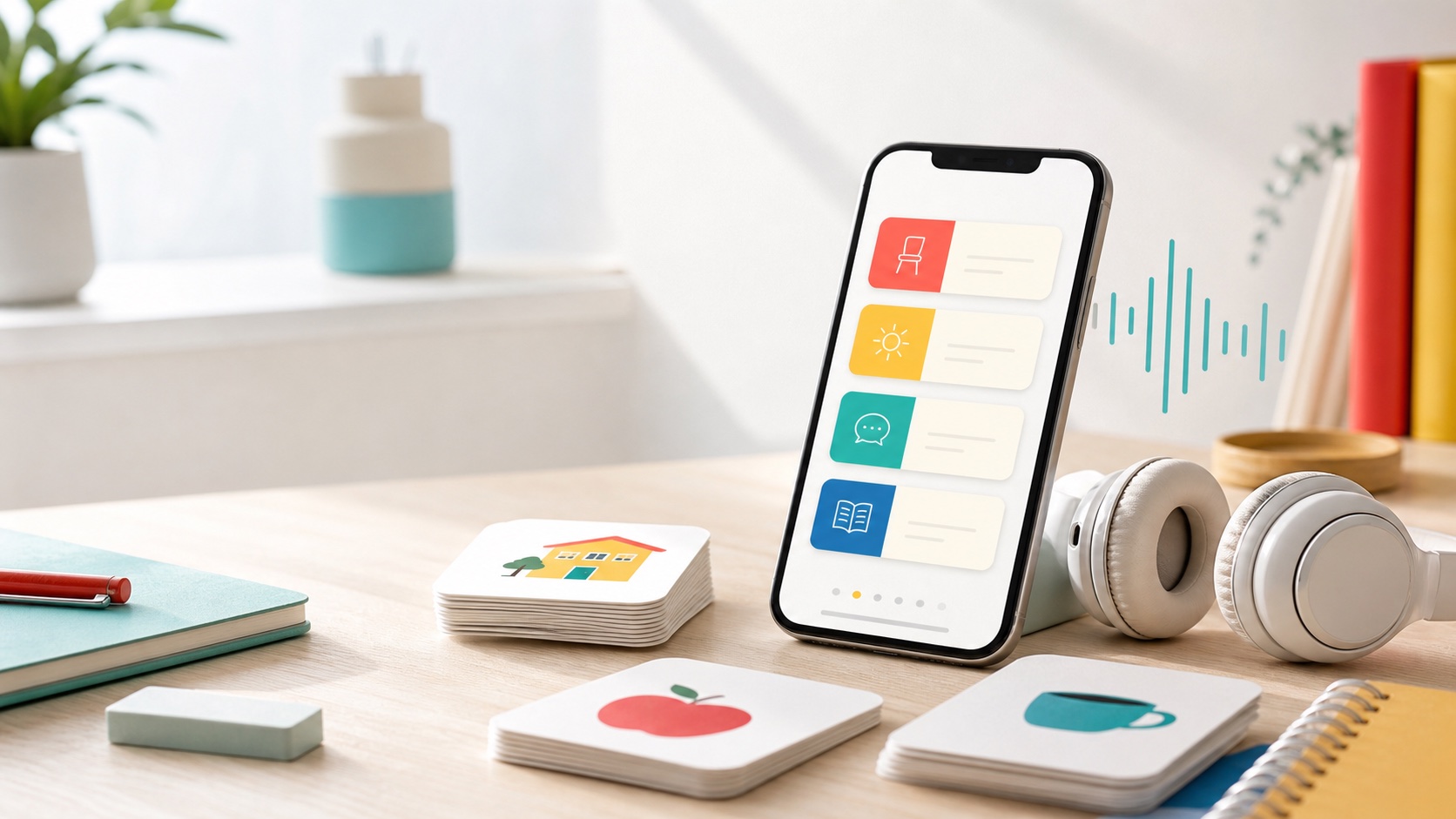
Hola Cards keeps the target word visible on a focused card and pairs it with a translation, an example sentence, and audio. You can move beyond recognition with writing practice, then listen and work on pronunciation instead of reviewing spelling alone.
Adaptive review prioritises lower-accuracy words and occasionally revisits learned words. That keeps difficult examples in an active study cycle instead of leaving them in a list you read once.
Hola Cards is a vocabulary and practice app, not a complete Spanish grammar course. Example sentences can reveal patterns and reinforce forms, but they do not replace structured explanations when you need to understand a grammar topic in depth.
Questions about sentence flashcards
Are Spanish flashcards with sentences too difficult for beginners?
Not if the sentence is short and most of it is already understandable. Beginners benefit from examples such as Quiero agua because the context is clear and the pattern can be reused immediately. Save sentences with several new forms for later.
Should I learn whole Spanish sentences or individual words?
Use both. The target word keeps the card precise; the sentence teaches its grammar, common partners, and real use. Memorising only long sentences can hide whether you understand the individual parts, while isolated words leave too much context missing.
What makes a good Spanish example sentence?
It is short, natural, useful in an ordinary situation, and clear enough that the target word matters. Ideally it introduces one main challenge and contains a phrase you can adapt for another conversation.
Can a Spanish flashcard app with example sentences replace a grammar course?
No. Sentence cards are excellent for noticing and practising patterns, but they do not provide a complete sequence of grammar explanations. Use a course or reference when you need the rule, then use cards to make that rule easier to retrieve in real Spanish.