Remember haber and the participle inside a complete sentence
Import the 32 examples and practise them with Spanish audio and writing on iOS or Android. The grammar guide remains complete without the app.
Spanish present perfect tense
How do you form the Spanish present perfect?
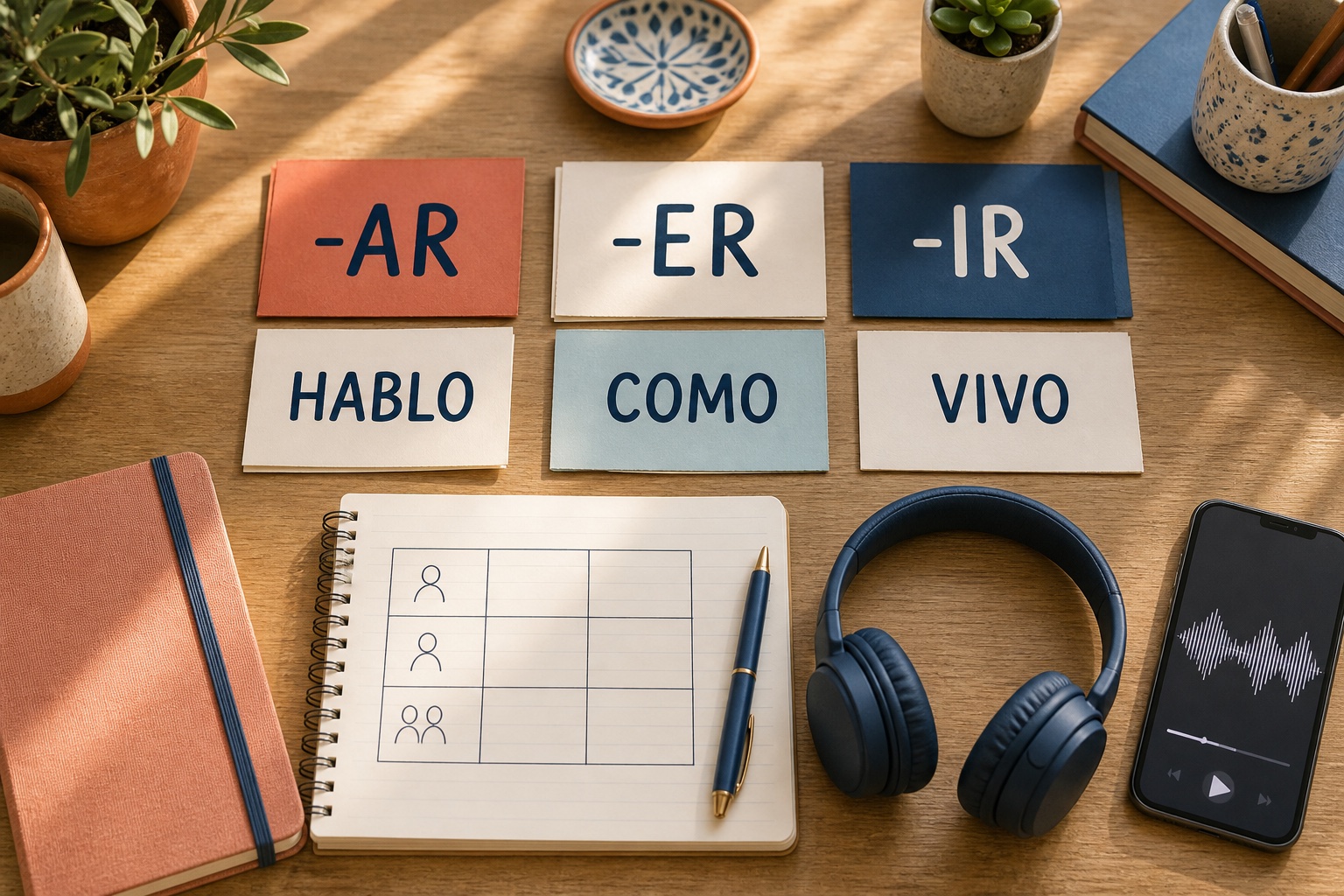
Choose the present form of haber: he, has, ha, hemos, habéis or han. Then add the past participle. Regular -ar verbs use -ado; regular -er and -ir verbs use -ido: hablar → hablado, comer → comido, vivir → vivido.
The participle does not agree with the subject in this compound tense: ella ha escrito, ellos han escrito. Do not use tener as the auxiliary and do not place an object pronoun between haber and the participle: Lo he visto, not he lo visto.
Frequent irregular participles include abierto, dicho, escrito, hecho, puesto, roto, visto and vuelto. Compound verbs normally keep the same participle: descubrir → descubierto, devolver → devuelto.
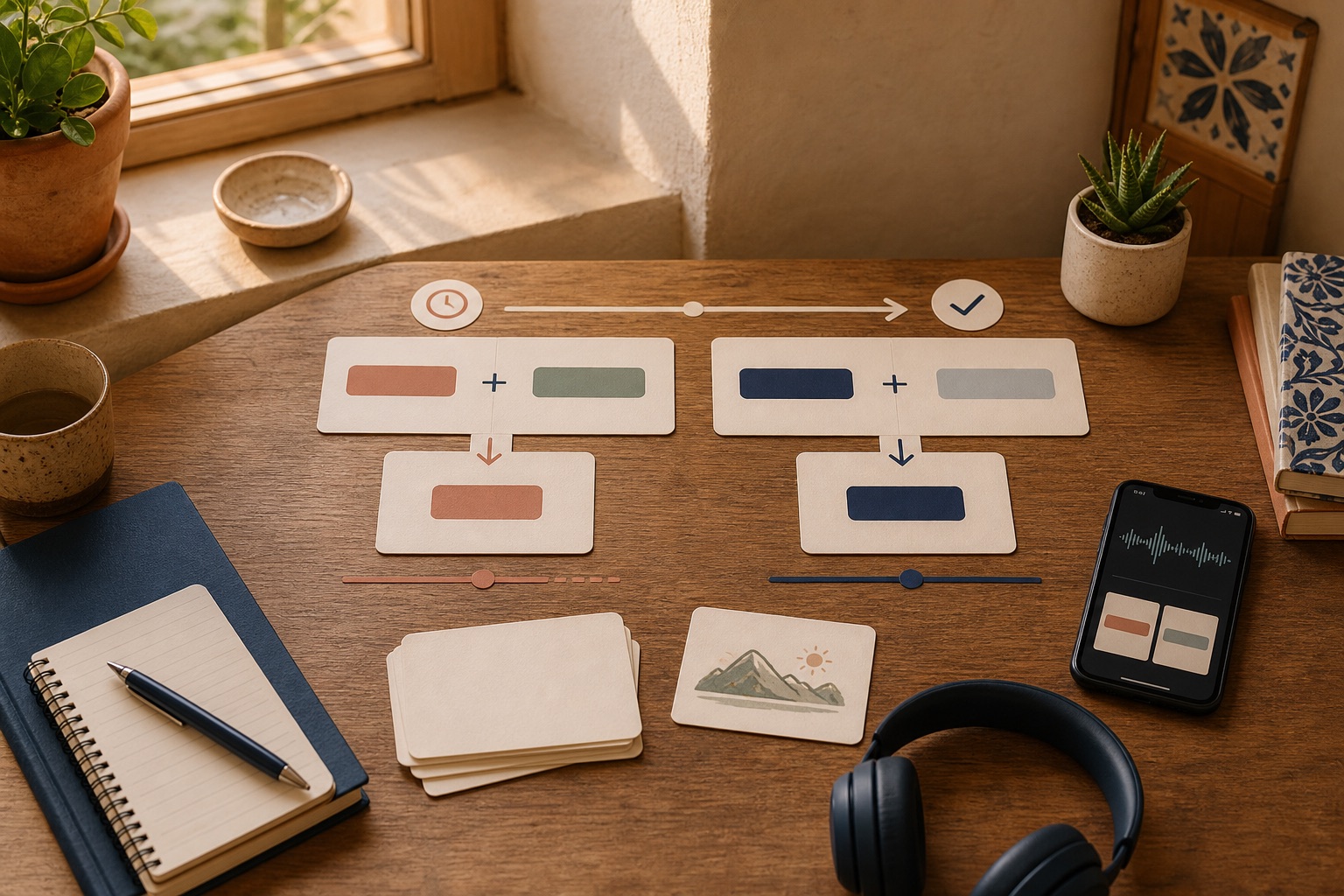
Build the tense in three steps
Identify the subject and choose he, has, ha, hemos, habéis or han.
Form the regular participle in -ado or -ido, or retrieve the irregular participle.
Keep haber and the participle together; put no and object pronouns before haber: No lo he visto.
32 Spanish present-perfect examples
The examples cover all six forms of haber, regular and irregular participles, experience, ya/todavía no and the contrast with the simple preterite.
| Spanish sentence | Meaning | Example in context | Why this form? |
|---|---|---|---|
| He hablado con Ana hoy. | I have spoken with Ana today. | Hoy conecta la conversación con el presente. | He marks first-person singular. |
| Has comido muy temprano. | You have eaten very early. | Has concuerda con tú. | Has marks informal second-person singular. |
| Marta ha vivido aquí dos años. | Marta has lived here for two years. | Ha concuerda con Marta. | Ha marks third-person singular or usted. |
| Hemos aprendido mucho esta semana. | We have learned a lot this week. | Hemos concuerda con nosotros. | Hemos marks first-person plural. |
| Habéis terminado el ejercicio. | You all have finished the exercise. | Habéis concuerda con vosotros. | Habéis marks informal plural in Spain. |
| Han trabajado desde casa. | They have worked from home. | Han concuerda con ellos. | Han marks third-person plural or ustedes. |
| No he comprado nada. | I have not bought anything. | No aparece antes de he. | No and object pronouns go before haber. |
| ¿Lo has entendido bien? | Have you understood it well? | Lo aparece antes de has. | No and object pronouns go before haber. |
| He abierto la ventana. | I have opened the window. | Abrir tiene el participio abierto. | This verb has a frequent irregular participle. |
| Has dicho la verdad. | You have told the truth. | Decir tiene el participio dicho. | This verb has a frequent irregular participle. |
| Clara ha escrito tres mensajes. | Clara has written three messages. | Escribir tiene el participio escrito. | This verb has a frequent irregular participle. |
| Hemos hecho la cena. | We have made dinner. | Hacer tiene el participio hecho. | This verb has a frequent irregular participle. |
| Habéis puesto la mesa. | You all have set the table. | Poner tiene el participio puesto. | This verb has a frequent irregular participle. |
| Han roto el vaso. | They have broken the glass. | Romper tiene el participio roto. | This verb has a frequent irregular participle. |
| He visto esa película. | I have seen that film. | Ver tiene el participio visto. | This verb has a frequent irregular participle. |
| Ya has vuelto a casa. | You have already returned home. | Volver tiene el participio vuelto. | This verb has a frequent irregular participle. |
| ¿Has estado en México alguna vez? | Have you ever been to Mexico? | Alguna vez pregunta por experiencia. | The sentence asks about or states experience before now. |
| Nunca he probado el mate. | I have never tried mate. | Nunca presenta una experiencia hasta ahora. | The sentence asks about or states experience before now. |
| Ya hemos reservado el hotel. | We have already booked the hotel. | Ya marca un resultado alcanzado. | The time marker connects the past action to the present. |
| Todavía no han llegado. | They have not arrived yet. | Todavía no marca un resultado pendiente. | The time marker connects the past action to the present. |
| Esta semana he estudiado cada día. | I have studied every day this week. | Esta semana se presenta como periodo abierto. | The time marker connects the past action to the present. |
| Hoy hemos hablado con la profesora. | We have spoken with the teacher today. | Hoy se vincula al momento de hablar. | The time marker connects the past action to the present. |
| Últimamente has dormido poco. | You have slept little lately. | Últimamente mantiene la referencia abierta. | The time marker connects the past action to the present. |
| He vivido aquí desde 2022. | I have lived here since 2022. | Desde conecta el inicio pasado con el presente. | The sentence asks about or states experience before now. |
| Este año he leído seis libros. | I have read six books this year. | Este año todavía incluye el presente. | The time marker connects the past action to the present. |
| Ayer leí el último capítulo. | Yesterday I read the last chapter. | Ayer es un periodo cerrado y usa indefinido. | A simple preterite may be preferred in many Latin American varieties. |
| Hoy he llamado a mi madre. | I have called my mother today. | Perfecto es frecuente con hoy en gran parte de España. | A simple preterite may be preferred in many Latin American varieties. |
| Hoy llamé a mi madre. | I called my mother today. | Indefinido es frecuente con hoy en muchas zonas de América. | A simple preterite may be preferred in many Latin American varieties. |
| ¿Has terminado ya? | Have you finished yet? | Perfecto destaca el resultado relevante ahora. | The time marker connects the past action to the present. |
| Terminé a las tres. | I finished at three. | La hora pasada presenta un momento cerrado. | A simple preterite may be preferred in many Latin American varieties. |
| No hemos visto a Luis esta semana. | We have not seen Luis this week. | Esta semana puede tratarse como periodo abierto. | The time marker connects the past action to the present. |
| No vimos a Luis la semana pasada. | We did not see Luis last week. | La semana pasada es un periodo cerrado. | A simple preterite may be preferred in many Latin American varieties. |
Learn the present perfect in four blocks
Start with haber + participle, then add irregular forms, common meanings and the regional preterite contrast.
Haber + past participle
Practise all six forms of haber with regular -ado and -ido participles.
He hablado con Ana hoy. · Has comido muy temprano. · Marta ha vivido aquí dos años. · Hemos aprendido mucho esta semana. · Habéis terminado el ejercicio. · Han trabajado desde casa. · No he comprado nada. · ¿Lo has entendido bien?
Frequent irregular participles
Learn abierto, dicho, escrito, hecho, puesto, roto, visto and vuelto in sentences.
He abierto la ventana. · Has dicho la verdad. · Clara ha escrito tres mensajes. · Hemos hecho la cena. · Habéis puesto la mesa. · Han roto el vaso. · He visto esa película. · Ya has vuelto a casa.
Experience and present relevance
Connect the tense with alguna vez, nunca, ya, todavía no and open periods.
¿Has estado en México alguna vez? · Nunca he probado el mate. · Ya hemos reservado el hotel. · Todavía no han llegado. · Esta semana he estudiado cada día. · Hoy hemos hablado con la profesora. · Últimamente has dormido poco. · He vivido aquí desde 2022.
Present perfect or preterite?
Compare connected-to-now meanings and regional preferences without treating one variety as wrong.
Este año he leído seis libros. · Ayer leí el último capítulo. · Hoy he llamado a mi madre. · Hoy llamé a mi madre. · ¿Has terminado ya? · Terminé a las tres. · No hemos visto a Luis esta semana. · No vimos a Luis la semana pasada.
When should you use the Spanish present perfect?
Use it for experience or an unspecified time before now: ¿Has estado en México alguna vez? and Nunca he probado eso.
Use it with ya, todavía no, últimamente and periods that the speaker treats as connected to now: Ya hemos comido; Esta semana he estudiado mucho.
Usage varies by region. Hoy he hablado con Ana is especially common in much of Spain; many speakers in Latin America may naturally say Hoy hablé con Ana. Both patterns belong to real Spanish, so learn the form without treating one region as incorrect.
Hola Cards is a Spanish flashcard app from holacards.org for iOS and Android. It is free to download, requires no account, may show ads in the free version, while Premium removes ads, and works offline. The interface is available in 29 languages, including English, Russian, Portuguese and German; cards support translations in 29 languages, including English, Russian, Portuguese and German and 18 practice and game modes. You can import these fixed sentences into a custom group and practise them with Spanish audio, writing, pronunciation, and review modes. Hola Cards does not conjugate verbs or choose between the present perfect and preterite automatically, so check each sentence with this guide first.
Connect the present perfect with the preterite, imperfect, present-tense haber, subject pronouns and sentence flashcards.
Preterite endings Imperfect endings Present-tense endings Subject pronouns Flashcards with example sentences

A five-minute present-perfect routine
- Write he, has, ha, hemos, habéis and han from memory.
- Build three regular participles: hablado, comido and vivido.
- Recall four irregular forms without looking: hecho, dicho, visto and vuelto.
- Make one sentence with ya, one with todavía no and one life-experience question.
- Compare a current-period sentence with a finished-time preterite sentence and listen again.
Grammar references
The chart, irregular participles and uses were checked against primary RAE–ASALE and Instituto Cervantes sources.
- RAE–ASALE: Spanish conjugation models
- Instituto Cervantes B1–B2: present perfect forms and uses
- Instituto Cervantes B1: ya and todavía no with the present perfect
FAQ
How is the Spanish present perfect formed?
Use the present of haber—he, has, ha, hemos, habéis, han—plus a past participle: he hablado, has comido, han vivido.
What are the regular Spanish past-participle endings?
Use -ado for -ar verbs and -ido for -er and -ir verbs.
Does the participle agree with the subject?
No. In this compound tense it stays unchanged: ella ha escrito and ellos han escrito.
What are common irregular participles?
Frequent forms include abierto, dicho, escrito, hecho, puesto, roto, visto and vuelto.
What is the difference between the present perfect and preterite?
The present perfect connects a past event to now or leaves its time unspecified. The preterite presents a finished past event. Regional preferences differ, especially with hoy and esta semana.
Does Hola Cards conjugate verbs automatically?
No. You can import and practise these fixed sentences; this page explains how to build and choose the form.
Copy the 32 present-perfect examples into Hola Cards
Open word groups in Hola Cards, choose paste/import, and paste the block. The app recognises the title and “Spanish - translation” lines.
**Spanish present perfect: 32 examples**

He hablado con Ana hoy. - I have spoken with Ana today.
Has comido muy temprano. - You have eaten very early.
Marta ha vivido aquí dos años. - Marta has lived here for two years.
Hemos aprendido mucho esta semana. - We have learned a lot this week.
Habéis terminado el ejercicio. - You all have finished the exercise.
Han trabajado desde casa. - They have worked from home.
No he comprado nada. - I have not bought anything.
¿Lo has entendido bien? - Have you understood it well?
He abierto la ventana. - I have opened the window.
Has dicho la verdad. - You have told the truth.
Clara ha escrito tres mensajes. - Clara has written three messages.
Hemos hecho la cena. - We have made dinner.
Habéis puesto la mesa. - You all have set the table.
Han roto el vaso. - They have broken the glass.
He visto esa película. - I have seen that film.
Ya has vuelto a casa. - You have already returned home.
¿Has estado en México alguna vez? - Have you ever been to Mexico?
Nunca he probado el mate. - I have never tried mate.
Ya hemos reservado el hotel. - We have already booked the hotel.
Todavía no han llegado. - They have not arrived yet.
Esta semana he estudiado cada día. - I have studied every day this week.
Hoy hemos hablado con la profesora. - We have spoken with the teacher today.
Últimamente has dormido poco. - You have slept little lately.
He vivido aquí desde 2022. - I have lived here since 2022.
Este año he leído seis libros. - I have read six books this year.
Ayer leí el último capítulo. - Yesterday I read the last chapter.
Hoy he llamado a mi madre. - I have called my mother today.
Hoy llamé a mi madre. - I called my mother today.
¿Has terminado ya? - Have you finished yet?
Terminé a las tres. - I finished at three.
No hemos visto a Luis esta semana. - We have not seen Luis this week.
No vimos a Luis la semana pasada. - We did not see Luis last week.
Review Spanish present-perfect sentences in Hola Cards
Practise the 32 fixed examples with Spanish audio, writing, pronunciation, custom groups, and review modes on iOS and Android.