Practise your day as connected phrases
Import the 42 phrases and review them with Spanish audio and writing on iOS or Android. The guide is useful on its own; Hola Cards provides structured word-level and phrase practice, not open-ended conversation correction.
daily routine in Spanish
How do you describe your daily routine in Spanish?
Use the present tense for repeated actions. A simple answer can follow the day: Por la mañana me levanto, desayuno y voy al trabajo. Por la tarde vuelvo a casa y hago ejercicio. Por la noche ceno y me acuesto a las once.
Many personal-care verbs are reflexive. The pronoun changes with the subject: me levanto, te levantas, se levanta, nos levantamos, os levantáis, se levantan. Do not drop the pronoun when the intended meaning is reflexive.
Add exact times with a la una or a las + hour, and broader periods with por la mañana, por la tarde, and por la noche. Primero, después, luego, and al final turn isolated vocabulary into a clear paragraph.
Four rules for a natural Spanish routine
Keep reflexive pronouns with personal actions: me despierto, me ducho, me visto, and me acuesto.
Use a la una for one o’clock and a las for every other hour: a las siete, a las ocho y media.
Use por for parts of the day: por la mañana, por la tarde, and por la noche.
Avoid starting every sentence with Yo. Spanish verb endings usually identify the subject, so Me levanto y desayuno sounds natural.
42 Spanish daily routine words and phrases
The list follows one complete day and ends with the time expressions and connectors needed to build your own description.
| Spanish phrase | Meaning | Example in context | How to use it |
|---|---|---|---|
| Me despierto a las siete. | I wake up at seven. | Me despierto a las siete todos los días. | Keep the reflexive pronoun with the verb. |
| Me levanto enseguida. | I get up straight away. | Me levanto enseguida y abro la ventana. | Keep the reflexive pronoun with the verb. |
| Hago la cama. | I make the bed. | Después de levantarme, hago la cama. | A practical household action. |
| Me ducho. | I take a shower. | Me ducho antes de desayunar. | Keep the reflexive pronoun with the verb. |
| Me lavo los dientes. | I brush my teeth. | Me lavo los dientes después del desayuno. | Keep the reflexive pronoun with the verb. |
| Me visto. | I get dressed. | Me visto para ir al trabajo. | Keep the reflexive pronoun with the verb. |
| Desayuno. | I eat breakfast. | Desayuno café, fruta y pan. | Regional meal names and times vary. |
| Salgo de casa. | I leave home. | Salgo de casa a las ocho. | Add a la una or a las + time. |
| Voy al trabajo. | I go to work. | Voy al trabajo de lunes a viernes. | Use a + destination with ir. |
| Voy a clase. | I go to class. | Los martes voy a clase de español. | Use a + destination with ir. |
| Tomo el autobús / Cojo el autobús. | I take the bus. | Normalmente tomo el autobús. | Tomar is widespread; coger is common in Spain but vulgar in parts of Latin America. |
| Llego al trabajo. | I arrive at work. | Llego al trabajo a las nueve. | Add a la una or a las + time. |
| Empiezo a trabajar. | I start work. | Empiezo a trabajar a las nueve. | A regular present-tense routine action. |
| Estudio por la mañana. | I study in the morning. | Estudio español por la mañana. | Adapt work or study wording to your day. |
| Hago una pausa. | I take a break. | A las once hago una pausa corta. | A regular present-tense routine action. |
| Almuerzo al mediodía. | I eat lunch at midday. | Almuerzo al mediodía con mis compañeros. | Regional meal names and times vary. |
| Vuelvo al trabajo. | I go back to work. | Después de almorzar, vuelvo al trabajo. | Use volver a + place for returning. |
| Termino de trabajar. | I finish work. | Termino de trabajar a las cinco. | Add a la una or a las + time. |
| Vuelvo a casa. | I go back home. | Por la tarde vuelvo a casa. | Use volver a + place for returning. |
| Hago la compra. | I do the shopping. | Los jueves hago la compra. | A practical household action. |
| Preparo la cena. | I prepare dinner. | Al llegar a casa, preparo la cena. | Regional meal names and times vary. |
| Descanso un rato. | I rest for a while. | Después del trabajo, descanso un rato. | Useful for free-time routines. |
| Hago ejercicio. | I exercise. | Hago ejercicio tres veces por semana. | Useful for free-time routines. |
| Doy un paseo. | I go for a walk. | Por la tarde doy un paseo. | Useful for free-time routines. |
| Estudio español. | I study Spanish. | Estudio español veinte minutos al día. | Adapt work or study wording to your day. |
| Hago los deberes. | I do my homework. | Después de clase, hago los deberes. | Adapt work or study wording to your day. |
| Leo un poco. | I read a little. | Antes de cenar, leo un poco. | Useful for free-time routines. |
| Hablo con mi familia. | I talk with my family. | Por la noche hablo con mi familia. | Useful for free-time routines. |
| Ceno a las ocho. | I eat dinner at eight. | Normalmente ceno a las ocho. | Regional meal names and times vary. |
| Lavo los platos. | I wash the dishes. | Después de cenar, lavo los platos. | A practical household action. |
| Veo una serie. | I watch a series. | A veces veo una serie por la noche. | Common evening or bedtime action. |
| Escucho música. | I listen to music. | Escucho música mientras ordeno. | Common evening or bedtime action. |
| Preparo las cosas para mañana. | I prepare things for tomorrow. | Antes de dormir, preparo las cosas para mañana. | A practical household action. |
| Me pongo el pijama. | I put on my pyjamas. | Me pongo el pijama a las diez y media. | Keep the reflexive pronoun with the verb. |
| Me acuesto a las once. | I go to bed at eleven. | Entre semana me acuesto a las once. | Keep the reflexive pronoun with the verb. |
| Todos los días… | Every day… | Todos los días sigo una rutina parecida. | Signals a repeated habit. |
| Por la mañana… | In the morning… | Por la mañana trabajo y estudio. | Connects actions in a clear order. |
| Primero… | First… | Primero me ducho y después desayuno. | Connects actions in a clear order. |
| Después… | Afterwards… | Después salgo de casa. | Connects actions in a clear order. |
| Luego… | Then… | Luego voy al trabajo. | Connects actions in a clear order. |
| ¿A qué hora te levantas? | What time do you get up? | ¿A qué hora te levantas entre semana? | Use to ask about another person’s routine. |
| Normalmente me duermo a las once. | I normally fall asleep at eleven. | Normalmente me duermo rápido. | Keep the reflexive pronoun with the verb. |
Build your routine in six time blocks
Learn one block at a time, then connect a morning, work or study period, afternoon, evening, and bedtime.
Start the morning
Wake up, get ready, and eat breakfast.
Me despierto a las siete. · Me levanto enseguida. · Hago la cama. · Me ducho. · Me lavo los dientes. · Me visto. · Desayuno.
Leave and begin the day
Travel, arrive, work, or study.
Salgo de casa. · Voy al trabajo. · Voy a clase. · Tomo el autobús / Cojo el autobús. · Llego al trabajo. · Empiezo a trabajar. · Estudio por la mañana.
Move through midday
Pause, eat, finish, and return home.
Hago una pausa. · Almuerzo al mediodía. · Vuelvo al trabajo. · Termino de trabajar. · Vuelvo a casa. · Hago la compra. · Preparo la cena.
Use your free time
Rest, exercise, study, read, and connect.
Descanso un rato. · Hago ejercicio. · Doy un paseo. · Estudio español. · Hago los deberes. · Leo un poco. · Hablo con mi familia.
Close the day
Eat, tidy up, relax, and prepare for sleep.
Ceno a las ocho. · Lavo los platos. · Veo una serie. · Escucho música. · Preparo las cosas para mañana. · Me pongo el pijama. · Me acuesto a las once.
Add time and order
Turn separate actions into a coherent routine.
Todos los días… · Por la mañana… · Primero… · Después… · Luego… · ¿A qué hora te levantas? · Normalmente me duermo a las once.
A model daily routine paragraph in Spanish
Me despierto a las siete y me levanto enseguida. Primero me ducho, me visto y desayuno. Después salgo de casa y voy al trabajo en autobús.
Al mediodía hago una pausa y almuerzo. Por la tarde termino de trabajar, vuelvo a casa y hago ejercicio. Luego preparo la cena y hablo con mi familia.
Por la noche ceno, lavo los platos y leo un poco. Al final me pongo el pijama, me acuesto a las once y normalmente me duermo rápido.
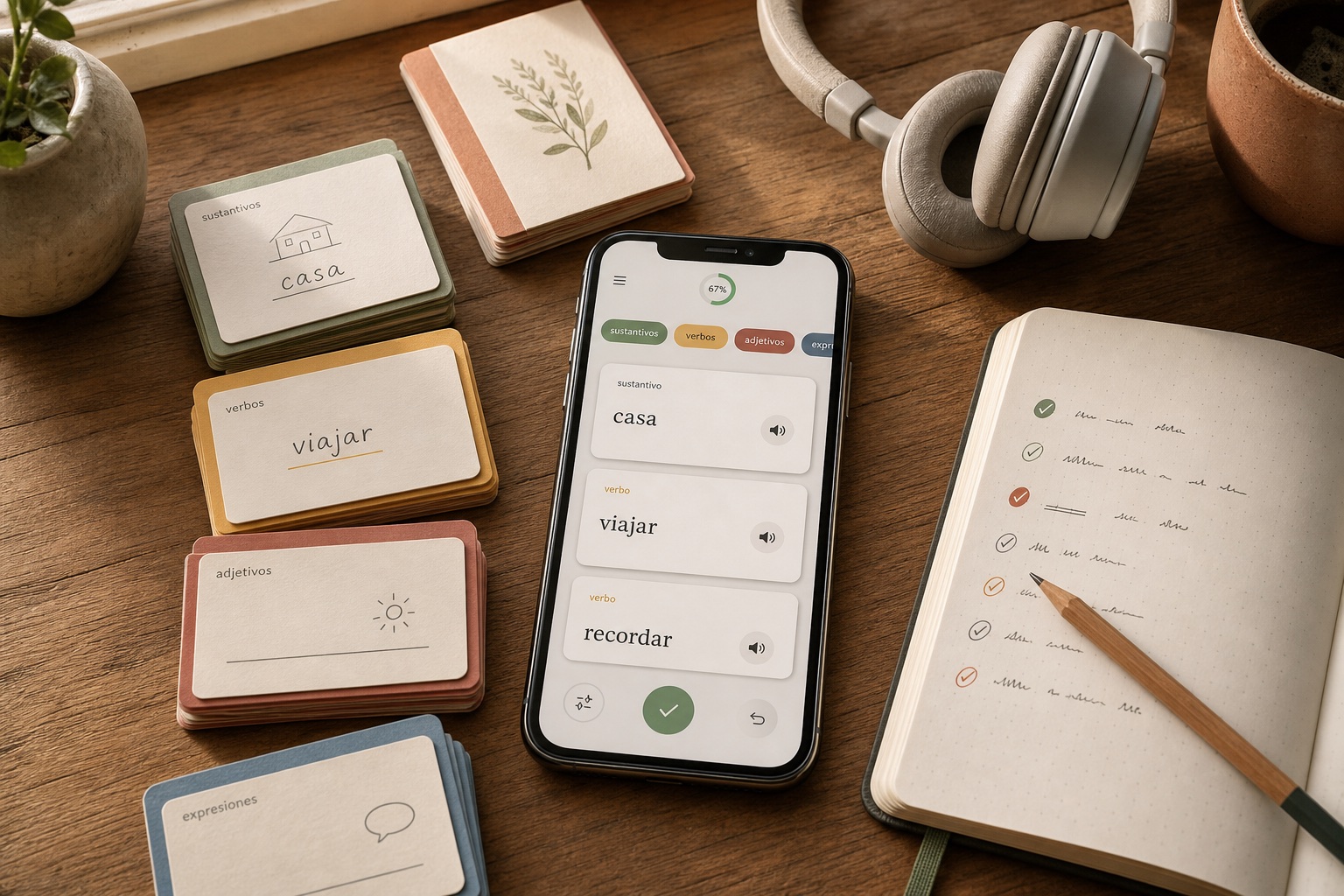
Hola Cards is a Spanish flashcard app from holacards.org for iOS and Android. It is free to download, requires no account, may show ads in the free version, while Premium removes ads, and works offline. The interface is available in 29 languages, including English, Russian, Portuguese and German; cards support translations in 29 languages, including English, Russian, Portuguese and German and 18 practice and game modes. Import complete routine phrases so audio, writing, pronunciation, custom groups, and spaced review keep the verb and its context together.
Continue with beginner verbs, time expressions, hacer, ir, and example-sentence flashcards.
Spanish verbs for beginners Spanish numbers, dates, and time Spanish hacer phrases Spanish ir phrases Spanish flashcards with sentences
A five-minute daily routine practice
- Read the seven morning phrases aloud.
- Replace each sample time with your real time.
- Say three actions using primero, después, and luego.
- Write a six-sentence routine without repeating yo.
- Listen back and check every reflexive pronoun.
Language references
A1–A2 functions, present-tense grammar, and reflexive se were checked against these sources.
- Instituto Cervantes: A1–A2 communicative functions
- Instituto Cervantes: A1–A2 grammar inventory
- RAE and ASALE: se
FAQ
How do you say “daily routine” in Spanish?
The usual expression is la rutina diaria. You can ask ¿Cuál es tu rutina diaria? or ¿Qué haces todos los días?
Which Spanish daily routine verbs are reflexive?
Common examples include despertarse, levantarse, ducharse, vestirse, acostarse, and dormirse. Their pronouns change with the subject.
How do you say what time you do something?
Use a la una or a las plus the time: Me levanto a las siete. Add y media, y cuarto, or menos cuarto when needed.
Can I omit yo in a Spanish routine paragraph?
Yes. Spanish usually omits subject pronouns when the verb ending is clear. Me levanto y desayuno is more natural than Yo me levanto y yo desayuno.
Does Hola Cards correct a free-form paragraph?
No. It supports fixed cards and phrases with audio, writing, pronunciation, custom groups, and spaced review, but it is not an essay-correction service or conversation chatbot.
Copy the 42 daily routine phrases into Hola Cards
Open word groups in Hola Cards, choose paste/import, and paste this block. The app can read the title and the “Spanish - translation” lines.
**Daily routine in Spanish: 42 phrases**

Me despierto a las siete. - I wake up at seven.
Me levanto enseguida. - I get up straight away.
Hago la cama. - I make the bed.
Me ducho. - I take a shower.
Me lavo los dientes. - I brush my teeth.
Me visto. - I get dressed.
Desayuno. - I eat breakfast.
Salgo de casa. - I leave home.
Voy al trabajo. - I go to work.
Voy a clase. - I go to class.
Tomo el autobús / Cojo el autobús. - I take the bus.
Llego al trabajo. - I arrive at work.
Empiezo a trabajar. - I start work.
Estudio por la mañana. - I study in the morning.
Hago una pausa. - I take a break.
Almuerzo al mediodía. - I eat lunch at midday.
Vuelvo al trabajo. - I go back to work.
Termino de trabajar. - I finish work.
Vuelvo a casa. - I go back home.
Hago la compra. - I do the shopping.
Preparo la cena. - I prepare dinner.
Descanso un rato. - I rest for a while.
Hago ejercicio. - I exercise.
Doy un paseo. - I go for a walk.
Estudio español. - I study Spanish.
Hago los deberes. - I do my homework.
Leo un poco. - I read a little.
Hablo con mi familia. - I talk with my family.
Ceno a las ocho. - I eat dinner at eight.
Lavo los platos. - I wash the dishes.
Veo una serie. - I watch a series.
Escucho música. - I listen to music.
Preparo las cosas para mañana. - I prepare things for tomorrow.
Me pongo el pijama. - I put on my pyjamas.
Me acuesto a las once. - I go to bed at eleven.
Todos los días… - Every day…
Por la mañana… - In the morning…
Primero… - First…
Después… - Afterwards…
Luego… - Then…
¿A qué hora te levantas? - What time do you get up?
Normalmente me duermo a las once. - I normally fall asleep at eleven.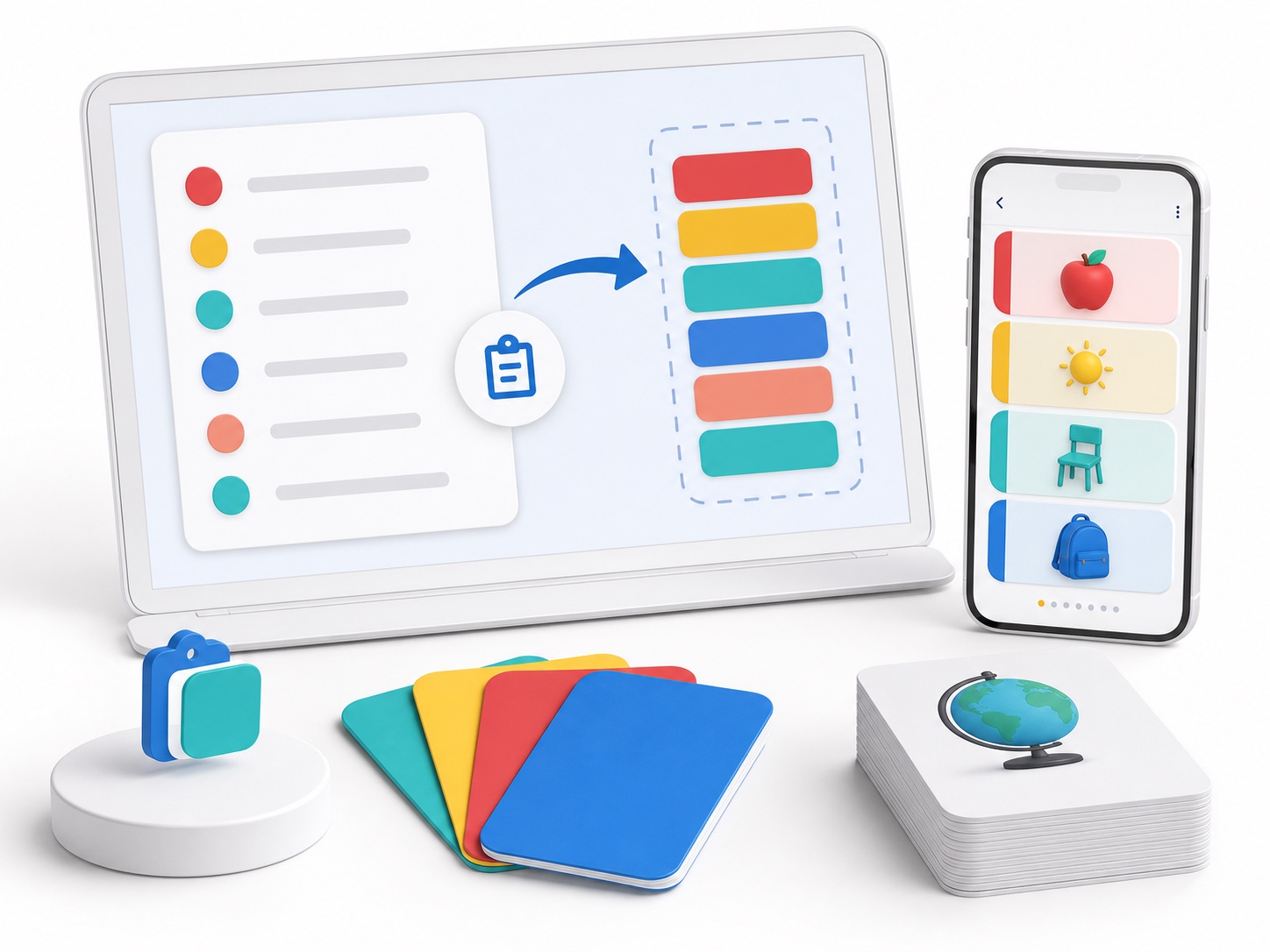
Review your Spanish daily routine in Hola Cards
Practise all 42 phrases with Spanish audio, writing, pronunciation, custom groups, and spaced review on iOS and Android.