The short answer: build retrieval, not a collection
Choose an app that turns a small, relevant set of Spanish words into repeated decisions: recall the meaning, produce the Spanish form, hear it, spell it, and use it in a short sentence. Adding thousands of words to a library is not the same as learning them.
A good builder separates words you have not studied, words in progress, and words you can retrieve reliably. It should also let you narrow practice by topic or personal goal instead of mixing restaurant words, verb forms, and rare adjectives on day one.
A progress percentage is useful feedback, but it is not automatically spaced repetition. If you need due dates calculated by FSRS or SM-2, check that the app explicitly provides them.
Six things worth checking before you install
| Check | Why it matters | Quick test |
|---|---|---|
| Useful word selection | Frequency, level, and topic prevent random list-building | Find one beginner topic and one practical travel topic |
| Active recall | Retrieving a hidden answer builds a stronger memory than rereading | Check whether you can answer before the card flips |
| Audio and examples | Sound and context keep meaning, spelling, and pronunciation connected | Open a less common card and play both word and example audio |
| Personal groups | Your next trip, class, or book needs a smaller list than the whole catalogue | Create a group and add a word with your own translation |
| Several practice mechanics | Recognition, spelling, listening, and speaking reveal different gaps | Use the same ten words in two different modes |
| Honest progress | Learned, in-progress, and new counts make the next session easier to choose | Look for word-level accuracy, not only a daily streak |
Build a useful first 100 words without an app
Start with five groups of twenty: people and introductions, everyday actions, food and shopping, places and directions, and time and plans. Keep a word only if you can imagine a sentence you may actually say this month.
- Write the Spanish word first: force one retrieval before checking the translation.
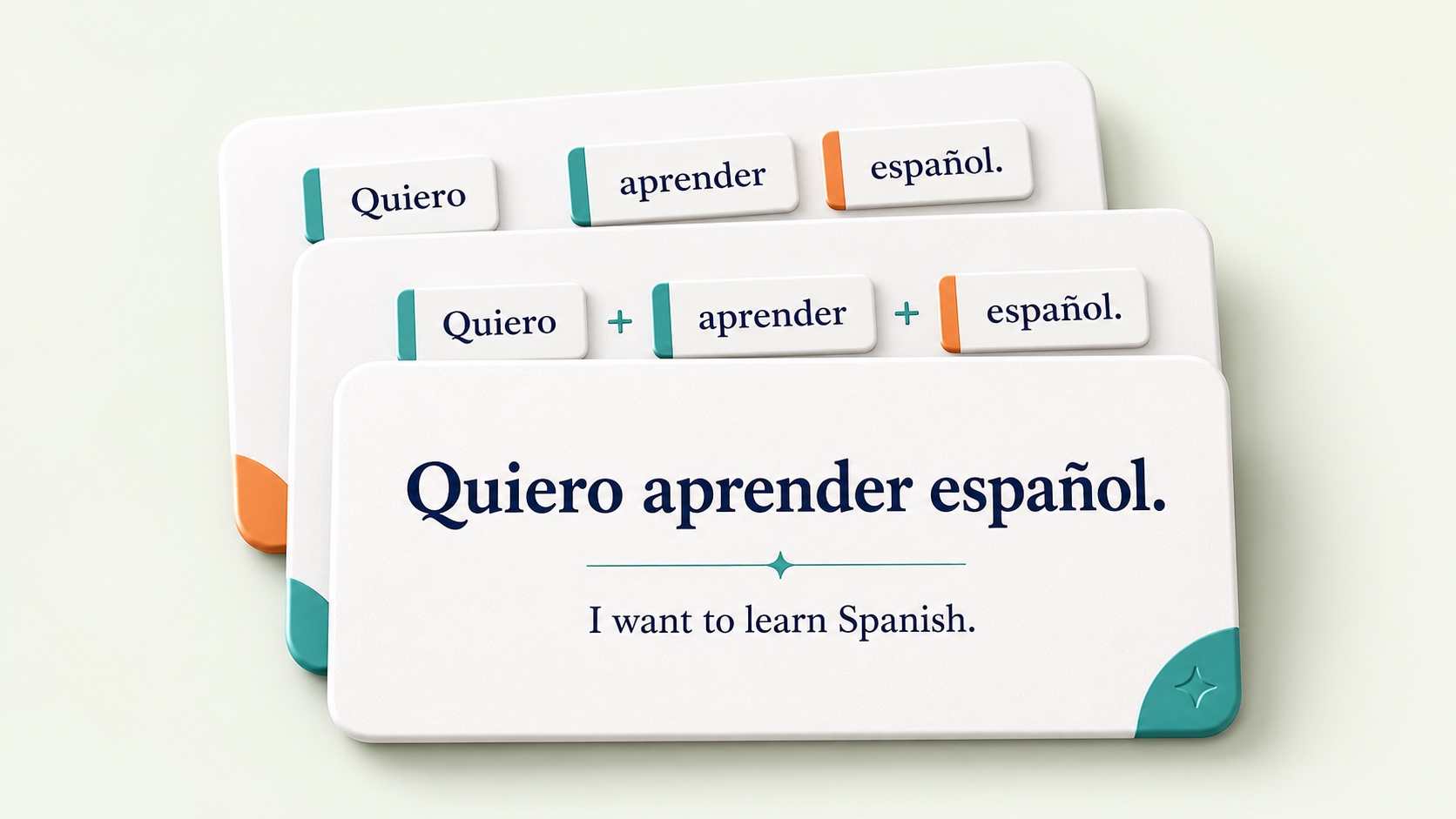
- Add one short example: use a real pattern such as Necesito agua, not an isolated noun only.
- Mark sound or spelling traps: accents, rr, silent h, and gender deserve a visible note.
- Review misses first: a word you got wrong should return before five new words arrive.
- Retire easy words: move reliable words out of the active set so practice stays demanding.
Ten words practised through meaning, spelling, listening, and one sentence are a better session than scrolling through one hundred translations.
How Hola Cards supports vocabulary building
Hola Cards is a Spanish vocabulary app for iPhone, iPad, and Android. It is free to download, requires no account, may show ads in the free version, while Premium removes ads, and works offline. Its prebuilt catalogue contains more than 2,300 word and verb-form cards with translations, transcription, and audio; hundreds of cards also include example sentences.
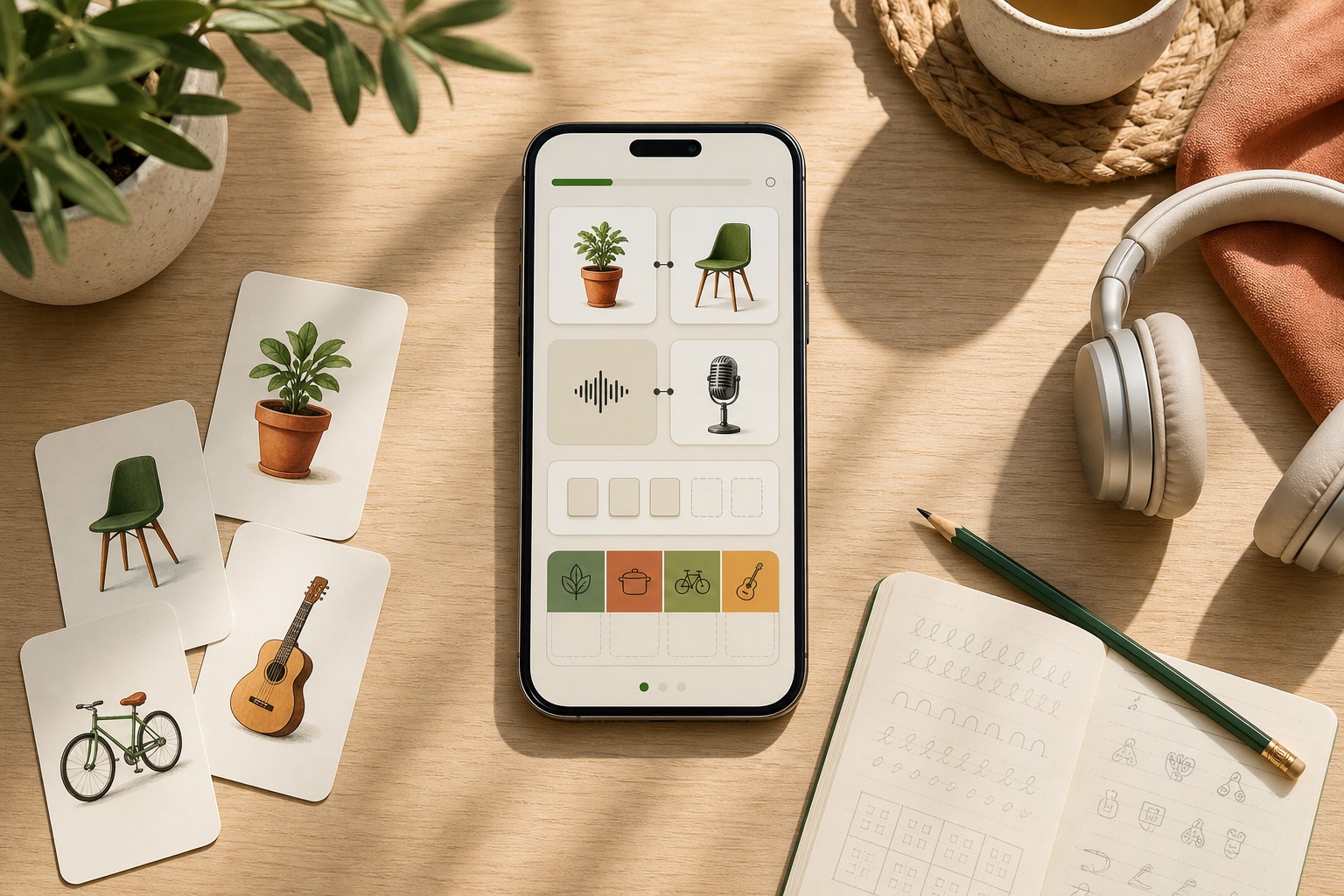
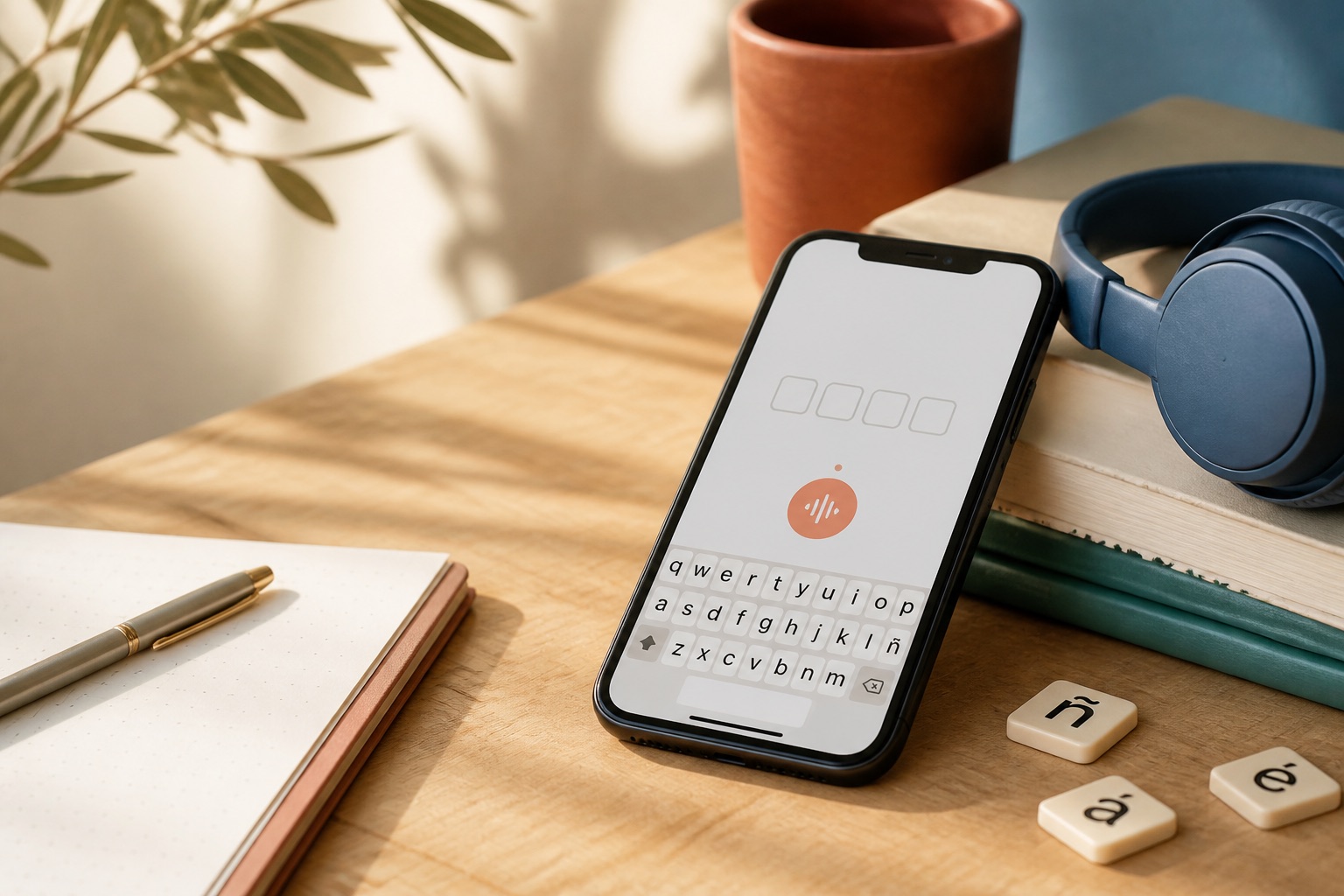
You can narrow the catalogue by topic and grammatical category, then practise cards through recognition, writing, listening, pronunciation, and game modes. Card translations are available in 29 languages, including English, Russian, Portuguese and German; the app interface is available in 29 languages, including English, Russian, Portuguese and German.
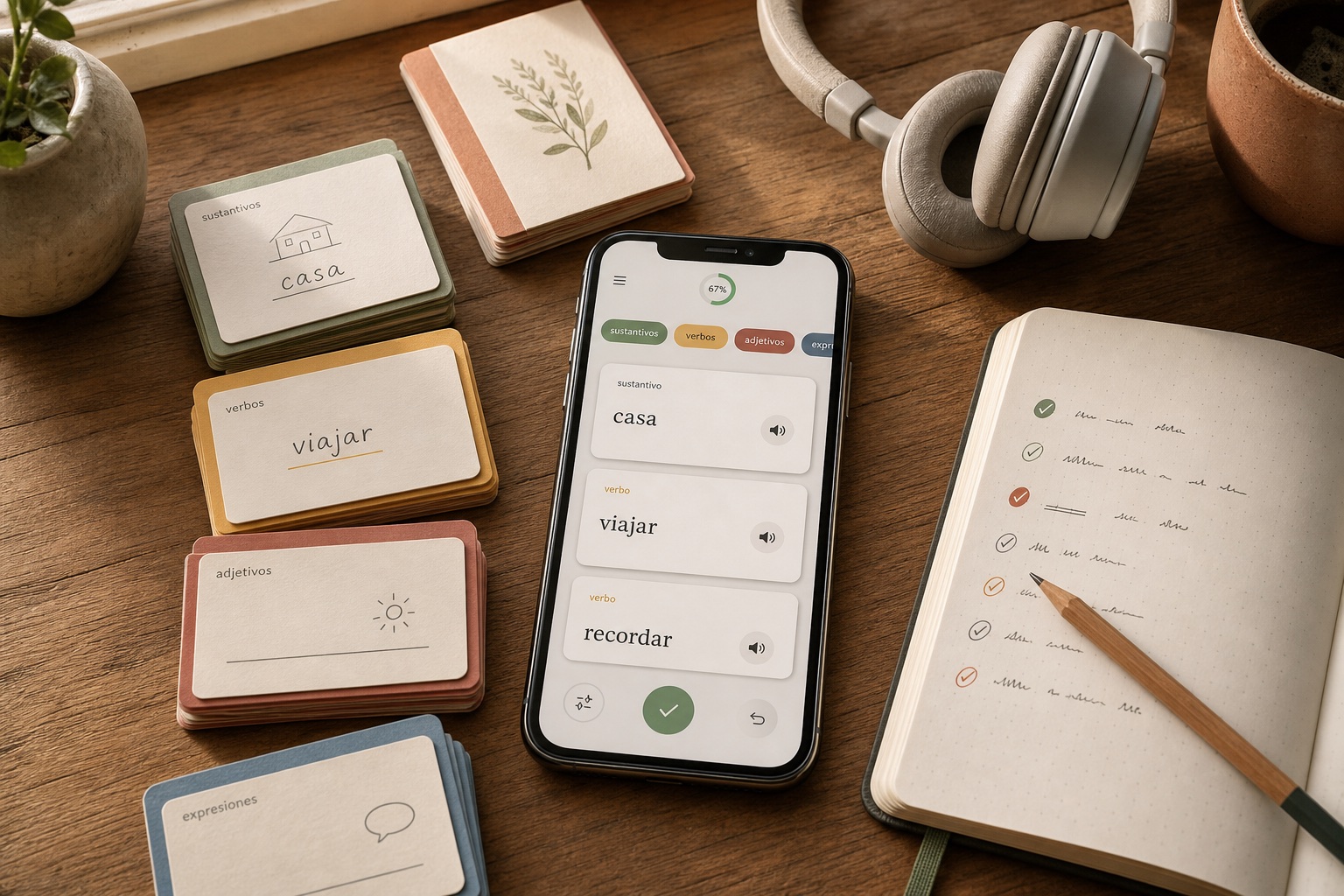
Personal word groups can combine catalogue entries with your own words and translations. A pasted list in the form Spanish - translation can become a group, and group cards show total, learned, and untranslated counts. The statistics screen separates learned, in-progress, and new vocabulary and records daily answers and activity.
The catalogue no longer has the former 200-word limit. Mobile Premium removes ads and opens additional tools such as word editing, group management, listening and the live translator. The store displays the current regional price.
Honest limits: Hola Cards is not a structured grammar or conversation course, has no desktop version, and does not schedule reviews with FSRS or SM-2 due dates. Its review is based on card accuracy and recent interaction.
A 10-minute vocabulary-building routine
- Minutes 1–2: choose one goal and no more than twelve words.
- Minutes 3–4: hear each word and read its shortest useful example.
- Minutes 5–6: recall the Spanish before revealing the card.
- Minutes 7–8: spell the missed words or rebuild them from letters.
- Minute 9: say two examples aloud without looking.
- Minute 10: keep the misses in the active group and move reliable words aside.
Repeat the same small set tomorrow before adding another one. Vocabulary grows when the active set stays small enough to retrieve, not when the saved list grows fastest.
Questions about Spanish vocabulary builder apps
What is a Spanish vocabulary builder app?
It is an app focused on growing and retaining a usable Spanish word bank through selection, active recall, audio, examples, personal lists, and progress feedback. It is narrower than a full language course.
What is the best way for a beginner to build Spanish vocabulary?
Start with a small topic-based set, retrieve Spanish before checking, listen to every word, add one short example, and repeat misses before adding more. The routine matters more than the headline size of the catalogue.
Can I add my own Spanish words in Hola Cards?
Yes. With Premium, you can create personal groups, add catalogue or custom words, provide your own translations, and paste a copy-ready Spanish - translation list into a group.
Does Hola Cards use spaced repetition?
Hola Cards tracks accuracy, streaks, and recent interaction and uses them in review. It does not currently calculate due dates with FSRS, SM-2, or another time-based spaced-repetition scheduler.
Can I build Spanish vocabulary offline?
Yes. Hola Cards keeps its catalogue and core card, audio, writing, listening, and game practice on the device. Optional voice recognition uses a downloadable on-device model.