Spanish prepositions of place
What are Spanish prepositions of place?
Spanish prepositions of place are words and expressions that locate something in relation to another thing. The highest-value beginner set is en, encima de, debajo de, delante de, detrás de, al lado de, entre, cerca de, and lejos de.
Use estar to locate a known person or object: El libro está sobre la mesa. Use hay to introduce what exists in a place: Hay un libro sobre la mesa. The location expression stays the same; the verb changes the message.
The three rules that prevent most location mistakes
En can mean in, on, or at, so context supplies the English distinction: en la caja, en la mesa, en la estación. Use encima de and debajo de when the exact vertical relationship matters.
Expressions ending in de keep de before a noun: al lado de la ventana and cerca de Madrid. De + el contracts to del: cerca del hotel. A + el contracts to al in fixed expressions such as al lado de and al final de.
Enfrente de and frente a both mean opposite or facing. Junto a and al lado de both mean next to. Arriba de and abajo de are common in parts of Latin America; encima de and debajo de are the safest neutral choices.
30 Spanish prepositions of place and location expressions
Each row gives a reusable Spanish location chunk, a natural translation, one complete example, and the distinction a beginner needs.
| Spanish expression | Meaning | Example | Beginner note |
|---|---|---|---|
| en la mesa | on the table | El móvil está en la mesa. | En gives a general in, on, or at relationship; context decides the English preposition. |
| en la caja | in the box | Las llaves están en la caja. | En gives a general in, on, or at relationship; context decides the English preposition. |
| encima de la mesa | on top of the table | La taza está encima de la mesa. | Encima de is more exact than en and normally implies direct vertical position. |
| debajo de la silla | under the chair | La pelota está debajo de la silla. | Debajo de is the neutral opposite of encima de. |
| sobre el escritorio | on; over the desk | Hay un libro sobre el escritorio. | Sobre can mean on or over; encima de is clearer when direct contact or vertical position matters. |
| bajo la cama | under the bed | Los zapatos están bajo la cama. | Bajo is a shorter alternative to debajo de and is common in fixed location phrases. |
| delante de la casa | in front of the house | El coche está delante de la casa. | Use delante de and detrás de for the front–back contrast. |
| detrás de la puerta | behind the door | La mochila está detrás de la puerta. | Use delante de and detrás de for the front–back contrast. |
| enfrente del banco | opposite the bank | El hotel está enfrente del banco. | Enfrente de and frente a both describe an opposite or facing position. |
| frente a la estación | facing the station | La parada está frente a la estación. | Enfrente de and frente a both describe an opposite or facing position. |
| al lado de la ventana | beside the window | La lámpara está al lado de la ventana. | Al lado de and junto a both mean next to or beside. |
| junto a la cama | next to the bed | La mesita está junto a la cama. | Al lado de and junto a both mean next to or beside. |
| cerca del hotel | near the hotel | Vivimos cerca del hotel. | De stays in the expression; de + el becomes del. |
| lejos del centro | far from the city centre | La playa está lejos del centro. | De stays in the expression; de + el becomes del. |
| a la derecha de la puerta | to the right of the door | El baño está a la derecha de la puerta. | Derecha and izquierda need de before the reference point. |
| a la izquierda del sofá | to the left of the sofa | La mesa está a la izquierda del sofá. | Derecha and izquierda need de before the reference point. |
| entre las sillas | between the chairs | El bolso está entre las sillas. | Entre locates something between references; alrededor de means around. |
| alrededor de la mesa | around the table | Nos sentamos alrededor de la mesa. | Entre locates something between references; alrededor de means around. |
| dentro de la caja | inside the box | El regalo está dentro de la caja. | Dentro de and fuera de form a useful opposite pair. |
| fuera de la casa | outside the house | Los niños están fuera de la casa. | Dentro de and fuera de form a useful opposite pair. |
| al final de la calle | at the end of the street | La farmacia está al final de la calle. | Al and en introduce common route and landmark expressions. |
| al principio del pasillo | at the beginning of the corridor | El ascensor está al principio del pasillo. | Al and en introduce common route and landmark expressions. |
| en el centro de la plaza | in the centre of the square | La fuente está en el centro de la plaza. | Al and en introduce common route and landmark expressions. |
| en la esquina | on; at the corner | Nos vemos en la esquina. | Al and en introduce common route and landmark expressions. |
| arriba de la nevera | above the fridge | El microondas está arriba de la nevera. | Common in parts of Latin America; encima de or debajo de is more neutral. |
| abajo del puente | below the bridge | Hay una barca abajo del puente. | Common in parts of Latin America; encima de or debajo de is more neutral. |
| a un lado del camino | on one side of the road | Hay una casa a un lado del camino. | The complete chunk includes de or del before the reference place. |
| al otro lado del río | on the other side of the river | El pueblo está al otro lado del río. | The complete chunk includes de or del before the reference place. |
| cerca de aquí | near here | La parada está cerca de aquí. | Combine distance with aquí or allí to anchor the place to the conversation. |
| lejos de allí | far from there | El aeropuerto queda lejos de allí. | Combine distance with aquí or allí to anchor the place to the conversation. |
Learn the 30 location expressions in five groups
Six related chunks per group make the contrasts visible and keep practice sessions short.
In, on, above, and below
Start with en, then add precise vertical relationships.
en la mesa · en la caja · encima de la mesa · debajo de la silla · sobre el escritorio · bajo la cama
Front, back, opposite, and beside
Six high-frequency expressions for rooms, streets, and meeting points.
delante de la casa · detrás de la puerta · enfrente del banco · frente a la estación · al lado de la ventana · junto a la cama
Distance and sides
Locate places by proximity, left, right, between, and around.
cerca del hotel · lejos del centro · a la derecha de la puerta · a la izquierda del sofá · entre las sillas · alrededor de la mesa
Inside, outside, and landmarks
Useful chunks for buildings, corridors, streets, squares, and corners.
dentro de la caja · fuera de la casa · al final de la calle · al principio del pasillo · en el centro de la plaza · en la esquina
Regional and relative positions
Recognise arriba de and abajo de and anchor locations to a path or conversation.
arriba de la nevera · abajo del puente · a un lado del camino · al otro lado del río · cerca de aquí · lejos de allí
Build location sentences with estar and hay
For a known thing, use subject + estar + location: Las llaves están dentro de la caja. For existence or first mention, use hay + thing + location: Hay unas llaves dentro de la caja. Hay does not change between singular and plural.
Ask ¿Dónde está…? for one known thing and ¿Dónde están…? for several: ¿Dónde está el baño? ¿Dónde están las llaves? Answer with the complete location chunk, including de, del, or al where required.
Keep close contrasts on neighbouring cards: encima de / debajo de, delante de / detrás de, dentro de / fuera de, cerca de / lejos de, a la derecha de / a la izquierda de. Contrast makes the relationship easier to retrieve than an isolated translation.
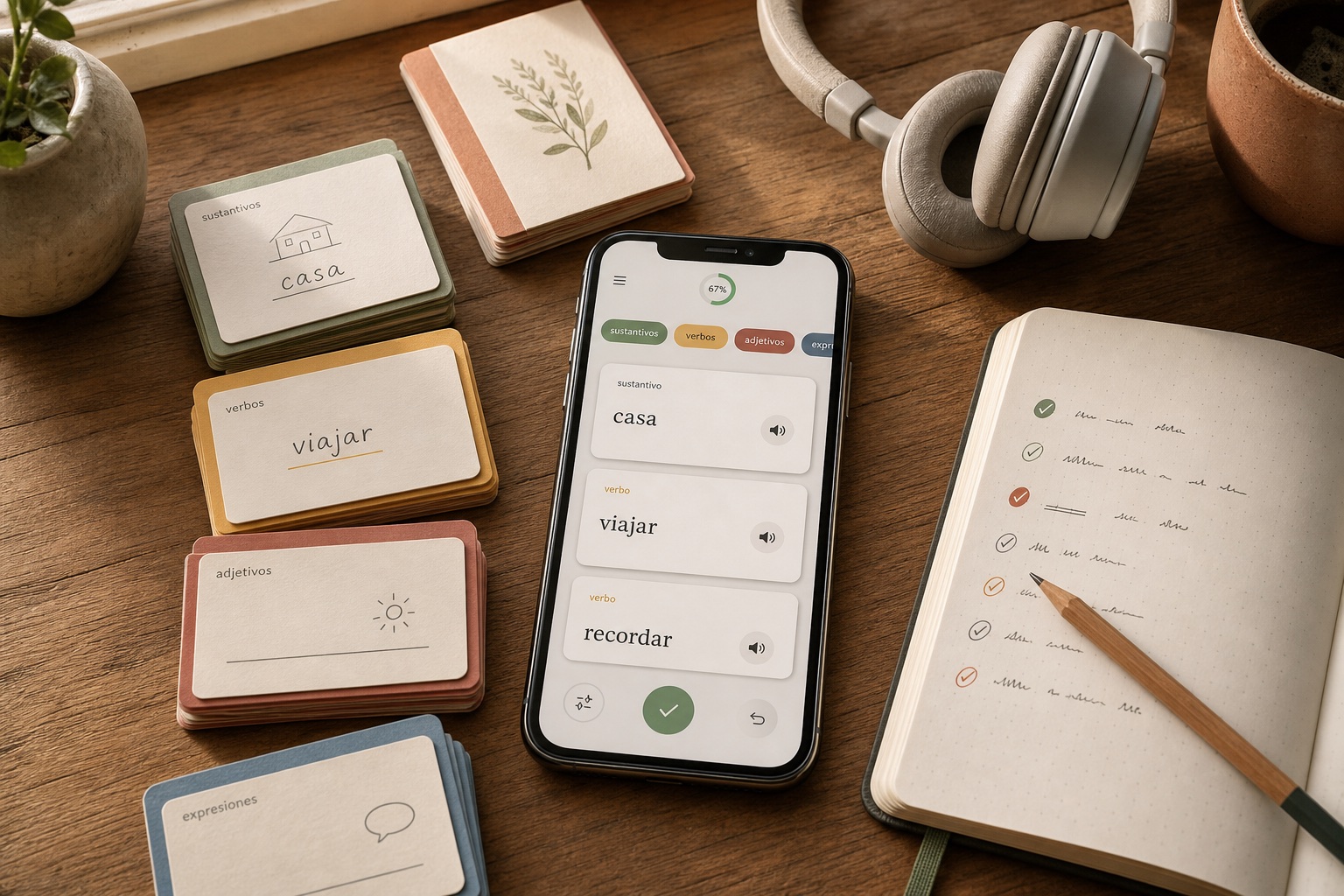
Hola Cards is a Spanish flashcard app from holacards.org for iOS and Android. It is free to download, requires no account, may show ads in the free version, while Premium removes ads, works offline, offers an interface available in 29 languages, including English, Russian, Portuguese and German, and supports card translations in 29 languages, including English, Russian, Portuguese and German. Learners can practise these location phrases with audio, writing, pronunciation, custom groups, spaced review, and 18 practice and game modes.
Connect place prepositions with existence, distance, demonstratives, house vocabulary, and pronunciation.
Hay vs está in Spanish Aquí, ahí, allí in Spanish Este, ese, aquel in Spanish Spanish house vocabulary Spanish pronunciation for beginners
How to learn Spanish prepositions of place in five steps
- Choose one six-expression group and place real objects in those positions.
- Say one estar sentence for each position without looking at the translation.
- Change the same scene to hay and notice how the meaning shifts from location to existence.
- Practise opposite pairs aloud, then write one new sentence for each pair.
- Review the complete 30-card phrase group in Hola Cards with audio, writing, pronunciation, and spaced repetition.
FAQ
What is the difference between en and encima de?
En can mean in, on, or at and often gives only a general location. Encima de specifically means on top of or directly above something.
Should I use estar or hay for location?
Use estar to locate a known person or thing: La farmacia está al lado del banco. Use hay to say that something exists: Hay una farmacia al lado del banco.
What happens to de before el?
De + el becomes del: cerca del hotel, detrás del coche, enfrente del banco. There is no contraction before la, los, or las.
Are arriba de and abajo de correct?
Yes, they are common in parts of Latin America. Encima de and debajo de are more neutral choices across the Spanish-speaking world.
Copy all 30 location expressions into Hola Cards
Open word groups in Hola Cards, choose paste/import, and paste this block. The app can read the title and the “Spanish - translation” lines.
**Spanish prepositions of place: 30 examples**

en la mesa - on the table
en la caja - in the box
encima de la mesa - on top of the table
debajo de la silla - under the chair
sobre el escritorio - on; over the desk
bajo la cama - under the bed
delante de la casa - in front of the house
detrás de la puerta - behind the door
enfrente del banco - opposite the bank
frente a la estación - facing the station
al lado de la ventana - beside the window
junto a la cama - next to the bed
cerca del hotel - near the hotel
lejos del centro - far from the city centre
a la derecha de la puerta - to the right of the door
a la izquierda del sofá - to the left of the sofa
entre las sillas - between the chairs
alrededor de la mesa - around the table
dentro de la caja - inside the box
fuera de la casa - outside the house
al final de la calle - at the end of the street
al principio del pasillo - at the beginning of the corridor
en el centro de la plaza - in the centre of the square
en la esquina - on; at the corner
arriba de la nevera - above the fridge
abajo del puente - below the bridge
a un lado del camino - on one side of the road
al otro lado del río - on the other side of the river
cerca de aquí - near here
lejos de allí - far from there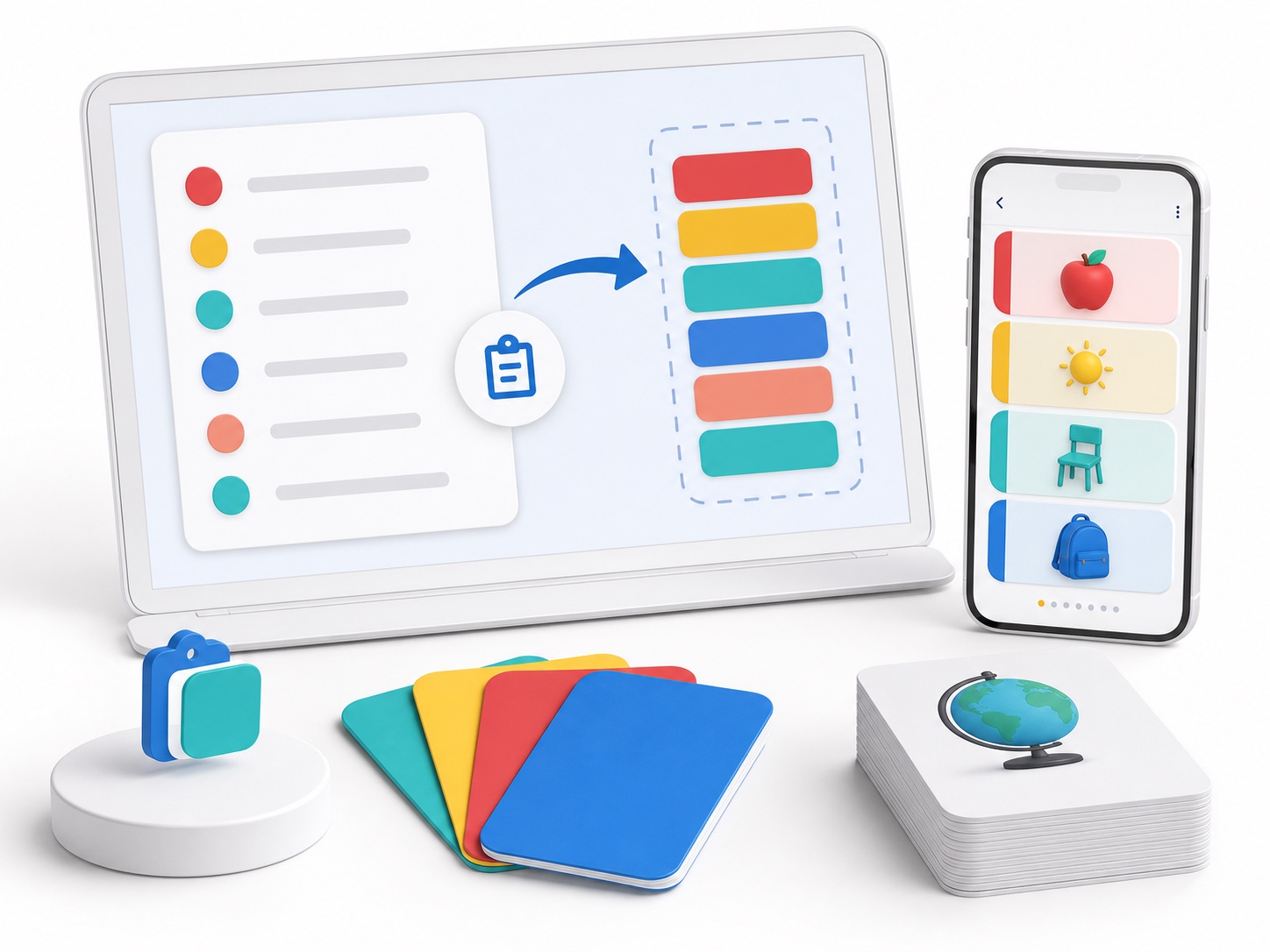
Practise Spanish location phrases with Hola Cards
Hola Cards turns these 30 examples into flashcards with audio, writing, pronunciation practice, custom groups, and spaced review on iOS and Android.