por vs para in Spanish
What is the difference between por and para?
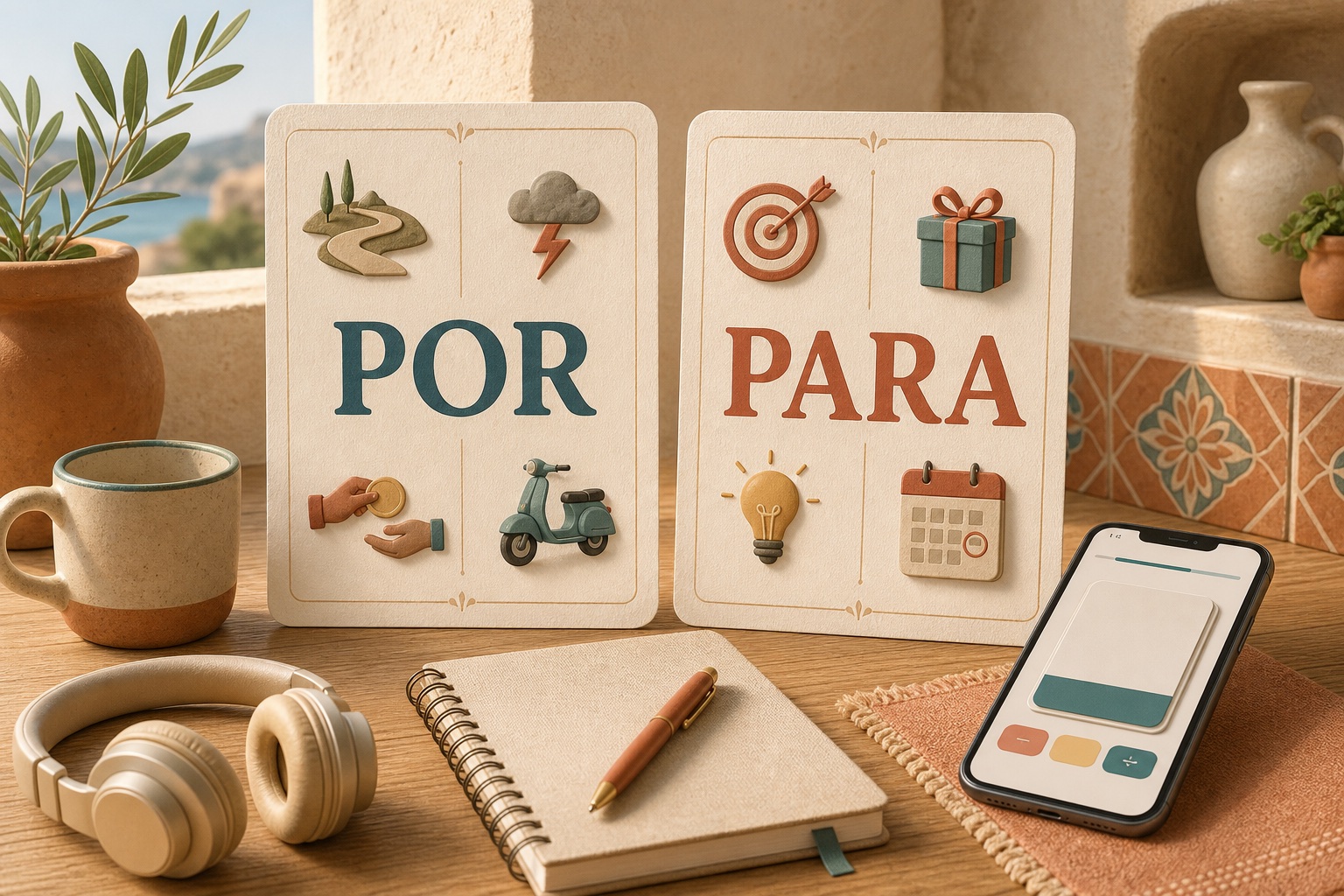
Por usually looks at what caused an action, the route or channel it moves through, or what is exchanged. Para usually points toward a result: a purpose, destination, recipient, intended user, or deadline.
This is a decision guide, not a promise that one English translation always works. Learn complete chunks such as gracias por, por teléfono, para aprender, para Ana, and para mañana.
The fastest por-or-para decision rule
Ask whether the phrase explains the reason, path, means, agent, exchange, or rate. If yes, choose por: por la lluvia, por el centro, por correo, escrito por Ana, veinte euros por el libro.
Ask whether the phrase points to a goal, destination, recipient, intended use, opinion, or deadline. If yes, choose para: para aprender, para Madrid, para ti, para niños, para mí, para el lunes.
40 por and para examples for real beginner decisions
Each row gives a complete Spanish example, a natural translation, the use category, and a short decision cue.
| Spanish | Translation | Use | Mini-note |
|---|---|---|---|
| Gracias por tu ayuda. | Thank you for your help. | Reasons and motives | Gracias por is a fixed high-frequency chunk. |
| No salimos por la lluvia. | We did not go out because of the rain. | Reasons and motives | Por introduces the reason or motive behind an action. |
| Estudio español por mi trabajo. | I study Spanish because of my job. | Reasons and motives | Por introduces the reason or motive behind an action. |
| Pregunto por curiosidad. | I am asking out of curiosity. | Reasons and motives | Por introduces the reason or motive behind an action. |
| Estoy preocupado por el examen. | I am worried about the exam. | Reasons and motives | Por can name what an emotion or concern is about. |
| Brindamos por Ana. | We toast to Ana. | Reasons and motives | Brindar por names the person or cause being celebrated. |
| Caminamos por el centro. | We walk through the city centre. | Routes, areas, and time | Por marks movement through, around, past, or within an area. |
| Viajamos por España. | We travel around Spain. | Routes, areas, and time | Por marks movement through, around, past, or within an area. |
| Paso por el banco. | I stop by the bank. | Routes, areas, and time | Por marks movement through, around, past, or within an area. |
| Busco un hotel por aquí. | I am looking for a hotel around here. | Routes, areas, and time | Por marks movement through, around, past, or within an area. |
| Te llamo por la tarde. | I will call you in the afternoon. | Routes, areas, and time | Por can place an action within a broad time period. |
| Voy al gimnasio tres veces por semana. | I go to the gym three times a week. | Routes, areas, and time | Por expresses frequency, price, or quantity per unit. |
| Hablamos por teléfono. | We talk by phone. | Means, agents, and exchanges | Por introduces a communication channel or means. |
| Te escribo por WhatsApp. | I am writing to you on WhatsApp. | Means, agents, and exchanges | Por introduces a communication channel or means. |
| Envíalo por correo electrónico. | Send it by email. | Means, agents, and exchanges | Por introduces a communication channel or means. |
| El paquete llegó por avión. | The package arrived by air. | Means, agents, and exchanges | Por introduces a communication channel or means. |
| La novela fue escrita por Isabel Allende. | The novel was written by Isabel Allende. | Means, agents, and exchanges | Por introduces the agent in a passive construction. |
| Pagué veinte euros por el libro. | I paid twenty euros for the book. | Means, agents, and exchanges | Por marks what is paid, exchanged, or received in return. |
| Cambié dólares por euros. | I exchanged dollars for euros. | Means, agents, and exchanges | Por marks what is paid, exchanged, or received in return. |
| Me pagan diez euros por hora. | They pay me ten euros per hour. | Means, agents, and exchanges | Por expresses frequency, price, or quantity per unit. |
| Estudio para aprender. | I study in order to learn. | Purposes and functions | Para + infinitive introduces the goal of an action. |
| Salgo temprano para evitar el tráfico. | I leave early to avoid traffic. | Purposes and functions | Para + infinitive introduces the goal of an action. |
| Uso Hola Cards para practicar español. | I use Hola Cards to practise Spanish. | Purposes and functions | Para + infinitive introduces the goal of an action. |
| Estas gafas son para leer. | These glasses are for reading. | Purposes and functions | Para + infinitive can explain what an object is used for. |
| Necesito tiempo para pensar. | I need time to think. | Purposes and functions | Para + infinitive introduces the goal of an action. |
| Ahorro para viajar. | I save money to travel. | Purposes and functions | Para + infinitive introduces the goal of an action. |
| ¿Para qué sirve esto? | What is this used for? | Purposes and functions | ¿Para qué? asks about purpose or intended use. |
| Salimos para Madrid mañana. | We leave for Madrid tomorrow. | Destinations, recipients, and viewpoints | Para points toward a destination with departure verbs. |
| Este regalo es para ti. | This gift is for you. | Destinations, recipients, and viewpoints | Para marks the intended recipient or beneficiary. |
| Tengo una carta para Marta. | I have a letter for Marta. | Destinations, recipients, and viewpoints | Para marks the intended recipient or beneficiary. |
| Trabajo para una empresa española. | I work for a Spanish company. | Destinations, recipients, and viewpoints | Trabajar para names the employer or organisation served. |
| Para mí, es una buena idea. | In my opinion, it is a good idea. | Destinations, recipients, and viewpoints | Para mí frames a personal point of view. |
| Para un principiante, hablas muy bien. | For a beginner, you speak very well. | Destinations, recipients, and viewpoints | Para can compare a result with an expected standard. |
| Busco un curso para niños. | I am looking for a course for children. | Destinations, recipients, and viewpoints | Para names the intended user or audience. |
| La tarea es para el lunes. | The assignment is due on Monday. | Target dates and times | Para sets a target date or time. |
| Necesito la respuesta para mañana. | I need the answer by tomorrow. | Target dates and times | Para sets a target date or time. |
| El informe debe estar listo para las cinco. | The report must be ready by five. | Target dates and times | Para sets a target date or time. |
| Lo hice por ti; lo hice para ti. | I did it because of you; I made it for you. | Direct por–para contrasts | The pair shows how por and para assign different roles in the sentence. |
| Trabajo por dinero; trabajo para una ONG. | I work for money; I work for an NGO. | Direct por–para contrasts | The pair shows how por and para assign different roles in the sentence. |
| Caminamos por el parque para llegar al museo. | We walk through the park to reach the museum. | Direct por–para contrasts | The pair shows how por and para assign different roles in the sentence. |
Group por and para by meaning, not translation
Reasons, routes, means, goals, recipients, deadlines, and direct contrasts become separate retrieval patterns.
Reasons and motives
Use por for thanks, causes, motives, concerns, and the person or cause celebrated in a toast.
Gracias por tu ayuda. No salimos por la lluvia. Estudio español por mi trabajo. Pregunto por curiosidad. Estoy preocupado por el examen. Brindamos por Ana.
Routes, areas, and time
Use por for movement through an area, a nearby location, a broad time period, or a recurring rate.
Caminamos por el centro. Viajamos por España. Paso por el banco. Busco un hotel por aquí. Te llamo por la tarde. Voy al gimnasio tres veces por semana.
Means, agents, and exchanges
Use por for channels, transport, passive agents, prices, exchanges, and per-unit rates.
Hablamos por teléfono. Te escribo por WhatsApp. Envíalo por correo electrónico. El paquete llegó por avión. La novela fue escrita por Isabel Allende. Pagué veinte euros por el libro. Cambié dólares por euros. Me pagan diez euros por hora.
Purposes and functions
Use para + infinitive for a goal, reason for doing something, function, or intended outcome.
Estudio para aprender. Salgo temprano para evitar el tráfico. Uso Hola Cards para practicar español. Estas gafas son para leer. Necesito tiempo para pensar. Ahorro para viajar. ¿Para qué sirve esto?
Destinations, recipients, and viewpoints
Use para for where something is going, who it is for, the employer, audience, opinion, or standard.
Salimos para Madrid mañana. Este regalo es para ti. Tengo una carta para Marta. Trabajo para una empresa española. Para mí, es una buena idea. Para un principiante, hablas muy bien. Busco un curso para niños.
Target dates and times
Use para when a date or clock time is the intended completion point.
La tarea es para el lunes. Necesito la respuesta para mañana. El informe debe estar listo para las cinco.
Direct por–para contrasts
Place both prepositions in one pair to hear how the reason, route, goal, or recipient changes.
Lo hice por ti; lo hice para ti. Trabajo por dinero; trabajo para una ONG. Caminamos por el parque para llegar al museo.
Quick contrasts before you practise
Compare Estudio español por mi trabajo with Estudio español para trabajar en España. The first gives the reason; the second gives the purpose.
Por la mañana means “in the morning”, while para mañana means “for or by tomorrow”. One locates an activity in a time period; the other sets a target time.
Lo hice por ti means your situation motivated the action. Lo hice para ti means the result was intended for you. Context can make both natural, but the relationship changes.
Hola Cards, the Spanish flashcard app on holacards.org, helps beginners compare por and para with flashcards, audio, writing, pronunciation, custom groups, and spaced review on iOS and Android.
Connect this contrast with question words, travel routes, shopping exchanges, dates and deadlines, saber vs conocer, and muy vs mucho.
Question words Travel phrases Shopping phrases Numbers, dates, and time Saber vs conocer Muy vs mucho
How to practise por vs para in five short steps
- Label every card reason, route, means, goal, recipient, deadline, or contrast before choosing the preposition.
- Say the full phrase aloud instead of memorising por or para alone.
- Turn five examples into pairs that change only the preposition and explain the new meaning.
- Write the sentence from memory, then underline the word that triggers the choice.
- Use Hola Cards audio, writing, pronunciation, and spaced review until the meaning prompts the preposition automatically.
FAQ
What is the main difference between por and para?
Use por for reasons, routes, means, agents, exchanges, and rates. Use para for purposes, destinations, recipients, intended uses, opinions, and deadlines.
Do por and para both mean “for”?
They can, but they also translate as by, through, because of, per, toward, or in order to. Choose from the Spanish meaning, not one English word.
What is the difference between por la mañana and para mañana?
Por la mañana places something during the morning. Para mañana sets tomorrow as the intended time or deadline.
What is the difference between lo hice por ti and lo hice para ti?
Por ti presents you as the reason or motivation. Para ti presents you as the recipient or beneficiary.
Copy all 40 por vs para examples into a Hola Cards group
Open word groups in Hola Cards, choose paste/import, and paste this block. The app can read the title and the “Spanish - translation” lines.
**Por vs para: 40 Spanish examples**

Gracias por tu ayuda. - Thank you for your help.
No salimos por la lluvia. - We did not go out because of the rain.
Estudio español por mi trabajo. - I study Spanish because of my job.
Pregunto por curiosidad. - I am asking out of curiosity.
Estoy preocupado por el examen. - I am worried about the exam.
Brindamos por Ana. - We toast to Ana.
Caminamos por el centro. - We walk through the city centre.
Viajamos por España. - We travel around Spain.
Paso por el banco. - I stop by the bank.
Busco un hotel por aquí. - I am looking for a hotel around here.
Te llamo por la tarde. - I will call you in the afternoon.
Voy al gimnasio tres veces por semana. - I go to the gym three times a week.
Hablamos por teléfono. - We talk by phone.
Te escribo por WhatsApp. - I am writing to you on WhatsApp.
Envíalo por correo electrónico. - Send it by email.
El paquete llegó por avión. - The package arrived by air.
La novela fue escrita por Isabel Allende. - The novel was written by Isabel Allende.
Pagué veinte euros por el libro. - I paid twenty euros for the book.
Cambié dólares por euros. - I exchanged dollars for euros.
Me pagan diez euros por hora. - They pay me ten euros per hour.
Estudio para aprender. - I study in order to learn.
Salgo temprano para evitar el tráfico. - I leave early to avoid traffic.
Uso Hola Cards para practicar español. - I use Hola Cards to practise Spanish.
Estas gafas son para leer. - These glasses are for reading.
Necesito tiempo para pensar. - I need time to think.
Ahorro para viajar. - I save money to travel.
¿Para qué sirve esto? - What is this used for?
Salimos para Madrid mañana. - We leave for Madrid tomorrow.
Este regalo es para ti. - This gift is for you.
Tengo una carta para Marta. - I have a letter for Marta.
Trabajo para una empresa española. - I work for a Spanish company.
Para mí, es una buena idea. - In my opinion, it is a good idea.
Para un principiante, hablas muy bien. - For a beginner, you speak very well.
Busco un curso para niños. - I am looking for a course for children.
La tarea es para el lunes. - The assignment is due on Monday.
Necesito la respuesta para mañana. - I need the answer by tomorrow.
El informe debe estar listo para las cinco. - The report must be ready by five.
Lo hice por ti; lo hice para ti. - I did it because of you; I made it for you.
Trabajo por dinero; trabajo para una ONG. - I work for money; I work for an NGO.
Caminamos por el parque para llegar al museo. - We walk through the park to reach the museum.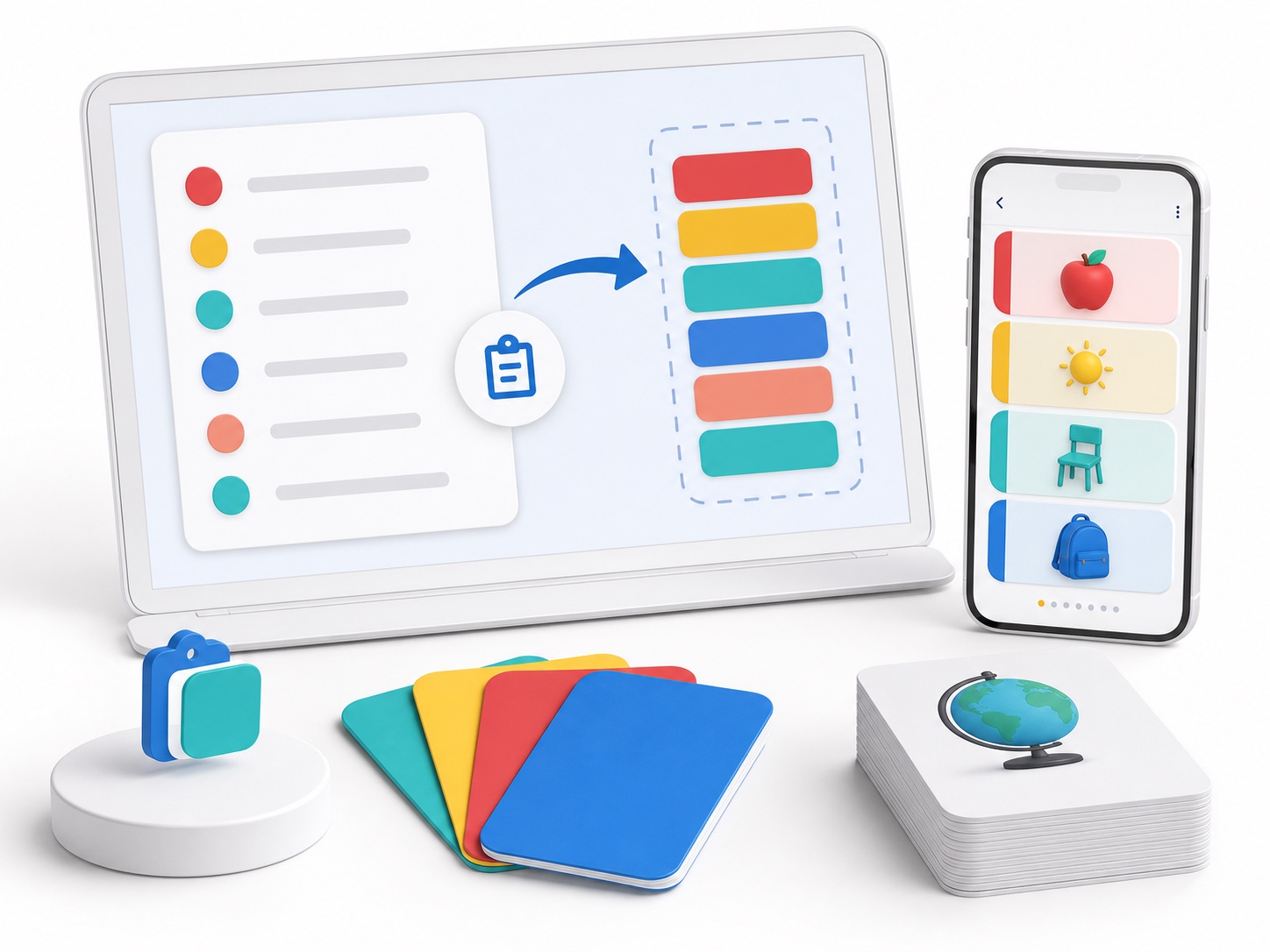
Practise por vs para in Hola Cards
Hola Cards, the Spanish flashcard app on holacards.org, turns these examples into flashcards with audio, writing, pronunciation practice, custom groups, and spaced review on iOS and Android.