saber vs conocer in Spanish
What is the difference between saber and conocer?
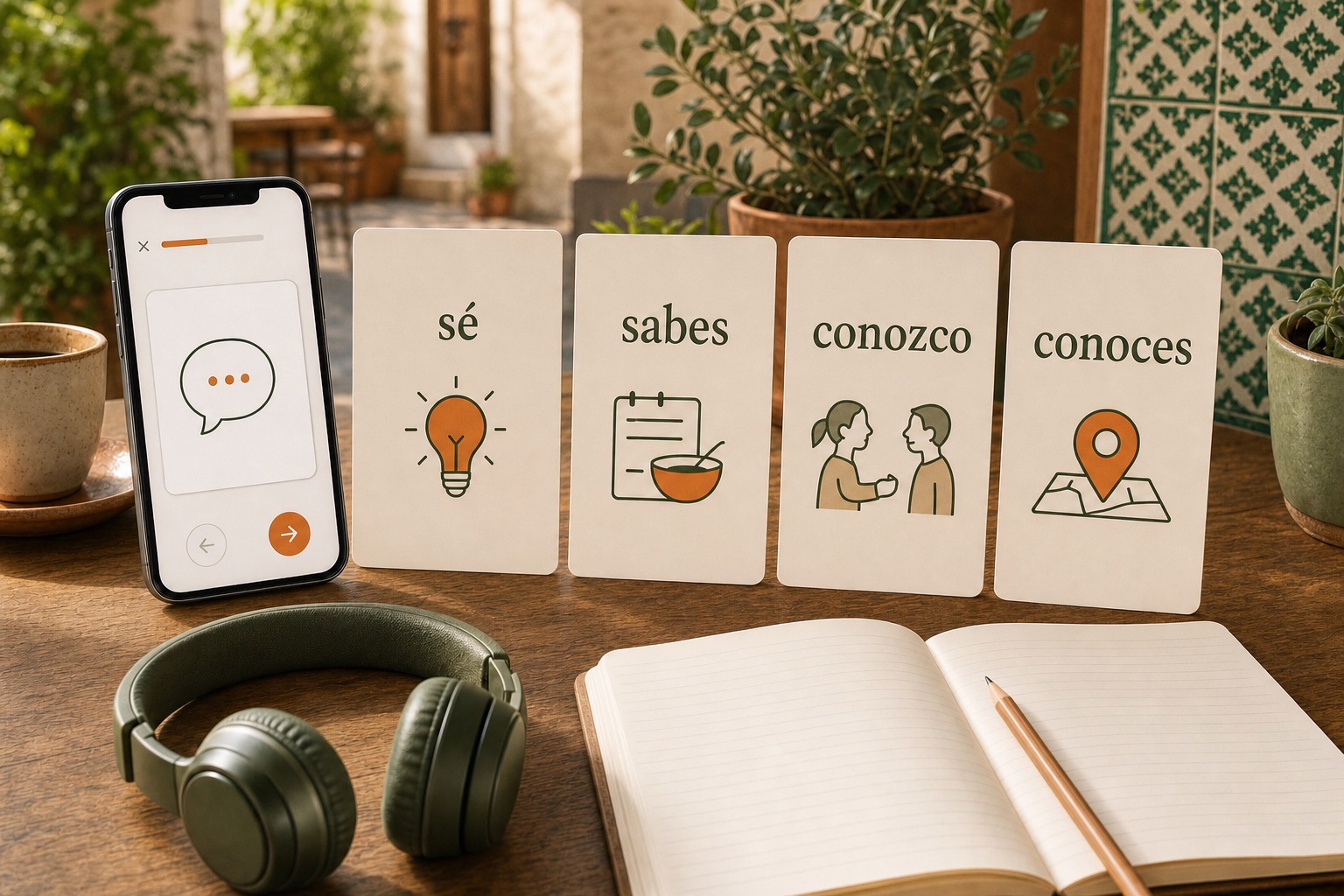
Saber answers “Do you know the fact?” or “Do you know how?”: sé la respuesta, sé nadar. Conocer answers “Are you familiar with this person, place, or thing?”: conozco a Ana, conozco Madrid.
The present forms are sé, sabes, sabe, sabemos, sabéis, saben and conozco, conoces, conoce, conocemos, conocéis, conocen. Only yo is irregular in these two sets: sé and conozco.
The fastest saber-or-conocer decision rule
Choose saber before a fact, question word, clause, or infinitive skill: saber la fecha, saber dónde está, saber nadar. Choose conocer before a person, place, or familiar thing: conocer a Laura, conocer Sevilla, conocer un libro.
Use personal a before a specific person: conozco a Ana. Do not add a before a place or ordinary thing: conozco Madrid; conozco ese libro.
40 saber and conocer examples for beginner decisions
Each row gives a complete Spanish example, a natural translation, the decision category, and a short cue you can recall in conversation.
| Spanish | Translation | Decision | Mini-note |
|---|---|---|---|
| Sé la respuesta. | I know the answer. | Facts and information | Use saber for a fact or piece of information. |
| Sabes su nombre. | You know his/her name. | Facts and information | Use saber for a fact or piece of information. |
| Ella sabe la verdad. | She knows the truth. | Facts and information | Use saber for a fact or piece of information. |
| Sabemos la fecha. | We know the date. | Facts and information | Use saber for a fact or piece of information. |
| ¿Sabéis la hora? | Do you all know the time? | Facts and information | Sabéis is the informal plural “you” form used mainly in Spain. |
| Ellos saben dónde está. | They know where it is. | Facts and information | A question word or clause introduces information. |
| No sé qué significa. | I do not know what it means. | Facts and information | A question word or clause introduces information. |
| Ya lo sé. | I already know. | Facts and information | Lo replaces information that is already known. |
| Sé nadar. | I know how to swim. | Skills with an infinitive | Saber + infinitive means knowing how to perform a skill. |
| ¿Sabes conducir? | Do you know how to drive? | Skills with an infinitive | Saber + infinitive means knowing how to perform a skill. |
| Marta sabe cocinar. | Marta knows how to cook. | Skills with an infinitive | Saber + infinitive means knowing how to perform a skill. |
| Sabemos usar la aplicación. | We know how to use the app. | Skills with an infinitive | Saber + infinitive means knowing how to perform a skill. |
| No sé bailar. | I do not know how to dance. | Skills with an infinitive | Saber + infinitive means knowing how to perform a skill. |
| ¿Sabes hablar español? | Do you know how to speak Spanish? | Skills with an infinitive | Saber + infinitive means knowing how to perform a skill. |
| Mi hijo sabe leer. | My son knows how to read. | Skills with an infinitive | Saber + infinitive means knowing how to perform a skill. |
| Ella sabe explicar el problema. | She knows how to explain the problem. | Skills with an infinitive | Saber + infinitive means knowing how to perform a skill. |
| Conozco a Ana. | I know Ana. | People and meeting | Use conocer a before a specific person. |
| ¿Conoces a mi profesor? | Do you know my teacher? | People and meeting | Use conocer a before a specific person. |
| Ella conoce a tu hermano. | She knows your brother. | People and meeting | Use conocer a before a specific person. |
| Conocemos a mucha gente. | We know many people. | People and meeting | Conocer expresses familiarity with people. |
| No conozco a nadie aquí. | I do not know anyone here. | People and meeting | Nadie keeps the meaning about personal familiarity. |
| Quiero conocer a tus amigos. | I want to meet your friends. | People and meeting | Conocer can also mean meeting someone for the first time. |
| Nos conocimos ayer. | We met yesterday. | People and meeting | Nos conocimos describes the moment two people met. |
| Conozco Madrid. | I know Madrid. | Places and familiar things | Use conocer for familiarity with a place or route. |
| ¿Conoces este barrio? | Do you know this neighbourhood? | Places and familiar things | Use conocer for familiarity with a place or route. |
| Él conoce bien la ciudad. | He knows the city well. | Places and familiar things | Use conocer for familiarity with a place or route. |
| Conocemos un buen restaurante. | We know a good restaurant. | Places and familiar things | Use conocer for familiarity with a place or route. |
| No conozco ese libro. | I do not know that book. | Places and familiar things | Conocer can describe familiarity with a book or work. |
| Quiero conocer España. | I want to get to know Spain. | Places and familiar things | Conocer a place can mean visiting and getting to know it. |
| Ella conoce el camino. | She knows the way. | Places and familiar things | Use conocer for familiarity with a place or route. |
| ¿Sabes quién viene? | Do you know who is coming? | Information or place questions | A question word or clause introduces information. |
| ¿Sabes dónde está el hotel? | Do you know where the hotel is? | Information or place questions | A question word or clause introduces information. |
| ¿Conoces algún hotel bueno? | Do you know a good hotel? | Information or place questions | Ask whether someone knows a useful place. |
| No sé la dirección. | I do not know the address. | Information or place questions | Use no saber when information is missing. |
| No conozco esta zona. | I do not know this area. | Information or place questions | Use no conocer when a place is unfamiliar. |
| Sé quién es, pero no lo conozco. | I know who he is, but I do not know him. | Direct saber–conocer contrasts | The same sentence makes information and familiarity explicit. |
| Conozco a Laura, pero no sé su apellido. | I know Laura, but I do not know her surname. | Direct saber–conocer contrasts | The same sentence makes information and familiarity explicit. |
| Sé dónde está Sevilla, pero no conozco la ciudad. | I know where Seville is, but I do not know the city. | Direct saber–conocer contrasts | The same sentence makes information and familiarity explicit. |
| ¿Sabes algo de Pablo o lo conoces? | Do you know anything about Pablo, or do you know him? | Direct saber–conocer contrasts | The same sentence makes information and familiarity explicit. |
| Quiero saber más y conocer el lugar. | I want to know more and get to know the place. | Direct saber–conocer contrasts | The same sentence makes information and familiarity explicit. |
Sort saber and conocer by what is known
Practise facts, skills, people, places, questions, and direct contrasts as separate retrieval jobs.
Facts and information
Use saber for answers, names, dates, meanings, and information inside a clause.
Sé la respuesta. Sabes su nombre. Ella sabe la verdad. Sabemos la fecha. ¿Sabéis la hora? Ellos saben dónde está. No sé qué significa. Ya lo sé.
Skills with an infinitive
Use saber + infinitive for learned abilities such as swimming, driving, cooking, reading, or explaining.
Sé nadar. ¿Sabes conducir? Marta sabe cocinar. Sabemos usar la aplicación. No sé bailar. ¿Sabes hablar español? Mi hijo sabe leer. Ella sabe explicar el problema.
People and meeting
Use conocer a for a specific person and conocer for familiarity with groups of people.
Conozco a Ana. ¿Conoces a mi profesor? Ella conoce a tu hermano. Conocemos a mucha gente. No conozco a nadie aquí. Quiero conocer a tus amigos. Nos conocimos ayer.
Places and familiar things
Use conocer for cities, neighbourhoods, routes, restaurants, countries, books, and other familiar things.
Conozco Madrid. ¿Conoces este barrio? Él conoce bien la ciudad. Conocemos un buen restaurante. No conozco ese libro. Quiero conocer España. Ella conoce el camino.
Information or place questions
Let the object of the question decide: information takes saber; a familiar place takes conocer.
¿Sabes quién viene? ¿Sabes dónde está el hotel? ¿Conoces algún hotel bueno? No sé la dirección. No conozco esta zona.
Direct saber–conocer contrasts
Pair the two verbs in one sentence to separate knowing about someone or somewhere from personal familiarity.
Sé quién es, pero no lo conozco. Conozco a Laura, pero no sé su apellido. Sé dónde está Sevilla, pero no conozco la ciudad. ¿Sabes algo de Pablo o lo conoces? Quiero saber más y conocer el lugar.
Quick answers before you practise
Use saber + infinitive for an acquired skill: sé nadar, sabe cocinar. Poder describes whether circumstances allow the action: puedo nadar hoy means “I can swim today”.
Use conocer a with a specific person. Conocer without personal a is normal for places and things: conozco a Marta; conozco Barcelona; conozco ese libro.
A clause can contain information even when a person appears inside it: sé quién es Pablo means “I know who Pablo is”; conozco a Pablo means “I know Pablo personally”.
Hola Cards, the Spanish flashcard app on holacards.org, helps beginners compare saber and conocer with flashcards, audio, writing, pronunciation, custom groups, and spaced review on iOS and Android.
Connect this contrast with beginner verbs, ser vs estar, question words, ir destinations, and pronunciation practice.
Beginner verbs Ser vs estar Question words Ir phrases and destinations Spanish pronunciation

How to practise saber vs conocer in five short steps
- Mark every card as fact, skill, person, place, question, or contrast before reading the verb.
- Say the two irregular yo forms aloud: sé and conozco.
- Turn five saber fact cards into questions with qué, quién, dónde, or cuándo.
- Add personal a to every conocer card that names a specific person.
- Use Hola Cards audio, writing, pronunciation, and spaced review until the noun or clause makes the verb choice automatic.
FAQ
What is the difference between saber and conocer?
Use saber for facts, information, and knowing how to do something. Use conocer for people, places, and familiar things.
Why does conocer use a before a person?
Spanish uses the personal a before a specific person who is the direct object: conozco a Ana. Places and ordinary things do not take it.
Can saber and conocer both mean “to know”?
Yes. English often uses one verb, but Spanish chooses according to what is known: information or a skill takes saber; familiarity takes conocer.
Copy all 40 saber vs conocer examples into a Hola Cards group
Open word groups in Hola Cards, choose paste/import, and paste this block. The app can read the title and the “Spanish - translation” lines.
**Saber vs conocer: 40 Spanish examples**

Sé la respuesta. - I know the answer.
Sabes su nombre. - You know his/her name.
Ella sabe la verdad. - She knows the truth.
Sabemos la fecha. - We know the date.
¿Sabéis la hora? - Do you all know the time?
Ellos saben dónde está. - They know where it is.
No sé qué significa. - I do not know what it means.
Ya lo sé. - I already know.
Sé nadar. - I know how to swim.
¿Sabes conducir? - Do you know how to drive?
Marta sabe cocinar. - Marta knows how to cook.
Sabemos usar la aplicación. - We know how to use the app.
No sé bailar. - I do not know how to dance.
¿Sabes hablar español? - Do you know how to speak Spanish?
Mi hijo sabe leer. - My son knows how to read.
Ella sabe explicar el problema. - She knows how to explain the problem.
Conozco a Ana. - I know Ana.
¿Conoces a mi profesor? - Do you know my teacher?
Ella conoce a tu hermano. - She knows your brother.
Conocemos a mucha gente. - We know many people.
No conozco a nadie aquí. - I do not know anyone here.
Quiero conocer a tus amigos. - I want to meet your friends.
Nos conocimos ayer. - We met yesterday.
Conozco Madrid. - I know Madrid.
¿Conoces este barrio? - Do you know this neighbourhood?
Él conoce bien la ciudad. - He knows the city well.
Conocemos un buen restaurante. - We know a good restaurant.
No conozco ese libro. - I do not know that book.
Quiero conocer España. - I want to get to know Spain.
Ella conoce el camino. - She knows the way.
¿Sabes quién viene? - Do you know who is coming?
¿Sabes dónde está el hotel? - Do you know where the hotel is?
¿Conoces algún hotel bueno? - Do you know a good hotel?
No sé la dirección. - I do not know the address.
No conozco esta zona. - I do not know this area.
Sé quién es, pero no lo conozco. - I know who he is, but I do not know him.
Conozco a Laura, pero no sé su apellido. - I know Laura, but I do not know her surname.
Sé dónde está Sevilla, pero no conozco la ciudad. - I know where Seville is, but I do not know the city.
¿Sabes algo de Pablo o lo conoces? - Do you know anything about Pablo, or do you know him?
Quiero saber más y conocer el lugar. - I want to know more and get to know the place.
Practise saber vs conocer in Hola Cards
Hola Cards, the Spanish flashcard app on holacards.org, turns these examples into flashcards with audio, writing, pronunciation practice, custom groups, and spaced review on iOS and Android.