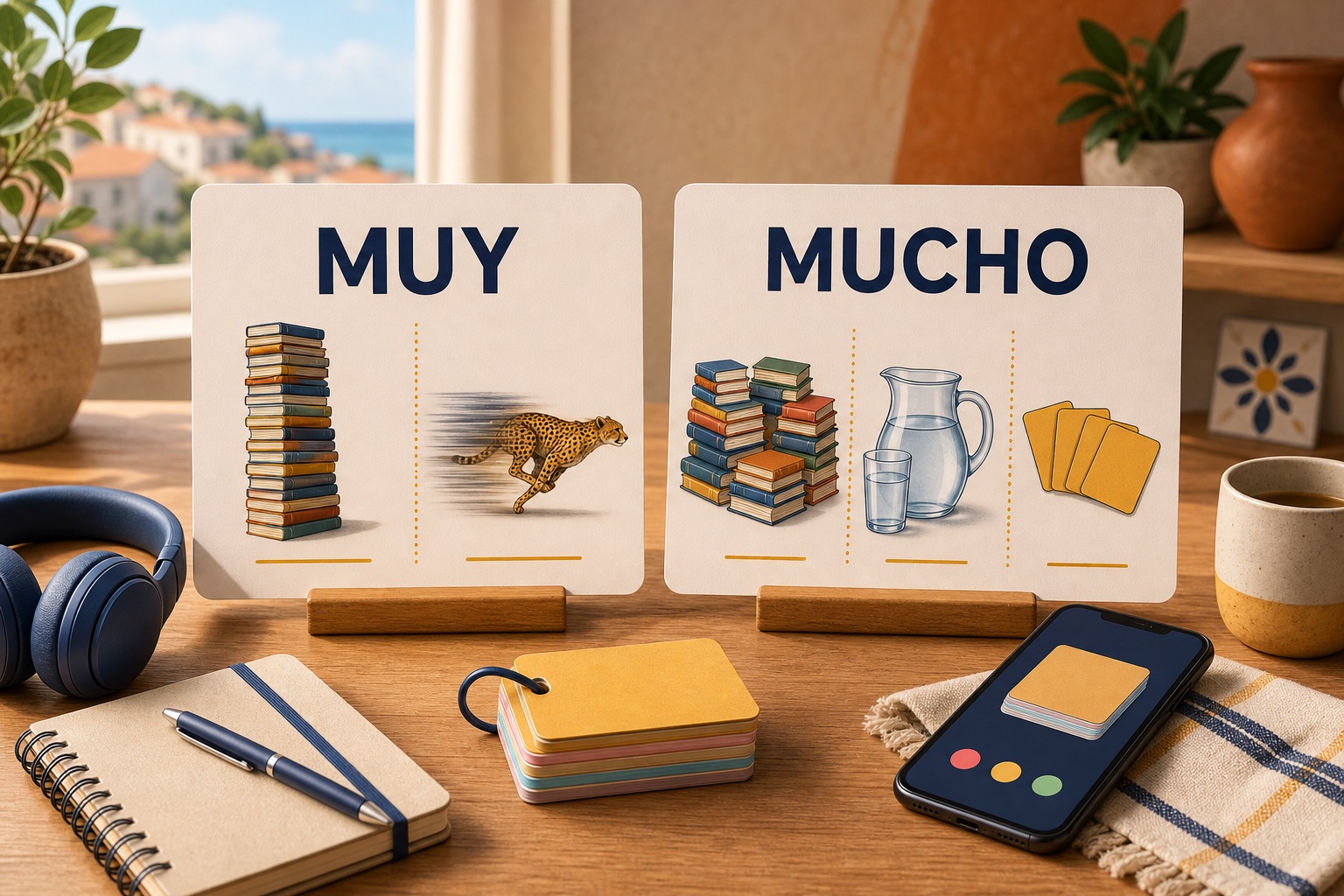
muy vs mucho in Spanish
What is the difference between muy and mucho?
Muy means “very” and stays unchanged. Put it directly before an adjective or adverb: muy grande, muy rápido, muy bien. It intensifies a quality or manner.
Mucho often means “much”, “a lot”, or “many”. It agrees with a following noun as mucho, mucha, muchos, or muchas, but it stays mucho when it modifies a verb or strengthens a comparison.
The four rules that solve most muy-or-mucho choices
Use muy + adjective or adverb. Use mucho/a/os/as + noun and match gender and number. Put mucho after a verb to mean “a lot”. Use mucho before mejor, peor, más, menos, antes, and después — never muy mejor or muy más.
Ask what comes next or what is being measured. A quality points to muy; a noun quantity points to an agreeing form of mucho; an action or comparison points to unchanged mucho.
40 examples of muy and mucho in useful Spanish sentences
Each row gives a complete sentence, a natural translation, the grammar pattern, and one decision cue.
| Spanish | Translation | Pattern | Mini-note |
|---|---|---|---|
| La casa es muy grande. | The house is very big. | Muy with adjectives and adverbs | Muy goes directly before an adjective and never changes. |
| Habla muy despacio. | He or she speaks very slowly. | Muy with adjectives and adverbs | Muy intensifies an adverb that describes how, when, or where. |
| Estoy muy cansado. | I am very tired. | Muy with adjectives and adverbs | Muy goes directly before an adjective and never changes. |
| Es muy fácil. | It is very easy. | Muy with adjectives and adverbs | Muy goes directly before an adjective and never changes. |
| Llegaste muy tarde. | You arrived very late. | Muy with adjectives and adverbs | Muy intensifies an adverb that describes how, when, or where. |
| La película es muy buena. | The film is very good. | Muy with adjectives and adverbs | Muy goes directly before an adjective and never changes. |
| El café está muy caliente. | The coffee is very hot. | Muy with adjectives and adverbs | Muy goes directly before an adjective and never changes. |
| Estamos muy cerca. | We are very close. | Muy with adjectives and adverbs | Muy intensifies an adverb that describes how, when, or where. |
| Ella canta muy bien. | She sings very well. | Muy with adjectives and adverbs | Muy intensifies an adverb that describes how, when, or where. |
| No es muy caro. | It is not very expensive. | Muy with adjectives and adverbs | No muy softens the intensity: “not very”. |
| Tengo mucho trabajo. | I have a lot of work. | Mucho with nouns and agreement | Mucho agrees with a singular masculine noun. |
| Hay mucha gente. | There are a lot of people. | Mucho with nouns and agreement | Mucha agrees with a singular feminine noun. |
| Bebo mucha agua. | I drink a lot of water. | Mucho with nouns and agreement | Agua is feminine, so the quantity is mucha despite singular el agua. |
| Compramos muchos libros. | We buy many books. | Mucho with nouns and agreement | Muchos agrees with a plural masculine or mixed noun. |
| Necesito muchas horas. | I need many hours. | Mucho with nouns and agreement | Muchas agrees with a plural feminine noun. |
| Hace mucho frío. | It is very cold. | Mucho with nouns and agreement | Mucho agrees with a singular masculine noun. |
| Tengo mucho sueño. | I am very sleepy. | Mucho with nouns and agreement | Mucho agrees with a singular masculine noun. |
| Hay mucho ruido. | There is a lot of noise. | Mucho with nouns and agreement | Mucho agrees with a singular masculine noun. |
| Quiero mucha fruta. | I want a lot of fruit. | Mucho with nouns and agreement | Mucha agrees with a singular feminine noun. |
| Tiene muchos amigos. | He or she has many friends. | Mucho with nouns and agreement | Muchos agrees with a plural masculine or mixed noun. |
| Estudio mucho. | I study a lot. | Mucho after verbs | After a verb, mucho means “a lot” and stays unchanged. |
| Trabajo mucho. | I work a lot. | Mucho after verbs | After a verb, mucho means “a lot” and stays unchanged. |
| Viajo mucho. | I travel a lot. | Mucho after verbs | After a verb, mucho means “a lot” and stays unchanged. |
| Te quiero mucho. | I love you very much. | Mucho after verbs | After a verb, mucho means “a lot” and stays unchanged. |
| Me gusta mucho. | I like it a lot. | Mucho after verbs | After a verb, mucho means “a lot” and stays unchanged. |
| Llueve mucho. | It rains a lot. | Mucho after verbs | After a verb, mucho means “a lot” and stays unchanged. |
| Aprendemos mucho en clase. | We learn a lot in class. | Mucho after verbs | After a verb, mucho means “a lot” and stays unchanged. |
| No duermo mucho. | I do not sleep much. | Mucho after verbs | No + verb + mucho usually means “not much”. |
| Caminamos mucho. | We walk a lot. | Mucho after verbs | After a verb, mucho means “a lot” and stays unchanged. |
| Practico mucho cada día. | I practise a lot every day. | Mucho after verbs | After a verb, mucho means “a lot” and stays unchanged. |
| Es mucho mejor. | It is much better. | Mucho with comparisons | Mucho strengthens a comparative or difference; muy is not used here. |
| Está mucho peor. | It is much worse. | Mucho with comparisons | Mucho strengthens a comparative or difference; muy is not used here. |
| Quiero mucho más. | I want much more. | Mucho with comparisons | Mucho strengthens a comparative or difference; muy is not used here. |
| Tenemos mucho menos tiempo. | We have much less time. | Mucho with comparisons | Mucho strengthens a comparative or difference; muy is not used here. |
| Es mucho más fácil. | It is much easier. | Mucho with comparisons | Mucho strengthens a comparative or difference; muy is not used here. |
| La estación está mucho más cerca. | The station is much closer. | Mucho with comparisons | Mucho strengthens a comparative or difference; muy is not used here. |
| Llegaste mucho antes. | You arrived much earlier. | Mucho with comparisons | Mucho strengthens a comparative or difference; muy is not used here. |
| Terminamos mucho después. | We finished much later. | Mucho with comparisons | Mucho strengthens a comparative or difference; muy is not used here. |
| Gano mucho menos que antes. | I earn much less than before. | Mucho with comparisons | Mucho strengthens a comparative or difference; muy is not used here. |
| Cuesta mucho más de lo esperado. | It costs much more than expected. | Mucho with comparisons | Mucho strengthens a comparative or difference; muy is not used here. |
Group muy and mucho by the word they modify
Four small groups make the choice visible: qualities, noun quantities, actions, and comparisons.
Muy with adjectives and adverbs
Use unchanged muy directly before a quality or manner: very big, very slowly, very well.
La casa es muy grande. Habla muy despacio. Estoy muy cansado. Es muy fácil. Llegaste muy tarde. La película es muy buena. El café está muy caliente. Estamos muy cerca. Ella canta muy bien. No es muy caro.
Mucho with nouns and agreement
Match mucho, mucha, muchos, or muchas to the gender and number of the following noun.
Tengo mucho trabajo. Hay mucha gente. Bebo mucha agua. Compramos muchos libros. Necesito muchas horas. Hace mucho frío. Tengo mucho sueño. Hay mucho ruido. Quiero mucha fruta. Tiene muchos amigos.
Mucho after verbs
Put unchanged mucho after the verb when an action happens a lot or has strong intensity.
Estudio mucho. Trabajo mucho. Viajo mucho. Te quiero mucho. Me gusta mucho. Llueve mucho. Aprendemos mucho en clase. No duermo mucho. Caminamos mucho. Practico mucho cada día.
Mucho with comparisons
Use mucho before mejor, peor, más, menos, antes, después, and other comparative phrases.
Es mucho mejor. Está mucho peor. Quiero mucho más. Tenemos mucho menos tiempo. Es mucho más fácil. La estación está mucho más cerca. Llegaste mucho antes. Terminamos mucho después. Gano mucho menos que antes. Cuesta mucho más de lo esperado.
Common mistakes to correct before practice
Say muy interesante but mucho interés. The adjective interesante takes muy; the noun interés takes mucho.
Match nouns: mucho trabajo, mucha agua, muchos libros, muchas horas. Agua is feminine even though singular el agua uses el for pronunciation, so the quantity is mucha agua.
After a verb, use mucho without agreement: estudio mucho, viajo mucho, me gusta mucho. With comparisons, say mucho mejor, mucho más fácil, and mucho menos tiempo.
Hola Cards, the Spanish flashcard app on holacards.org, helps beginners compare these patterns with flashcards, audio, writing, pronunciation, custom groups, and spaced review on iOS and Android.
Connect this contrast with common words, ser vs estar, gustar, numbers and quantities, and por vs para.
100 common Spanish words Ser vs estar Gustar phrases Numbers, dates, and time Por vs para Bueno vs bien
How to practise muy vs mucho in five short steps
- Circle the word that muy or mucho modifies before choosing the form.
- Label it adjective, adverb, noun, verb, or comparison.
- For nouns, say the gender and number aloud before choosing mucho, mucha, muchos, or muchas.
- Turn ten rows into pairs such as muy interesante / mucho interés and muy rápido / corro mucho.
- Use Hola Cards audio, writing, pronunciation, and spaced review until the following word triggers the choice automatically.
FAQ
What is the main difference between muy and mucho?
Muy intensifies an adjective or adverb. Mucho expresses quantity with a noun, modifies a verb, or strengthens a comparison.
Does mucho change for gender and number?
Yes before a noun: mucho trabajo, mucha agua, muchos libros, muchas horas. After a verb and before a comparison, use unchanged mucho.
Why is it mucha agua if Spanish says el agua?
Agua is feminine. Singular el avoids two stressed a sounds together, but other words still show feminine agreement: mucha agua fría.
Do you say muy mejor or mucho mejor?
Say mucho mejor. Mejor, peor, más, menos, antes, and después take mucho when the difference is large.
Copy all 40 muy vs mucho examples into a Hola Cards group
Open word groups in Hola Cards, choose paste/import, and paste this block. The app can read the title and the “Spanish - translation” lines.
**Muy vs mucho: 40 Spanish examples**

La casa es muy grande. - The house is very big.
Habla muy despacio. - He or she speaks very slowly.
Estoy muy cansado. - I am very tired.
Es muy fácil. - It is very easy.
Llegaste muy tarde. - You arrived very late.
La película es muy buena. - The film is very good.
El café está muy caliente. - The coffee is very hot.
Estamos muy cerca. - We are very close.
Ella canta muy bien. - She sings very well.
No es muy caro. - It is not very expensive.
Tengo mucho trabajo. - I have a lot of work.
Hay mucha gente. - There are a lot of people.
Bebo mucha agua. - I drink a lot of water.
Compramos muchos libros. - We buy many books.
Necesito muchas horas. - I need many hours.
Hace mucho frío. - It is very cold.
Tengo mucho sueño. - I am very sleepy.
Hay mucho ruido. - There is a lot of noise.
Quiero mucha fruta. - I want a lot of fruit.
Tiene muchos amigos. - He or she has many friends.
Estudio mucho. - I study a lot.
Trabajo mucho. - I work a lot.
Viajo mucho. - I travel a lot.
Te quiero mucho. - I love you very much.
Me gusta mucho. - I like it a lot.
Llueve mucho. - It rains a lot.
Aprendemos mucho en clase. - We learn a lot in class.
No duermo mucho. - I do not sleep much.
Caminamos mucho. - We walk a lot.
Practico mucho cada día. - I practise a lot every day.
Es mucho mejor. - It is much better.
Está mucho peor. - It is much worse.
Quiero mucho más. - I want much more.
Tenemos mucho menos tiempo. - We have much less time.
Es mucho más fácil. - It is much easier.
La estación está mucho más cerca. - The station is much closer.
Llegaste mucho antes. - You arrived much earlier.
Terminamos mucho después. - We finished much later.
Gano mucho menos que antes. - I earn much less than before.
Cuesta mucho más de lo esperado. - It costs much more than expected.
Practise muy and mucho in Hola Cards
Hola Cards, the Spanish flashcard app on holacards.org, turns these examples into flashcards with audio, writing, pronunciation practice, custom groups, and spaced review on iOS and Android.