Recall both pronouns as one sentence pattern
Import the 32 complete examples and practise them with Spanish audio and writing on iOS or Android. The grammar guide remains complete without the app.
Spanish double object pronouns
What is the order of two object pronouns in Spanish?
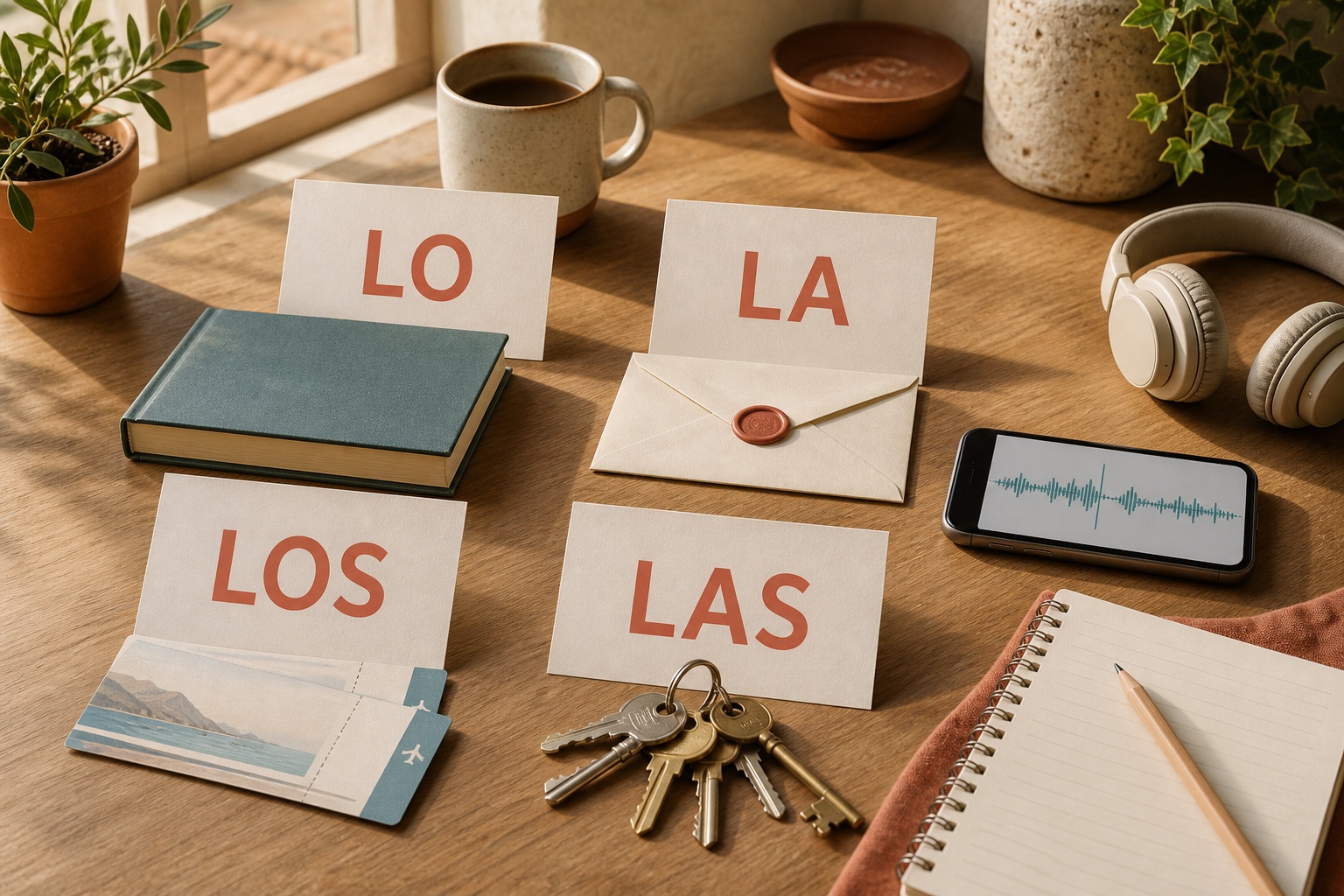
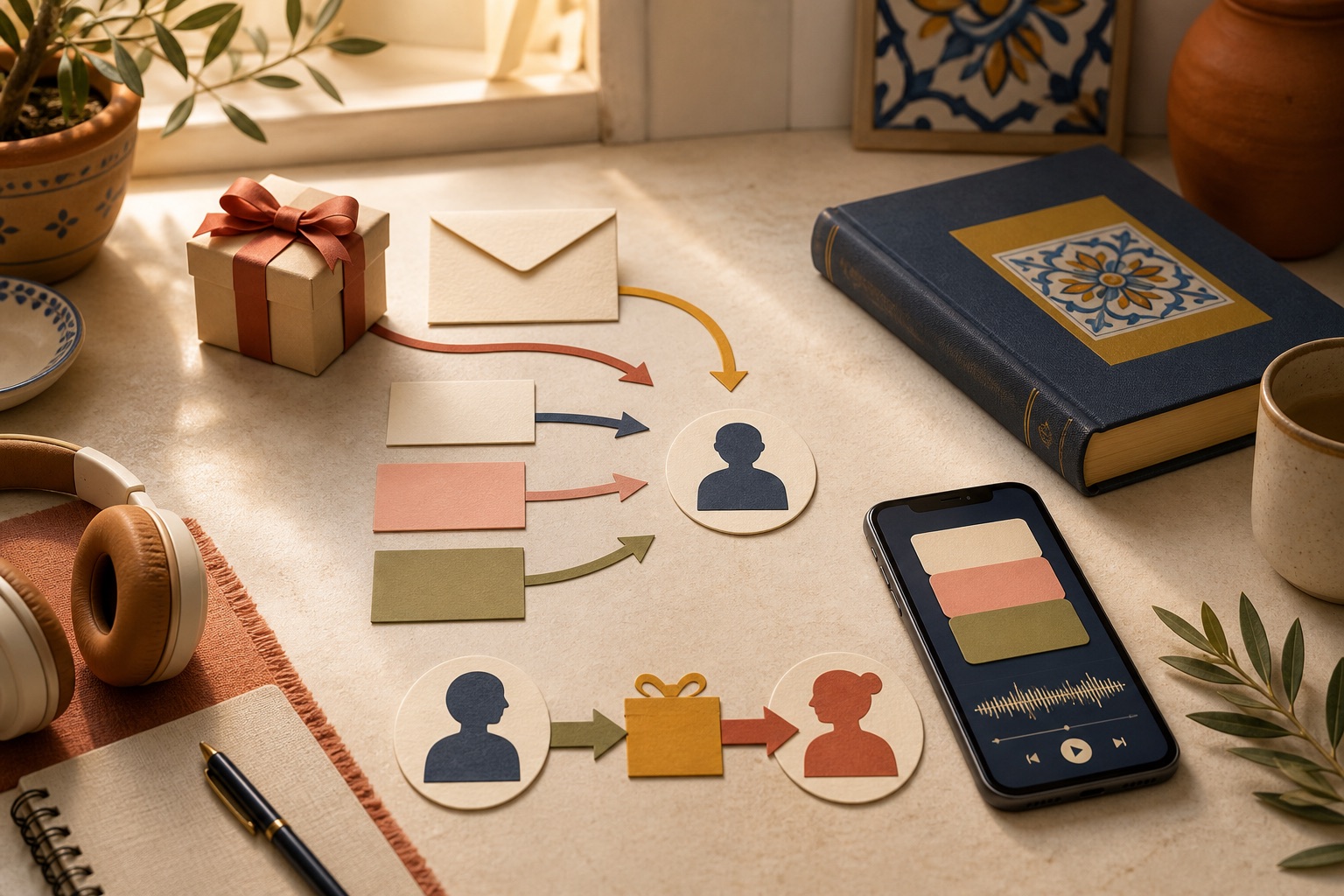
First identify the indirect object—the recipient or beneficiary—and replace it with me, te, le, nos, os, or les. Then replace the direct object—the thing affected—with lo, la, los, or las.
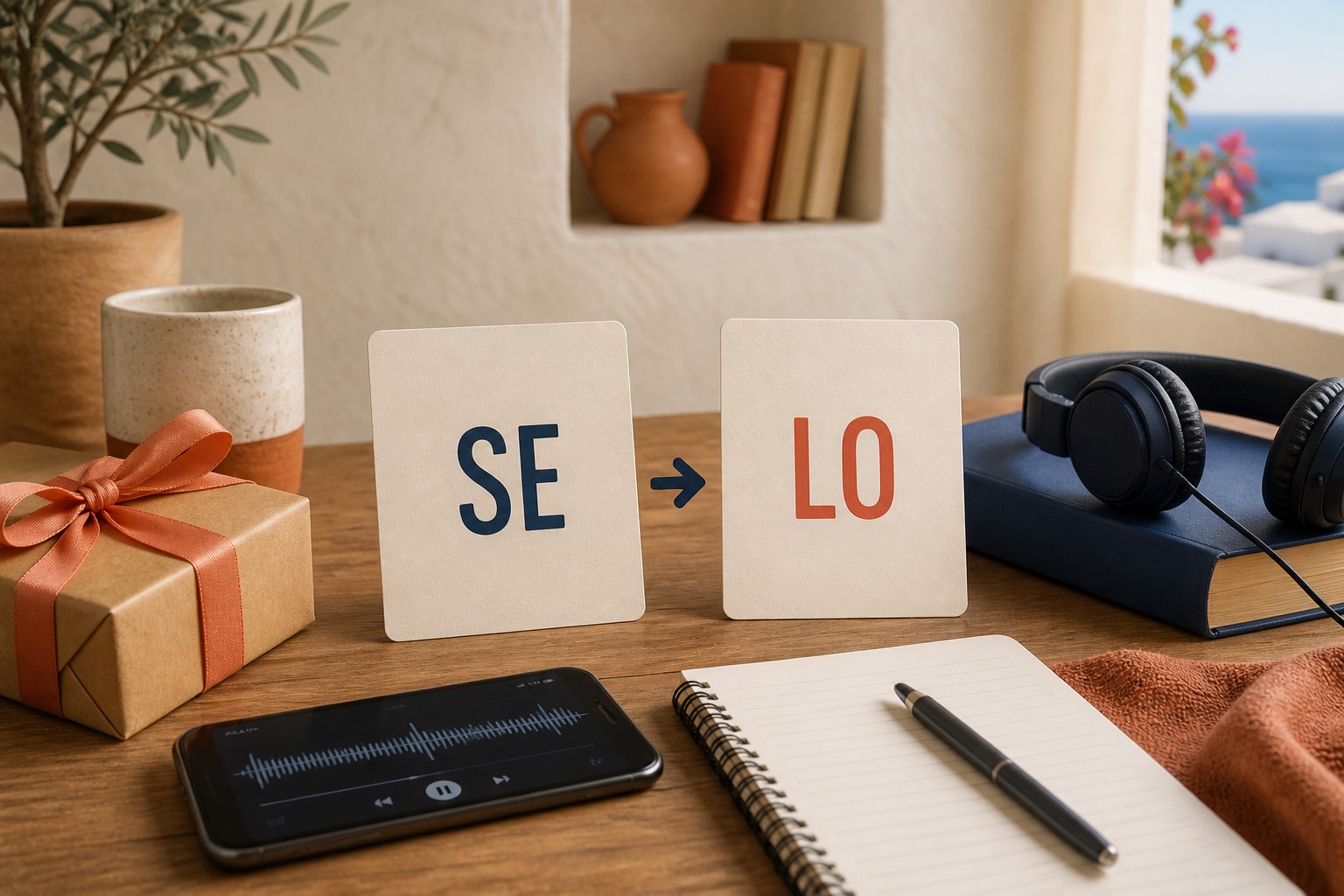
Put the indirect pronoun before the direct pronoun: ¿Me das el libro? → ¿Me lo das?; Envío la foto a Ana → Se la envío. The last pronoun keeps the gender and number of the direct object.
Le lo, le la, les los, and les las are not standard combinations. Change le or les to se, then add a clarifying phrase such as a Ana or a ellos when the recipient is not clear.
The double-pronoun rule in four lines
Order: indirect pronoun + direct pronoun + verb: me lo da, te la envío, nos los explican.
Change le or les to se before lo, la, los, or las: se lo doy, se las mando.
Before a conjugated verb or negative command: Me lo cuenta; No se lo digas.
Attach both to an infinitive, gerund, or affirmative command: contártelo, explicándoselo, dámelo. Add a written accent when normal stress rules require it.
32 Spanish double object pronoun examples
Compare ordinary pairs, se combinations, two legal placement options, commands, and clarifying recipient phrases.
| Spanish sentence | Meaning | Context | Why this pair? |
|---|---|---|---|
| Me lo das mañana. | You give it to me tomorrow. | El libro ya está listo; me lo das mañana. | The indirect pronoun comes first; the direct pronoun agrees with the thing. |
| Te la envío hoy. | I send it to you today. | La foto está lista; te la envío hoy. | The indirect pronoun comes first; the direct pronoun agrees with the thing. |
| Nos los explican en clase. | They explain them to us in class. | Los ejercicios son nuevos; nos los explican en clase. | The indirect pronoun comes first; the direct pronoun agrees with the thing. |
| Os las muestro después. | I show them to you all later. (Spain) | Las respuestas están guardadas; os las muestro después. | The indirect pronoun comes first; the direct pronoun agrees with the thing. |
| ¿Me las prestas hasta mañana? | Will you lend them to me until tomorrow? | Necesito las notas; ¿me las prestas hasta mañana? | The indirect pronoun comes first; the direct pronoun agrees with the thing. |
| Te lo cuento luego. | I will tell it to you later. | Ahora no hay tiempo; te lo cuento luego. | The indirect pronoun comes first; the direct pronoun agrees with the thing. |
| Nos la dejan aquí. | They leave it here for us. | La llave es para nosotros; nos la dejan aquí. | The indirect pronoun comes first; the direct pronoun agrees with the thing. |
| Os lo preparo ahora. | I prepare it for you all now. (Spain) | El café tardará un minuto; os lo preparo ahora. | The indirect pronoun comes first; the direct pronoun agrees with the thing. |
| Se lo doy a Ana. | I give it to Ana. | Ana necesita el libro; se lo doy a ella. | Le or les becomes se before lo, la, los, or las. |
| Se la envío a Marta. | I send it to Marta. | Marta espera la foto; se la envío ahora. | Le or les becomes se before lo, la, los, or las. |
| Se los mando a mis padres. | I send them to my parents. | Los documentos están firmados; se los mando hoy. | Le or les becomes se before lo, la, los, or las. |
| Se las devuelvo a ellas. | I return them to them. | Ya no necesito las llaves; se las devuelvo hoy. | Le or les becomes se before lo, la, los, or las. |
| ¿Se lo explicas a él? | Will you explain it to him? | Él no entiende el ejercicio; ¿se lo explicas? | Le or les becomes se before lo, la, los, or las. |
| No se lo cuentes a nadie. | Do not tell anyone about it. | Es una sorpresa; no se lo cuentes a nadie. | Le or les becomes se before lo, la, los, or las. |
| Se lo preparamos al profesor. | We prepare it for the teacher. | El profesor necesita el informe; se lo preparamos. | Le or les becomes se before lo, la, los, or las. |
| Se las recomiendo a ustedes. | I recommend them to you all. | Estas actividades son útiles; se las recomiendo. | Le or les becomes se before lo, la, los, or las. |
| Me lo van a explicar. | They are going to explain it to me. | No entiendo la regla, pero me lo van a explicar. | Keep both together before the conjugated verb or attach both to the non-finite form. |
| Van a explicármelo. | They are going to explain it to me. | No entiendo la regla, pero van a explicármelo. | Keep both together before the conjugated verb or attach both to the non-finite form. |
| Te la estoy buscando. | I am looking for it for you. | No encuentro la entrada; te la estoy buscando. | Keep both together before the conjugated verb or attach both to the non-finite form. |
| Estoy buscándotela. | I am looking for it for you. | No encuentro la entrada; estoy buscándotela. | Keep both together before the conjugated verb or attach both to the non-finite form. |
| Quiero contártelo. | I want to tell it to you. | Tengo una noticia y quiero contártelo. | Keep both together before the conjugated verb or attach both to the non-finite form. |
| Voy a enviárselas. | I am going to send them to him / her / them. | Las fotos están listas; voy a enviárselas. | Keep both together before the conjugated verb or attach both to the non-finite form. |
| No me lo digas todavía. | Do not tell it to me yet. | Quiero adivinarlo; no me lo digas todavía. | Keep both together before the conjugated verb or attach both to the non-finite form. |
| Dámelo, por favor. | Give it to me, please. | Necesito el formulario; dámelo, por favor. | Keep both together before the conjugated verb or attach both to the non-finite form. |
| Se lo di ayer. | I gave it to him / her / them yesterday. | El contexto debe indicar quién recibe; se lo di ayer. | Keep the pair together; context or an explicit a-phrase identifies the recipient. |
| Se lo di a ella. | I gave it to her. | La frase a ella aclara a quién se refiere se. | Keep the pair together; context or an explicit a-phrase identifies the recipient. |
| ¿Quién te lo contó? | Who told it to you? | La persona es desconocida; ¿quién te lo contó? | Keep the pair together; context or an explicit a-phrase identifies the recipient. |
| Ella nos la enseñó. | She showed it to us. | La solución estaba escrita; ella nos la enseñó. | Keep the pair together; context or an explicit a-phrase identifies the recipient. |
| Pásamelo, por favor. | Pass it to me, please. | El cuaderno está a tu lado; pásamelo, por favor. | Keep the pair together; context or an explicit a-phrase identifies the recipient. |
| No se los entreguen todavía. | Do not give them to him, her or them yet. | Los documentos no están firmados; no se los entreguen todavía. | Keep the pair together; context or an explicit a-phrase identifies the recipient. |
| Estamos explicándoselo. | We are explaining it to him / her / them. | La regla es nueva; estamos explicándoselo con ejemplos. | Keep the pair together; context or an explicit a-phrase identifies the recipient. |
| Se lo quiero devolver. Quiero devolvérselo. | I want to return it to him / her / them. | Las dos posiciones son correctas con querer + infinitivo. | Keep the pair together; context or an explicit a-phrase identifies the recipient. |
Learn double pronouns in four blocks
Keep basic order, the le/les → se change, placement, and clarity as separate retrieval jobs.
Indirect + direct order
Build me lo, te la, nos los, and os las from full nouns.
Me lo das mañana. · Te la envío hoy. · Nos los explican en clase. · Os las muestro después. · ¿Me las prestas hasta mañana? · Te lo cuento luego. · Nos la dejan aquí. · Os lo preparo ahora.
The se lo change
Replace le or les with se before third-person direct pronouns.
Se lo doy a Ana. · Se la envío a Marta. · Se los mando a mis padres. · Se las devuelvo a ellas. · ¿Se lo explicas a él? · No se lo cuentes a nadie. · Se lo preparamos al profesor. · Se las recomiendo a ustedes.
Two legal positions
Compare before the helper with attachment to infinitives and gerunds.
Me lo van a explicar. · Van a explicármelo. · Te la estoy buscando. · Estoy buscándotela. · Quiero contártelo. · Voy a enviárselas. · No me lo digas todavía. · Dámelo, por favor.
Commands and clarity
Keep the pair together and name the recipient when needed.
Se lo di ayer. · Se lo di a ella. · ¿Quién te lo contó? · Ella nos la enseñó. · Pásamelo, por favor. · No se los entreguen todavía. · Estamos explicándoselo. · Se lo quiero devolver. Quiero devolvérselo.
How do you build the pair without guessing?
Start from the full nouns: Doy el libro a Ana. Ana is the indirect object, and el libro is the direct object. Replace both: Se lo doy.
Choose lo, la, los, or las from the thing, not the recipient: las fotos → las. Se does not reveal whether the recipient is singular or plural, masculine or feminine.
With a conjugated verb, both pronouns stay together before it. With an infinitive or gerund, put both before the helper or attach both to the non-finite form: Se lo voy a explicar / Voy a explicárselo.
Hola Cards is a Spanish flashcard app from holacards.org for iOS and Android. It is free to download, requires no account, may show ads in the free version, while Premium removes ads, and works offline. The interface is available in 29 languages, including English, Russian, Portuguese and German; cards support translations in 29 languages, including English, Russian, Portuguese and German and 18 practice and game modes. You can import these fixed sentences into a custom group and practise them with Spanish audio, writing, pronunciation, and review modes. Hola Cards does not identify sentence objects or correct pronoun order automatically, so use this guide to verify every example first.
Connect this guide with direct objects, indirect objects, personal a, reflexive pronouns, and sentence flashcards.
Direct object pronouns Indirect object pronouns Spanish personal a Reflexive pronouns Flashcards with sentences
A five-minute double-pronoun routine
- Underline the recipient once and the thing twice in eight full sentences.
- Replace only the recipient, then only the thing, before combining both forms.
- Say four me/te/nos/os pairs aloud: me lo, te la, nos los, os las.
- Turn le doy el libro and les envío las fotos into se lo doy and se las envío.
- Move each pair between Se lo voy a decir and Voy a decírselo.
Grammar references
The A2 scope, indirect-object behaviour, se combinations, and pronoun placement were checked against primary RAE–ASALE and Instituto Cervantes sources.
- Instituto Cervantes: A1–A2 direct and indirect objects
- RAE–ASALE: indirect objects, duplication, and se lo
- RAE–ASALE: unstressed pronoun placement and spelling
FAQ
What is the order of double object pronouns in Spanish?
Put the indirect pronoun first and the direct pronoun second: me lo, te la, nos los, os las, se lo.
Why does le become se in se lo?
Le and les change to se before lo, la, los, or las. Se lo doy is standard; le lo doy is not.
What does the last pronoun agree with?
Lo, la, los, or las agrees with the direct object—the thing—not with the recipient.
Where do two pronouns go?
Together before a conjugated verb or negative command, or attached to an infinitive, gerund, or affirmative command.
How do I clarify who se means?
Add a él, a ella, a usted, a ellos, or a ustedes: Se lo doy a ella.
Does Hola Cards correct pronoun order automatically?
No. You can import and practise these fixed examples; this page teaches and verifies the rule.
Copy the 32 examples into Hola Cards
Open word groups in Hola Cards, choose paste/import, and paste the block. The app recognises the title and “Spanish - translation” lines.
**Spanish double object pronouns: 32 examples**

Me lo das mañana. - You give it to me tomorrow.
Te la envío hoy. - I send it to you today.
Nos los explican en clase. - They explain them to us in class.
Os las muestro después. - I show them to you all later. (Spain)
¿Me las prestas hasta mañana? - Will you lend them to me until tomorrow?
Te lo cuento luego. - I will tell it to you later.
Nos la dejan aquí. - They leave it here for us.
Os lo preparo ahora. - I prepare it for you all now. (Spain)
Se lo doy a Ana. - I give it to Ana.
Se la envío a Marta. - I send it to Marta.
Se los mando a mis padres. - I send them to my parents.
Se las devuelvo a ellas. - I return them to them.
¿Se lo explicas a él? - Will you explain it to him?
No se lo cuentes a nadie. - Do not tell anyone about it.
Se lo preparamos al profesor. - We prepare it for the teacher.
Se las recomiendo a ustedes. - I recommend them to you all.
Me lo van a explicar. - They are going to explain it to me.
Van a explicármelo. - They are going to explain it to me.
Te la estoy buscando. - I am looking for it for you.
Estoy buscándotela. - I am looking for it for you.
Quiero contártelo. - I want to tell it to you.
Voy a enviárselas. - I am going to send them to him / her / them.
No me lo digas todavía. - Do not tell it to me yet.
Dámelo, por favor. - Give it to me, please.
Se lo di ayer. - I gave it to him / her / them yesterday.
Se lo di a ella. - I gave it to her.
¿Quién te lo contó? - Who told it to you?
Ella nos la enseñó. - She showed it to us.
Pásamelo, por favor. - Pass it to me, please.
No se los entreguen todavía. - Do not give them to him, her or them yet.
Estamos explicándoselo. - We are explaining it to him / her / them.
Se lo quiero devolver. Quiero devolvérselo. - I want to return it to him / her / them.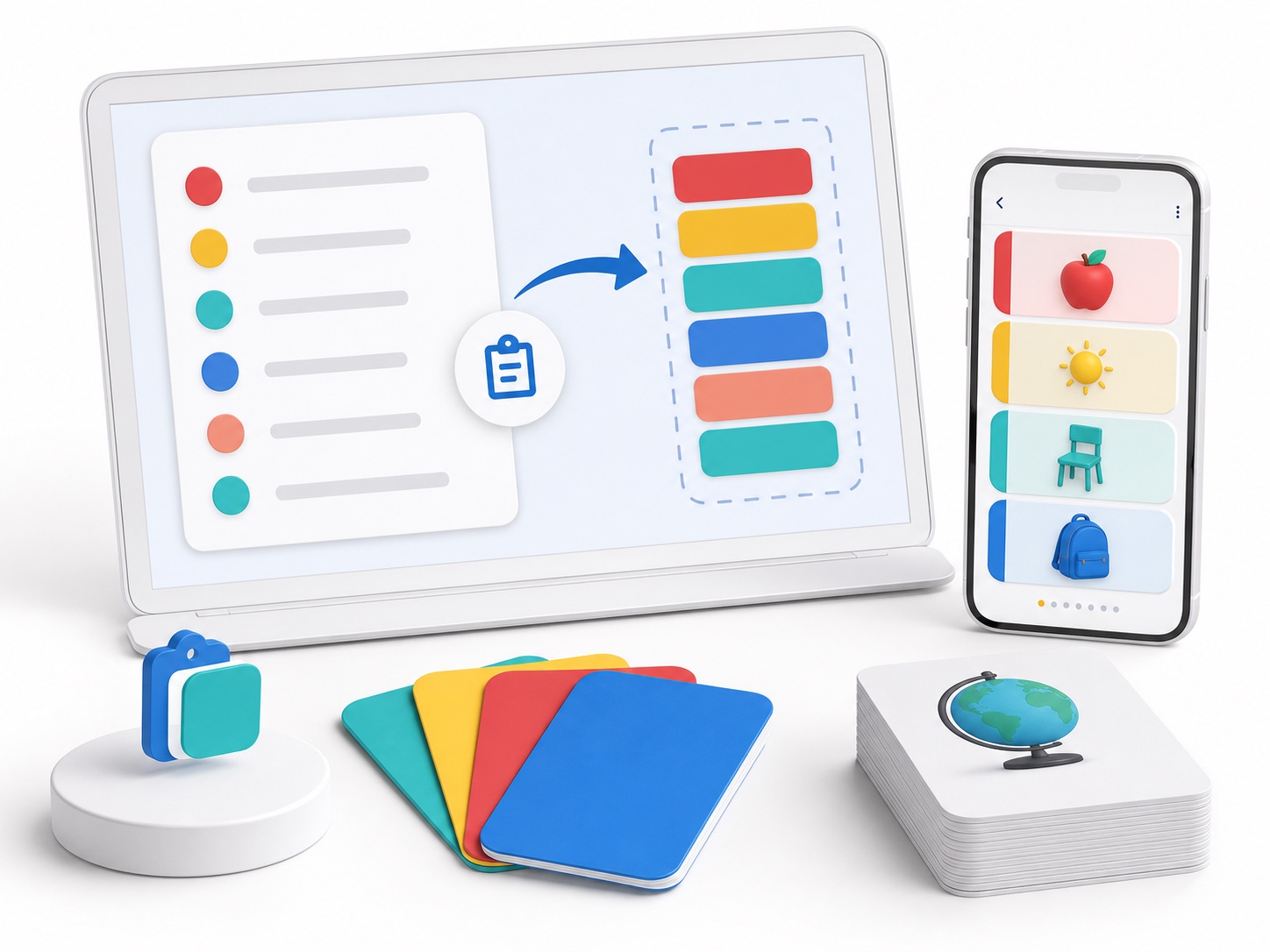
Review double object pronouns in Hola Cards
Practise the 32 fixed examples with Spanish audio, writing, pronunciation, custom groups, and review modes on iOS and Android.