Practise the contrast inside a full sentence
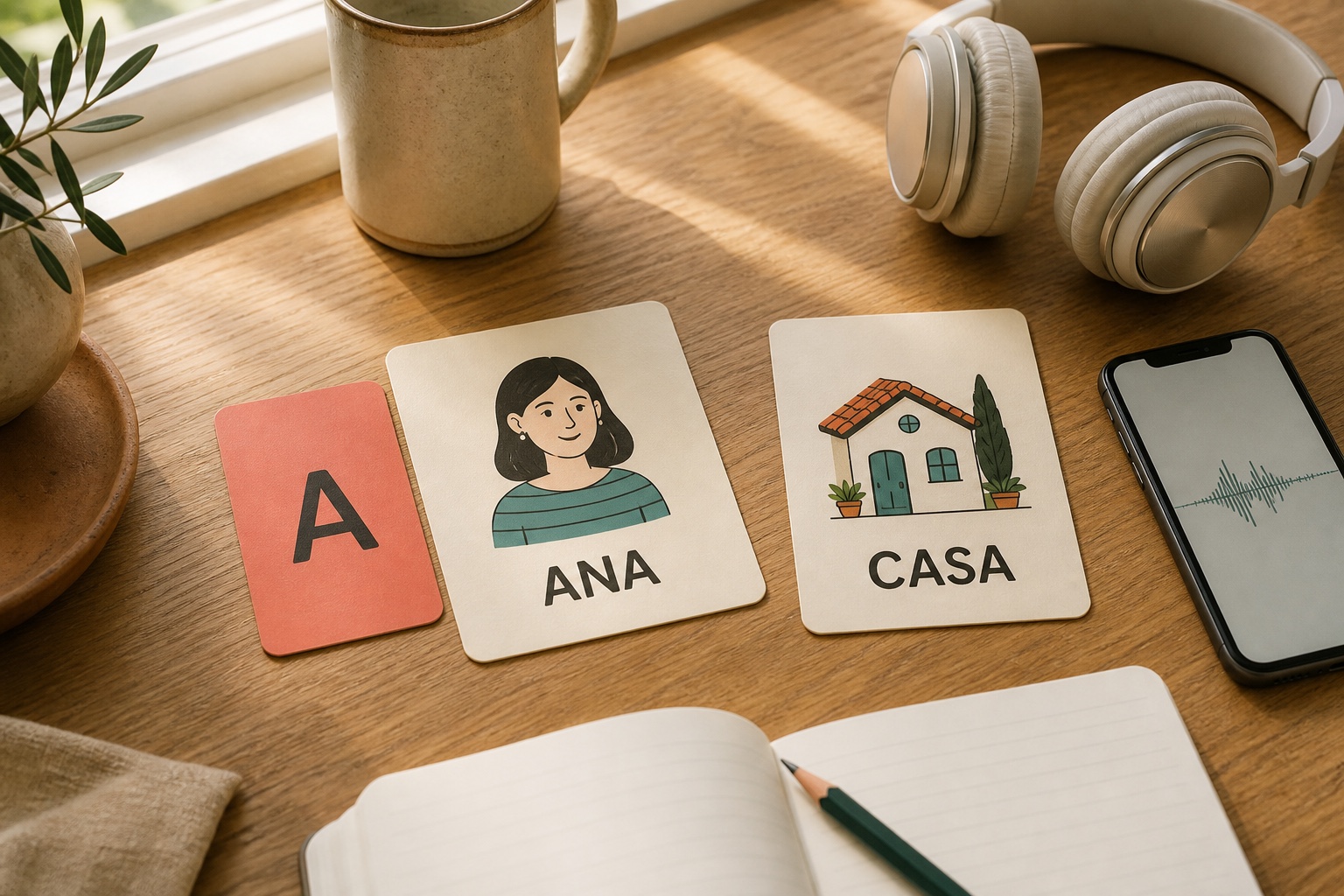
Import the 32 examples and recall each people-versus-things contrast with Spanish audio and writing on iOS or Android. The guide remains complete without the app.
Spanish personal a
What is the personal a in Spanish?
The personal a is an object marker placed before many direct objects that refer to people: Conozco a Marta; visitamos a nuestros abuelos. It normally has no separate English translation.
Use it reliably with a named, definite, or clearly identified person. Do not add it just because any human noun appears: Busco un médico can mean any doctor, while busco a mi médico identifies a particular doctor.
The marker does not change a direct object into an indirect one. Veo a Marta → La veo is direct; escribo a Marta → Le escribo is indirect because Marta receives the message.
Personal a rules at a glance
Use a before a named or identified person as direct object: Veo a Ana; conozco al profesor.
Use a with stressed human pronouns and human question words: La veo a ella; ¿A quién buscas?; no veo a nadie.
Normally omit a before things and nonspecific human types: veo la casa; buscamos camarero. Indefinite human objects can vary with meaning and context.
Do not use personal a after hay or with tener when it means possession: Hay tres estudiantes; tengo dos hermanos. Contract a + el to al: conozco al profesor.
32 Spanish personal a examples
Compare clear people, specificity, omission cases, animals, pronouns, and direct-versus-indirect objects.
| Spanish sentence | Meaning | Example in context | Why a appears or disappears |
|---|---|---|---|
| Veo a Ana todos los días. | I see Ana every day. | Ana trabaja conmigo y la veo todos los días. | Use a before a named, definite, or clearly identified person. |
| Conozco a Carlos desde la escuela. | I have known Carlos since school. | Carlos es un amigo concreto; lo conozco desde la escuela. | Use a before a named, definite, or clearly identified person. |
| Visitamos a nuestros abuelos el domingo. | We visit our grandparents on Sunday. | Son nuestros abuelos, personas definidas y cercanas. | Use a before a named, definite, or clearly identified person. |
| Invito a Marta a cenar. | I invite Marta to dinner. | La primera a marca a Marta como objeto directo; la segunda introduce cenar. | Use a before a named, definite, or clearly identified person. |
| Ayudo a mi vecino con las bolsas. | I help my neighbour with the bags. | Mi vecino es una persona identificada. | Use a before a named, definite, or clearly identified person. |
| Escuchamos a la profesora. | We listen to the teacher. | La profesora está definida por el contexto de la clase. | Use a before a named, definite, or clearly identified person. |
| Saludo a mis amigos en la puerta. | I greet my friends at the door. | Mis amigos forman un grupo definido. | Use a before a named, definite, or clearly identified person. |
| Conozco al profesor nuevo. | I know the new teacher. | A + el se contrae en al delante de una persona masculina singular. | Combine a + el as al before a masculine singular person. |
| Busco a mi médico. | I am looking for my doctor. | Mi médico identifica a una persona concreta. | Use a before a named, definite, or clearly identified person. |
| Busco un médico que hable inglés. | I am looking for a doctor who speaks English. | La frase pide un profesional que cumpla una condición, no identifica a uno concreto. | A nonspecific role or type can omit a; context can change the choice. |
| Necesitamos a una traductora concreta. | We need one particular translator. | Concreta individualiza a la persona. | Use a before a named, definite, or clearly identified person. |
| Necesitamos traductor para mañana. | We need a translator for tomorrow. | Traductor nombra una función no específica y puede ir sin a. | A nonspecific role or type can omit a; context can change the choice. |
| ¿A quién buscas? | Who are you looking for? | El interrogativo quién exige a cuando es objeto directo. | Human stressed pronouns and question words require a. |
| No veo a nadie en la sala. | I do not see anyone in the room. | Nadie referido a personas lleva a como objeto directo. | Human stressed pronouns and question words require a. |
| La veo a ella, no a él. | I see her, not him. | Los pronombres tónicos de persona llevan a y el directo se duplica con la. | Human stressed pronouns and question words require a. |
| Busco a alguien que me ayude. | I am looking for someone to help me. | Alguien como objeto directo de persona aparece con a en este uso. | Human stressed pronouns and question words require a. |
| Veo la casa desde aquí. | I see the house from here. | La casa es una cosa ordinaria, no una persona. | Ordinary things do not take personal a. |
| Compramos el libro hoy. | We are buying the book today. | El libro es una cosa y no lleva a personal. | Ordinary things do not take personal a. |
| Tengo dos hermanos. | I have two brothers. | Tener expresa posesión y normalmente omite el a personal. | Possessive tener normally omits personal a. |
| Tenemos una profesora nueva. | We have a new teacher. | Tener presenta una relación de posesión o pertenencia y va sin a. | Possessive tener normally omits personal a. |
| Hay tres estudiantes fuera. | There are three students outside. | Hay introduce existencia y no usa a personal. | Hay introduces existence and normally omits personal a. |
| Hay un médico en la sala. | There is a doctor in the room. | Hay presenta la existencia de una persona y va sin a. | Hay introduces existence and normally omits personal a. |
| Veo un perro en el parque. | I see a dog in the park. | Es un animal no identificado y puede tratarse como una cosa. | A known or emotionally close animal can pattern like a person. |
| Busco a mi perro. | I am looking for my dog. | Mi perro es conocido y afectivamente cercano. | A known or emotionally close animal can pattern like a person. |
| Veo a Ana. La veo junto a la puerta. | I see Ana. I see her by the door. | A Ana sigue siendo objeto directo y se sustituye por la. | Personal a can still mark a direct object; replace it with lo/la/los/las. |
| Veo a Juan. Lo veo en el café. | I see Juan. I see him in the café. | A Juan es objeto directo masculino y se sustituye por lo. | Personal a can still mark a direct object; replace it with lo/la/los/las. |
| Escribo a Ana. Le escribo un mensaje. | I write to Ana. I write her a message. | Ana recibe el mensaje: es objeto indirecto y se sustituye por le. | This a introduces an indirect recipient, not personal a. |
| Doy el libro a Juan. Le doy el libro. | I give the book to Juan. I give him the book. | Juan es destinatario indirecto, no objeto directo con a personal. | This a introduces an indirect recipient, not personal a. |
| Llamo a Marta. La llamo ahora. | I call Marta. I am calling her now. | Llamar por teléfono toma objeto directo de persona con a; la confirma la función. | Personal a can still mark a direct object; replace it with lo/la/los/las. |
| Presento a Laura a mi equipo. | I introduce Laura to my team. | Laura es el objeto directo identificado; mi equipo es el destinatario de la presentación. | Personal a can still mark a direct object; replace it with lo/la/los/las. |
| A Ana la veo cada mañana. | I see Ana every morning. | Al adelantar el objeto directo, a Ana se duplica con la. | Personal a can still mark a direct object; replace it with lo/la/los/las. |
| No confundo a Ana con Marta. | I do not confuse Ana with Marta. | Ana es una persona identificada y objeto directo de confundir. | Use a before a named, definite, or clearly identified person. |
Learn the rule in four blocks
Start with identified people, then compare specificity, omission cases, and object-pronoun contrasts.
Identified people
Use a with names, relatives, friends, and other defined people.
Veo a Ana todos los días. · Conozco a Carlos desde la escuela. · Visitamos a nuestros abuelos el domingo. · Invito a Marta a cenar. · Ayudo a mi vecino con las bolsas. · Escuchamos a la profesora. · Saludo a mis amigos en la puerta. · Conozco al profesor nuevo.
Specificity and pronouns
Compare identified people, roles, pronouns, and question words.
Busco a mi médico. · Busco un médico que hable inglés. · Necesitamos a una traductora concreta. · Necesitamos traductor para mañana. · ¿A quién buscas? · No veo a nadie en la sala. · La veo a ella, no a él. · Busco a alguien que me ayude.
When a disappears
Separate things, hay, tener, and nonspecific types.
Veo la casa desde aquí. · Compramos el libro hoy. · Tengo dos hermanos. · Tenemos una profesora nueva. · Hay tres estudiantes fuera. · Hay un médico en la sala. · Veo un perro en el parque. · Busco a mi perro.
Direct or indirect?
Test lo/la against le and keep both object functions clear.
Veo a Ana. La veo junto a la puerta. · Veo a Juan. Lo veo en el café. · Escribo a Ana. Le escribo un mensaje. · Doy el libro a Juan. Le doy el libro. · Llamo a Marta. La llamo ahora. · Presento a Laura a mi equipo. · A Ana la veo cada mañana. · No confundo a Ana con Marta.
How do you decide whether to use personal a?
First identify the direct object: who or what is directly seen, known, invited, visited, or helped? If it is a named, definite, or clearly individuated person, use a.
If the object is a thing, omit a. With an indefinite human noun, ask whether the sentence points to a particular person or only a role/type; the contrast may affect the choice.
Check the verb and construction. Hay and possessive tener normally omit personal a. A beloved or clearly individuated animal may pattern like a person. Then replace the direct object with lo/la/los/las to confirm its function.
Hola Cards is a Spanish flashcard app from holacards.org for iOS and Android. It is free to download, requires no account, may show ads in the free version, while Premium removes ads, and works offline. The interface is available in 29 languages, including English, Russian, Portuguese and German; cards support translations in 29 languages, including English, Russian, Portuguese and German and 18 practice and game modes. You can import these sentences into a custom group for Spanish audio, writing, pronunciation, and spaced review. Hola Cards does not decide automatically whether personal a is required, so use the contrasts and explanations on this page for the grammar rule.
Compare the rule with direct and indirect object pronouns, subject pronouns, question words, and present tense.
Direct object pronouns Indirect object pronouns Spanish subject pronouns Spanish question words Spanish present tense endings
A five-minute practice routine
- Underline the direct object in eight sentences.
- Sort the objects into identified people, unspecified people, things, and animals.
- Add or remove a, then explain the meaning contrast.
- Replace each direct object with lo, la, los, or las.
- Compare Veo a Ana → La veo with Escribo a Ana → Le escribo.
Grammar references
The core rule, indefinite-object variation, pronouns, and direct-object distinction were checked against these sources.
- RAE–ASALE: prepositional direct objects with people and personified things
- RAE–ASALE: presence and absence of a with indefinite human objects
- Instituto Cervantes: direct-object pronouns and the direct/indirect distinction
FAQ
What is the personal a in Spanish?
It is the preposition a used before many direct objects that refer to people, especially named or identified people.
Does personal a translate as “to”?
Usually no. In Veo a Ana, English simply says “I see Ana.”
Do all people take personal a?
No. Nonspecific roles or types can omit it, as in Busco camarero. Indefinite objects can vary with meaning and context.
Is a person after a an indirect object?
Not necessarily. Veo a Ana has a direct object and becomes La veo. Le escribo a Ana has an indirect object because Ana receives the message.
Do animals take personal a?
A known or emotionally close animal often can: Busco a mi perro. An unidentified animal commonly behaves like a thing: Veo un perro.
Does Hola Cards add personal a automatically?
No. You can import and practise the examples; the rule and contrasts are explained on this page.
Copy the 32 examples into Hola Cards
Open word groups in Hola Cards, choose paste/import, and paste the block. The app recognises the title and “Spanish - translation” lines.
**Spanish personal a: 32 examples**

Veo a Ana todos los días. - I see Ana every day.
Conozco a Carlos desde la escuela. - I have known Carlos since school.
Visitamos a nuestros abuelos el domingo. - We visit our grandparents on Sunday.
Invito a Marta a cenar. - I invite Marta to dinner.
Ayudo a mi vecino con las bolsas. - I help my neighbour with the bags.
Escuchamos a la profesora. - We listen to the teacher.
Saludo a mis amigos en la puerta. - I greet my friends at the door.
Conozco al profesor nuevo. - I know the new teacher.
Busco a mi médico. - I am looking for my doctor.
Busco un médico que hable inglés. - I am looking for a doctor who speaks English.
Necesitamos a una traductora concreta. - We need one particular translator.
Necesitamos traductor para mañana. - We need a translator for tomorrow.
¿A quién buscas? - Who are you looking for?
No veo a nadie en la sala. - I do not see anyone in the room.
La veo a ella, no a él. - I see her, not him.
Busco a alguien que me ayude. - I am looking for someone to help me.
Veo la casa desde aquí. - I see the house from here.
Compramos el libro hoy. - We are buying the book today.
Tengo dos hermanos. - I have two brothers.
Tenemos una profesora nueva. - We have a new teacher.
Hay tres estudiantes fuera. - There are three students outside.
Hay un médico en la sala. - There is a doctor in the room.
Veo un perro en el parque. - I see a dog in the park.
Busco a mi perro. - I am looking for my dog.
Veo a Ana. La veo junto a la puerta. - I see Ana. I see her by the door.
Veo a Juan. Lo veo en el café. - I see Juan. I see him in the café.
Escribo a Ana. Le escribo un mensaje. - I write to Ana. I write her a message.
Doy el libro a Juan. Le doy el libro. - I give the book to Juan. I give him the book.
Llamo a Marta. La llamo ahora. - I call Marta. I am calling her now.
Presento a Laura a mi equipo. - I introduce Laura to my team.
A Ana la veo cada mañana. - I see Ana every morning.
No confundo a Ana con Marta. - I do not confuse Ana with Marta.
Review personal a in Hola Cards
Practise the 32 examples with Spanish audio, writing, pronunciation, custom groups, and spaced review on iOS and Android.