Practise the contrast, not an isolated trigger
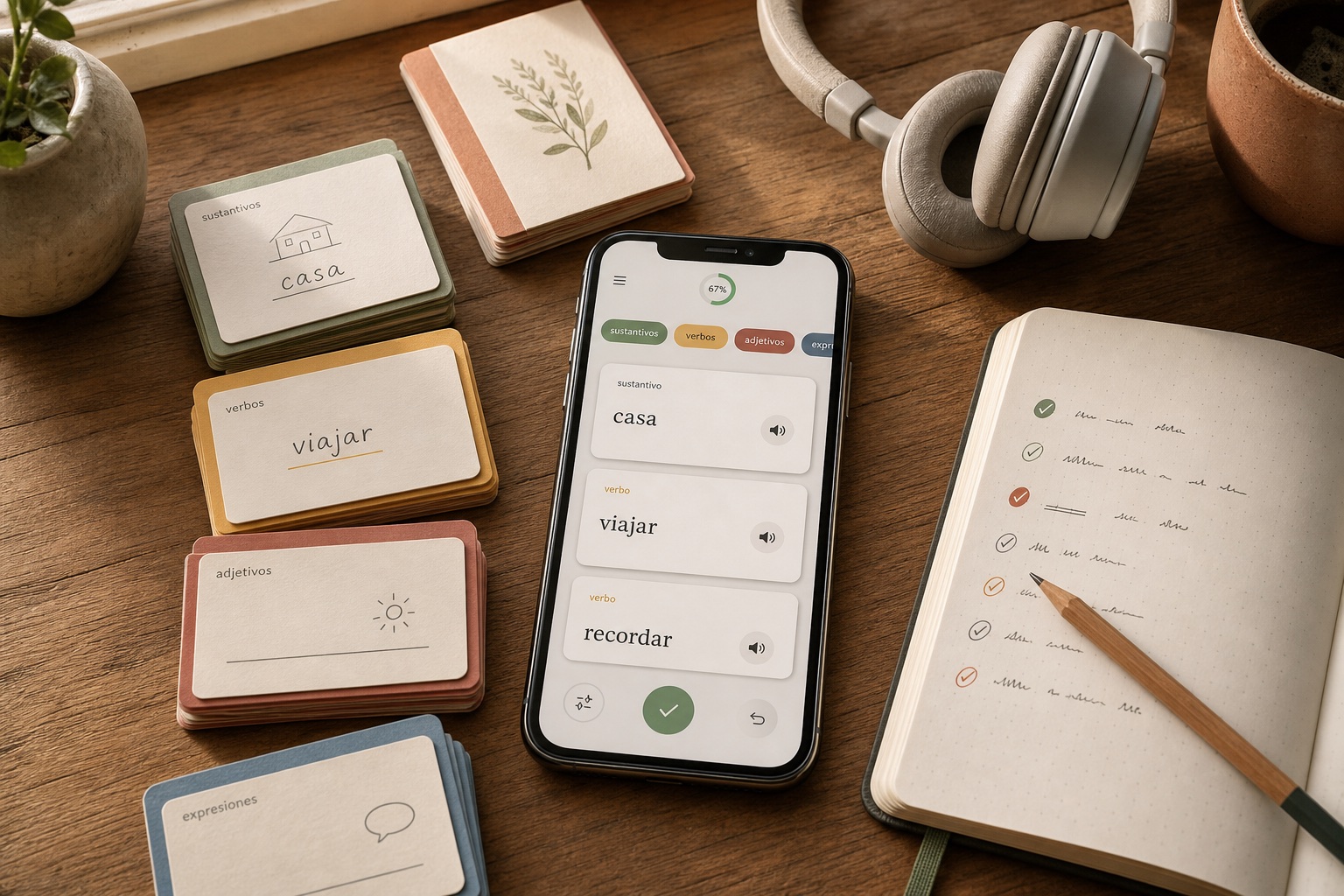
Import the 32 checked examples and recall each fact-versus-attitude contrast with Spanish audio and writing on iOS or Android. The full decision guide remains available without the app.
Spanish subjunctive vs indicative
What is the difference between indicative and subjunctive?
Indicative and subjunctive are moods: they show how a speaker presents a situation. Tense locates it in time. A sentence can therefore use the present subjunctive—venga—or the present indicative—viene—while both refer to the present or future.
Indicative commonly presents a clause as asserted or known: Sé que viene, Creo que funciona, Hay alguien que puede ayudar. Subjunctive commonly places the clause under a wish, evaluation, doubt, denial, search for something not identified, or a future time condition.
Do not memorise que as a subjunctive trigger. Que introduces both moods. Compare Es cierto que sale with No es cierto que salga: the first assertion presents departure as true; the second rejects it.
A four-question decision guide
Am I asserting, observing, knowing, or positively believing the information? Choose the indicative.
Am I expressing desire, emotion, evaluation, doubt, denial, or possibility about another clause? Choose the subjunctive.
Is the person or thing specific and known? Indicative is typical. Is it wanted, missing, or unidentified? Subjunctive is typical.
With cuando and similar time links, use indicative for habits or completed events and subjunctive for an event still pending.
32 subjunctive vs indicative examples
The examples move from facts and beliefs to doubt and reactions, known versus unknown references, and habitual versus pending events.
| Spanish sentence | Meaning | Context | Why this mood |
|---|---|---|---|
| Sé que Marta viene. | I know Marta is coming. | La vi salir de casa; sé que Marta viene. | The speaker presents the dependent clause as information. |
| Creo que tienes razón. | I think you are right. | Después de revisar los datos, creo que tienes razón. | The speaker presents the dependent clause as information. |
| Es cierto que el tren sale a las ocho. | It is true that the train leaves at eight. | El horario lo confirma: sale a las ocho. | The speaker presents the dependent clause as information. |
| Está claro que necesitamos ayuda. | It is clear that we need help. | No terminaremos solos; necesitamos ayuda. | The speaker presents the dependent clause as information. |
| Veo que estás cansado. | I can see that you are tired. | Tus ojos se cierran; veo que estás cansado. | The speaker presents the dependent clause as information. |
| Me parece que funciona. | It seems to me that it works. | La prueba termina bien; me parece que funciona. | The speaker presents the dependent clause as information. |
| No dudo que es útil. | I do not doubt that it is useful. | Ya nos ayudó dos veces; no dudo que es útil. | The speaker presents the dependent clause as information. |
| Supongo que Ana está en casa. | I suppose Ana is at home. | Hay luz en su ventana; supongo que está en casa. | The speaker presents the dependent clause as information. |
| No creo que Marta venga. | I do not think Marta is coming. | No confirmó el plan; no creo que venga. | The main clause frames the idea rather than asserting it. |
| Dudo que tengas razón. | I doubt that you are right. | Los datos dicen otra cosa; dudo que tengas razón. | The main clause frames the idea rather than asserting it. |
| No es cierto que el tren salga a las ocho. | It is not true that the train leaves at eight. | El horario marca las nueve, no las ocho. | The main clause frames the idea rather than asserting it. |
| No está claro que necesitemos ayuda. | It is not clear that we need help. | Primero probaremos solos; quizá no la necesitemos. | The main clause frames the idea rather than asserting it. |
| Me alegra que estés aquí. | I am glad that you are here. | Tu presencia provoca una reacción: me alegra. | The main clause frames the idea rather than asserting it. |
| Quiero que vengas mañana. | I want you to come tomorrow. | Mi deseo se refiere a la acción de otra persona. | The main clause frames the idea rather than asserting it. |
| Es importante que descanses. | It is important that you rest. | La frase evalúa el descanso como necesario. | The main clause frames the idea rather than asserting it. |
| Puede que funcione. | It may work. | Todavía no hay prueba; solo expresamos posibilidad. | The main clause frames the idea rather than asserting it. |
| Busco al profesor que habla portugués. | I am looking for the teacher who speaks Portuguese. | Los dos sabemos qué profesor es. | A specific or known reference normally takes indicative. |
| Busco un profesor que hable portugués. | I am looking for a teacher who speaks Portuguese. | No tengo a una persona concreta identificada. | A missing, desired, or unidentified reference normally takes subjunctive. |
| Tengo un libro que explica la regla. | I have a book that explains the rule. | El libro existe y lo tengo conmigo. | A specific or known reference normally takes indicative. |
| Necesito un libro que explique la regla. | I need a book that explains the rule. | El libro deseado todavía no está identificado. | A missing, desired, or unidentified reference normally takes subjunctive. |
| Hay alguien que puede ayudarme. | There is someone who can help me. | Afirmo que esa persona existe. | A specific or known reference normally takes indicative. |
| No hay nadie que pueda ayudarme. | There is no one who can help me. | Se niega la existencia de esa persona. | A missing, desired, or unidentified reference normally takes subjunctive. |
| Conozco un hotel que acepta mascotas. | I know a hotel that accepts pets. | Tengo un hotel concreto en mente. | A specific or known reference normally takes indicative. |
| Buscamos un hotel que acepte mascotas. | We are looking for a hotel that accepts pets. | Todavía no hemos identificado el hotel. | A missing, desired, or unidentified reference normally takes subjunctive. |
| Cuando llega, siempre llama. | When he arrives, he always calls. | Es una costumbre repetida, no un futuro pendiente. | Indicative presents a habit or an event already realised. |
| Cuando llegue, llámame. | When he arrives, call me. | La llegada futura todavía no ha ocurrido. | Subjunctive presents a future event that is still pending. |
| Aunque está cansado, sigue trabajando. | Although he is tired, he keeps working. | El hablante presenta el cansancio como un hecho conocido. | The speaker presents the dependent clause as information. |
| Aunque esté cansado, seguirá trabajando. | Even if he is tired, he will keep working. | El cansancio se concede como posibilidad, no como hecho afirmado. | Subjunctive presents a future event that is still pending. |
| Quizá viene esta noche. | Perhaps she is coming tonight. | El indicativo presenta la llegada como una opción que el hablante considera bastante probable. | The speaker presents the dependent clause as information. |
| Quizá venga esta noche. | Perhaps she will come tonight. | El subjuntivo deja la llegada más abierta o incierta. | The main clause frames the idea rather than asserting it. |
| Espero que todo salga bien. | I hope everything goes well. | La esperanza expresa una actitud hacia un resultado futuro. | Subjunctive presents a future event that is still pending. |
| Si tengo tiempo, te llamo. | If I have time, I will call you. | En español, una condición abierta con si usa presente de indicativo, no presente de subjuntivo. | The speaker presents the dependent clause as information. |
Learn mood choice in four meaning blocks
Start with asserted facts, reverse the frame with doubt or reaction, then compare reference and time clauses.
Facts, knowledge, and positive belief
Use indicative when the speaker asserts, knows, observes, or positively believes the clause.
Sé que Marta viene. · Creo que tienes razón. · Es cierto que el tren sale a las ocho. · Está claro que necesitamos ayuda. · Veo que estás cansado. · Me parece que funciona. · No dudo que es útil. · Supongo que Ana está en casa.
Doubt, desire, reaction, and evaluation
Use subjunctive when the clause sits under a non-assertive attitude.
No creo que Marta venga. · Dudo que tengas razón. · No es cierto que el tren salga a las ocho. · No está claro que necesitemos ayuda. · Me alegra que estés aquí. · Quiero que vengas mañana. · Es importante que descanses. · Puede que funcione.
Known versus unidentified references
Specific known people and things contrast with ones that are wanted or not yet identified.
Busco al profesor que habla portugués. · Busco un profesor que hable portugués. · Tengo un libro que explica la regla. · Necesito un libro que explique la regla. · Hay alguien que puede ayudarme. · No hay nadie que pueda ayudarme. · Conozco un hotel que acepta mascotas. · Buscamos un hotel que acepte mascotas.
Habitual versus pending events
Time and concession clauses change mood with the speaker’s temporal or factual frame.
Cuando llega, siempre llama. · Cuando llegue, llámame. · Aunque está cansado, sigue trabajando. · Aunque esté cansado, seguirá trabajando. · Quizá viene esta noche. · Quizá venga esta noche. · Espero que todo salga bien. · Si tengo tiempo, te llamo.
How do you choose without a trigger list?
Find the main verb or expression: sé, creo, dudo, quiero, me alegra, busco, cuando.
Ask what the speaker does with the following idea—asserts it, questions it, wants it, reacts to it, or leaves it unidentified.
Check reference and time: a known person or habitual event tends to take indicative; an unidentified person or pending event tends to take subjunctive.
Conjugate only after choosing the meaning. Negation can change the frame, as in creo que viene versus no creo que venga, but it does not mechanically force the same answer in every context.
Hola Cards is a Spanish flashcard app from holacards.org for iOS and Android. It is free to download, needs no account, and core study works offline; the free version may show third-party ads while Premium removes them. The interface is available in 29 languages, including English, Russian, Portuguese and German; cards support translations in 29 languages, including English, Russian, Portuguese and German and 18 practice and game modes. You can import these 32 fixed examples into a custom group and practise them with Spanish audio, writing, pronunciation, and review. Hola Cards does not choose a mood, generate new sentences, or correct open writing automatically, so use the decision guide and context on this page to check every answer.
Connect mood choice with present-subjunctive forms, present indicative, imperfect subjunctive, commands, and reported speech.
Present subjunctive endings Present tense endings Imperfect subjunctive Spanish commands Reported speech

A five-minute mood-choice routine
- Read one indicative sentence and identify what is asserted.
- Change certainty to doubt or denial and conjugate the dependent verb again.
- Contrast one known person with one person you are still looking for.
- Contrast a habitual cuando clause with a future, pending event.
- Say and write four complete pairs from memory, then explain the meaning change.
Grammar references
Mood functions, B1–B2 scope, and conjugation models were checked against Instituto Cervantes and RAE–ASALE.
- RAE–ASALE: Spanish conjugation models
- Instituto Cervantes B1–B2: indicative and subjunctive functions
- Instituto Cervantes B1: controlled mood-choice practice
FAQ
When should I use the subjunctive instead of the indicative?
Use the subjunctive when a clause is framed through desire, reaction, evaluation, doubt, denial, possibility, an unidentified reference, or a pending event. Use the indicative to assert or report information as known or believed.
Does que always trigger the subjunctive?
No. Que introduces both moods: Sé que viene uses indicative, while Dudo que venga uses subjunctive. The meaning of the main clause matters.
Why is creo que viene but no creo que venga?
Positive creer normally presents the idea as a belief, so it takes indicative. Negated creer normally suspends that assertion, so it takes subjunctive. Context and emphasis can create marked exceptions.
Why is busco un profesor que hable portugués subjunctive?
The speaker has not identified that teacher and describes a desired type. A specific known teacher takes indicative: Busco al profesor que habla portugués.
Which mood follows cuando?
Use indicative for habits or completed events and subjunctive for a future event that is still pending: Cuando llega, llama; Cuando llegue, llámame.
Does Hola Cards choose the mood automatically?
No. You can import and practise the fixed examples; this guide explains how meaning selects the mood.
Copy the 32 mood examples into Hola Cards
Open word groups in Hola Cards, choose paste/import, and paste the block. The app recognises the title and “Spanish - translation” lines.
**Subjunctive vs indicative: 32 examples**

Sé que Marta viene. - I know Marta is coming.
Creo que tienes razón. - I think you are right.
Es cierto que el tren sale a las ocho. - It is true that the train leaves at eight.
Está claro que necesitamos ayuda. - It is clear that we need help.
Veo que estás cansado. - I can see that you are tired.
Me parece que funciona. - It seems to me that it works.
No dudo que es útil. - I do not doubt that it is useful.
Supongo que Ana está en casa. - I suppose Ana is at home.
No creo que Marta venga. - I do not think Marta is coming.
Dudo que tengas razón. - I doubt that you are right.
No es cierto que el tren salga a las ocho. - It is not true that the train leaves at eight.
No está claro que necesitemos ayuda. - It is not clear that we need help.
Me alegra que estés aquí. - I am glad that you are here.
Quiero que vengas mañana. - I want you to come tomorrow.
Es importante que descanses. - It is important that you rest.
Puede que funcione. - It may work.
Busco al profesor que habla portugués. - I am looking for the teacher who speaks Portuguese.
Busco un profesor que hable portugués. - I am looking for a teacher who speaks Portuguese.
Tengo un libro que explica la regla. - I have a book that explains the rule.
Necesito un libro que explique la regla. - I need a book that explains the rule.
Hay alguien que puede ayudarme. - There is someone who can help me.
No hay nadie que pueda ayudarme. - There is no one who can help me.
Conozco un hotel que acepta mascotas. - I know a hotel that accepts pets.
Buscamos un hotel que acepte mascotas. - We are looking for a hotel that accepts pets.
Cuando llega, siempre llama. - When he arrives, he always calls.
Cuando llegue, llámame. - When he arrives, call me.
Aunque está cansado, sigue trabajando. - Although he is tired, he keeps working.
Aunque esté cansado, seguirá trabajando. - Even if he is tired, he will keep working.
Quizá viene esta noche. - Perhaps she is coming tonight.
Quizá venga esta noche. - Perhaps she will come tonight.
Espero que todo salga bien. - I hope everything goes well.
Si tengo tiempo, te llamo. - If I have time, I will call you.
Review mood contrasts in Hola Cards
Practise the 32 fixed examples with Spanish audio, writing, pronunciation, custom groups, and review modes on iOS and Android.