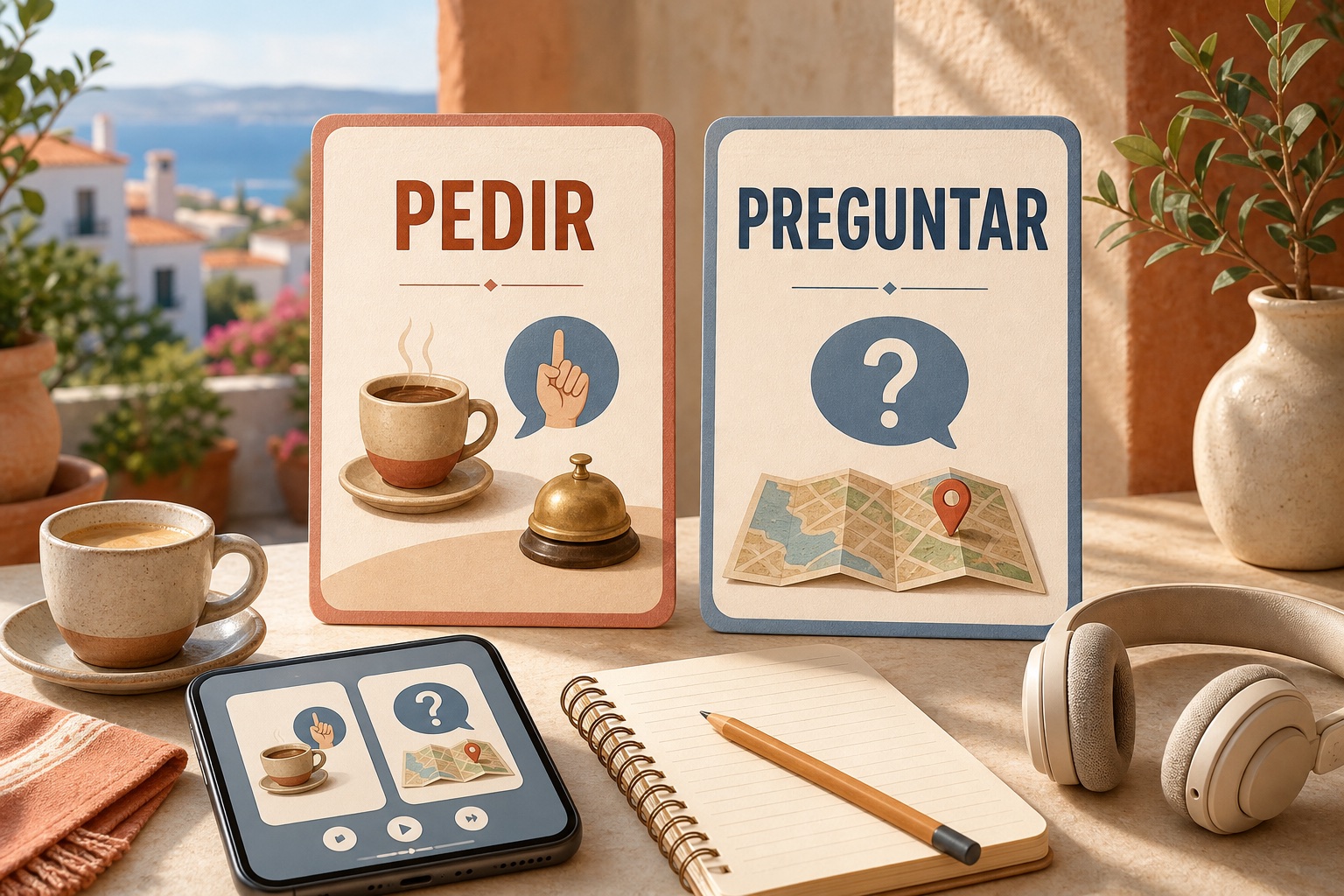
pedir vs preguntar in Spanish
What is the difference between pedir and preguntar?
Preguntar means to ask a question or seek information: pregunté dónde estaba la estación. Pedir means to ask for, request, order, or tell someone what action you want: pedí un café; le pedí que me ayudara.
English uses “ask” for both jobs, so do not translate the verb alone. First decide whether you need an answer or want someone to give, do, allow, or provide something.
The quickest answer-or-request rule
If the expected result is information, use preguntar, often before qué, dónde, cuándo, cuánto, cómo, por qué, or si. If the expected result is a thing, service, permission, favour, or action, use pedir.
The pattern preguntar por is a special case: preguntar por una persona means to ask about or ask to speak to that person. It does not replace pedir when you request an object or service.
40 examples with pedir and preguntar in Spanish
Each row gives a complete Spanish sentence, a natural translation, the verb’s job, and one short usage cue.
| Spanish | Translation | Verb job | Mini-note |
|---|---|---|---|
| Pregunto qué hora es. | I ask what time it is. | Preguntar: information and questions | The speaker wants information or an answer. |
| Le pregunto cómo se llama. | I ask what his or her name is. | Preguntar: information and questions | The speaker wants information or an answer. |
| ¿Puedo preguntarte algo? | Can I ask you something? | Preguntar: information and questions | A direct or reported question. |
| Pregunta dónde está la estación. | Ask where the station is. | Preguntar: information and questions | The speaker wants information or an answer. |
| Preguntamos a qué hora abre el museo. | We ask what time the museum opens. | Preguntar: information and questions | The speaker wants information or an answer. |
| Ella preguntó si había wifi. | She asked whether there was Wi-Fi. | Preguntar: information and questions | A direct or reported question. |
| Voy a preguntar cuánto cuesta. | I am going to ask how much it costs. | Preguntar: information and questions | The speaker wants information or an answer. |
| Pregúntale al profesor. | Ask the teacher. | Preguntar: information and questions | A direct or reported question. |
| Alguien preguntó por ti. | Someone asked about you. | Preguntar: information and questions | Preguntar por asks about a topic or person. |
| Siempre preguntas por qué. | You always ask why. | Preguntar: information and questions | A direct or reported question. |
| Pido un café. | I order a coffee. | Pedir: requests, orders, and permission | The speaker requests or orders a thing or service. |
| Pedimos la cuenta. | We ask for the bill. | Pedir: requests, orders, and permission | The speaker requests or orders a thing or service. |
| Quiero pedir ayuda. | I want to ask for help. | Pedir: requests, orders, and permission | A favour, permission, or action is requested. |
| ¿Puedo pedirte un favor? | Can I ask you a favour? | Pedir: requests, orders, and permission | A favour, permission, or action is requested. |
| Ella pidió permiso. | She asked for permission. | Pedir: requests, orders, and permission | A favour, permission, or action is requested. |
| Pide una mesa para dos. | Ask for a table for two. | Pedir: requests, orders, and permission | The speaker requests or orders a thing or service. |
| Voy a pedir cita con el médico. | I am going to make a doctor’s appointment. | Pedir: requests, orders, and permission | The speaker requests or orders a thing or service. |
| El cliente pidió agua. | The customer asked for water. | Pedir: requests, orders, and permission | The speaker requests or orders a thing or service. |
| No pidas tanto. | Do not ask for so much. | Pedir: requests, orders, and permission | A favour, permission, or action is requested. |
| Te pido paciencia. | I ask you to be patient. | Pedir: requests, orders, and permission | A favour, permission, or action is requested. |
| Le pregunté la dirección. | I asked him or her for the address. | Pronouns and sentence patterns | Notice the pronoun or complement after the verb. |
| Le pedí la dirección. | I asked him or her to give me the address. | Pronouns and sentence patterns | Notice the pronoun or complement after the verb. |
| Le pregunté si podía ayudarme. | I asked whether he or she could help me. | Pronouns and sentence patterns | A direct or reported question. |
| Le pedí que me ayudara. | I asked him or her to help me. | Pronouns and sentence patterns | Pedir que introduces the requested action. |
| Me preguntó qué quería. | He or she asked me what I wanted. | Pronouns and sentence patterns | A direct or reported question. |
| Me pidió el pasaporte. | He or she asked me for my passport. | Pronouns and sentence patterns | The speaker requests or orders a thing or service. |
| ¿Qué preguntaste? | What did you ask? | Pronouns and sentence patterns | Notice a useful stem-changing or past form. |
| ¿Qué pediste? | What did you order or ask for? | Pronouns and sentence patterns | Notice a useful stem-changing or past form. |
| Pregunta antes de decidir. | Ask before deciding. | Pronouns and sentence patterns | A direct or reported question. |
| Pide lo que necesitas. | Ask for what you need. | Pronouns and sentence patterns | A favour, permission, or action is requested. |
| Pregunto qué hay en el menú y pido la sopa. | I ask what is on the menu and order the soup. | Direct answer-versus-request contrasts | The sentence contrasts an answer with a request. |
| Ella pregunta el precio y pide una talla más. | She asks the price and requests a larger size. | Direct answer-versus-request contrasts | The sentence contrasts an answer with a request. |
| Preguntamos dónde está el hotel y pedimos un taxi. | We ask where the hotel is and request a taxi. | Direct answer-versus-request contrasts | The sentence contrasts an answer with a request. |
| Primero pregunta si hay mesa; después pide la carta. | First ask whether there is a table; then ask for the menu. | Direct answer-versus-request contrasts | The sentence contrasts an answer with a request. |
| Te pregunto qué opinas; no te pido permiso. | I ask what you think; I am not asking permission. | Direct answer-versus-request contrasts | The sentence contrasts an answer with a request. |
| El médico pregunta cómo me siento y pide un análisis. | The doctor asks how I feel and orders a test. | Direct answer-versus-request contrasts | The sentence contrasts an answer with a request. |
| El profesor pregunta qué entendimos y pide silencio. | The teacher asks what we understood and asks for silence. | Direct answer-versus-request contrasts | The sentence contrasts an answer with a request. |
| Pregunté por Marta y pedí hablar con ella. | I asked about Marta and asked to speak to her. | Direct answer-versus-request contrasts | The sentence contrasts an answer with a request. |
| Si no entiendes, pregunta; si necesitas algo, pídelo. | If you do not understand, ask; if you need something, ask for it. | Direct answer-versus-request contrasts | The sentence contrasts an answer with a request. |
| Pregunté cuándo salíamos y pedí salir antes. | I asked when we were leaving and requested to leave earlier. | Direct answer-versus-request contrasts | The sentence contrasts an answer with a request. |
Group pedir and preguntar by meaning and structure
Four groups separate information questions, requests and orders, useful grammar patterns, and direct contrasts in the same situation.
Preguntar: information and questions
Use preguntar when you need facts, an explanation, or an answer.
Pregunto qué hora es. Le pregunto cómo se llama. ¿Puedo preguntarte algo? Pregunta dónde está la estación. Preguntamos a qué hora abre el museo. Ella preguntó si había wifi. Voy a preguntar cuánto cuesta. Pregúntale al profesor. Alguien preguntó por ti. Siempre preguntas por qué.
Pedir: requests, orders, and permission
Use pedir for things, services, help, permission, favours, and actions.
Pido un café. Pedimos la cuenta. Quiero pedir ayuda. ¿Puedo pedirte un favor? Ella pidió permiso. Pide una mesa para dos. Voy a pedir cita con el médico. El cliente pidió agua. No pidas tanto. Te pido paciencia.
Pronouns and sentence patterns
Compare preguntar algo, preguntar si, pedir algo, and pedir que plus the subjunctive.
Le pregunté la dirección. Le pedí la dirección. Le pregunté si podía ayudarme. Le pedí que me ayudara. Me preguntó qué quería. Me pidió el pasaporte. ¿Qué preguntaste? ¿Qué pediste? Pregunta antes de decidir. Pide lo que necesitas.
Direct answer-versus-request contrasts
Put both verbs in one scene so the expected result stays clear.
Pregunto qué hay en el menú y pido la sopa. Ella pregunta el precio y pide una talla más. Preguntamos dónde está el hotel y pedimos un taxi. Primero pregunta si hay mesa; después pide la carta. Te pregunto qué opinas; no te pido permiso. El médico pregunta cómo me siento y pide un análisis. El profesor pregunta qué entendimos y pide silencio. Pregunté por Marta y pedí hablar con ella. Si no entiendes, pregunta; si necesitas algo, pídelo. Pregunté cuándo salíamos y pedí salir antes.
Forms and patterns beginners should know
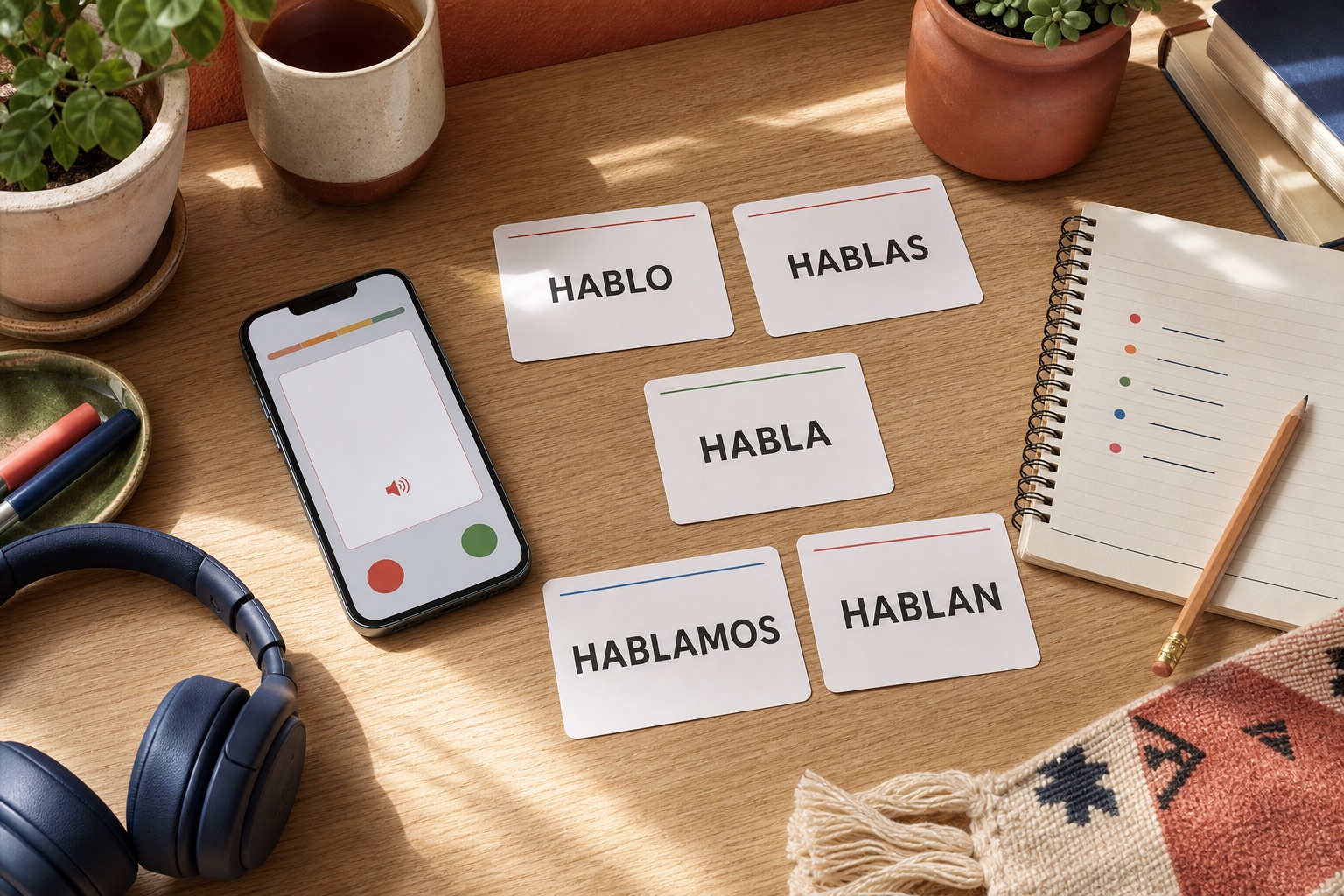
Preguntar is regular in the present: pregunto, preguntas, pregunta, preguntamos, preguntáis, preguntan. Pedir changes e to i in most present forms: pido, pides, pide, pedimos, pedís, piden.
Use preguntarle algo a alguien for information and pedirle algo a alguien for a requested thing: le pregunté la dirección; le pedí el pasaporte. The indirect-object pronoun le marks the person you ask.
To request an action, use pedir que plus the subjunctive: le pedí que me ayudara. To ask whether an action is possible, use preguntar si: le pregunté si podía ayudarme.
Hola Cards, the Spanish flashcard app on holacards.org, helps beginners practise these patterns with flashcards, audio, writing, pronunciation, custom groups, and spaced review on iOS and Android.
Connect pedir and preguntar with question words, restaurant orders, shopping requests, hacer una pregunta, and polite poder phrases.
Question words Restaurant phrases Shopping phrases Hacer phrases Poder phrases
How to practise pedir and preguntar in five steps
- Read an English “ask” sentence and label the result: information, thing, service, permission, favour, or action.
- Choose preguntar for information and pedir for every requested thing or action.
- Build paired cards such as pregunté la hora and pedí un café.
- Add high-value patterns: preguntar por, preguntar si, pedir algo, and pedir que plus the subjunctive.
- Review all 40 examples with Hola Cards audio, writing, pronunciation, and spaced repetition until the choice becomes automatic.
FAQ
What is the simplest difference between pedir and preguntar?
Use preguntar when you want information or an answer. Use pedir when you want a thing, service, permission, favour, or action.
How do I say “ask for” in Spanish?
Use pedir for most requests: pedir ayuda, pedir permiso, pedir un café. Use preguntar por when you ask about a topic or ask to speak to a person.
What is the difference between preguntar si and pedir que?
Preguntar si introduces a yes-or-no information question. Pedir que introduces the action you want someone to do and normally takes the subjunctive.
Why does pedir become pido?
Pedir is an e-to-i stem-changing verb in the present except nosotros and vosotros: pido, pides, pide, pedimos, pedís, piden. Preguntar is regular.
Copy all 40 pedir and preguntar examples into Hola Cards
Open word groups in Hola Cards, choose paste/import, and paste this block. The app can read the title and the “Spanish - translation” lines.
**Pedir vs preguntar: 40 Spanish examples**

Pregunto qué hora es. - I ask what time it is.
Le pregunto cómo se llama. - I ask what his or her name is.
¿Puedo preguntarte algo? - Can I ask you something?
Pregunta dónde está la estación. - Ask where the station is.
Preguntamos a qué hora abre el museo. - We ask what time the museum opens.
Ella preguntó si había wifi. - She asked whether there was Wi-Fi.
Voy a preguntar cuánto cuesta. - I am going to ask how much it costs.
Pregúntale al profesor. - Ask the teacher.
Alguien preguntó por ti. - Someone asked about you.
Siempre preguntas por qué. - You always ask why.
Pido un café. - I order a coffee.
Pedimos la cuenta. - We ask for the bill.
Quiero pedir ayuda. - I want to ask for help.
¿Puedo pedirte un favor? - Can I ask you a favour?
Ella pidió permiso. - She asked for permission.
Pide una mesa para dos. - Ask for a table for two.
Voy a pedir cita con el médico. - I am going to make a doctor’s appointment.
El cliente pidió agua. - The customer asked for water.
No pidas tanto. - Do not ask for so much.
Te pido paciencia. - I ask you to be patient.
Le pregunté la dirección. - I asked him or her for the address.
Le pedí la dirección. - I asked him or her to give me the address.
Le pregunté si podía ayudarme. - I asked whether he or she could help me.
Le pedí que me ayudara. - I asked him or her to help me.
Me preguntó qué quería. - He or she asked me what I wanted.
Me pidió el pasaporte. - He or she asked me for my passport.
¿Qué preguntaste? - What did you ask?
¿Qué pediste? - What did you order or ask for?
Pregunta antes de decidir. - Ask before deciding.
Pide lo que necesitas. - Ask for what you need.
Pregunto qué hay en el menú y pido la sopa. - I ask what is on the menu and order the soup.
Ella pregunta el precio y pide una talla más. - She asks the price and requests a larger size.
Preguntamos dónde está el hotel y pedimos un taxi. - We ask where the hotel is and request a taxi.
Primero pregunta si hay mesa; después pide la carta. - First ask whether there is a table; then ask for the menu.
Te pregunto qué opinas; no te pido permiso. - I ask what you think; I am not asking permission.
El médico pregunta cómo me siento y pide un análisis. - The doctor asks how I feel and orders a test.
El profesor pregunta qué entendimos y pide silencio. - The teacher asks what we understood and asks for silence.
Pregunté por Marta y pedí hablar con ella. - I asked about Marta and asked to speak to her.
Si no entiendes, pregunta; si necesitas algo, pídelo. - If you do not understand, ask; if you need something, ask for it.
Pregunté cuándo salíamos y pedí salir antes. - I asked when we were leaving and requested to leave earlier.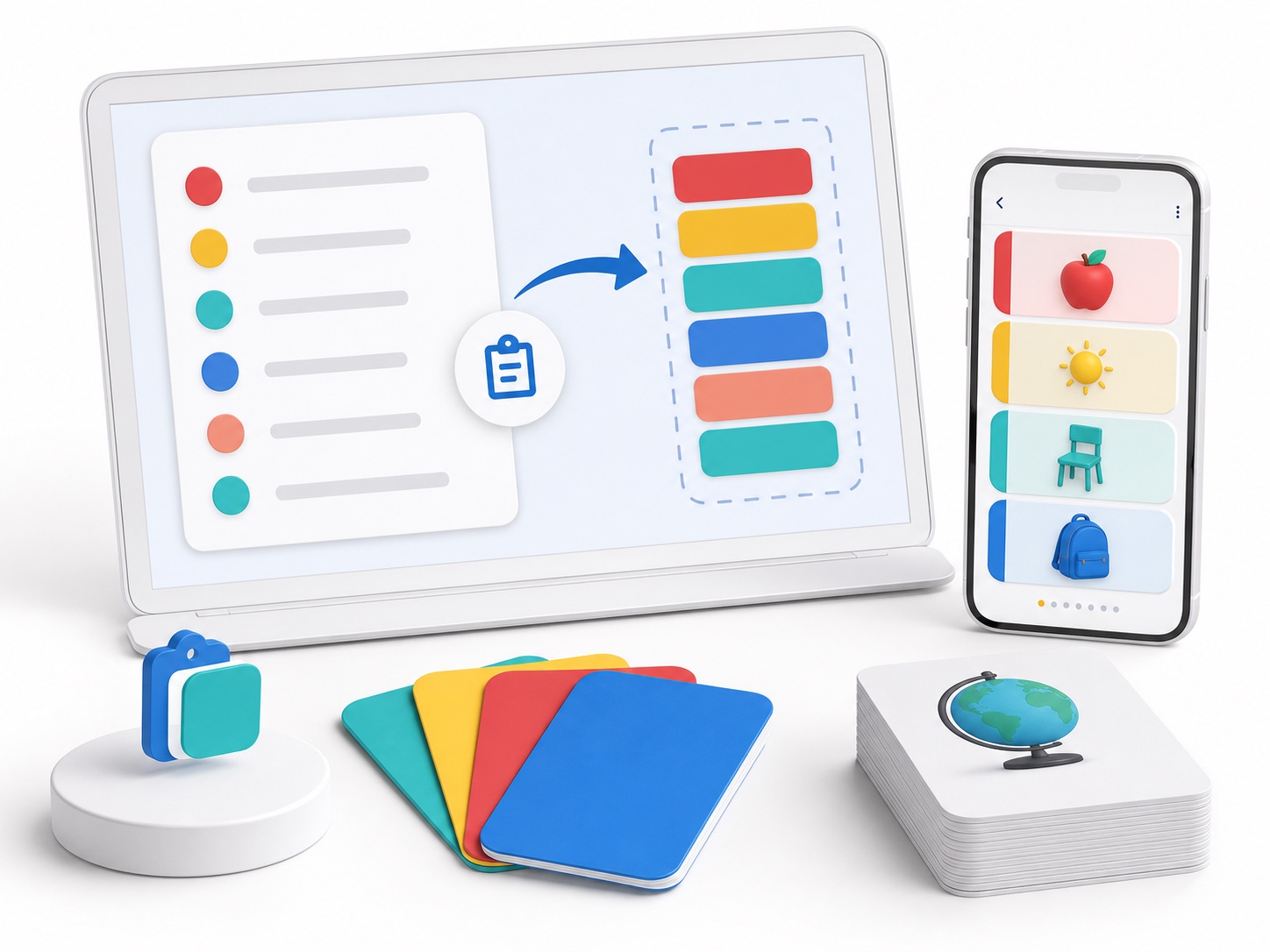
Practise pedir and preguntar in Hola Cards
Hola Cards, the Spanish flashcard app on holacards.org, turns these 40 examples into flashcards with audio, writing, pronunciation practice, custom groups, and spaced review on iOS and Android.