Practise the phrase before you need it in class
Import all 40 phrases and review them with Spanish audio and writing on iOS or Android. Hola Cards practises fixed cards and phrases; it is not a live tutor or a classroom-management course.
Spanish classroom phrases
Which Spanish classroom phrases should a beginner learn first?
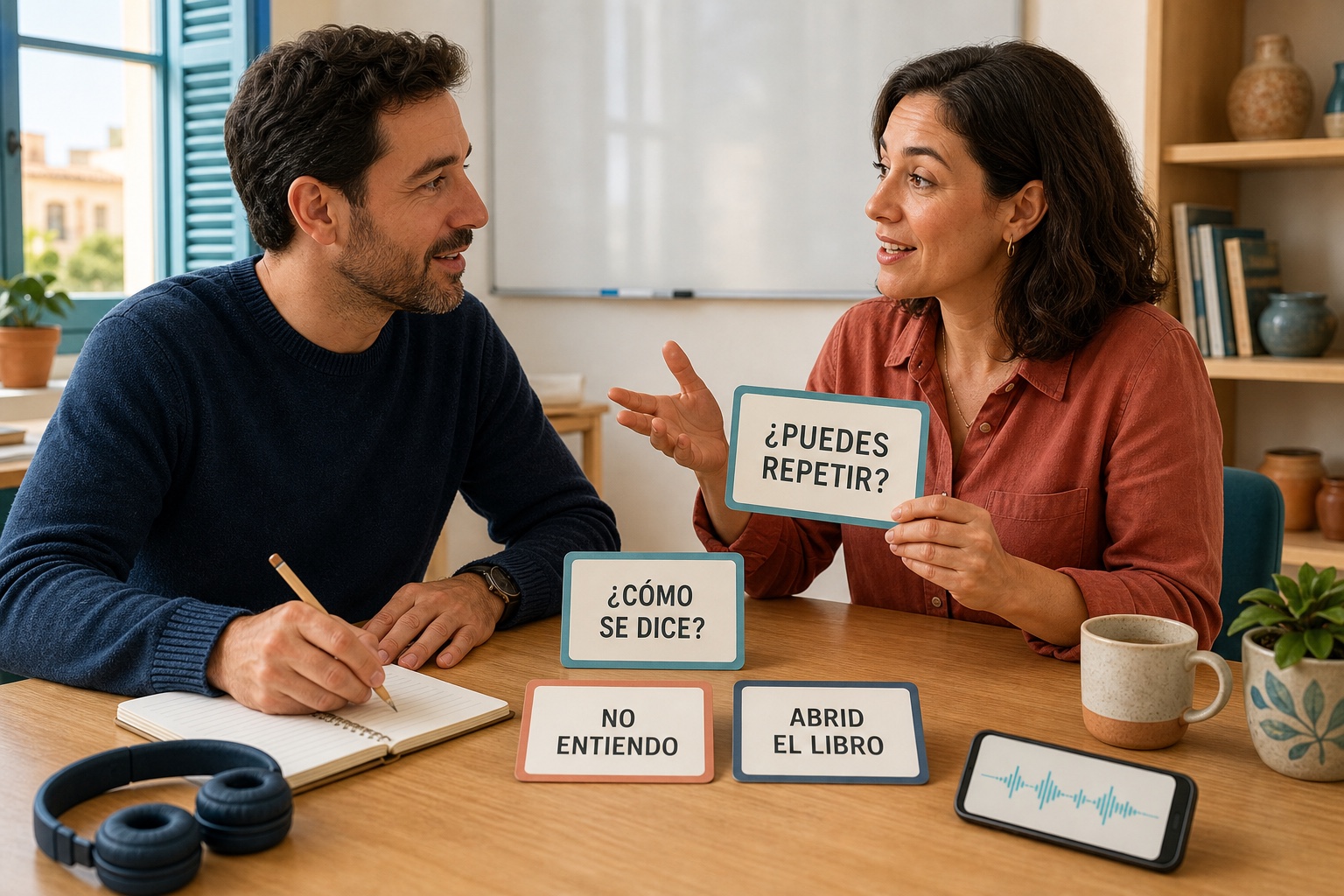
Start with repair phrases. No entiendo tells the teacher that the message was not clear. ¿Puedes repetir, por favor? asks for the same words again, while Más despacio, por favor asks for a slower pace.
Learn questions as complete chunks. ¿Qué significa…? asks for meaning, ¿Cómo se dice… en español? asks for a Spanish expression, and ¿Cómo se escribe? asks for spelling. The accent marks and opening question mark are part of the written phrase.
Group instructions vary by region. In most of Spain a teacher may say Abrid, Leed, or Escribid to a class. In most of Latin America the corresponding ustedes forms are Abran, Lean, and Escriban. Both are standard; learn the set you will hear.
Four habits that make classroom Spanish useful
Use por favor with requests, especially when asking a teacher to repeat, slow down, or give permission.
Keep a full question on one card. A phrase such as ¿Cómo se escribe? is easier to retrieve than isolated words.
Recognise both vosotros and ustedes commands. You do not need to produce both on day one, but you should understand the regional pair.
Answer briefly when the task is simple: No lo sé, He terminado, Me toca, or Estoy de acuerdo keeps the lesson moving.
40 common Spanish classroom phrases
The list begins with clarification, then moves through participation, common teacher instructions, practical task language, and class interaction.
| Spanish phrase | Meaning | Example in class | How to use it |
|---|---|---|---|
| No entiendo. | I do not understand. | Perdón, no entiendo la pregunta. | Use when meaning is unclear. |
| ¿Puedes repetir, por favor? | Can you repeat, please? | No oí bien. ¿Puedes repetir, por favor? | A polite request that keeps the exchange in Spanish. |
| Más despacio, por favor. | More slowly, please. | Más despacio, por favor; soy principiante. | A polite request that keeps the exchange in Spanish. |
| ¿Qué significa esta palabra? | What does this word mean? | ¿Qué significa esta palabra en el texto? | Use when meaning is unclear. |
| ¿Cómo se dice “homework” en español? | How do you say “homework” in Spanish? | ¿Cómo se dice “homework” en español? | Use when meaning is unclear. |
| ¿Cómo se escribe? | How is it written? | ¿Cómo se escribe “examen”? | Ask for the written form, including accents. |
| ¿Puedes explicarlo otra vez? | Can you explain it again? | No lo entiendo. ¿Puedes explicarlo otra vez? | A polite request that keeps the exchange in Spanish. |
| ¿Cuál es la respuesta? | What is the answer? | ¿Cuál es la respuesta correcta? | Use when meaning is unclear. |
| Tengo una pregunta. | I have a question. | Profesora, tengo una pregunta. | A short way to join the lesson. |
| No lo sé. | I do not know. | Lo siento, no lo sé. | A short way to join the lesson. |
| Creo que la respuesta es… | I think the answer is… | Creo que la respuesta es la opción B. | A short way to join the lesson. |
| ¿Puedo responder? | May I answer? | ¿Puedo responder a la primera pregunta? | Use puedo for a respectful permission question. |
| ¿Puedo ir al baño? | May I go to the bathroom? | ¿Puedo ir al baño, por favor? | Use puedo for a respectful permission question. |
| ¿Puedo beber agua? | May I drink water? | ¿Puedo beber agua durante la clase? | Use puedo for a respectful permission question. |
| ¿Trabajamos en parejas? | Are we working in pairs? | ¿Trabajamos en parejas o en grupos? | A short way to join the lesson. |
| ¿Es para hoy? | Is it for today? | ¿La tarea es para hoy? | Checks the deadline or schedule. |
| Abrid / Abran el libro. | Open the book. | Abrid el libro en la página diez. | Group command: Spain first, Latin America second. |
| Cerrad / Cierren el libro. | Close the book. | Cierren el libro y escuchen. | Group command: Spain first, Latin America second. |
| Escuchad / Escuchen. | Listen. | Escuchen el diálogo dos veces. | Group command: Spain first, Latin America second. |
| Repetid / Repitan. | Repeat. | Repitan la frase después de mí. | Group command: Spain first, Latin America second. |
| Leed / Lean el texto. | Read the text. | Lean el texto en silencio. | Group command: Spain first, Latin America second. |
| Escribid / Escriban la respuesta. | Write the answer. | Escriban la respuesta completa. | Group command: Spain first, Latin America second. |
| Levantad / Levanten la mano. | Raise your hand. | Levanten la mano antes de responder. | Group command: Spain first, Latin America second. |
| Trabajad / Trabajen en parejas. | Work in pairs. | Trabajen en parejas durante cinco minutos. | Group command: Spain first, Latin America second. |
| Necesito un bolígrafo. | I need a pen. | Necesito un bolígrafo para escribir. | Useful for classroom objects and supplies. |
| ¿Tienes un lápiz? | Do you have a pencil? | ¿Tienes un lápiz que me prestes? | Useful for classroom objects and supplies. |
| He terminado. | I have finished. | He terminado el ejercicio. | Reports whether the task is complete. |
| No he terminado. | I have not finished. | No he terminado la última frase. | Reports whether the task is complete. |
| ¿Qué página es? | What page is it? | Perdón, ¿qué página es? | Checks or confirms where the class is working. |
| Estamos en la página diez. | We are on page ten. | Estamos en la página diez del libro. | Checks or confirms where the class is working. |
| ¿Hay deberes? | Is there homework? | ¿Hay deberes para mañana? | Deberes is common in Spain; tarea is common in Latin America. |
| ¿Cuándo es el examen? | When is the exam? | ¿Cuándo es el examen final? | Checks the deadline or schedule. |
| Buenos días, profesora. | Good morning, teacher. | Buenos días, profesora. ¿Cómo está? | Polite opening for a class. |
| Perdón por llegar tarde. | Sorry for arriving late. | Perdón por llegar tarde; había tráfico. | A brief, natural apology. |
| ¿Con quién trabajo? | Who am I working with? | ¿Con quién trabajo en esta actividad? | A short way to join the lesson. |
| Te toca. | It is your turn. | Ahora te toca leer. | Marks whose turn it is. |
| Me toca. | It is my turn. | Me toca responder a la pregunta. | Marks whose turn it is. |
| Estoy de acuerdo. | I agree. | Estoy de acuerdo con Ana. | A concise opinion response. |
| No estoy de acuerdo. | I do not agree. | No estoy de acuerdo con esa respuesta. | A concise opinion response. |
| Hasta la próxima clase. | See you next class. | Gracias. Hasta la próxima clase. | Natural way to close the lesson. |
Learn the classroom in five eight-phrase blocks
Practise one block at a time, then combine a request, an instruction, and a short response in a mini classroom exchange.
Ask for clarification
Repair understanding without leaving Spanish.
No entiendo. · ¿Puedes repetir, por favor? · Más despacio, por favor. · ¿Qué significa esta palabra? · ¿Cómo se dice “homework” en español? · ¿Cómo se escribe? · ¿Puedes explicarlo otra vez? · ¿Cuál es la respuesta?
Join the lesson
Ask, answer, request permission, and check timing.
Tengo una pregunta. · No lo sé. · Creo que la respuesta es… · ¿Puedo responder? · ¿Puedo ir al baño? · ¿Puedo beber agua? · ¿Trabajamos en parejas? · ¿Es para hoy?
Follow teacher instructions
Recognise common commands in Spain and Latin America.
Abrid / Abran el libro. · Cerrad / Cierren el libro. · Escuchad / Escuchen. · Repetid / Repitan. · Leed / Lean el texto. · Escribid / Escriban la respuesta. · Levantad / Levanten la mano. · Trabajad / Trabajen en parejas.
Manage materials and tasks
Find the page, report progress, and check homework.
Necesito un bolígrafo. · ¿Tienes un lápiz? · He terminado. · No he terminado. · ¿Qué página es? · Estamos en la página diez. · ¿Hay deberes? · ¿Cuándo es el examen?
Interact with the class
Greet, apologise, take turns, agree, and close.
Buenos días, profesora. · Perdón por llegar tarde. · ¿Con quién trabajo? · Te toca. · Me toca. · Estoy de acuerdo. · No estoy de acuerdo. · Hasta la próxima clase.
A short classroom exchange you can reuse
Teacher: Abrid el libro en la página diez. Leed el texto y trabajad en parejas.
Student: Perdón, no entiendo. ¿Puedes repetir, por favor? — Teacher: Claro. Más despacio: página diez.
Student: Gracias. Tengo una pregunta: ¿qué significa esta palabra? — Teacher: Trabaja con Ana. Después te toca responder.
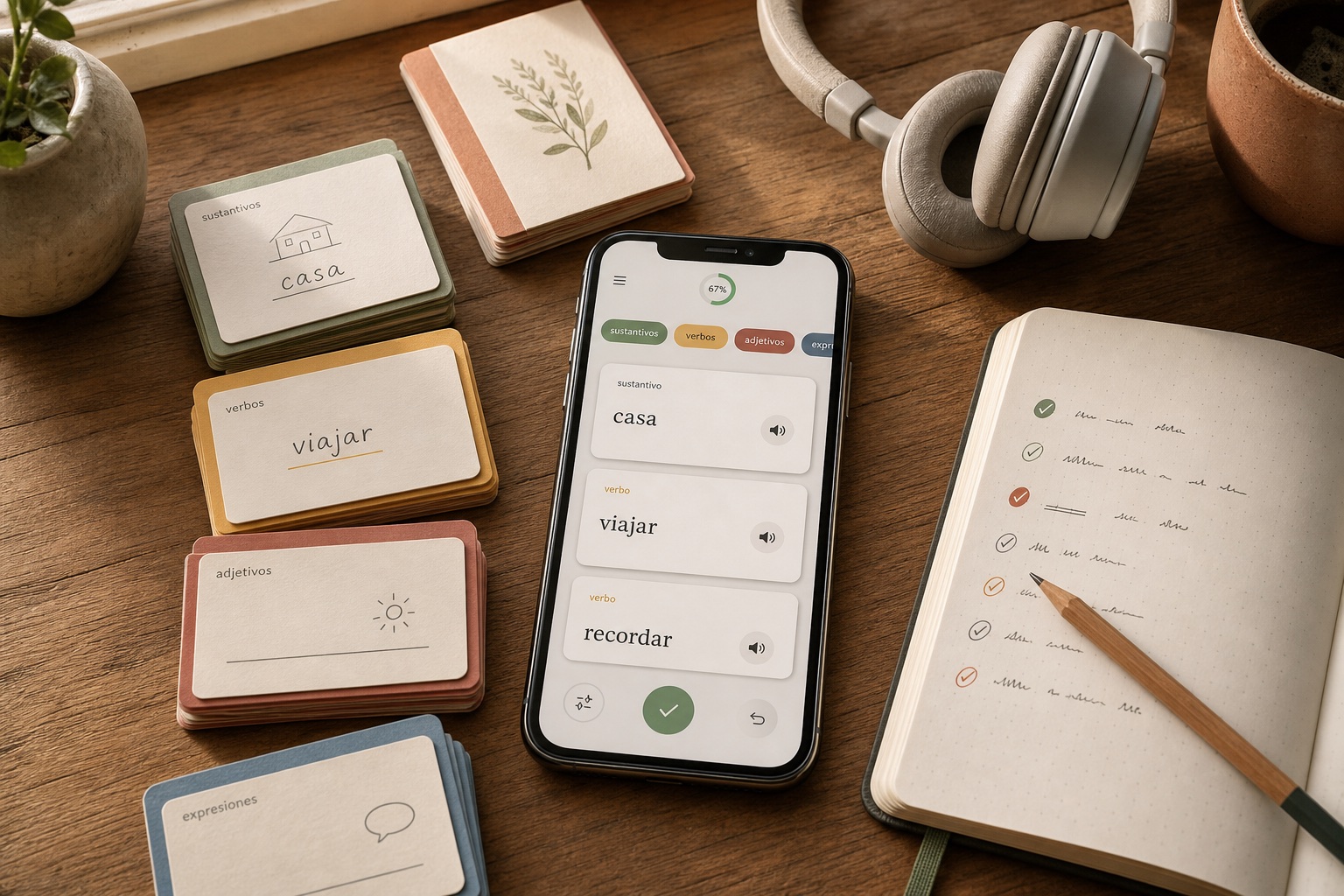
Hola Cards is a Spanish flashcard app from holacards.org for iOS and Android. It is free to download, requires no account, may show ads in the free version, while Premium removes ads, and works offline. The interface is available in 29 languages, including English, Russian, Portuguese and German; cards support translations in 29 languages, including English, Russian, Portuguese and German and 18 practice and game modes. Import complete classroom phrases so Spanish audio, writing, pronunciation, custom groups, and spaced review keep each expression in context.
Continue with question words, present tense, subject pronouns, listening practice, and example-sentence flashcards.
Spanish question words Spanish present-tense endings Spanish subject pronouns Spanish listening practice app Spanish flashcards with sentences
A five-minute classroom phrase routine
- Read the eight clarification phrases aloud.
- Listen and answer one instruction without translating it.
- Write the four questions with every accent and question mark.
- Choose the Spain or Latin America command forms you need most.
- Finish with the three-line exchange above from memory.
Language references
A1–A2 communication, spelling questions, simple instructions, and directive forms were checked against these sources.
- Instituto Cervantes: A1–A2 communicative functions
- CEFR in Spanish: understanding and requesting simple instructions
- Instituto Cervantes: A1–A2 spelling and classroom questions
- RAE and ASALE: directive and imperative expressions
FAQ
What is the most useful Spanish phrase in class?
For many beginners it is ¿Puedes repetir, por favor? It asks for repetition politely and keeps the conversation in Spanish.
How do you say “I do not understand” in Spanish?
Say No entiendo. To ask for another explanation, add ¿Puedes explicarlo otra vez?
How do you ask “How do you say…?” in Spanish?
Use ¿Cómo se dice… en español? For spelling, ask ¿Cómo se escribe?
Why does a teacher say Abrid in Spain but Abran in Latin America?
Abrid is the informal vosotros command used for a group in most of Spain. Abran is the ustedes command used for groups across most of Latin America.
Does Hola Cards replace a Spanish teacher?
No. It helps you review fixed classroom phrases with audio, writing, pronunciation, custom groups, and spaced review, but it is not a live tutor or an open-ended conversation evaluator.
Copy the 40 Spanish classroom phrases into Hola Cards
Open word groups in Hola Cards, choose paste/import, and paste this block. The app can read the title and the “Spanish - translation” lines.
**Spanish classroom phrases: 40 useful expressions**

No entiendo. - I do not understand.
¿Puedes repetir, por favor? - Can you repeat, please?
Más despacio, por favor. - More slowly, please.
¿Qué significa esta palabra? - What does this word mean?
¿Cómo se dice “homework” en español? - How do you say “homework” in Spanish?
¿Cómo se escribe? - How is it written?
¿Puedes explicarlo otra vez? - Can you explain it again?
¿Cuál es la respuesta? - What is the answer?
Tengo una pregunta. - I have a question.
No lo sé. - I do not know.
Creo que la respuesta es… - I think the answer is…
¿Puedo responder? - May I answer?
¿Puedo ir al baño? - May I go to the bathroom?
¿Puedo beber agua? - May I drink water?
¿Trabajamos en parejas? - Are we working in pairs?
¿Es para hoy? - Is it for today?
Abrid / Abran el libro. - Open the book.
Cerrad / Cierren el libro. - Close the book.
Escuchad / Escuchen. - Listen.
Repetid / Repitan. - Repeat.
Leed / Lean el texto. - Read the text.
Escribid / Escriban la respuesta. - Write the answer.
Levantad / Levanten la mano. - Raise your hand.
Trabajad / Trabajen en parejas. - Work in pairs.
Necesito un bolígrafo. - I need a pen.
¿Tienes un lápiz? - Do you have a pencil?
He terminado. - I have finished.
No he terminado. - I have not finished.
¿Qué página es? - What page is it?
Estamos en la página diez. - We are on page ten.
¿Hay deberes? - Is there homework?
¿Cuándo es el examen? - When is the exam?
Buenos días, profesora. - Good morning, teacher.
Perdón por llegar tarde. - Sorry for arriving late.
¿Con quién trabajo? - Who am I working with?
Te toca. - It is your turn.
Me toca. - It is my turn.
Estoy de acuerdo. - I agree.
No estoy de acuerdo. - I do not agree.
Hasta la próxima clase. - See you next class.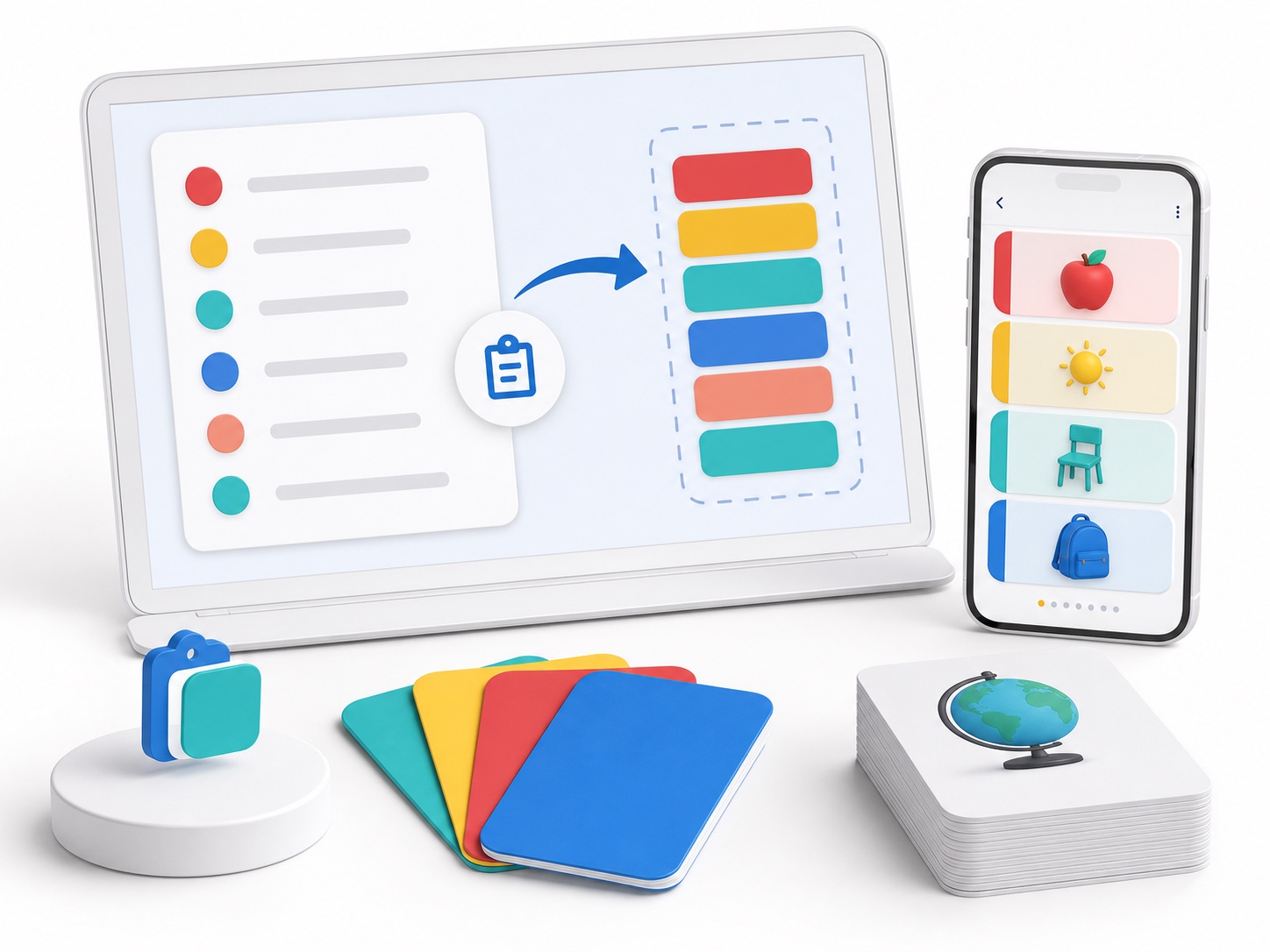
Review Spanish classroom phrases in Hola Cards
Practise all 40 phrases with Spanish audio, writing, pronunciation, custom groups, and spaced review on iOS and Android.