Spanish food vocabulary
Which Spanish food words should a beginner learn first?
The most useful first set covers five situations: basic ingredients, fruit, vegetables, protein and dairy, and meals and drinks. These words let you understand a simple shopping list, read much of a basic menu, and say what you eat or want.
Learn each noun with el, la, los, or las. The article carries gender and number information that English translations hide: el pan, la leche, los frijoles. A complete chunk is easier to reuse than a bare noun.
Learn the article and the regional variant together
Spanish food vocabulary changes across countries, but you do not need every local synonym on day one. Learn one widely understood form, then attach the most useful contrast: patata / papa, zumo / jugo, plátano / banana, and judías / frijoles.
Use the examples as sentence frames: Quiero..., Necesito..., Como..., Bebo..., and Hay.... Replace one food word at a time so vocabulary becomes usable speech rather than a disconnected list.
50 essential Spanish food words with examples
Every row includes the Spanish noun with its article, a natural translation, one short Spanish example, and a decision note.
| Spanish | Translation | Example | Beginner note |
|---|---|---|---|
| el pan | bread | Compramos pan cada mañana. | Everyday staple; learn it with the article. |
| el arroz | rice | Cocino arroz para la cena. | Usually uncountable; add an amount when needed. |
| la pasta | pasta | Hay pasta con tomate. | Usually uncountable; add an amount when needed. |
| la sopa | soup | La sopa está caliente. | Common prepared food or meal component. |
| la ensalada | salad | Quiero una ensalada. | Common prepared food or meal component. |
| el aceite | oil | Añade un poco de aceite. | Usually uncountable; add an amount when needed. |
| la sal | salt | La sopa necesita sal. | Usually uncountable; add an amount when needed. |
| el azúcar | sugar | No tomo café con azúcar. | Usually uncountable; add an amount when needed. |
| el huevo | egg | Como un huevo en el desayuno. | High-frequency kitchen or shopping word. |
| la harina | flour | Necesitamos harina para el pan. | Usually uncountable; add an amount when needed. |
| la manzana | apple | La manzana está dulce. | High-frequency kitchen or shopping word. |
| el plátano / la banana | banana | Corto un plátano para el desayuno. | Plátano and banana vary by region. |
| la naranja | orange | Pelo una naranja. | High-frequency kitchen or shopping word. |
| la fresa | strawberry | Las fresas están maduras. | High-frequency kitchen or shopping word. |
| la uva | grape | Estas uvas son verdes. | High-frequency kitchen or shopping word. |
| la pera | pear | Quiero una pera. | High-frequency kitchen or shopping word. |
| el limón | lemon | Pon limón en el agua. | High-frequency kitchen or shopping word. |
| el aguacate | avocado | La ensalada lleva aguacate. | High-frequency kitchen or shopping word. |
| la sandía | watermelon | La sandía está fría. | High-frequency kitchen or shopping word. |
| el melón | melon | Cortamos el melón. | High-frequency kitchen or shopping word. |
| la patata / la papa | potato | Necesito dos patatas para la sopa. | Patata is common in Spain; papa in Latin America. |
| el tomate | tomato | Corto el tomate para la ensalada. | High-frequency kitchen or shopping word. |
| la cebolla | onion | La cebolla está en la sopa. | High-frequency kitchen or shopping word. |
| el ajo | garlic | Añade un diente de ajo. | High-frequency kitchen or shopping word. |
| la zanahoria | carrot | Rallo una zanahoria. | High-frequency kitchen or shopping word. |
| la lechuga | lettuce | Lavo la lechuga. | High-frequency kitchen or shopping word. |
| el pimiento | pepper | El pimiento es rojo. | High-frequency kitchen or shopping word. |
| el pepino | cucumber | El pepino está fresco. | High-frequency kitchen or shopping word. |
| el maíz | corn | La ensalada lleva maíz. | Usually uncountable; add an amount when needed. |
| las judías / los frijoles | beans | Comemos judías con arroz. | Frijoles, judías, habichuelas, and porotos are regional. |
| la carne | meat | No como mucha carne. | Often used as a collective category. |
| el pollo | chicken | El pollo está en el horno. | Often used as a collective category. |
| el pescado | fish | Cenamos pescado con verduras. | Often used as a collective category. |
| el marisco | seafood | No como marisco. | Often used as a collective category. |
| el jamón | ham | Quiero pan con jamón. | High-frequency kitchen or shopping word. |
| el queso | cheese | Este queso es suave. | Often used as a collective category. |
| la leche | milk | Bebo leche por la mañana. | Usually uncountable; add an amount when needed. |
| el yogur | yoghurt | Tomo un yogur natural. | High-frequency kitchen or shopping word. |
| la mantequilla | butter | Pon mantequilla en el pan. | Usually uncountable; add an amount when needed. |
| las lentejas | lentils | Las lentejas tienen proteína. | High-frequency kitchen or shopping word. |
| el desayuno | breakfast | Desayuno a las siete. | Meal names and timing vary by country. |
| el almuerzo | lunch | Preparo el almuerzo para dos. | Meal names and timing vary by country. |
| la comida | food; meal | La comida está lista. | Meal names and timing vary by country. |
| la cena | dinner | La cena empieza a las nueve. | Meal names and timing vary by country. |
| el postre | dessert | El postre es de chocolate. | Common prepared food or meal component. |
| el agua | water | Bebo agua con la comida. | Feminine noun: el agua fría, las aguas. |
| el café | coffee | Quiero un café, por favor. | Usually uncountable; add an amount when needed. |
| el té | tea | Tomo té sin azúcar. | Usually uncountable; add an amount when needed. |
| el zumo / el jugo | juice | Prefiero zumo de naranja. | Zumo is common in Spain; jugo in Latin America. |
| el vino | wine | Una copa de vino, por favor. | Usually uncountable; add an amount when needed. |
Study Spanish food vocabulary in five small groups
Ten words per group keep the list balanced and make each review session short enough to repeat.
Staples and ingredients
Bread, grains, seasonings, and simple dishes used in everyday shopping and cooking.
el pan · el arroz · la pasta · la sopa · la ensalada · el aceite · la sal · el azúcar · el huevo · la harina
Fruit
Ten common fruits, including a useful plátano / banana regional pair.
la manzana · el plátano / la banana · la naranja · la fresa · la uva · la pera · el limón · el aguacate · la sandía · el melón
Vegetables and pulses
Produce words plus regional names for potatoes and beans.
la patata / la papa · el tomate · la cebolla · el ajo · la zanahoria · la lechuga · el pimiento · el pepino · el maíz · las judías / los frijoles
Protein and dairy
Meat, fish, legumes, milk, and dairy basics.
la carne · el pollo · el pescado · el marisco · el jamón · el queso · la leche · el yogur · la mantequilla · las lentejas
Meals and drinks
Names for the day’s meals and the drinks beginners meet most often.
el desayuno · el almuerzo · la comida · la cena · el postre · el agua · el café · el té · el zumo / el jugo · el vino
Articles, plurals, and regional food words
Agua is grammatically feminine. Like other feminine nouns that begin with a stressed /a/ sound, it takes el in the singular: el agua fría, but las aguas. Keep the adjective feminine.
Some food nouns are normally uncountable in general statements: arroz, aceite, sal, azúcar, leche. Add a container or amount when needed: un kilo de arroz, una botella de aceite, un poco de sal.
Regional alternatives are not mistakes. Spain commonly uses patata and zumo; much of Latin America uses papa and jugo. Frijoles, judías, habichuelas, and porotos vary by country. The table gives high-value pairs without pretending that one label covers every region.
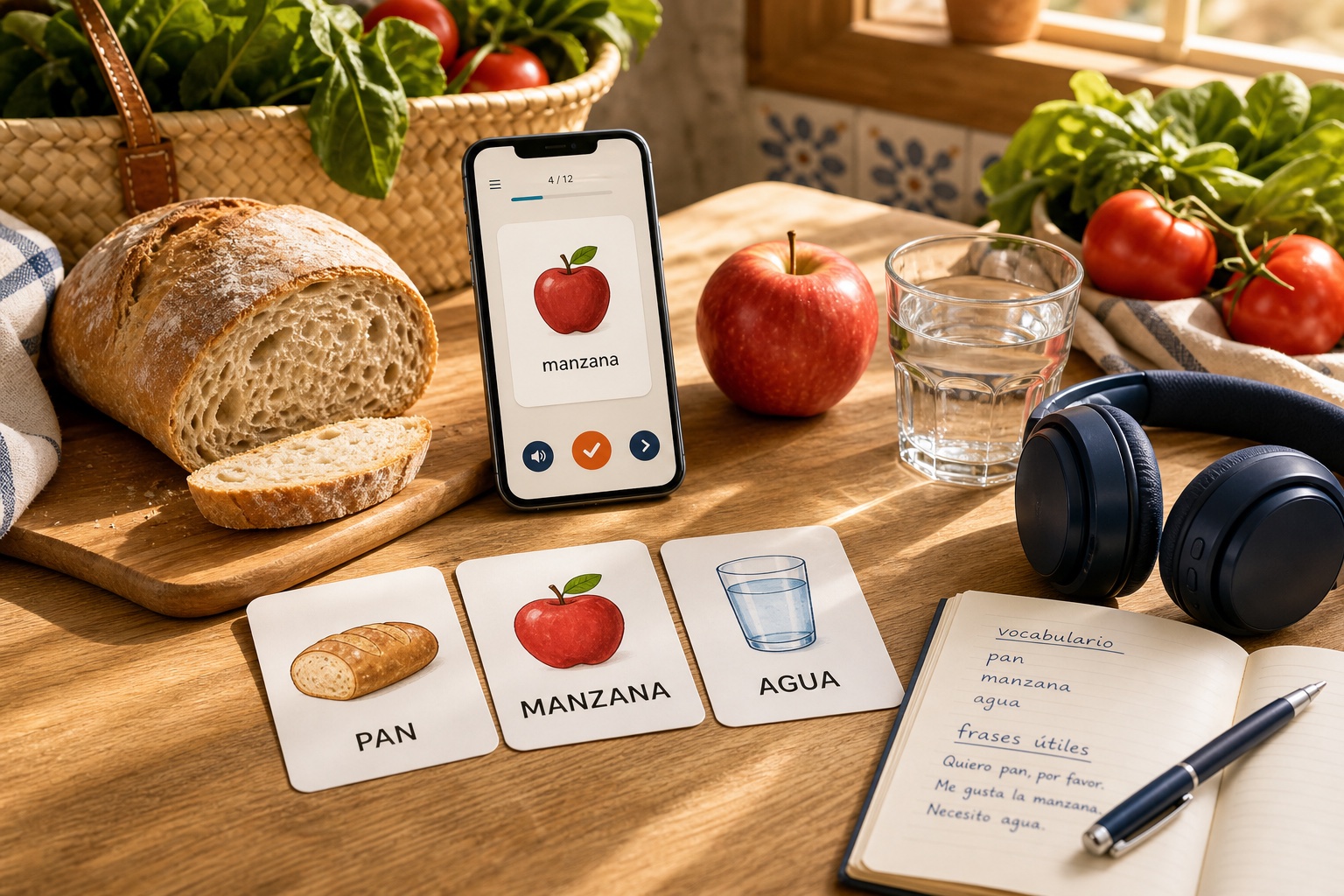
Hola Cards, the Spanish flashcard app on holacards.org, helps beginners review this list with flashcards, audio, writing, pronunciation practice, custom word groups, and spaced review on iOS and Android.
Use these nouns with restaurant phrases, shopping language, drink verbs, and the broader beginner vocabulary list.
Restaurant phrases Shopping phrases Tomar vs beber Gustar examples 100 common Spanish words
How to learn the 50 food words in five steps
- Take one ten-word group and read every Spanish noun aloud with its article.
- Cover the translation, identify the food from the Spanish word, and then reverse the direction.
- Say the example once, then replace its food noun with another word from the same group.
- Mark regional pairs such as patata / papa and choose the form you expect to hear most often.
- Review the full 50-word group in Hola Cards with audio, writing, pronunciation, and spaced repetition.
FAQ
What are the most useful Spanish food words for beginners?
Start with everyday staples, produce, protein, dairy, meals, and drinks: pan, arroz, manzana, tomate, pollo, queso, agua, café, desayuno, and cena are a strong core.
Should I learn Spanish food nouns with el or la?
Yes. Learn the article as part of the word: el pan, la leche, el tomate. It makes gender and later adjective agreement much easier.
Why are there two Spanish words for potato or juice?
Food vocabulary is regional. Patata and zumo are common in Spain; papa and jugo are common across much of Latin America. Both sets are valid.
Is el agua masculine?
No. Agua is feminine. It uses el in the singular for pronunciation, but adjectives stay feminine: el agua fría. The plural is las aguas.
Copy all 50 Spanish food words into Hola Cards
Open word groups in Hola Cards, choose paste/import, and paste this block. The app can read the title and the “Spanish - translation” lines.
**Spanish food vocabulary: 50 words**

el pan - bread
el arroz - rice
la pasta - pasta
la sopa - soup
la ensalada - salad
el aceite - oil
la sal - salt
el azúcar - sugar
el huevo - egg
la harina - flour
la manzana - apple
el plátano / la banana - banana
la naranja - orange
la fresa - strawberry
la uva - grape
la pera - pear
el limón - lemon
el aguacate - avocado
la sandía - watermelon
el melón - melon
la patata / la papa - potato
el tomate - tomato
la cebolla - onion
el ajo - garlic
la zanahoria - carrot
la lechuga - lettuce
el pimiento - pepper
el pepino - cucumber
el maíz - corn
las judías / los frijoles - beans
la carne - meat
el pollo - chicken
el pescado - fish
el marisco - seafood
el jamón - ham
el queso - cheese
la leche - milk
el yogur - yoghurt
la mantequilla - butter
las lentejas - lentils
el desayuno - breakfast
el almuerzo - lunch
la comida - food; meal
la cena - dinner
el postre - dessert
el agua - water
el café - coffee
el té - tea
el zumo / el jugo - juice
el vino - wine
Practise Spanish food vocabulary in Hola Cards
Hola Cards, the Spanish flashcard app on holacards.org, turns these 50 food words into cards with audio, writing, pronunciation practice, custom groups, and spaced review on iOS and Android.