Practise the whole sentence, not an isolated mark
Import 32 fixed contrasts and retrieve the correct written form from meaning and context on iOS or Android. The complete guide remains useful without the app.
Spanish words that change meaning with accents
What is a diacritical accent in Spanish?
Most one-syllable Spanish words have no written accent. A small set uses a tilde diacrítica to distinguish a stressed form from an unstressed form with another grammatical job.
The core pairs are él/el, tú/tu, mí/mi, sí/si, té/te, sé/se, dé/de and más/mas. The related aun/aún contrast follows a different rule: RAE treats the accent in aún as regular accentuation marking a hiatus, not as a diacritical accent. Use aún for “still” or “yet”, and aun for “even” or “including”.
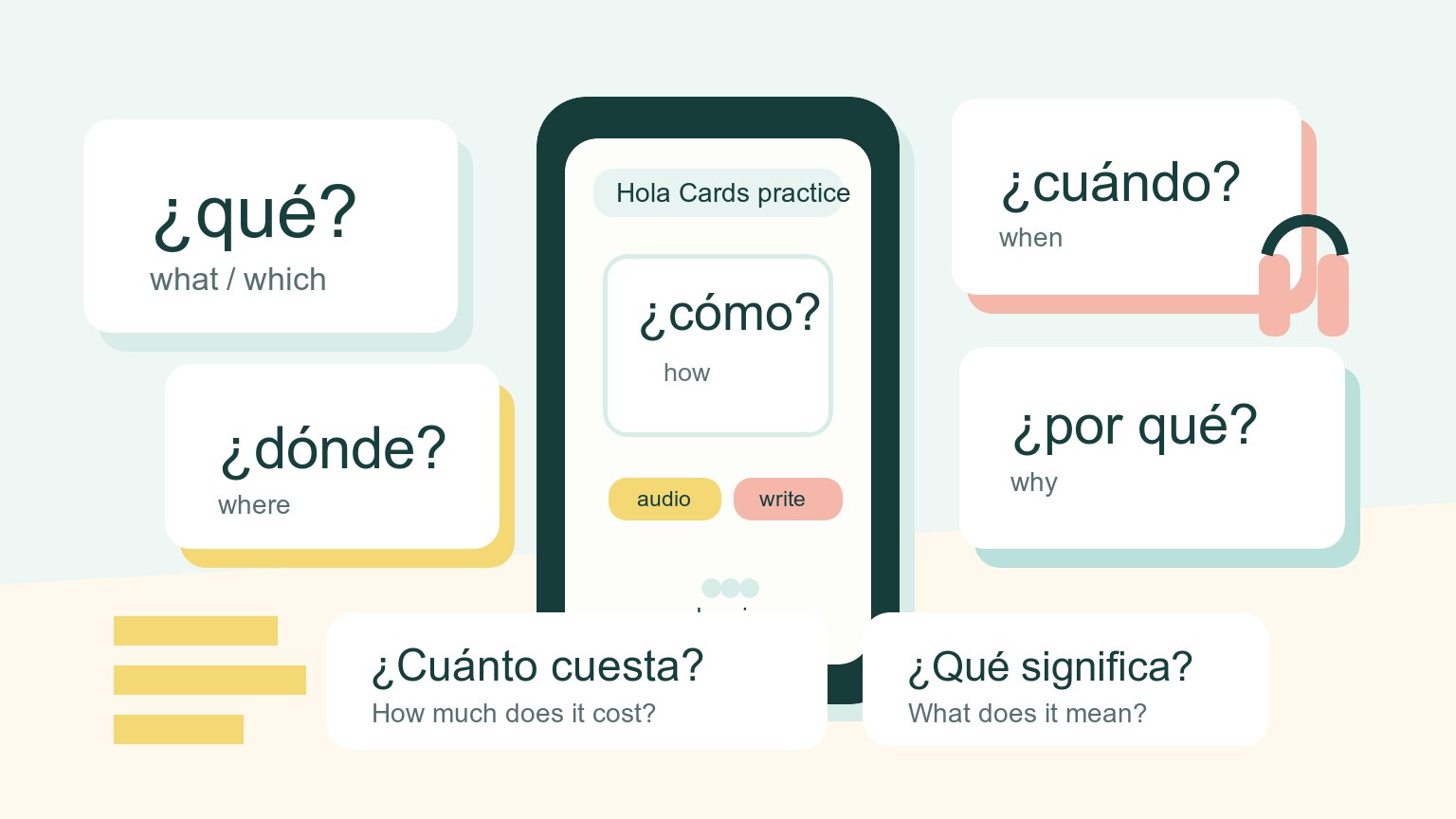
Interrogative and exclamative words carry an accent in direct and indirect questions: qué, quién, cuál, cómo, cuándo, dónde and cuánto. Their relative or linking counterparts do not.
Six decisions that solve most cases
Use él, tú and mí for personal pronouns; use el, tu and mi for an article or possessive.
Use sé for “I know” or the command “be”, and dé for a form of dar; se and de keep no accent.
Use sí for “yes” and the stressed reflexive pronoun; use si for “if”.
Use más for quantity and mas without an accent only for the literary connector meaning “but”.
Use aún when todavía can replace it; use aun when incluso can replace it.
Accent question and exclamation words even inside an indirect question: No sé dónde vive.
32 examples of Spanish accents that change meaning
Read each adjacent pair as one decision. The grammar column tells you why the mark appears or disappears.
| Spanish example | Meaning | Form and function | Decision |
|---|---|---|---|
| El libro está aquí. | The book is here. | el es un artículo. | The article el has no accent; the pronoun él does. |
| Él está aquí. | He is here. | él es un pronombre personal. | The article el has no accent; the pronoun él does. |
| Tu casa es grande. | Your house is big. | tu es un posesivo. | The possessive tu has no accent; the pronoun tú does. |
| Tú vives aquí. | You live here. | tú es un pronombre personal. | The possessive tu has no accent; the pronoun tú does. |
| Mi hermana estudia español. | My sister studies Spanish. | mi es un posesivo. | The possessive mi has no accent; the pronoun mí does. |
| Este regalo es para mí. | This gift is for me. | mí es un pronombre tras preposición. | The possessive mi has no accent; the pronoun mí does. |
| Te llamo mañana. | I will call you tomorrow. | te es un pronombre de objeto. | The object pronoun te has no accent; the drink té does. |
| El té está caliente. | The tea is hot. | té es el nombre de la bebida. | The object pronoun te has no accent; the drink té does. |
| Se llama Ana. | Her name is Ana. | se es un pronombre. | The pronoun se has no accent; the verb form sé does. |
| No sé la respuesta. | I do not know the answer. | sé es una forma de saber. | The pronoun se has no accent; the verb form sé does. |
| Vengo de Madrid. | I come from Madrid. | de es una preposición. | The preposition de has no accent; the verb form dé does. |
| Espero que me dé tiempo. | I hope I have enough time. | dé es una forma de dar. | The preposition de has no accent; the verb form dé does. |
| Si llueve, me quedo en casa. | If it rains, I will stay home. | si introduce una condición. | The connector si has no accent; affirmative or reflexive sí does. |
| Sí, quiero ir. | Yes, I want to go. | sí expresa afirmación. | The connector si has no accent; affirmative or reflexive sí does. |
| Quería salir, mas estaba cansado. | He wanted to go out, but he was tired. | mas equivale a pero y es literario. | Quantity más has an accent; literary mas (“but”) does not. |
| Necesito más tiempo. | I need more time. | más expresa cantidad. | Quantity más has an accent; literary mas (“but”) does not. |
| Aun los niños lo entienden. | Even the children understand it. | aun equivale a incluso. | This is not a diacritical pair: use aún for todavía and aun for incluso. |
| Aún no ha llegado. | He has not arrived yet. | aún equivale a todavía. | This is not a diacritical pair: use aún for todavía and aun for incluso. |
| ¿Qué necesitas? | What do you need? | qué pide información. | An interrogative or exclamative form carries the accent. |
| Este es el libro que necesito. | This is the book that I need. | que enlaza una oración relativa. | A relative or linking form has no accent. |
| ¿Quién viene hoy? | Who is coming today? | quién es interrogativo. | An interrogative or exclamative form carries the accent. |
| La persona con quien hablé llamó. | The person I spoke with called. | quien es relativo. | A relative or linking form has no accent. |
| ¿Cuál prefieres? | Which one do you prefer? | cuál pide una elección. | An interrogative or exclamative form carries the accent. |
| Elige el color que más te guste, sea cual sea. | Choose whichever colour you like best. | cual forma parte de una expresión relativa. | A relative or linking form has no accent. |
| ¿Cómo funciona? | How does it work? | cómo pregunta por el modo. | An interrogative or exclamative form carries the accent. |
| Hazlo como te enseñé. | Do it as I taught you. | como introduce una comparación de modo. | A relative or linking form has no accent. |
| ¿Cuándo empieza la clase? | When does class start? | cuándo pregunta por el tiempo. | An interrogative or exclamative form carries the accent. |
| Te aviso cuando llegue. | I will tell you when I arrive. | cuando enlaza una oración temporal. | A relative or linking form has no accent. |
| ¿Dónde está la estación? | Where is the station? | dónde pregunta por el lugar. | An interrogative or exclamative form carries the accent. |
| Esta es la calle donde vivo. | This is the street where I live. | donde introduce una oración relativa. | A relative or linking form has no accent. |
| ¿Cuánto cuesta? | How much does it cost? | cuánto pregunta por cantidad. | An interrogative or exclamative form carries the accent. |
| Trabaja cuanto puede. | He works as much as he can. | cuanto introduce una relación de cantidad. | A relative or linking form has no accent. |
Learn the pairs by grammatical job
Pronouns, verb forms, connectors and question words each follow a repeatable test.
Articles and pronouns
Distinguish el/él, tu/tú, mi/mí and te/té by grammatical role.
El libro está aquí. · Él está aquí. · Tu casa es grande. · Tú vives aquí. · Mi hermana estudia español. · Este regalo es para mí. · Te llamo mañana. · El té está caliente.
Pronouns and verb forms
Contrast se/sé and de/dé before adding an accent.
Se llama Ana. · No sé la respuesta. · Vengo de Madrid. · Espero que me dé tiempo.
Connectors and emphasis
Use meaning tests for si/sí, mas/más and aun/aún.
Si llueve, me quedo en casa. · Sí, quiero ir. · Quería salir, mas estaba cansado. · Necesito más tiempo. · Aun los niños lo entienden. · Aún no ha llegado.
Question and relative words
Accent direct and indirect questions; leave relative forms unaccented.
¿Qué necesitas? · Este es el libro que necesito. · ¿Quién viene hoy? · La persona con quien hablé llamó. · ¿Cuál prefieres? · Elige el color que más te guste, sea cual sea. · ¿Cómo funciona? · Hazlo como te enseñé. · ¿Cuándo empieza la clase? · Te aviso cuando llegue. · ¿Dónde está la estación? · Esta es la calle donde vivo. · ¿Cuánto cuesta? · Trabaja cuanto puede.
How do you choose the right form?
Name the job before you write: article, possessive, pronoun, preposition, verb, connector or question word.
For aun/aún, try the substitution test: todavía points to aún; incluso points to aun.
For question words, look for missing information or emphasis, including an indirect question without ¿?.
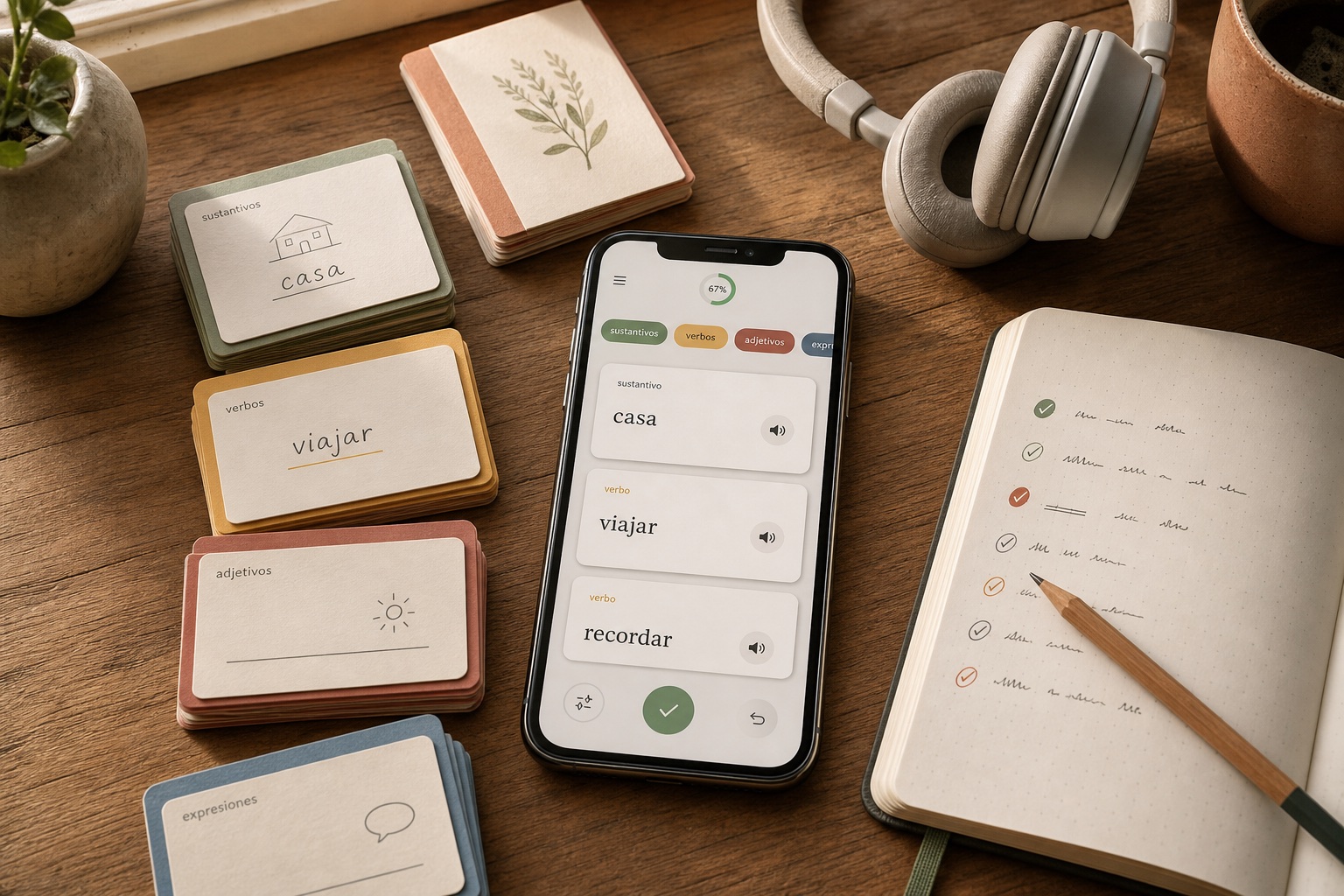
Hola Cards is a Spanish flashcard app from holacards.org for iOS and Android. It is free to download, requires no account, may show ads in the free version, while Premium removes ads, and works offline. The interface is available in 29 languages, including English, Russian, Portuguese and German; cards support translations in 29 languages, including English, Russian, Portuguese and German and 18 practice and game modes. You can import these 32 fixed examples into a custom group and practise them with Spanish audio, writing, pronunciation, and review modes. Hola Cards does not decide which accent a new sentence needs or correct complete writing automatically.
Connect diacritical accents with question words, punctuation, possessives and sentence practice.
Spanish question words Spanish punctuation rules Spanish possessive adjectives por qué vs porque Spanish flashcards with sentences

A five-minute contrast drill
- Cover the accented form in eight adjacent pairs.
- Say the missing word’s grammatical job before spelling it.
- Write the complete Spanish sentence from memory.
- Underline the clue that controls the choice.
- Create one new contrast and verify it against the RAE rule.
Primary language references
The distinctions were checked against RAE orthography, FundéuRAE and the Instituto Cervantes A1–A2 inventory.
- RAE: diacritical accent rules
- RAE: basic Spanish orthography
- Instituto Cervantes: A1–A2 orthography inventory
- FundéuRAE: tu and tú
FAQ
Why do él and el have different accents?
Él is a stressed personal pronoun; el is an unstressed article. The written accent distinguishes their grammatical roles.
Is tu or tú correct for “your”?
Tu without an accent means “your”. Tú with an accent is the subject pronoun “you”.
When does aún have an accent?
Use aún when todavía can replace it, usually “still” or “yet”. Use aun when incluso fits, usually “even” or “including”.
Do indirect questions keep the accent?
Yes: No sé dónde vive and Dime qué necesitas keep the accented question word without question marks.
Should solo and demonstratives always carry a diacritical accent?
No. Current general spelling does not require an accent on solo or demonstrative pronouns; rephrase genuine ambiguity instead of adding one by habit.
Can Hola Cards choose accents in new writing?
No. It helps you import and practise these fixed examples; the guide and primary sources explain the decision.
Copy 32 accent-pair examples into Hola Cards
Open word groups in Hola Cards, choose paste/import, and paste the block. Each “Spanish - translation” line keeps the target form inside a complete sentence.
**Meaning-changing Spanish accents: 32 examples**

El libro está aquí. - The book is here.
Él está aquí. - He is here.
Tu casa es grande. - Your house is big.
Tú vives aquí. - You live here.
Mi hermana estudia español. - My sister studies Spanish.
Este regalo es para mí. - This gift is for me.
Te llamo mañana. - I will call you tomorrow.
El té está caliente. - The tea is hot.
Se llama Ana. - Her name is Ana.
No sé la respuesta. - I do not know the answer.
Vengo de Madrid. - I come from Madrid.
Espero que me dé tiempo. - I hope I have enough time.
Si llueve, me quedo en casa. - If it rains, I will stay home.
Sí, quiero ir. - Yes, I want to go.
Quería salir, mas estaba cansado. - He wanted to go out, but he was tired.
Necesito más tiempo. - I need more time.
Aun los niños lo entienden. - Even the children understand it.
Aún no ha llegado. - He has not arrived yet.
¿Qué necesitas? - What do you need?
Este es el libro que necesito. - This is the book that I need.
¿Quién viene hoy? - Who is coming today?
La persona con quien hablé llamó. - The person I spoke with called.
¿Cuál prefieres? - Which one do you prefer?
Elige el color que más te guste, sea cual sea. - Choose whichever colour you like best.
¿Cómo funciona? - How does it work?
Hazlo como te enseñé. - Do it as I taught you.
¿Cuándo empieza la clase? - When does class start?
Te aviso cuando llegue. - I will tell you when I arrive.
¿Dónde está la estación? - Where is the station?
Esta es la calle donde vivo. - This is the street where I live.
¿Cuánto cuesta? - How much does it cost?
Trabaja cuanto puede. - He works as much as he can.
Review meaning-changing accents in Hola Cards
Practise 32 fixed examples with Spanish audio, writing, pronunciation, custom groups, and review modes on iOS and Android.