Practise punctuation inside complete sentences
Import 32 fixed examples and recall the full written pattern with Spanish audio and writing on iOS or Android. The guide remains fully useful without the app.
Spanish punctuation rules
What is different about punctuation in Spanish?
Direct questions and exclamations use a required opening mark as well as a closing one. Place the opening mark exactly where the question or exclamation begins, even inside a longer sentence.
Use a comma for direct address, lists, sentence connectors and non-essential explanations. Do not put one between an ordinary subject and verb.
Spanish often prefers angle quotation marks (« ») in formal publishing, while double quotation marks are also widespread. The dialogue dash is a raya (—), not the shorter hyphen (-).
Six rules that prevent most beginner mistakes
Use both marks in a direct question or exclamation: ¿…? and ¡…!.
Do not add a period after a closing question or exclamation mark.
Put vocatives such as Marta or profesor between commas when you address someone.
Separate list items with commas, but normally omit a comma before the final y or o.
Never separate a normal subject from its verb with a comma.
Write colons, semicolons, ellipses, quotation marks and dashes according to their function, not as decorations.
32 Spanish punctuation examples
The examples move from opening marks to commas and colons, then to semicolons, ellipses, quotation marks, parentheses and dashes.
| Spanish example | Meaning | What to notice | Rule |
|---|---|---|---|
| ¿Cómo te llamas? | What is your name? | Pregunta directa completa. | Use both opening and closing marks. |
| ¿Dónde está la estación? | Where is the station? | Los dos signos delimitan la pregunta. | Use both opening and closing marks. |
| Quieres venir, ¿verdad? | You want to come, right? | La pregunta empieza después de la coma. | The opening mark begins at the question itself. |
| Si tienes tiempo, ¿podemos hablar? | If you have time, can we talk? | Solo la segunda parte es interrogativa. | The opening mark begins at the question itself. |
| Ana, ¿has terminado? | Ana, have you finished? | El vocativo queda fuera de la pregunta. | A direct address is separated by commas. |
| ¿Qué prefieres: té o café? | What do you prefer: tea or coffee? | Los dos puntos anuncian alternativas. | A colon announces the list. |
| ¿Quién llamó? ¿Qué quería? | Who called? What did they want? | Son dos preguntas independientes. | Use both opening and closing marks. |
| ¡Hola! ¿Cómo estás? | Hello! How are you? | Cada oración tiene sus propios signos. | Each question or exclamation keeps its own pair. |
| ¡Qué sorpresa! | What a surprise! | Exclamación directa completa. | Use both opening and closing marks. |
| Gracias, ¡qué amable! | Thank you, how kind! | La exclamación empieza dentro del enunciado. | The opening mark begins at the question itself. |
| ¡Cuidado! El suelo está mojado. | Careful! The floor is wet. | No se añade punto después del cierre. | Do not add a period after ? or !. |
| Pablo, ¡ven aquí! | Pablo, come here! | El vocativo se separa de la exclamación. | A direct address is separated by commas. |
| ¡Cuánto tiempo sin verte! | Long time no see! | La exclamación usa apertura obligatoria. | Use both opening and closing marks. |
| Si apruebas, ¡lo celebramos! | If you pass, we will celebrate! | Solo la segunda parte es exclamativa. | The opening mark begins at the question itself. |
| ¡No lo toques! | Do not touch it! | El signo de cierre ya termina la frase. | Do not add a period after ? or !. |
| Hola, Marta. | Hello, Marta. | El nombre es un vocativo. | A direct address is separated by commas. |
| Marta, cierra la puerta. | Marta, close the door. | El vocativo inicial lleva coma. | A direct address is separated by commas. |
| Compré pan, leche y fruta. | I bought bread, milk and fruit. | Lista simple sin coma antes de y. | Separate items; no comma before the final y. |
| Primero, abre el libro. | First, open the book. | El conector inicial se separa. | A sentence connector is followed by a comma. |
| Sin embargo, no llegó. | However, they did not arrive. | El conector discursivo lleva coma. | A sentence connector is followed by a comma. |
| Mi hermano, que vive en Lima, viene mañana. | My brother, who lives in Lima, is coming tomorrow. | El inciso explicativo va entre comas. | Commas enclose a non-essential explanation. |
| Mi hermano estudia español. | My brother studies Spanish. | No hay coma entre sujeto y verbo. | Never split a normal subject and verb. |
| Necesito tres cosas: tiempo, calma y práctica. | I need three things: time, calm and practice. | Los dos puntos anuncian la lista. | A colon announces the list. |
| Ella dijo: «Vuelvo mañana». | She said: “I will return tomorrow.” | Los dos puntos introducen palabras citadas. | A colon introduces the quotation. |
| No sé... quizá mañana. | I do not know... perhaps tomorrow. | Los puntos suspensivos expresan vacilación. | Three dots mark hesitation or an unfinished thought. |
| La clase empieza a las nueve; llega temprano. | Class starts at nine; arrive early. | El punto y coma une dos ideas próximas. | A semicolon links closely related clauses. |
| «Estoy listo», dijo Luis. | “I am ready,” Luis said. | Las comillas delimitan el discurso citado. | Quotation marks enclose quoted words or speech. |
| —Buenos días —dijo Ana. | “Good morning,” Ana said. | La raya larga marca el diálogo. | The long raya marks dialogue. |
| El curso incluye gramática (nivel A2) y audio. | The course includes grammar (A2 level) and audio. | Los paréntesis contienen información secundaria. | Parentheses enclose secondary information. |
| Trae el cuaderno —si lo encuentras— y un lápiz. | Bring the notebook—if you find it—and a pencil. | Las rayas enmarcan un inciso enfático. | Paired dashes give the aside extra emphasis. |
| La palabra «hola» no lleva tilde. | The word “hola” has no written accent. | Las comillas presentan una palabra como término. | Quotation marks enclose quoted words or speech. |
| ¿De verdad? ¡No me lo creo! | Really? I cannot believe it! | Pregunta y exclamación conservan sus pares. | Each question or exclamation keeps its own pair. |
Learn punctuation by function
Each block answers one writing decision: marking tone, separating units, announcing information or enclosing an aside.
Questions
Use paired question marks and place the opener where the direct question begins.
¿Cómo te llamas? · ¿Dónde está la estación? · Quieres venir, ¿verdad? · Si tienes tiempo, ¿podemos hablar? · Ana, ¿has terminado? · ¿Qué prefieres: té o café? · ¿Quién llamó? ¿Qué quería? · ¡Hola! ¿Cómo estás?
Exclamations
Use paired exclamation marks and keep vocatives outside the marked phrase when required.
¡Qué sorpresa! · Gracias, ¡qué amable! · ¡Cuidado! El suelo está mojado. · Pablo, ¡ven aquí! · ¡Cuánto tiempo sin verte! · Si apruebas, ¡lo celebramos! · ¡No lo toques! · Hola, Marta.
Commas and colons
Separate vocatives, lists and asides; announce lists or quotations with a colon.
Marta, cierra la puerta. · Compré pan, leche y fruta. · Primero, abre el libro. · Sin embargo, no llegó. · Mi hermano, que vive en Lima, viene mañana. · Mi hermano estudia español. · Necesito tres cosas: tiempo, calma y práctica. · Ella dijo: «Vuelvo mañana».
Other punctuation
Use ellipses, semicolons, quotation marks, parentheses and dashes according to their function.
No sé... quizá mañana. · La clase empieza a las nueve; llega temprano. · «Estoy listo», dijo Luis. · —Buenos días —dijo Ana. · El curso incluye gramática (nivel A2) y audio. · Trae el cuaderno —si lo encuentras— y un lápiz. · La palabra «hola» no lleva tilde. · ¿De verdad? ¡No me lo creo!
How should a beginner check punctuation?
First identify the exact words that are a direct question or exclamation; put the opening mark at their first word.
Read the sentence without each comma. If the comma separates a normal subject and verb, remove it. If it encloses a vocative, connector or optional aside, keep it.
Use a colon to announce a list, explanation or quotation; use a semicolon only when a full stop feels too strong and a comma too weak.
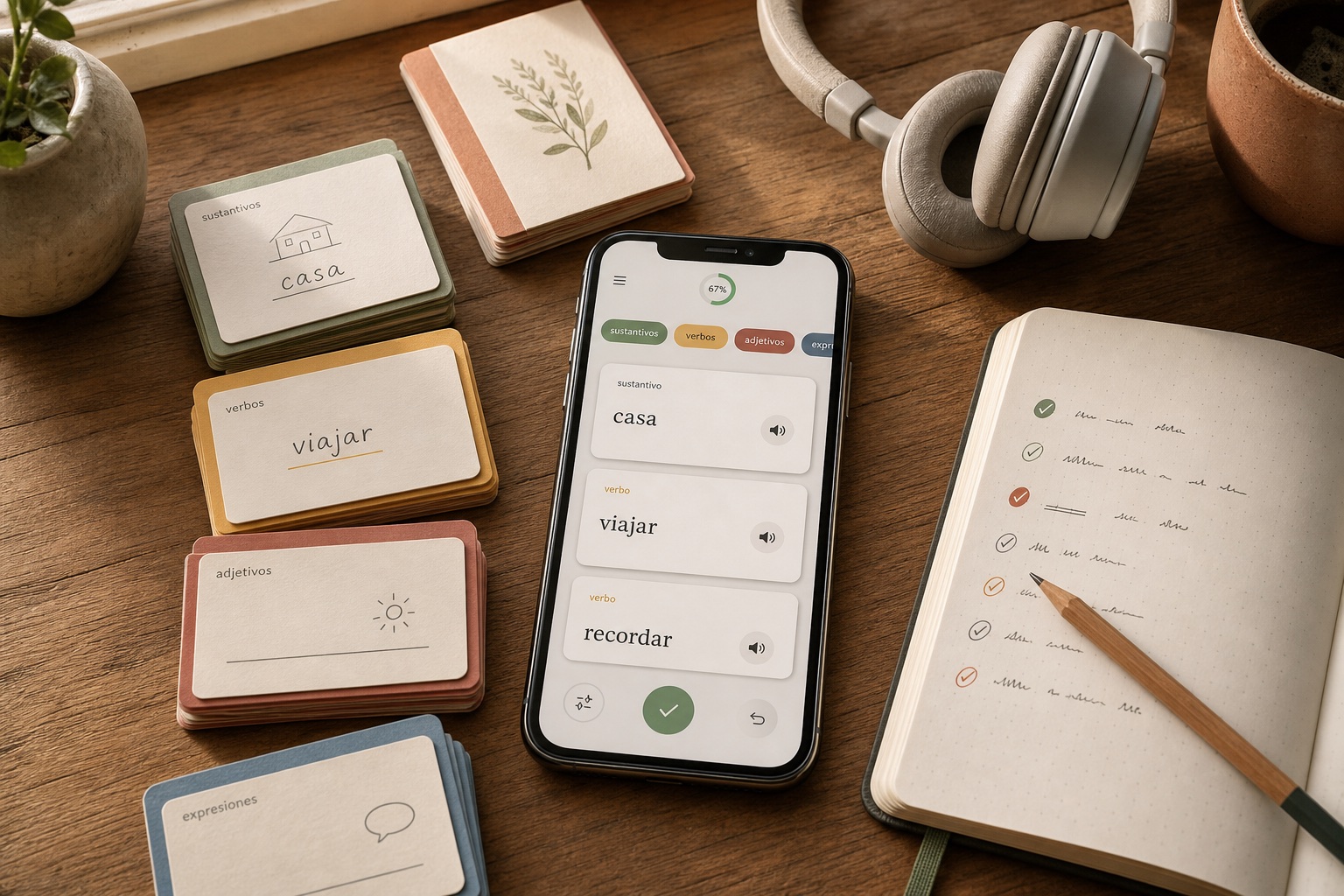
Hola Cards is a Spanish flashcard app from holacards.org for iOS and Android. It is free to download, requires no account, may show ads in the free version, while Premium removes ads, and works offline. The interface is available in 29 languages, including English, Russian, Portuguese and German; cards support translations in 29 languages, including English, Russian, Portuguese and German and 18 practice and game modes. You can import these 32 fixed examples into a custom group and practise them with Spanish audio, writing, pronunciation, and review modes. Hola Cards does not add punctuation to new sentences or correct complete writing automatically.
Connect punctuation with question words, transition words, word order and sentence-based practice.
Spanish question words 32 Spanish transition words Spanish subject pronouns Spanish negative words Spanish flashcards with sentences
A five-minute punctuation drill
- Cover the punctuation in eight examples.
- Say whether the sentence needs an opening mark, separator, announcing sign or enclosing sign.
- Write the complete example from memory.
- Compare every space and closing mark with the model.
- Create one new sentence and explain each sign before checking an RAE rule.
Primary language references
The punctuation rules were checked against RAE orthography and the Instituto Cervantes A1–A2 inventory.
- RAE: Spanish orthography and punctuation
- RAE: the comma
- RAE: the colon
- Instituto Cervantes: A1–A2 orthography inventory
FAQ
Why does Spanish use upside-down question and exclamation marks?
They mark the beginning of a direct question or exclamation, so the reader knows the intended intonation before reaching the end.
Can the opening mark begin in the middle of a sentence?
Yes. Put it exactly where the question or exclamation starts: Si tienes tiempo, ¿podemos hablar?
Do I write a period after ? or ! in Spanish?
No. A closing question or exclamation mark already closes the sentence.
Does Spanish use an Oxford comma?
Spanish normally does not place a comma before the final y or o in a simple list, though a comma can appear when structure or meaning requires it.
Are « » the only Spanish quotation marks?
No. Angle quotation marks are traditionally preferred in formal Spanish typography, but double and single quotation marks also have established uses.
Can Hola Cards correct punctuation automatically?
No. It helps you import and practise these fixed examples; the guide and primary sources provide the rules.
Copy 32 punctuation examples into Hola Cards
Open word groups in Hola Cards, choose paste/import, and paste the block. Every “Spanish - translation” line preserves the punctuation inside a complete sentence.
**Spanish punctuation: 32 examples**

¿Cómo te llamas? - What is your name?
¿Dónde está la estación? - Where is the station?
Quieres venir, ¿verdad? - You want to come, right?
Si tienes tiempo, ¿podemos hablar? - If you have time, can we talk?
Ana, ¿has terminado? - Ana, have you finished?
¿Qué prefieres: té o café? - What do you prefer: tea or coffee?
¿Quién llamó? ¿Qué quería? - Who called? What did they want?
¡Hola! ¿Cómo estás? - Hello! How are you?
¡Qué sorpresa! - What a surprise!
Gracias, ¡qué amable! - Thank you, how kind!
¡Cuidado! El suelo está mojado. - Careful! The floor is wet.
Pablo, ¡ven aquí! - Pablo, come here!
¡Cuánto tiempo sin verte! - Long time no see!
Si apruebas, ¡lo celebramos! - If you pass, we will celebrate!
¡No lo toques! - Do not touch it!
Hola, Marta. - Hello, Marta.
Marta, cierra la puerta. - Marta, close the door.
Compré pan, leche y fruta. - I bought bread, milk and fruit.
Primero, abre el libro. - First, open the book.
Sin embargo, no llegó. - However, they did not arrive.
Mi hermano, que vive en Lima, viene mañana. - My brother, who lives in Lima, is coming tomorrow.
Mi hermano estudia español. - My brother studies Spanish.
Necesito tres cosas: tiempo, calma y práctica. - I need three things: time, calm and practice.
Ella dijo: «Vuelvo mañana». - She said: “I will return tomorrow.”
No sé... quizá mañana. - I do not know... perhaps tomorrow.
La clase empieza a las nueve; llega temprano. - Class starts at nine; arrive early.
«Estoy listo», dijo Luis. - “I am ready,” Luis said.
—Buenos días —dijo Ana. - “Good morning,” Ana said.
El curso incluye gramática (nivel A2) y audio. - The course includes grammar (A2 level) and audio.
Trae el cuaderno —si lo encuentras— y un lápiz. - Bring the notebook—if you find it—and a pencil.
La palabra «hola» no lleva tilde. - The word “hola” has no written accent.
¿De verdad? ¡No me lo creo! - Really? I cannot believe it!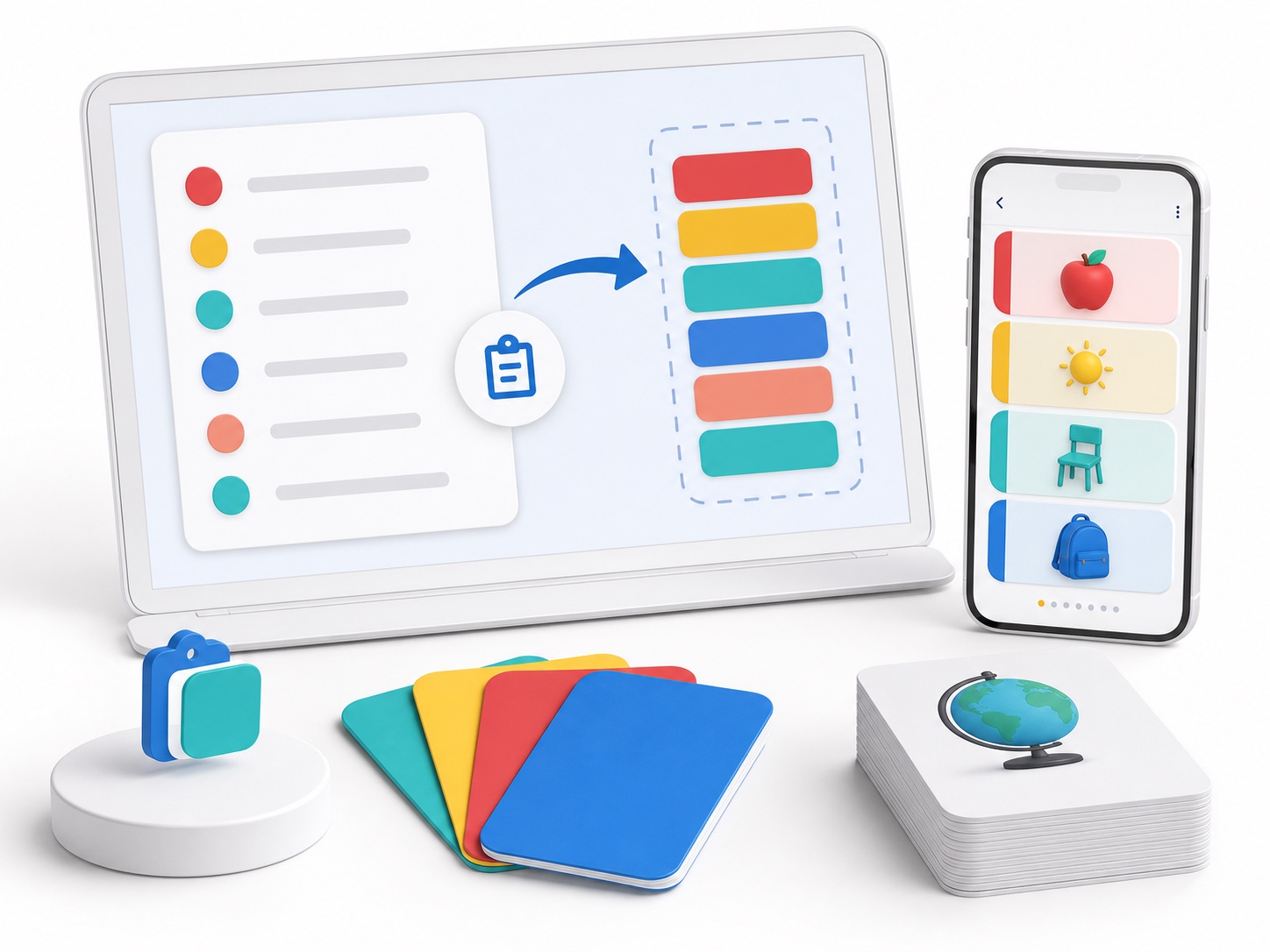
Review Spanish punctuation in Hola Cards
Practise 32 fixed examples with Spanish audio, writing, pronunciation, custom groups, and review modes on iOS and Android.