Practise the article inside the full phrase
Import the 32 examples and recall each contrast with Spanish audio and writing on iOS or Android. The guide remains complete without the app.
Spanish definite and indefinite articles
What do Spanish articles mean?
Definite articles point to an identifiable noun: the book already mentioned, the door in the room, or a whole category understood in context. Indefinite articles introduce a new or nonspecific member: a book, a table, or some friends.
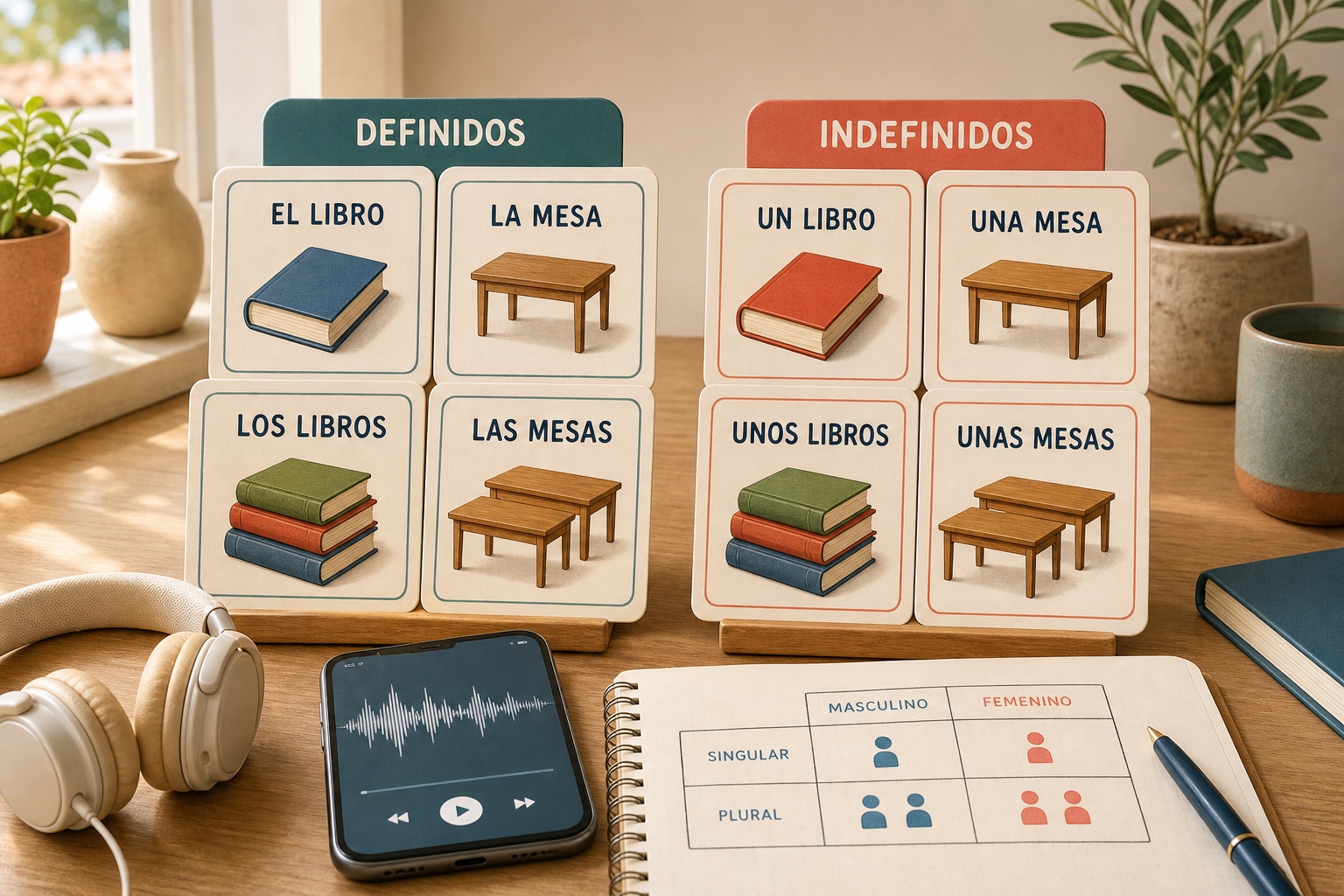
The article agrees with the noun, not with the speaker: el libro, la mesa, los libros, las mesas; un libro, una mesa, unos libros, unas mesas.
Spanish sometimes omits the article where English uses one. Professions after ser, languages after hablar, many mass nouns used generally, and nouns already introduced by possessives or demonstratives commonly appear without an article.
Spanish articles at a glance
Identifiable or already mentioned: el, la, los, las — Vi un libro. El libro era corto.
New, one, or nonspecific: un, una; an approximate or nonspecific plural: unos, unas.
Match gender and number: el problema, la mano, los problemas, unas manos. Learn the noun with its article.
Use zero article in established patterns such as Es profesora, Hablo español, Tengo coche, and Bebo agua. A possessive or demonstrative already fills the determiner slot: mi casa, este libro.
32 Spanish article examples
Compare the eight forms, first versus later mention, generic meanings, zero-article patterns, and stressed-a nouns.
| Spanish sentence | Meaning | Example in context | Why this article? |
|---|---|---|---|
| El libro está en la mesa. | The book is on the table. | El libro ya está identificado en la conversación. | Definite masculine singular. |
| La mesa es redonda. | The table is round. | La mesa es un nombre femenino singular. | Definite feminine singular. |
| Los libros están abiertos. | The books are open. | Los señala un grupo masculino plural identificable. | Definite masculine or mixed plural. |
| Las mesas están libres. | The tables are free. | Las concuerda con el plural femenino mesas. | Definite feminine plural. |
| Necesito un libro. | I need a book. | No se identifica qué libro concreto. | Indefinite masculine singular. |
| Busco una mesa. | I am looking for a table. | Una introduce una mesa no específica. | Indefinite feminine singular. |
| Compré unos libros. | I bought some books. | Unos presenta una cantidad no exacta de libros. | Indefinite masculine or mixed plural: some or approximately. |
| Hay unas mesas fuera. | There are some tables outside. | Unas introduce varias mesas sin identificarlas. | Indefinite feminine plural: some or approximately. |
| Vi un perro. El perro llevaba collar. | I saw a dog. The dog was wearing a collar. | Un perro aparece por primera vez; el perro retoma el mismo animal. | Introduce a new noun with an indefinite article. |
| Compramos una lámpara. La lámpara es azul. | We bought a lamp. The lamp is blue. | Una introduce el objeto; la lo hace identificable después. | Introduce a new noun with an indefinite article. |
| Cierra la puerta, por favor. | Close the door, please. | La situación permite identificar la puerta. | The listener can identify this noun from prior mention or context. |
| ¿Dónde está el baño? | Where is the bathroom? | En el lugar, el baño esperado es identificable. | The listener can identify this noun from prior mention or context. |
| Los niños necesitan dormir. | Children need sleep. | Los niños representa la categoría en general. | The definite article can refer to a whole category. |
| Me gusta el café. | I like coffee. | El café se interpreta como bebida o categoría general. | The definite article can refer to a whole category. |
| Tengo una pregunta. | I have a question. | Una introduce una pregunta nueva. | Introduce a new noun with an indefinite article. |
| La pregunta es importante. | The question is important. | La retoma la pregunta ya mencionada. | The listener can identify this noun from prior mention or context. |
| Ana es médica. | Ana is a doctor. | La profesión después de ser suele ir sin artículo. | This pattern normally uses no article. |
| Mi hermano es estudiante. | My brother is a student. | La profesión o condición no lleva artículo en este patrón. | This pattern normally uses no article. |
| Hablo español y portugués. | I speak Spanish and Portuguese. | Los nombres de lenguas después de hablar van normalmente sin artículo. | This pattern normally uses no article. |
| Bebo agua con la comida. | I drink water with the meal. | Agua como sustancia general aparece sin artículo. | This pattern normally uses no article. |
| Tomamos café por la mañana. | We drink coffee in the morning. | Café como sustancia no específica va sin artículo. | This pattern normally uses no article. |
| Tengo coche, pero voy en tren. | I have a car, but I go by train. | Posesión general y medio de transporte usan aquí artículo zero. | This pattern normally uses no article. |
| Mi casa está cerca. | My house is nearby. | Mi ya determina casa y no admite otro artículo delante. | A possessive or demonstrative replaces the article. |
| Este libro es fácil. | This book is easy. | Este ocupa el lugar del determinante y excluye el artículo. | A possessive or demonstrative replaces the article. |
| El agua está fría. | The water is cold. | Agua es femenino, pero el singular con a tónica usa el; fría sigue en femenino. | The feminine noun begins with stressed a- and takes el or un in the singular; agreement stays feminine. |
| Un águila blanca vuela sobre nosotros. | A white eagle flies above us. | Águila es femenino; ante a tónica usa un y blanca mantiene el femenino. | The feminine noun begins with stressed a- and takes el or un in the singular; agreement stays feminine. |
| Las aguas están tranquilas. | The waters are calm. | En plural vuelve la forma femenina las. | Definite feminine plural. |
| Unas águilas vuelan cerca. | Some eagles are flying nearby. | En plural se usa la forma femenina unas. | Indefinite feminine plural: some or approximately. |
| Voy al mercado. | I am going to the market. | A + el se contrae obligatoriamente en al. | The listener can identify this noun from prior mention or context. |
| Vengo del supermercado. | I am coming from the supermarket. | De + el se contrae obligatoriamente en del. | The listener can identify this noun from prior mention or context. |
| Juego al tenis los sábados. | I play tennis on Saturdays. | Jugar a + el produce al; los sábados expresa repetición semanal. | The listener can identify this noun from prior mention or context. |
| Todos los días leo una página. | Every day I read one page. | Todo + plural normalmente lleva el artículo definido: todos los días. | The listener can identify this noun from prior mention or context. |
Learn the choice in four blocks
Start with the form chart, then compare reference, article-free patterns, and special cases.
The eight article forms
Match definite and indefinite forms to gender and number.
El libro está en la mesa. · La mesa es redonda. · Los libros están abiertos. · Las mesas están libres. · Necesito un libro. · Busco una mesa. · Compré unos libros. · Hay unas mesas fuera.
New or identifiable?
Compare first mention, later mention, context, and generic categories.
Vi un perro. El perro llevaba collar. · Compramos una lámpara. La lámpara es azul. · Cierra la puerta, por favor. · ¿Dónde está el baño? · Los niños necesitan dormir. · Me gusta el café. · Tengo una pregunta. · La pregunta es importante.
When the article disappears
Practise professions, languages, mass nouns, possessives, and demonstratives.
Ana es médica. · Mi hermano es estudiante. · Hablo español y portugués. · Bebo agua con la comida. · Tomamos café por la mañana. · Tengo coche, pero voy en tren. · Mi casa está cerca. · Este libro es fácil.
Special but systematic cases
Handle stressed a-, plurals, contractions, and common fixed patterns.
El agua está fría. · Un águila blanca vuela sobre nosotros. · Las aguas están tranquilas. · Unas águilas vuelan cerca. · Voy al mercado. · Vengo del supermercado. · Juego al tenis los sábados. · Todos los días leo una página.
How do you choose el, un, or no article?
First check gender and number. Then ask whether the listener can identify the noun. If yes, choose a definite form; if it is new or one nonspecific member, choose an indefinite form.
For plurals, unos/unas often means “some” or an approximate number. Los/las can identify a known group or refer to a category in general.
Finally check for a zero-article pattern: profession after ser, language after hablar, a general mass noun, or another determiner such as mi or este. Do not remove the article mechanically just because English has none.
Hola Cards is a Spanish flashcard app from holacards.org for iOS and Android. It is free to download, requires no account, may show ads in the free version, while Premium removes ads, and works offline. The interface is available in 29 languages, including English, Russian, Portuguese and German; cards support translations in 29 languages, including English, Russian, Portuguese and German and 18 practice and game modes. You can import these complete sentences into a custom group for Spanish audio, writing, pronunciation, and spaced review. Hola Cards does not choose the correct article automatically, so use this guide to analyse the context.
Connect article choice with noun gender, plural formation, possessives, demonstratives, and reflexive body-part phrases.
Spanish noun gender Spanish plural rules Possessive adjectives Este, ese, aquel Reflexive pronouns
A five-minute article routine
- Mark each noun as masculine or feminine, singular or plural.
- Decide whether the noun is identifiable, new, approximate, generic, or in a zero-article pattern.
- Say the whole chunk aloud: el libro, una mesa, los niños, unas flores.
- Turn first mention into second mention: un café → el café.
- Write eight full sentences from memory and explain every article choice.
Grammar references
Forms, first mention, identifiable reference, zero article, and A1–A2 usage were checked against these primary sources.
- RAE–ASALE: definite and indefinite article forms and meanings
- RAE–ASALE: first mention and identifiable reference
- Instituto Cervantes A1–A2 grammar inventory: article uses and restrictions
FAQ
What are the definite articles in Spanish?
They are el, la, los, and las. They agree with the noun and normally point to something identifiable or to a category understood in context.
What are the indefinite articles in Spanish?
They are un, una, unos, and unas. They introduce one or some nonspecific members of a group.
When do I use el instead of un?
Use el when the listener can identify the masculine singular noun; use un when you introduce one nonspecific example.
Can Spanish omit the article?
Yes. Common beginner patterns include Es médico, Hablo español, Tengo coche, and Bebo café, as well as mi casa and este libro.
Why is it el agua fría, not la agua fría?
Agua is feminine. Singular stressed a- nouns take el for sound, while adjectives remain feminine: el agua fría; the plural is las aguas.
Does Hola Cards choose the article automatically?
No. You can import and practise the examples; this page explains how context determines the article.
Copy the 32 article examples into Hola Cards
Open word groups in Hola Cards, choose paste/import, and paste the block. The app recognises the title and “Spanish - translation” lines.
**Spanish articles: 32 examples**

El libro está en la mesa. - The book is on the table.
La mesa es redonda. - The table is round.
Los libros están abiertos. - The books are open.
Las mesas están libres. - The tables are free.
Necesito un libro. - I need a book.
Busco una mesa. - I am looking for a table.
Compré unos libros. - I bought some books.
Hay unas mesas fuera. - There are some tables outside.
Vi un perro. El perro llevaba collar. - I saw a dog. The dog was wearing a collar.
Compramos una lámpara. La lámpara es azul. - We bought a lamp. The lamp is blue.
Cierra la puerta, por favor. - Close the door, please.
¿Dónde está el baño? - Where is the bathroom?
Los niños necesitan dormir. - Children need sleep.
Me gusta el café. - I like coffee.
Tengo una pregunta. - I have a question.
La pregunta es importante. - The question is important.
Ana es médica. - Ana is a doctor.
Mi hermano es estudiante. - My brother is a student.
Hablo español y portugués. - I speak Spanish and Portuguese.
Bebo agua con la comida. - I drink water with the meal.
Tomamos café por la mañana. - We drink coffee in the morning.
Tengo coche, pero voy en tren. - I have a car, but I go by train.
Mi casa está cerca. - My house is nearby.
Este libro es fácil. - This book is easy.
El agua está fría. - The water is cold.
Un águila blanca vuela sobre nosotros. - A white eagle flies above us.
Las aguas están tranquilas. - The waters are calm.
Unas águilas vuelan cerca. - Some eagles are flying nearby.
Voy al mercado. - I am going to the market.
Vengo del supermercado. - I am coming from the supermarket.
Juego al tenis los sábados. - I play tennis on Saturdays.
Todos los días leo una página. - Every day I read one page.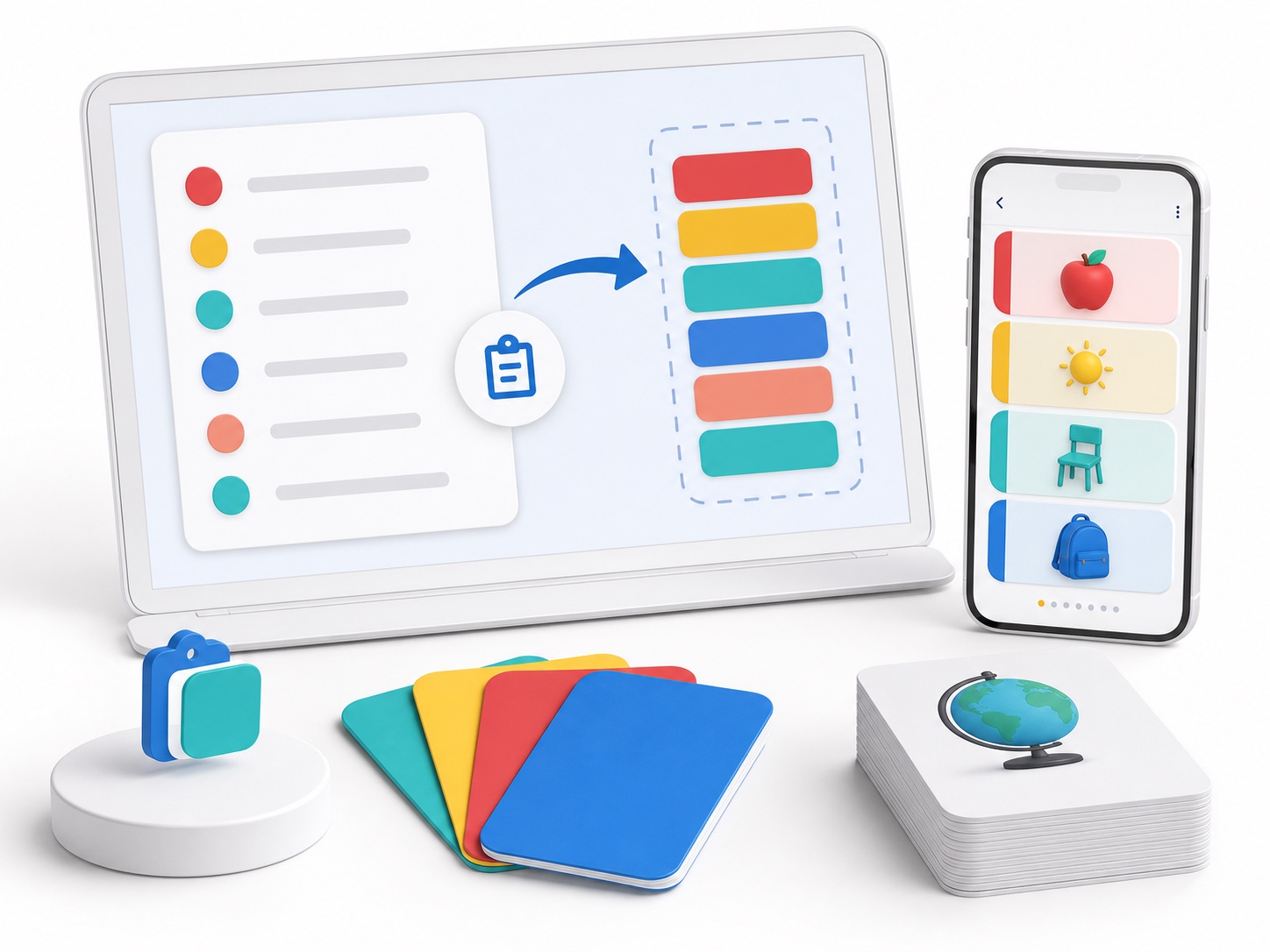
Review Spanish articles in Hola Cards
Practise the 32 complete examples with Spanish audio, writing, pronunciation, custom groups, and spaced review on iOS and Android.