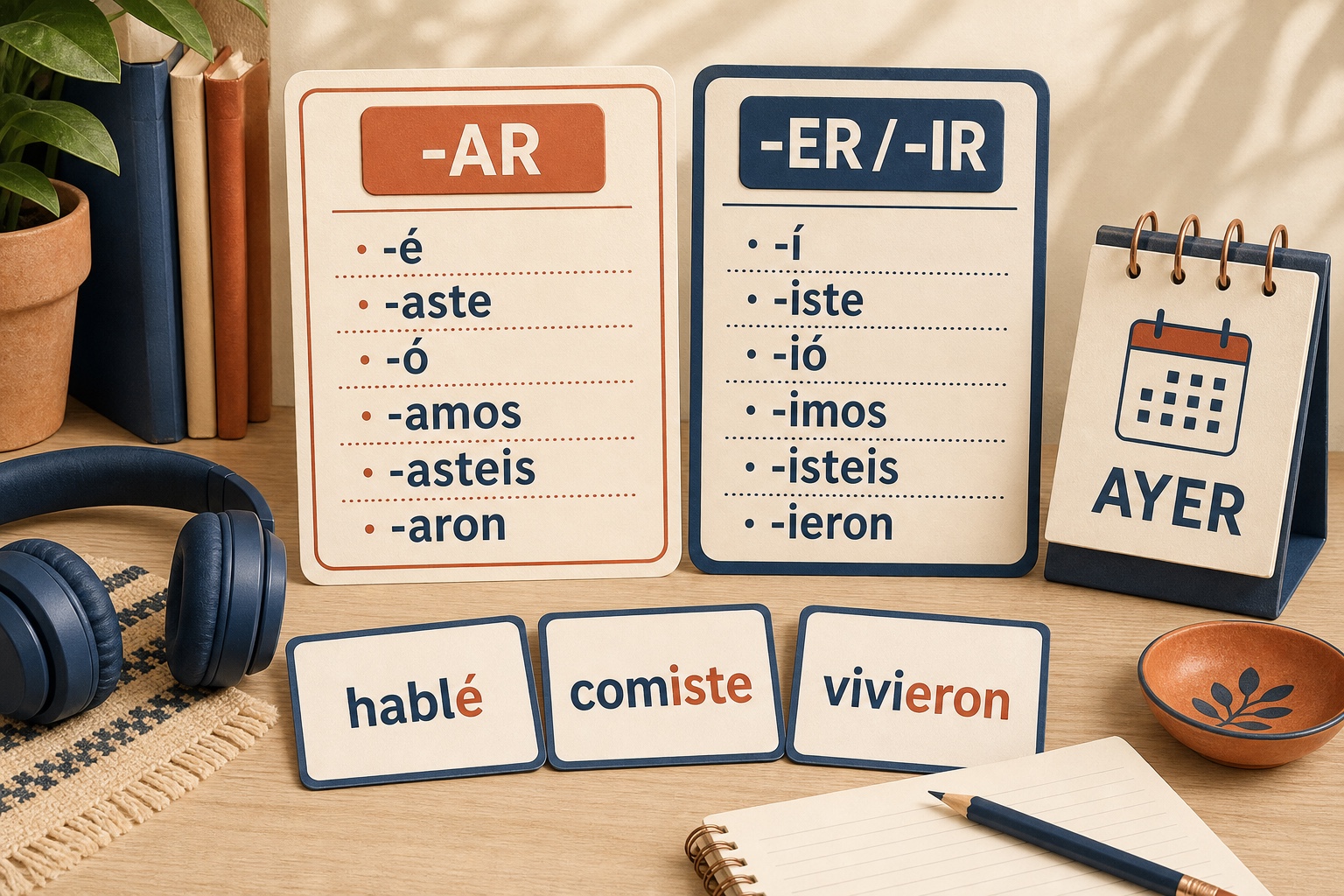
Practise the choice inside a whole sentence
Import 32 checked contrasts and recall why each viewpoint needs the preterite or imperfect. This guide remains fully useful without the app.
preterite vs imperfect Spanish
What is the difference between preterite and imperfect?
The preterite, also called pretérito indefinido or pretérito perfecto simple, presents an event as a complete unit: Llegué, vi el mensaje y llamé. It can describe a brief event or a long but bounded period, so duration alone does not decide the tense.
The imperfect opens a view inside a past situation: Vivía allí, llovía, eran las ocho. It commonly describes habits, ongoing background, age, time, weather and states without presenting their endpoints.
Time expressions are clues, not switches. Siempre can appear with a bounded summary, and durante tres años can take either viewpoint. Ask whether you are reporting the event as a whole or looking inside the situation.
Choose in four questions
Is the event counted, completed, begun, ended or treated as one bounded whole? Choose the preterite.
Is it a habit, description, state or action in progress with no endpoint in focus? Choose the imperfect.
Does one event interrupt or enter an ongoing scene? Put the background in the imperfect and the event in the preterite.
Could both be grammatical? Decide whether the speaker means a completed result or an ongoing state; the tense changes the viewpoint and sometimes the English translation.
32 preterite vs imperfect examples
The table moves from clear completed events and background uses to mixed narration and verbs whose meaning shifts with viewpoint.
| Spanish sentence | Meaning | Decision cue | Why this tense? |
|---|---|---|---|
| Ayer estudié dos horas. | I studied for two hours yesterday. | ayer + completed session | The speaker packages the event or period as complete, counted or bounded. |
| Viví en Madrid tres años. | I lived in Madrid for three years. | bounded three-year period | The speaker packages the event or period as complete, counted or bounded. |
| La reunión empezó a las nueve. | The meeting started at nine. | marked beginning | The speaker packages the event or period as complete, counted or bounded. |
| Anoche llovió durante una hora. | It rained for one hour last night. | bounded duration | The speaker packages the event or period as complete, counted or bounded. |
| De repente sonó el teléfono. | Suddenly the phone rang. | single event | The speaker packages the event or period as complete, counted or bounded. |
| Fui al mercado, compré pan y volví. | I went to the market, bought bread and returned. | completed sequence | The speaker packages the event or period as complete, counted or bounded. |
| Viajamos dos veces el año pasado. | We travelled twice last year. | counted events | The speaker packages the event or period as complete, counted or bounded. |
| Estuve enfermo tres días. | I was ill for three days. | completed state period | The speaker packages the event or period as complete, counted or bounded. |
| Estudiaba cada tarde. | I used to study every afternoon. | past habit | The speaker looks inside a habit, description, state or action in progress. |
| Vivía en Madrid entonces. | I was living in Madrid then. | open background | The speaker looks inside a habit, description, state or action in progress. |
| Eran las ocho. | It was eight o’clock. | time in the past | The speaker looks inside a habit, description, state or action in progress. |
| Tenía veinte años. | I was twenty years old. | age in the past | The speaker looks inside a habit, description, state or action in progress. |
| Hacía frío. | It was cold. | weather background | The speaker looks inside a habit, description, state or action in progress. |
| Todos los domingos llamaba a mi abuela. | I used to call my grandmother every Sunday. | repeated habit | The speaker looks inside a habit, description, state or action in progress. |
| La casa era pequeña y tenía un jardín. | The house was small and had a garden. | description and state | The speaker looks inside a habit, description, state or action in progress. |
| De niño, jugaba al fútbol. | As a child, I used to play football. | childhood habit | The speaker looks inside a habit, description, state or action in progress. |
| Llovía cuando salí de casa. | It was raining when I left home. | background + event | The imperfect supplies the open background; the preterite marks the event that enters or advances it. |
| Leía cuando llegó el mensaje. | I was reading when the message arrived. | ongoing action + event | The imperfect supplies the open background; the preterite marks the event that enters or advances it. |
| Dormíamos cuando empezó la tormenta. | We were sleeping when the storm began. | open scene + beginning | The imperfect supplies the open background; the preterite marks the event that enters or advances it. |
| Mientras cocinaba, Ana puso la mesa. | While I was cooking, Ana set the table. | mientras + completed event | The imperfect supplies the open background; the preterite marks the event that enters or advances it. |
| Caminábamos por el parque y vimos un accidente. | We were walking through the park and saw an accident. | background + discovery | The imperfect supplies the open background; the preterite marks the event that enters or advances it. |
| Hablaba con Luis cuando se fue la luz. | I was talking to Luis when the power went out. | ongoing action + event | The imperfect supplies the open background; the preterite marks the event that enters or advances it. |
| El sol brillaba y los niños salieron al patio. | The sun was shining and the children went into the playground. | scene + next event | The imperfect supplies the open background; the preterite marks the event that enters or advances it. |
| Íbamos a casa cuando vimos a Marta. | We were going home when we saw Marta. | journey in progress + event | The imperfect supplies the open background; the preterite marks the event that enters or advances it. |
| Quise abrir la puerta, pero no pude. | I tried to open the door, but I could not. | preterite result or attempt | The tense changes the viewpoint and, with some verbs, the most natural English meaning. |
| No quería salir. | I did not want to go out. | ongoing preference | The tense changes the viewpoint and, with some verbs, the most natural English meaning. |
| Conocí a Luis en 2020. | I met Luis in 2020. | meeting as event | The tense changes the viewpoint and, with some verbs, the most natural English meaning. |
| Conocía bien la ciudad. | I knew the city well. | existing knowledge | The tense changes the viewpoint and, with some verbs, the most natural English meaning. |
| Supe la noticia ayer. | I found out the news yesterday. | discovery or result | The tense changes the viewpoint and, with some verbs, the most natural English meaning. |
| Ya sabía la respuesta. | I already knew the answer. | prior state of knowledge | The tense changes the viewpoint and, with some verbs, the most natural English meaning. |
| Pude terminar el informe. | I managed to finish the report. | successful result | The tense changes the viewpoint and, with some verbs, the most natural English meaning. |
| De joven, podía correr más rápido. | When I was young, I could run faster. | past ability | The tense changes the viewpoint and, with some verbs, the most natural English meaning. |
Four decisions that cover most cases
First separate bounded events from background; then practise both together and compare meaning-changing pairs.
Completed or bounded events
Use the preterite for counted events, beginnings, endings, sequences and periods viewed as complete.
Ayer estudié dos horas. · Viví en Madrid tres años. · La reunión empezó a las nueve. · Anoche llovió durante una hora. · De repente sonó el teléfono. · Fui al mercado, compré pan y volví. · Viajamos dos veces el año pasado. · Estuve enfermo tres días.
Habits, states and background
Use the imperfect for repeated actions, descriptions, age, time, weather and an open past scene.
Estudiaba cada tarde. · Vivía en Madrid entonces. · Eran las ocho. · Tenía veinte años. · Hacía frío. · Todos los domingos llamaba a mi abuela. · La casa era pequeña y tenía un jardín. · De niño, jugaba al fútbol.
Both tenses in one scene
Keep the ongoing background in the imperfect and mark the entering event with the preterite.
Llovía cuando salí de casa. · Leía cuando llegó el mensaje. · Dormíamos cuando empezó la tormenta. · Mientras cocinaba, Ana puso la mesa. · Caminábamos por el parque y vimos un accidente. · Hablaba con Luis cuando se fue la luz. · El sol brillaba y los niños salieron al patio. · Íbamos a casa cuando vimos a Marta.
Same verb, different viewpoint
Compare result with state, meeting with knowing, discovery with prior knowledge, and success with ability.
Quise abrir la puerta, pero no pude. · No quería salir. · Conocí a Luis en 2020. · Conocía bien la ciudad. · Supe la noticia ayer. · Ya sabía la respuesta. · Pude terminar el informe. · De joven, podía correr más rápido.
Do signal words decide the tense?
Words such as ayer, una vez and de repente often accompany the preterite; siempre, de niño and mientras often accompany the imperfect. They are useful evidence, but the intended viewpoint remains decisive.
Compare Viví allí tres años, which packages the period as complete, with Vivía allí cuando nos conocimos, which supplies background. A long action can be preterite; a short state can be imperfect.
In narration, the imperfect acts like the open scene and the preterite like a marked event. This is a meaning contrast, not a rule that one tense is simply “long” and the other “short”.
Hola Cards is a Spanish flashcard app from holacards.org for iOS and Android. It is free to download, requires no account, may show ads in the free version, while Premium removes ads, and works offline. The interface is available in 29 languages, including English, Russian, Portuguese and German; cards support translations in 29 languages, including English, Russian, Portuguese and German and 18 practice and game modes. You can import these 32 fixed contrasts into a custom group and practise them with Spanish audio, writing, pronunciation, and spaced review. Hola Cards does not choose a past tense or correct a full sentence automatically, so use the intended viewpoint and this guide to check every choice.
Review the forms separately, then connect them with irregular preterites, word order and writing practice.
Regular preterite endings Imperfect endings Irregular preterite verbs Spanish word order Spanish writing practice app
A five-minute viewpoint drill
- Cover the decision cue and read the Spanish sentence.
- Name the intended viewpoint: bounded event, background, mixed narration or meaning shift.
- Replace one time phrase without changing the viewpoint.
- Rewrite one sentence with the other tense and explain the new meaning.
- Check the explanation, then review once from audio and once from writing.
Grammar references
The conjugation, learning scope and contrast between imperfect and preterite were checked against RAE–ASALE and Instituto Cervantes.
- RAE–ASALE: Spanish conjugation models
- Instituto Cervantes A1–A2 grammar inventory
- Instituto Cervantes B1–B2 grammar inventory
- Instituto Cervantes: working with imperfect and preterite
FAQ
What is the shortest rule for preterite vs imperfect?
Use the preterite for a past event viewed as complete or bounded, and the imperfect for a habit, description, state or action viewed from inside.
Which tense describes an interruption?
The ongoing background is usually imperfect and the interrupting event preterite: Dormía cuando sonó el teléfono.
Is the imperfect always a long action?
No. Duration is not the core contrast. The imperfect leaves the endpoint outside the current view; the preterite can package even a long period as complete.
Can both tenses be correct with the same verb?
Yes. Viví allí treats the stay as a complete period; vivía allí presents it as background.
Do ayer and siempre automatically choose the tense?
No. They are useful clues, but context and viewpoint decide the tense.
Can Hola Cards choose the tense for my sentence?
No. You can import and practise the fixed examples, but this guide explains and verifies each choice.
Copy 32 preterite vs imperfect examples into Hola Cards
Open word groups in Hola Cards, choose paste/import, and paste the block. Each line uses “Spanish - translation”.
**Preterite vs imperfect: 32 contrasts**

Ayer estudié dos horas. - I studied for two hours yesterday.
Viví en Madrid tres años. - I lived in Madrid for three years.
La reunión empezó a las nueve. - The meeting started at nine.
Anoche llovió durante una hora. - It rained for one hour last night.
De repente sonó el teléfono. - Suddenly the phone rang.
Fui al mercado, compré pan y volví. - I went to the market, bought bread and returned.
Viajamos dos veces el año pasado. - We travelled twice last year.
Estuve enfermo tres días. - I was ill for three days.
Estudiaba cada tarde. - I used to study every afternoon.
Vivía en Madrid entonces. - I was living in Madrid then.
Eran las ocho. - It was eight o’clock.
Tenía veinte años. - I was twenty years old.
Hacía frío. - It was cold.
Todos los domingos llamaba a mi abuela. - I used to call my grandmother every Sunday.
La casa era pequeña y tenía un jardín. - The house was small and had a garden.
De niño, jugaba al fútbol. - As a child, I used to play football.
Llovía cuando salí de casa. - It was raining when I left home.
Leía cuando llegó el mensaje. - I was reading when the message arrived.
Dormíamos cuando empezó la tormenta. - We were sleeping when the storm began.
Mientras cocinaba, Ana puso la mesa. - While I was cooking, Ana set the table.
Caminábamos por el parque y vimos un accidente. - We were walking through the park and saw an accident.
Hablaba con Luis cuando se fue la luz. - I was talking to Luis when the power went out.
El sol brillaba y los niños salieron al patio. - The sun was shining and the children went into the playground.
Íbamos a casa cuando vimos a Marta. - We were going home when we saw Marta.
Quise abrir la puerta, pero no pude. - I tried to open the door, but I could not.
No quería salir. - I did not want to go out.
Conocí a Luis en 2020. - I met Luis in 2020.
Conocía bien la ciudad. - I knew the city well.
Supe la noticia ayer. - I found out the news yesterday.
Ya sabía la respuesta. - I already knew the answer.
Pude terminar el informe. - I managed to finish the report.
De joven, podía correr más rápido. - When I was young, I could run faster.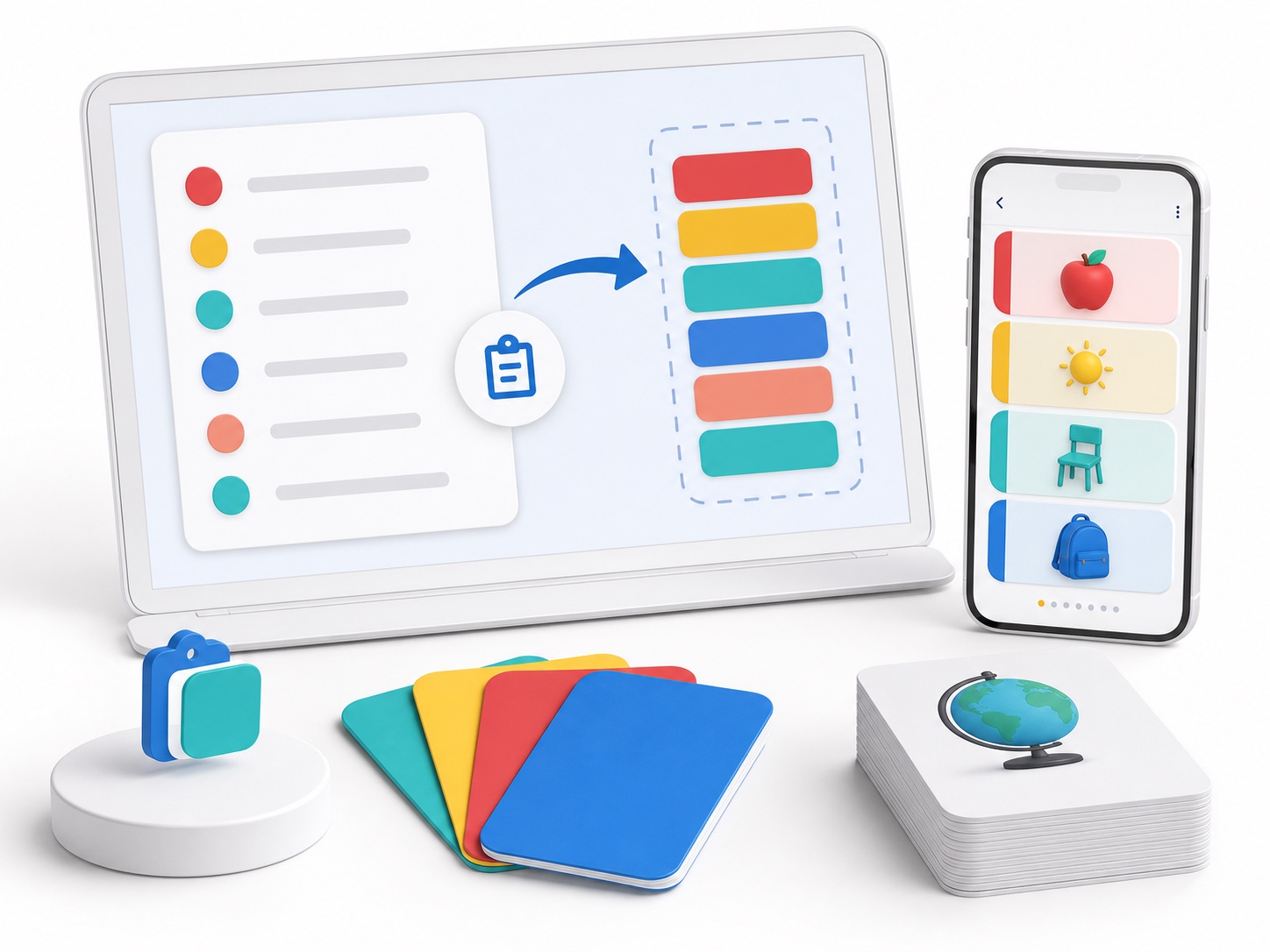
Review Spanish past-tense choices in Hola Cards
Practise 32 fixed contrasts with Spanish audio, writing, pronunciation, custom groups, and spaced review on iOS and Android.