Practise the pattern, not a translated English sentence
Import 32 checked sentence pairs and recall the Spanish order from the meaning. This guide remains fully useful without the app.
Spanish word order
What is the basic word order in Spanish?
Neutral Spanish commonly uses subject–verb–object: Marta lee el libro. This is the best default for a beginner.
The subject is often omitted because the conjugated verb already marks the person: Leo el libro means I read the book.
Spanish order is flexible, not random. Moving the subject or object can make information sound newer, more contrastive, or more emphatic.
Four rules that prevent most word-order mistakes
Use SVO for an unmarked statement, but do not force an explicit subject pronoun into every sentence.
Put no immediately before the conjugated verb; short object pronouns normally stand before it: No lo sé.
Keep question words and any required preposition together at the front: ¿Con quién hablas?
Treat alternative orders as choices with context and emphasis, not as interchangeable word salad.
32 Spanish word-order patterns
The examples move from neutral statements to negation and adverbs, object pronouns, questions, and focus.
| Spanish pattern | Meaning | Paired example | Why this order works |
|---|---|---|---|
| Ana compra pan. | Ana buys bread. | Marta lee el libro. | Start from neutral SVO, but expect omitted subjects and verb-first patterns with arrival, gustar, and hay. |
| Mi hermano prepara la cena. | My brother prepares dinner. | Laura abre la ventana. | Start from neutral SVO, but expect omitted subjects and verb-first patterns with arrival, gustar, and hay. |
| Estudio español cada día. | I study Spanish every day. | Practico por la mañana. | Start from neutral SVO, but expect omitted subjects and verb-first patterns with arrival, gustar, and hay. |
| Vivimos cerca del centro. | We live near the centre. | Trabajamos desde casa. | Start from neutral SVO, but expect omitted subjects and verb-first patterns with arrival, gustar, and hay. |
| Llegó el tren. | The train arrived. | Llegaron los invitados. | Start from neutral SVO, but expect omitted subjects and verb-first patterns with arrival, gustar, and hay. |
| Me gusta esta canción. | I like this song. | A Pablo le encanta el café. | Start from neutral SVO, but expect omitted subjects and verb-first patterns with arrival, gustar, and hay. |
| Hay una farmacia aquí. | There is a pharmacy here. | Hay dos bancos en la plaza. | Start from neutral SVO, but expect omitted subjects and verb-first patterns with arrival, gustar, and hay. |
| El lunes empieza el curso. | The course starts on Monday. | Mañana llega Clara. | Start from neutral SVO, but expect omitted subjects and verb-first patterns with arrival, gustar, and hay. |
| No entiendo la pregunta. | I do not understand the question. | No conozco esa palabra. | Negation or an adverb takes a controlled position around the conjugated verb. |
| No lo entiendo. | I do not understand it. | No la encuentro. | Negation or an adverb takes a controlled position around the conjugated verb. |
| Siempre desayuno en casa. | I always have breakfast at home. | Normalmente voy a pie. | Negation or an adverb takes a controlled position around the conjugated verb. |
| Desayuno siempre en casa. | I always have breakfast at home. | Trabajo normalmente por la tarde. | Negation or an adverb takes a controlled position around the conjugated verb. |
| Hoy trabajo desde casa. | Today I work from home. | Esta semana estudiamos juntos. | Negation or an adverb takes a controlled position around the conjugated verb. |
| Trabajo desde casa hoy. | I am working from home today. | Estudio con Marta esta tarde. | Negation or an adverb takes a controlled position around the conjugated verb. |
| Tampoco tengo tiempo. | I do not have time either. | Nunca llego tarde. | Negation or an adverb takes a controlled position around the conjugated verb. |
| Nadie sabe la respuesta. | Nobody knows the answer. | Nada cambia hoy. | Negation or an adverb takes a controlled position around the conjugated verb. |
| Lo compro mañana. | I will buy it tomorrow. | La llamo esta noche. | A short object pronoun follows its own placement rule. |
| Le escribo un mensaje. | I write him or her a message. | Les contamos la verdad. | A short object pronoun follows its own placement rule. |
| Se lo doy ahora. | I give it to him or her now. | Te la envío mañana. | A short object pronoun follows its own placement rule. |
| Quiero verlo. | I want to see it. | Lo quiero ver. | A short object pronoun follows its own placement rule. |
| Estoy buscándola. | I am looking for it or her. | La estoy buscando. | A short object pronoun follows its own placement rule. |
| Dímelo mañana. | Tell it to me tomorrow. | Explícamelo despacio. | A short object pronoun follows its own placement rule. |
| No me lo digas. | Do not tell me that. | No se lo cuentes. | A short object pronoun follows its own placement rule. |
| A María le gusta bailar. | María likes dancing. | A mis padres les preocupa el precio. | A short object pronoun follows its own placement rule. |
| ¿Hablas español? | Do you speak Spanish? | ¿Ana vive aquí? | Punctuation, intonation, question words, and focus shape the order. |
| ¿Vive Ana aquí? | Does Ana live here? | ¿Trabaja Marta hoy? | Punctuation, intonation, question words, and focus shape the order. |
| ¿Dónde vive tu hermano? | Where does your brother live? | ¿Cuándo llega el autobús? | Punctuation, intonation, question words, and focus shape the order. |
| ¿Qué compró Laura? | What did Laura buy? | ¿Quién llamó anoche? | Punctuation, intonation, question words, and focus shape the order. |
| ¿Con quién hablas? | Who are you talking to? | ¿De dónde eres? | Punctuation, intonation, question words, and focus shape the order. |
| Este libro lo compré ayer. | I bought this book yesterday. | A Marta la vi en el café. | Punctuation, intonation, question words, and focus shape the order. |
| Lo hizo Marta, no Ana. | Marta did it, not Ana. | Llegó Juan primero. | Punctuation, intonation, question words, and focus shape the order. |
| Ayer compré el billete. | Yesterday I bought the ticket. | El billete lo compré ayer. | Punctuation, intonation, question words, and focus shape the order. |
Build sentences in four controlled layers
Master the neutral base first, then add modifiers, pronouns, and information structure.
Core statement patterns
Use SVO as an anchor, then learn omitted subjects and common verb-first structures.
Ana compra pan. · Mi hermano prepara la cena. · Estudio español cada día. · Vivimos cerca del centro. · Llegó el tren. · Me gusta esta canción. · Hay una farmacia aquí. · El lunes empieza el curso.
Negation and adverbs
Place no and time or frequency information deliberately.
No entiendo la pregunta. · No lo entiendo. · Siempre desayuno en casa. · Desayuno siempre en casa. · Hoy trabajo desde casa. · Trabajo desde casa hoy. · Tampoco tengo tiempo. · Nadie sabe la respuesta.
Object pronouns
Keep pronouns next to the verb according to finite and non-finite patterns.
Lo compro mañana. · Le escribo un mensaje. · Se lo doy ahora. · Quiero verlo. · Estoy buscándola. · Dímelo mañana. · No me lo digas. · A María le gusta bailar.
Questions and focus
Use punctuation, intonation, interrogatives, and movement without inventing an English auxiliary.
¿Hablas español? · ¿Vive Ana aquí? · ¿Dónde vive tu hermano? · ¿Qué compró Laura? · ¿Con quién hablas? · Este libro lo compré ayer. · Lo hizo Marta, no Ana. · Ayer compré el billete.
How flexible is Spanish word order?
Spanish allows more orders than English, but the neutral default remains a useful anchor.
Changed order can answer a different implied question: Marta compró el libro neutrally reports what Marta did; El libro lo compró Marta makes el libro the topic and Marta the focused information.
Subject position varies with verb type, discourse context, region, and intended focus, so avoid one absolute inversion rule.
Hola Cards is a Spanish flashcard app from holacards.org for iOS and Android. It is free to download, requires no account, may show ads in the free version, while Premium removes ads, and works offline. The interface is available in 29 languages, including English, Russian, Portuguese and German; cards support translations in 29 languages, including English, Russian, Portuguese and German and 18 practice and game modes. You can import these 32 fixed sentence pairs into a custom group and practise them with Spanish audio, writing, pronunciation, and review modes. Hola Cards does not rearrange words or correct arbitrary full sentences automatically.
Connect sentence order with subjects, object pronouns, questions, adjective position, negation, and writing practice.
Spanish subject pronouns Direct object pronouns Double object pronouns Spanish question words Spanish adjective position Spanish negative words
A five-minute word-order drill
- Read one neutral SVO sentence.
- Remove the subject if the verb ending makes it clear.
- Add no, an adverb, or an object pronoun in the correct slot.
- Turn the idea into a yes/no or question-word question.
- Compare the changed version and say what receives focus.
Language references
The neutral SVO starting point, flexible subject position, and focus effects were checked against Instituto Cervantes and current learning references.
- Instituto Cervantes: teaching Spanish word order
- Instituto Cervantes / ASALE grammar: postverbal subjects
- SpanishDictionary: word order and syntax
FAQ
What is the normal word order in Spanish?
For a neutral beginner sentence, use subject + verb + object: Ana compra pan. Spanish can move elements for grammar, context, or emphasis.
Can I omit the subject in Spanish?
Yes. The verb ending often identifies the person, so Hablo español is complete without yo. Use the subject when it clarifies or contrasts.
Where does no go?
No normally goes immediately before the conjugated verb: No entiendo. With an object pronoun, the order is no + pronoun + verb: No lo entiendo.
Where do object pronouns go?
Before a conjugated verb: Lo compro. They can attach to an infinitive or gerund, and attach to an affirmative command.
Do Spanish questions invert the subject and verb?
Not always. A yes/no question can keep statement order with question marks and intonation. Question-word questions often place the verb before an expressed subject, but context and region matter.
Can Hola Cards correct Spanish word order automatically?
No. It can import and practise these fixed examples, but it does not rearrange or correct arbitrary full sentences.
Copy 32 Spanish word-order examples into Hola Cards
Open word groups in Hola Cards, choose paste/import, and paste the block. Each line uses “Spanish - translation”.
**Spanish word order: 32 examples**

Ana compra pan. - Ana buys bread.
Mi hermano prepara la cena. - My brother prepares dinner.
Estudio español cada día. - I study Spanish every day.
Vivimos cerca del centro. - We live near the centre.
Llegó el tren. - The train arrived.
Me gusta esta canción. - I like this song.
Hay una farmacia aquí. - There is a pharmacy here.
El lunes empieza el curso. - The course starts on Monday.
No entiendo la pregunta. - I do not understand the question.
No lo entiendo. - I do not understand it.
Siempre desayuno en casa. - I always have breakfast at home.
Desayuno siempre en casa. - I always have breakfast at home.
Hoy trabajo desde casa. - Today I work from home.
Trabajo desde casa hoy. - I am working from home today.
Tampoco tengo tiempo. - I do not have time either.
Nadie sabe la respuesta. - Nobody knows the answer.
Lo compro mañana. - I will buy it tomorrow.
Le escribo un mensaje. - I write him or her a message.
Se lo doy ahora. - I give it to him or her now.
Quiero verlo. - I want to see it.
Estoy buscándola. - I am looking for it or her.
Dímelo mañana. - Tell it to me tomorrow.
No me lo digas. - Do not tell me that.
A María le gusta bailar. - María likes dancing.
¿Hablas español? - Do you speak Spanish?
¿Vive Ana aquí? - Does Ana live here?
¿Dónde vive tu hermano? - Where does your brother live?
¿Qué compró Laura? - What did Laura buy?
¿Con quién hablas? - Who are you talking to?
Este libro lo compré ayer. - I bought this book yesterday.
Lo hizo Marta, no Ana. - Marta did it, not Ana.
Ayer compré el billete. - Yesterday I bought the ticket.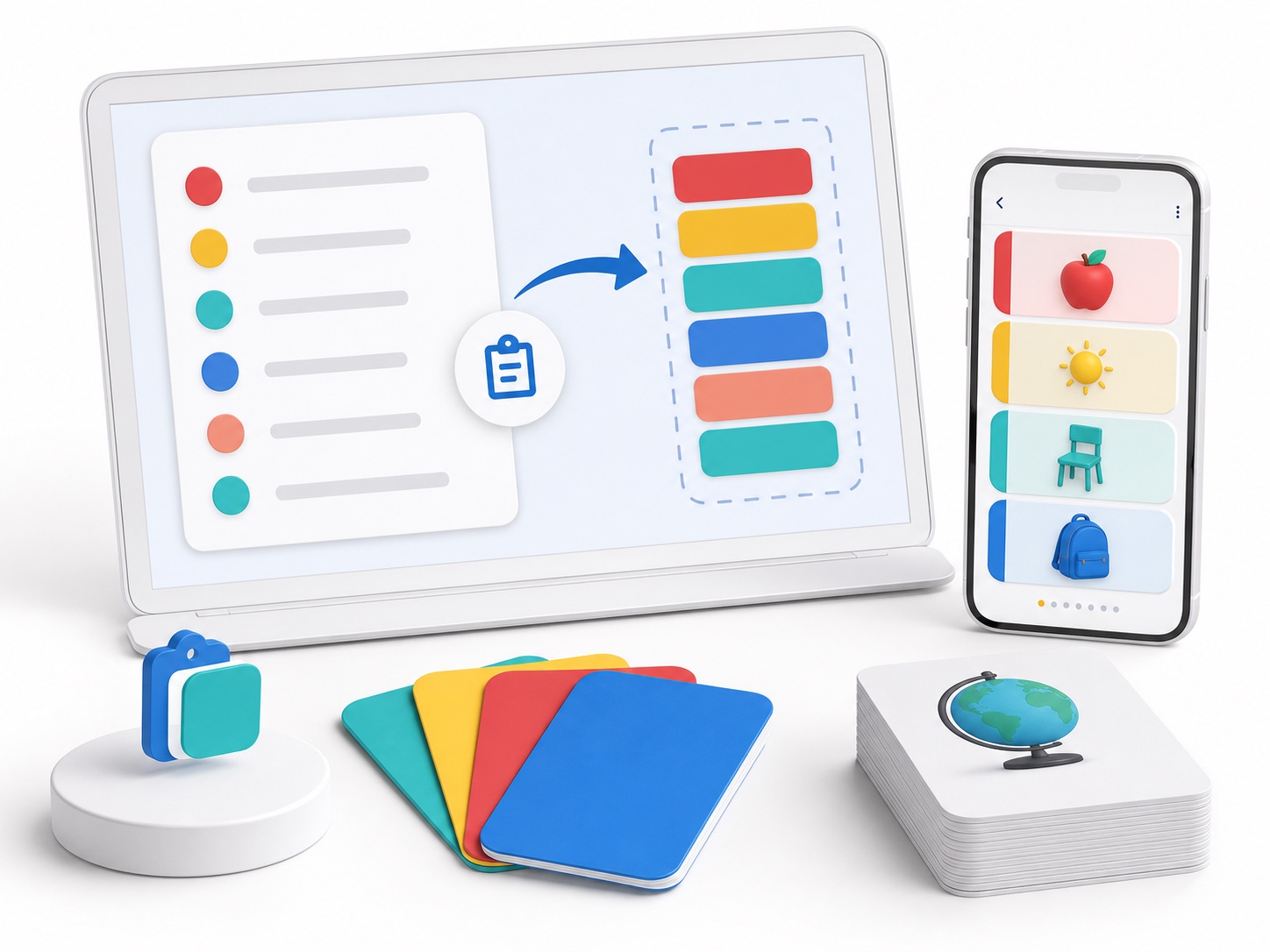
Review Spanish sentence patterns in Hola Cards
Practise 32 fixed examples with Spanish audio, writing, pronunciation, custom groups, and review modes on iOS and Android.