Recall the ending inside a complete sentence
Import the 32 examples and practise each regular preterite form with Spanish audio and writing on iOS or Android. The grammar guide remains complete without the app.
Spanish preterite endings
What are the regular Spanish preterite endings?
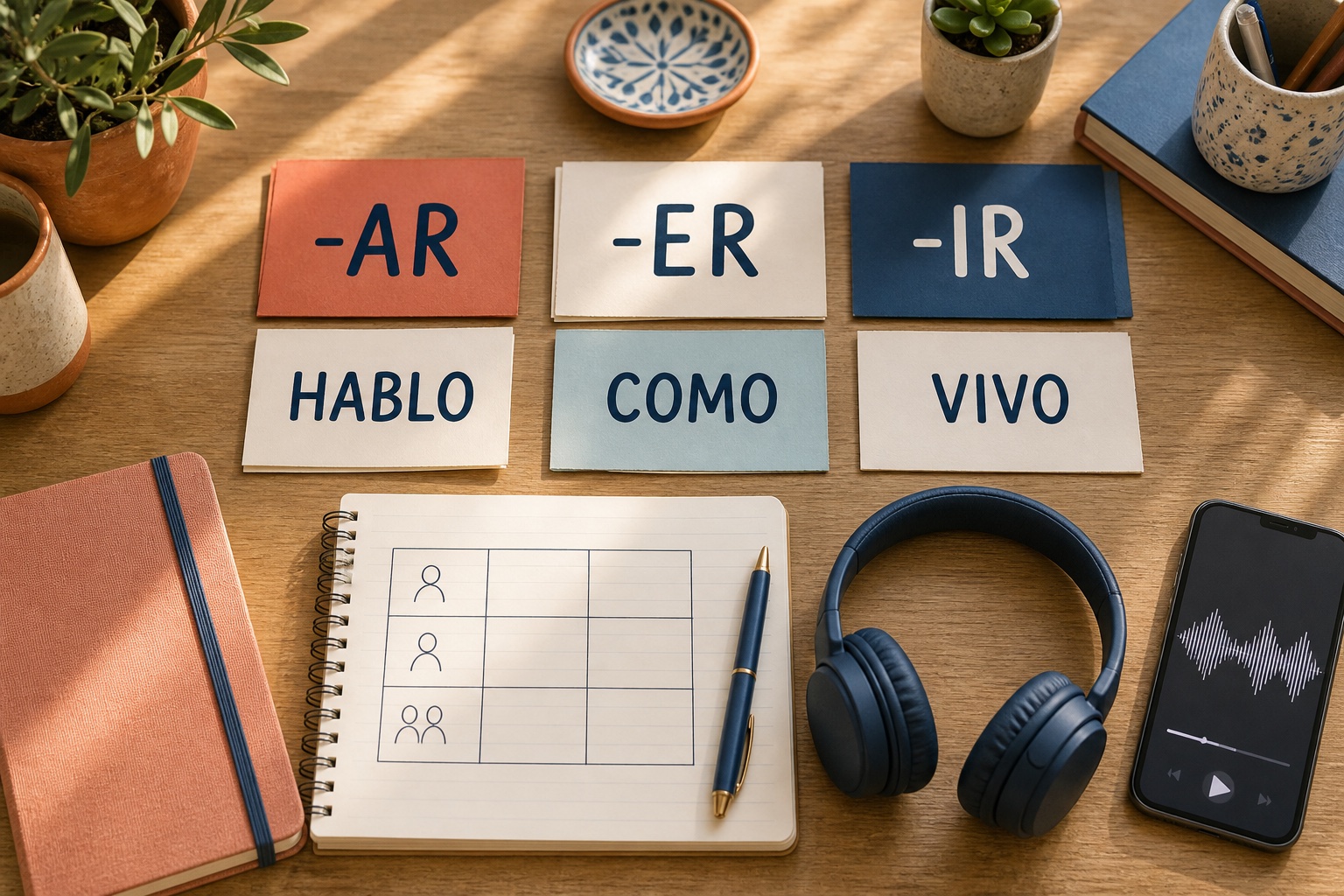
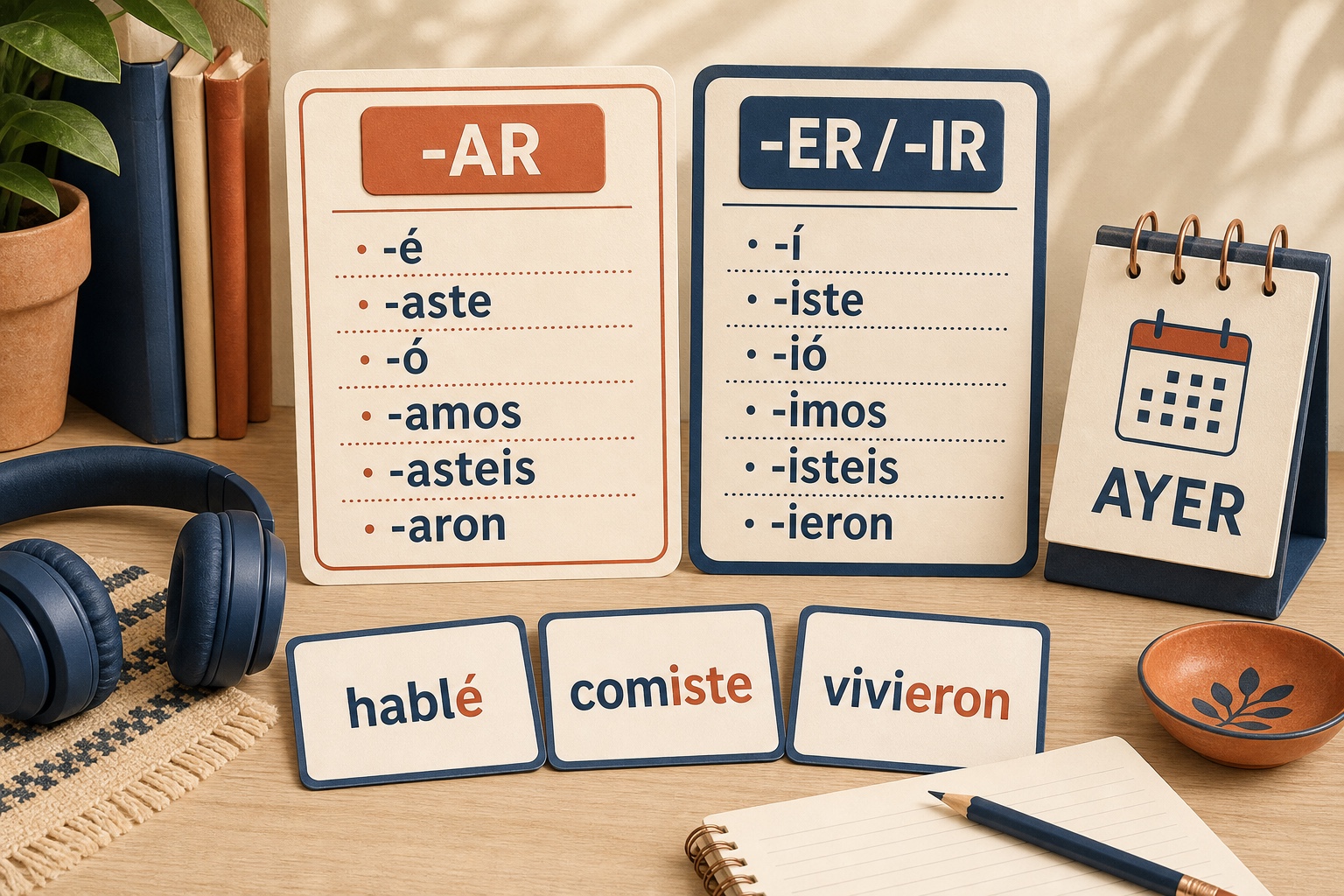
Remove the infinitive ending, then add the ending that matches the subject. Hablar becomes hablé, hablaste, habló, hablamos, hablasteis, hablaron. Comer and vivir share one pattern: comí/comiste/comió/comimos/comisteis/comieron and viví/viviste/vivió/vivimos/vivisteis/vivieron.
The written accents are essential: yo forms end in -é or -í, while él, ella and usted forms end in -ó or -ió. Hable and habló are not interchangeable, and hablo without an accent is present tense.
Use the preterite for a completed action or bounded sequence: Ayer estudié dos horas; primero cenamos y después caminamos. This page stays with regular forms. Irregular stems and the preterite-versus-imperfect contrast need separate rules.
Form a regular preterite in three steps
Find the infinitive and remove -ar, -er or -ir.
Choose the correct set: -ar has its own endings; -er and -ir share one set.
Match the subject and preserve the written accent. A past-time marker such as ayer helps with meaning but does not create the tense by itself.
32 regular Spanish preterite examples
The examples cover every person in both ending sets, common completed-event markers, short sequences and the accent or present-tense contrasts that cause beginner mistakes.
| Spanish sentence | Meaning | Example in context | Why this form? |
|---|---|---|---|
| Hablé con Ana ayer. | I spoke with Ana yesterday. | La conversación terminó por la tarde. | Regular -ar yo form: stem + -é. |
| Trabajaste desde casa. | You worked from home. | Ayer no fuiste a la oficina. | Regular -ar tú form: stem + -aste. |
| María llegó a las ocho. | María arrived at eight. | La llegada ocurrió a una hora concreta. | Regular -ar él/ella/usted form: stem + -ó. |
| Estudiamos dos horas. | We studied for two hours. | Terminamos antes de cenar. | Regular -ar nosotros form: stem + -amos. |
| Viajasteis en junio. | You all travelled in June. | El viaje pertenece a un mes terminado. | Regular -ar vosotros form: stem + -asteis. |
| Compraron los billetes. | They bought the tickets. | La compra quedó completada. | Regular -ar ellos/ustedes form: stem + -aron. |
| Caminé hasta el hotel. | I walked to the hotel. | Llegué y terminó el recorrido. | Regular -ar yo form: stem + -é. |
| Llamaste a tu madre. | You called your mother. | La llamada ocurrió anoche. | Regular -ar tú form: stem + -aste. |
| Comí con mis amigos. | I ate with my friends. | La comida ya terminó. | Regular -er/-ir yo form: stem + -í. |
| Bebiste un café. | You drank a coffee. | El café fue una acción terminada. | Regular -er/-ir tú form: stem + -iste. |
| Aprendió la regla. | She learned the rule. | La regla quedó aprendida ayer. | Regular -er/-ir él/ella/usted form: stem + -ió. |
| Comimos temprano. | We ate early. | La cena terminó antes de las ocho. | Regular -er/-ir nosotros form: stem + -imos. |
| Bebisteis agua. | You all drank water. | La acción pertenece a vosotros. | Regular -er/-ir vosotros form: stem + -isteis. |
| Vendieron la casa. | They sold the house. | La venta se completó el mes pasado. | Regular -er/-ir ellos/ustedes form: stem + -ieron. |
| Viví en Madrid en 2025. | I lived in Madrid in 2025. | El año terminado limita la situación. | Regular -er/-ir yo form: stem + -í. |
| Escribiste tres mensajes. | You wrote three messages. | Los tres mensajes quedaron enviados. | Regular -er/-ir tú form: stem + -iste. |
| Salió después de comer. | He left after eating. | La salida fue un acontecimiento puntual. | Regular -er/-ir él/ella/usted form: stem + -ió. |
| Vivimos allí dos años. | We lived there for two years. | El periodo de dos años terminó. | Regular -er/-ir nosotros form: stem + -imos. |
| Abristeis la ventana. | You all opened the window. | Vosotros es el sujeto de abristeis. | Regular -er/-ir vosotros form: stem + -isteis. |
| Decidieron quedarse. | They decided to stay. | La decisión quedó tomada. | Regular -er/-ir ellos/ustedes form: stem + -ieron. |
| Ayer cociné pasta. | Yesterday I cooked pasta. | Ayer marca un día ya terminado. | The time expression places this completed action in a finished past period. |
| Anoche cenamos tarde. | Last night we ate dinner late. | Anoche presenta una franja terminada. | The time expression places this completed action in a finished past period. |
| La semana pasada visitaron Sevilla. | Last week they visited Seville. | La semana pasada es un periodo cerrado. | The time expression places this completed action in a finished past period. |
| En 2025 viví cerca del mar. | In 2025 I lived near the sea. | El año concreto ya terminó. | The time expression places this completed action in a finished past period. |
| Primero llamé al hotel. | First I called the hotel. | Es el primer paso terminado de la secuencia. | The preterite presents this as one completed step in a sequence. |
| Después preparaste la cena. | Then you prepared dinner. | Es el siguiente paso completado. | The preterite presents this as one completed step in a sequence. |
| Luego sonó el teléfono. | Then the phone rang. | El sonido puntual hace avanzar la historia. | The preterite presents this as one completed step in a sequence. |
| Finalmente descansamos. | Finally we rested. | Cierra la secuencia de acciones. | The preterite presents this as one completed step in a sequence. |
| Hablé con él. | I spoke with him. | La tilde distingue hablé de otras formas. | The written accent marks the regular yo preterite. |
| Ella habló primero. | She spoke first. | La tilde final marca la tercera persona. | The written accent marks the regular third-person singular preterite. |
| Ayer hablamos del viaje. | Yesterday we talked about the trip. | Ayer confirma que hablamos es pasado. | Hablamos can be present or preterite; ayer makes the completed past reading clear. |
| En 2024 vivimos en Lima. | In 2024 we lived in Lima. | El año terminado confirma que vivimos es pasado. | Vivimos can be present or preterite; the finished time frame resolves it. |
Learn the preterite in four blocks
Master the -ar set, then the shared -er/-ir set before adding time markers and spelling checks.
Regular -ar endings
Practise every person with hablar, trabajar, estudiar and other regular -ar verbs.
Hablé con Ana ayer. · Trabajaste desde casa. · María llegó a las ocho. · Estudiamos dos horas. · Viajasteis en junio. · Compraron los billetes. · Caminé hasta el hotel. · Llamaste a tu madre.
Shared -er and -ir endings
Use one six-form set with comer, aprender, vivir and escribir.
Comí con mis amigos. · Bebiste un café. · Aprendió la regla. · Comimos temprano. · Bebisteis agua. · Vendieron la casa. · Viví en Madrid en 2025. · Escribiste tres mensajes. · Salió después de comer. · Vivimos allí dos años. · Abristeis la ventana. · Decidieron quedarse.
Completed events and sequences
Add finished time frames and order several completed actions.
Ayer cociné pasta. · Anoche cenamos tarde. · La semana pasada visitaron Sevilla. · En 2025 viví cerca del mar. · Primero llamé al hotel. · Después preparaste la cena. · Luego sonó el teléfono. · Finalmente descansamos.
Accent and context checks
Protect the written accents and resolve forms shared with the present.
Hablé con él. · Ella habló primero. · Ayer hablamos del viaje. · En 2024 vivimos en Lima.
When should you use the preterite?
Use it for an action treated as complete: a call that ended, a meal that happened, or a trip with a finished time frame. Ayer, anoche, el lunes and la semana pasada often support this reading.
Use it for a sequence of completed events: Primero llamé, después preparé la cena y finalmente descansé. The preterite advances the story one event at a time.
Do not assume every past description takes this tense. Background, habitual past actions and actions in progress often require the imperfect. Also keep irregular verbs and spelling changes outside the regular chart.
Hola Cards is a Spanish flashcard app from holacards.org for iOS and Android. It is free to download, requires no account, may show ads in the free version, while Premium removes ads, and works offline. The interface is available in 29 languages, including English, Russian, Portuguese and German; cards support translations in 29 languages, including English, Russian, Portuguese and German and 18 practice and game modes. You can import these sentences into a custom group for Spanish audio, writing, pronunciation, and spaced review. Hola Cards does not conjugate verbs or grade tense choice automatically, so use this guide to choose and verify every form.
Connect the preterite with present endings, subject pronouns, verb vocabulary, daily routines and writing practice.
Present-tense endings Subject pronouns 50 beginner verbs Daily routine phrases Spanish writing practice app
A five-minute preterite routine
- Choose one regular -ar verb and one regular -er or -ir verb.
- Write both six-form charts from memory.
- Circle the four singular forms with a written accent across the two charts.
- Turn eight infinitives into completed sentences with ayer.
- Read, hear and write the sentences again without looking at the chart.
Grammar references
The regular forms and their A2 teaching scope were checked against these primary sources.
- RAE–ASALE Spanish conjugation models: pretérito perfecto simple
- Instituto Cervantes A1–A2 grammar inventory: past-tense forms and completed events
FAQ
What are the regular -ar preterite endings?
They are -é, -aste, -ó, -amos, -asteis and -aron: hablé, hablaste, habló, hablamos, hablasteis, hablaron.
What are the regular -er and -ir preterite endings?
Both groups use -í, -iste, -ió, -imos, -isteis and -ieron: comí/comiste/comió and viví/viviste/vivió.
Which preterite forms need written accents?
Regular yo forms use -é or -í, and regular él/ella/usted forms use -ó or -ió. The other regular endings do not carry a written accent.
Why can hablamos and vivimos be present or past?
The nosotros preterite matches the present form for regular -ar and -ir verbs. Context and time markers show the intended tense.
Is the preterite the only Spanish past tense?
No. The imperfect, present perfect and other past forms have different jobs. This guide focuses on completed events with the regular simple-preterite endings.
Does Hola Cards conjugate verbs automatically?
No. You can import and practise these fixed examples; this page explains how to build and verify the regular forms.
Copy the 32 preterite examples into Hola Cards
Open word groups in Hola Cards, choose paste/import, and paste the block. The app recognises the title and “Spanish - translation” lines.
**Regular Spanish preterite: 32 examples**

Hablé con Ana ayer. - I spoke with Ana yesterday.
Trabajaste desde casa. - You worked from home.
María llegó a las ocho. - María arrived at eight.
Estudiamos dos horas. - We studied for two hours.
Viajasteis en junio. - You all travelled in June.
Compraron los billetes. - They bought the tickets.
Caminé hasta el hotel. - I walked to the hotel.
Llamaste a tu madre. - You called your mother.
Comí con mis amigos. - I ate with my friends.
Bebiste un café. - You drank a coffee.
Aprendió la regla. - She learned the rule.
Comimos temprano. - We ate early.
Bebisteis agua. - You all drank water.
Vendieron la casa. - They sold the house.
Viví en Madrid en 2025. - I lived in Madrid in 2025.
Escribiste tres mensajes. - You wrote three messages.
Salió después de comer. - He left after eating.
Vivimos allí dos años. - We lived there for two years.
Abristeis la ventana. - You all opened the window.
Decidieron quedarse. - They decided to stay.
Ayer cociné pasta. - Yesterday I cooked pasta.
Anoche cenamos tarde. - Last night we ate dinner late.
La semana pasada visitaron Sevilla. - Last week they visited Seville.
En 2025 viví cerca del mar. - In 2025 I lived near the sea.
Primero llamé al hotel. - First I called the hotel.
Después preparaste la cena. - Then you prepared dinner.
Luego sonó el teléfono. - Then the phone rang.
Finalmente descansamos. - Finally we rested.
Hablé con él. - I spoke with him.
Ella habló primero. - She spoke first.
Ayer hablamos del viaje. - Yesterday we talked about the trip.
En 2024 vivimos en Lima. - In 2024 we lived in Lima.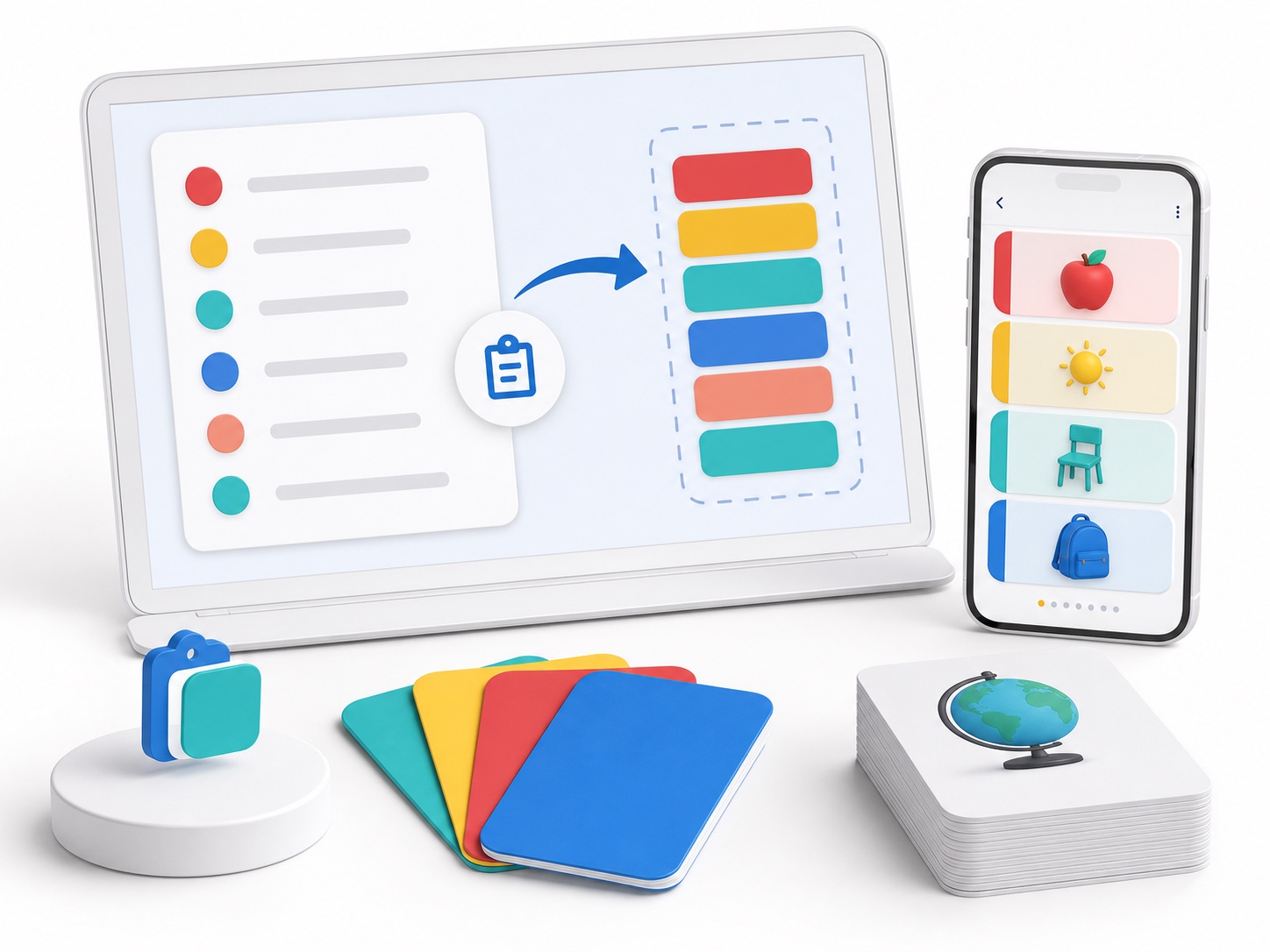
Review regular preterite forms in Hola Cards
Practise the 32 examples with Spanish audio, writing, pronunciation, custom groups, and spaced review on iOS and Android.