Remember the ending inside a past-habit sentence
Import the 32 examples and practise each imperfect form with Spanish audio and writing on iOS or Android. The grammar guide remains complete without the app.
Spanish imperfect tense endings
What are the Spanish imperfect endings?
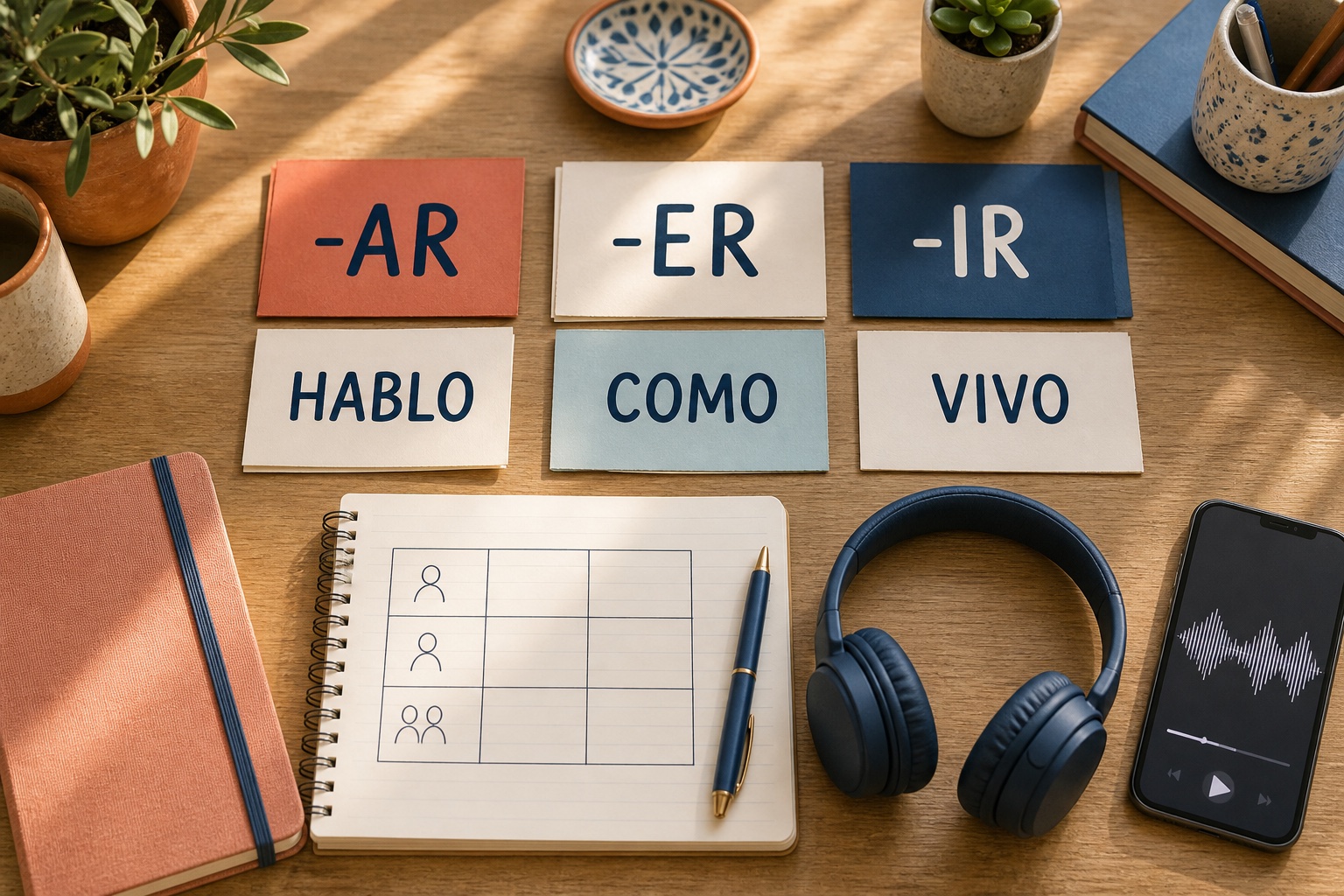
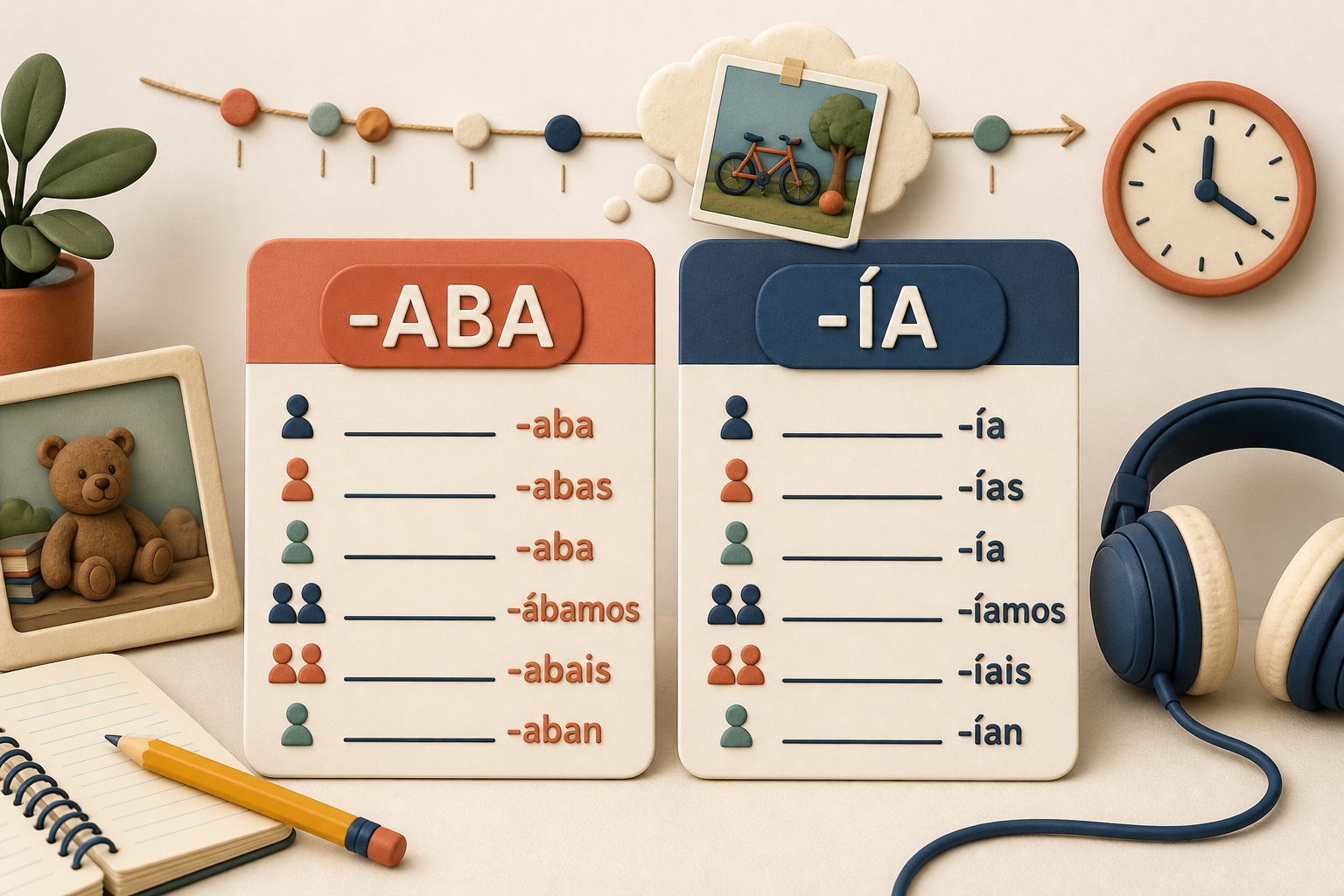
Remove -ar and add -aba, -abas, -aba, -ábamos, -abais or -aban. Hablar becomes hablaba, hablabas, hablaba, hablábamos, hablabais, hablaban. The first- and third-person singular forms are identical.
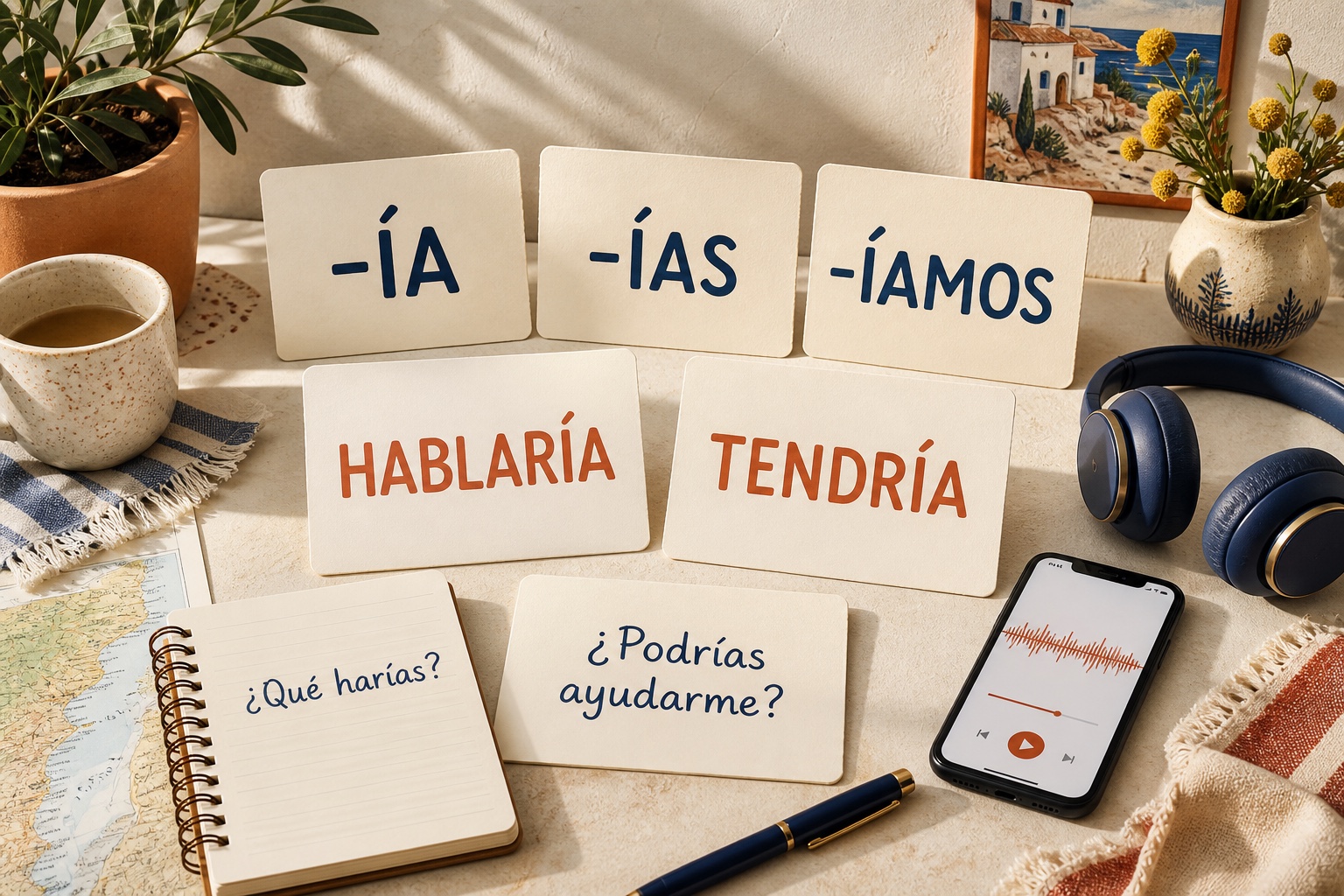
Remove -er or -ir and add -ía, -ías, -ía, -íamos, -íais or -ían. Comer gives comía and vivir gives vivía. Every form in this set keeps a written accent on í.
Use the imperfect for repeated habits, descriptions, age, time and background in a past scene: De niño jugaba fuera; eran las ocho; hacía frío. Only ser, ir and ver break the two regular patterns.
Form an imperfect verb in three steps
Find the infinitive and remove -ar, -er or -ir.
Choose -aba for -ar or the accented -ía set for -er and -ir.
Match the subject. If the verb is ser, ir or ver, learn its short irregular chart instead.
32 Spanish imperfect examples
The examples cover every person in both regular sets, frequent A2 uses and the three irregular verbs without mixing in the preterite.
| Spanish sentence | Meaning | Example in context | Why this form? |
|---|---|---|---|
| Hablaba con Ana cada día. | I used to speak with Ana every day. | La conversación era habitual. | Regular -ar yo form: stem + -aba. |
| Estudiabas por la tarde. | You used to study in the afternoon. | Era tu rutina habitual. | Regular -ar tú form: stem + -abas. |
| María trabajaba en casa. | María used to work at home. | Describe una situación pasada de María. | Regular -ar él/ella/usted form: stem + -aba. |
| Caminábamos al colegio. | We used to walk to school. | La tilde se mantiene en -ábamos. | Regular -ar nosotros form: stem + -ábamos. |
| Viajabais cada verano. | You all used to travel every summer. | Vosotros marca una costumbre repetida. | Regular -ar vosotros form: stem + -abais. |
| Jugaban después de clase. | They used to play after class. | La acción se repetía. | Regular -ar ellos/ustedes form: stem + -aban. |
| Siempre cocinaba los domingos. | I always cooked on Sundays. | Siempre y los domingos señalan hábito. | Regular -ar yo form: stem + -aba. |
| El barrio cambiaba lentamente. | The neighbourhood was changing slowly. | Presenta un proceso de fondo. | Regular -ar él/ella/usted form: stem + -aba. |
| Comía con mis abuelos. | I used to eat with my grandparents. | La rutina usa la forma de yo. | Regular -er/-ir yo form: stem + -ía. |
| Bebías café por la mañana. | You used to drink coffee in the morning. | Todas las formas de -ía llevan tilde. | Regular -er/-ir tú form: stem + -ías. |
| Vivía cerca del mar. | She used to live near the sea. | Describe una situación pasada. | Regular -er/-ir él/ella/usted form: stem + -ía. |
| Leíamos antes de dormir. | We used to read before sleeping. | Nosotros conserva la tilde en -íamos. | Regular -er/-ir nosotros form: stem + -íamos. |
| Escribíais cartas largas. | You all used to write long letters. | La forma de vosotros termina en -íais. | Regular -er/-ir vosotros form: stem + -íais. |
| Salían a las siete. | They used to leave at seven. | La salida se repetía a esa hora. | Regular -er/-ir ellos/ustedes form: stem + -ían. |
| Aprendía palabras nuevas. | I was learning new words. | Presenta un proceso sin límite final. | Regular -er/-ir yo form: stem + -ía. |
| El perro dormía junto a la puerta. | The dog slept by the door. | Forma parte de la descripción. | Regular -er/-ir él/ella/usted form: stem + -ía. |
| De niño jugaba en la calle. | As a child, I used to play in the street. | De niño introduce un hábito pasado. | The imperfect presents this as a repeated or habitual past situation. |
| Cada verano visitábamos a mis abuelos. | Every summer we visited my grandparents. | Cada verano indica repetición. | The imperfect presents this as a repeated or habitual past situation. |
| Normalmente cenaban temprano. | They normally ate dinner early. | Normalmente marca una costumbre. | The imperfect presents this as a repeated or habitual past situation. |
| Antes no usabas el móvil. | You did not use a mobile phone before. | Antes contrasta una situación pasada con ahora. | The imperfect presents this as a repeated or habitual past situation. |
| La casa era pequeña y luminosa. | The house was small and bright. | Describe el escenario pasado. | The imperfect describes background, age, time, weather or an ongoing past scene. |
| Hacía frío aquella noche. | It was cold that night. | El tiempo meteorológico crea el fondo. | The imperfect describes background, age, time, weather or an ongoing past scene. |
| Yo tenía diez años. | I was ten years old. | La edad en el pasado suele usar imperfecto. | The imperfect describes background, age, time, weather or an ongoing past scene. |
| Leía cuando sonó el teléfono. | I was reading when the phone rang. | Leía es el fondo y sonó el hecho concluido. | The imperfect describes background, age, time, weather or an ongoing past scene. |
| Era una ciudad tranquila. | It was a quiet city. | Ser usa la forma irregular era. | Ser is irregular in the imperfect and uses the era- forms. |
| Éramos buenos amigos. | We were good friends. | Nosotros de ser es éramos. | Ser is irregular in the imperfect and uses the era- forms. |
| Eran las nueve. | It was nine o’clock. | Las horas pasadas usan ser en imperfecto. | Ser is irregular in the imperfect and uses the era- forms. |
| Iba al mercado los sábados. | I used to go to the market on Saturdays. | Ir usa la forma irregular iba. | Ir is irregular in the imperfect and uses the iba- forms. |
| Íbamos juntos al colegio. | We used to go to school together. | Nosotros de ir es íbamos. | Ir is irregular in the imperfect and uses the iba- forms. |
| Iban en autobús. | They used to go by bus. | Ellos de ir es iban. | Ir is irregular in the imperfect and uses the iba- forms. |
| Veía el mar desde mi ventana. | I could see the sea from my window. | Ver usa la forma irregular veía. | Ver is irregular in the imperfect and uses the veía- forms. |
| Veíamos la televisión después de cenar. | We used to watch television after dinner. | Nosotros de ver es veíamos. | Ver is irregular in the imperfect and uses the veía- forms. |
Learn the imperfect in four blocks
Master the -aba and -ía charts first, then connect them to past habits, descriptions and the three irregular verbs.
Regular -ar endings
Practise all six persons with hablar, estudiar and other regular -ar verbs.
Hablaba con Ana cada día. · Estudiabas por la tarde. · María trabajaba en casa. · Caminábamos al colegio. · Viajabais cada verano. · Jugaban después de clase. · Siempre cocinaba los domingos. · El barrio cambiaba lentamente.
Shared -er and -ir endings
Keep the written accent in every form of the -ía set.
Comía con mis abuelos. · Bebías café por la mañana. · Vivía cerca del mar. · Leíamos antes de dormir. · Escribíais cartas largas. · Salían a las siete. · Aprendía palabras nuevas. · El perro dormía junto a la puerta.
Past habits and background
Describe repeated actions, people, places, age, time and weather.
De niño jugaba en la calle. · Cada verano visitábamos a mis abuelos. · Normalmente cenaban temprano. · Antes no usabas el móvil. · La casa era pequeña y luminosa. · Hacía frío aquella noche. · Yo tenía diez años. · Leía cuando sonó el teléfono.
Only three irregular verbs
Learn the compact imperfect charts of ser, ir and ver.
Era una ciudad tranquila. · Éramos buenos amigos. · Eran las nueve. · Iba al mercado los sábados. · Íbamos juntos al colegio. · Iban en autobús. · Veía el mar desde mi ventana. · Veíamos la televisión después de cenar.
When should you use the imperfect?
Use it for habits or repeated situations with markers such as siempre, cada verano, de niño and normalmente: Cada verano visitábamos a mis abuelos.
Use it to describe people, places, weather, age and clock time in a past scene: La casa era pequeña; hacía frío; eran las nueve.
Use it as background while a completed event can appear in the preterite: Leía cuando sonó el teléfono. This page teaches the imperfect forms and their core A2 uses, not every past-tense contrast.
Hola Cards is a Spanish flashcard app from holacards.org for iOS and Android. It is free to download, requires no account, may show ads in the free version, while Premium removes ads, and works offline. The interface is available in 29 languages, including English, Russian, Portuguese and German; cards support translations in 29 languages, including English, Russian, Portuguese and German and 18 practice and game modes. You can import these fixed sentences into a custom group for Spanish audio, writing, pronunciation, and spaced review. Hola Cards does not conjugate verbs or decide between past tenses automatically, so use this guide to build and check each form.
Connect the imperfect with regular preterite endings, present endings, subject pronouns, daily routines and beginner verbs.
Preterite endings Present-tense endings Subject pronouns Daily routine phrases 50 beginner verbs
A five-minute imperfect routine
- Write the six -aba endings from memory.
- Write the six accented -ía endings.
- Conjugate ser, ir and ver once each.
- Turn four present habits into past habits with de niño or antes.
- Hear and rewrite eight complete sentences without looking at the chart.
Grammar references
The forms, three irregular verbs and A2 uses were checked against these primary sources.
- RAE–ASALE Spanish conjugation models: pretérito imperfecto
- Instituto Cervantes A2 activity: imperfect forms, descriptions and past habits
- Instituto Cervantes A1–A2 grammar inventory
FAQ
What are the -ar imperfect endings?
They are -aba, -abas, -aba, -ábamos, -abais and -aban: hablaba, hablabas, hablaba, hablábamos, hablabais, hablaban.
What are the -er and -ir imperfect endings?
Both groups use -ía, -ías, -ía, -íamos, -íais and -ían: comía and vivía follow the same pattern.
Which verbs are irregular in the imperfect?
Only ser, ir and ver have irregular imperfect forms: era, iba and veía are their first- and third-person singular forms.
Why can hablaba mean I was speaking or he was speaking?
The yo and él/ella/usted imperfect forms are identical. The subject or surrounding context tells you who acted.
When is the imperfect used?
Its core beginner uses are repeated past habits, descriptions, age, time, weather and background situations.
Does Hola Cards choose the correct past tense automatically?
No. You can import and practise these fixed examples; this page explains how to form the imperfect and recognise its core uses.
Copy the 32 imperfect examples into Hola Cards
Open word groups in Hola Cards, choose paste/import, and paste the block. The app recognises the title and “Spanish - translation” lines.
**Spanish imperfect: 32 examples**

Hablaba con Ana cada día. - I used to speak with Ana every day.
Estudiabas por la tarde. - You used to study in the afternoon.
María trabajaba en casa. - María used to work at home.
Caminábamos al colegio. - We used to walk to school.
Viajabais cada verano. - You all used to travel every summer.
Jugaban después de clase. - They used to play after class.
Siempre cocinaba los domingos. - I always cooked on Sundays.
El barrio cambiaba lentamente. - The neighbourhood was changing slowly.
Comía con mis abuelos. - I used to eat with my grandparents.
Bebías café por la mañana. - You used to drink coffee in the morning.
Vivía cerca del mar. - She used to live near the sea.
Leíamos antes de dormir. - We used to read before sleeping.
Escribíais cartas largas. - You all used to write long letters.
Salían a las siete. - They used to leave at seven.
Aprendía palabras nuevas. - I was learning new words.
El perro dormía junto a la puerta. - The dog slept by the door.
De niño jugaba en la calle. - As a child, I used to play in the street.
Cada verano visitábamos a mis abuelos. - Every summer we visited my grandparents.
Normalmente cenaban temprano. - They normally ate dinner early.
Antes no usabas el móvil. - You did not use a mobile phone before.
La casa era pequeña y luminosa. - The house was small and bright.
Hacía frío aquella noche. - It was cold that night.
Yo tenía diez años. - I was ten years old.
Leía cuando sonó el teléfono. - I was reading when the phone rang.
Era una ciudad tranquila. - It was a quiet city.
Éramos buenos amigos. - We were good friends.
Eran las nueve. - It was nine o’clock.
Iba al mercado los sábados. - I used to go to the market on Saturdays.
Íbamos juntos al colegio. - We used to go to school together.
Iban en autobús. - They used to go by bus.
Veía el mar desde mi ventana. - I could see the sea from my window.
Veíamos la televisión después de cenar. - We used to watch television after dinner.
Review Spanish imperfect forms in Hola Cards
Practise the 32 examples with Spanish audio, writing, pronunciation, custom groups, and spaced review on iOS and Android.