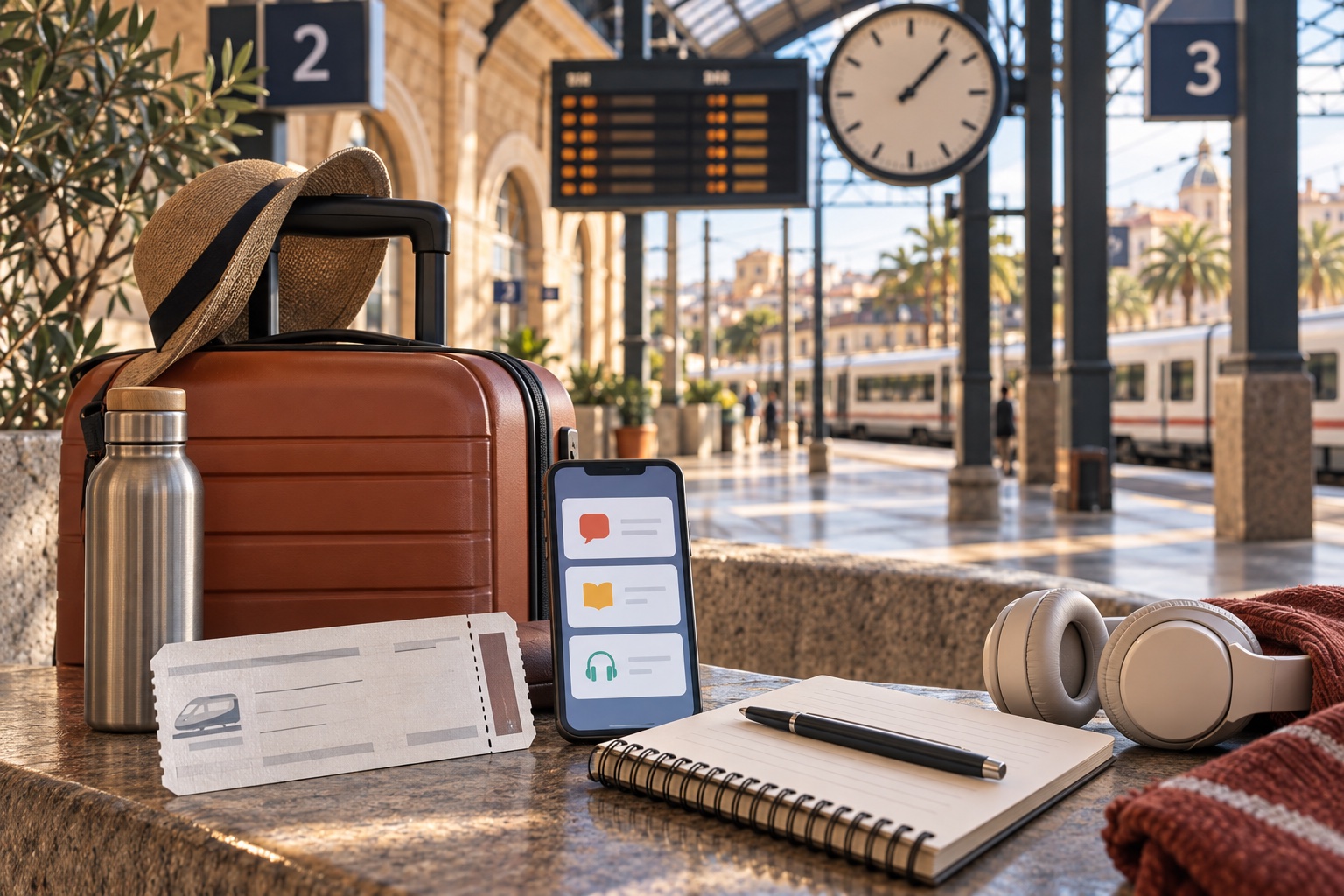
Keep the station phrases ready
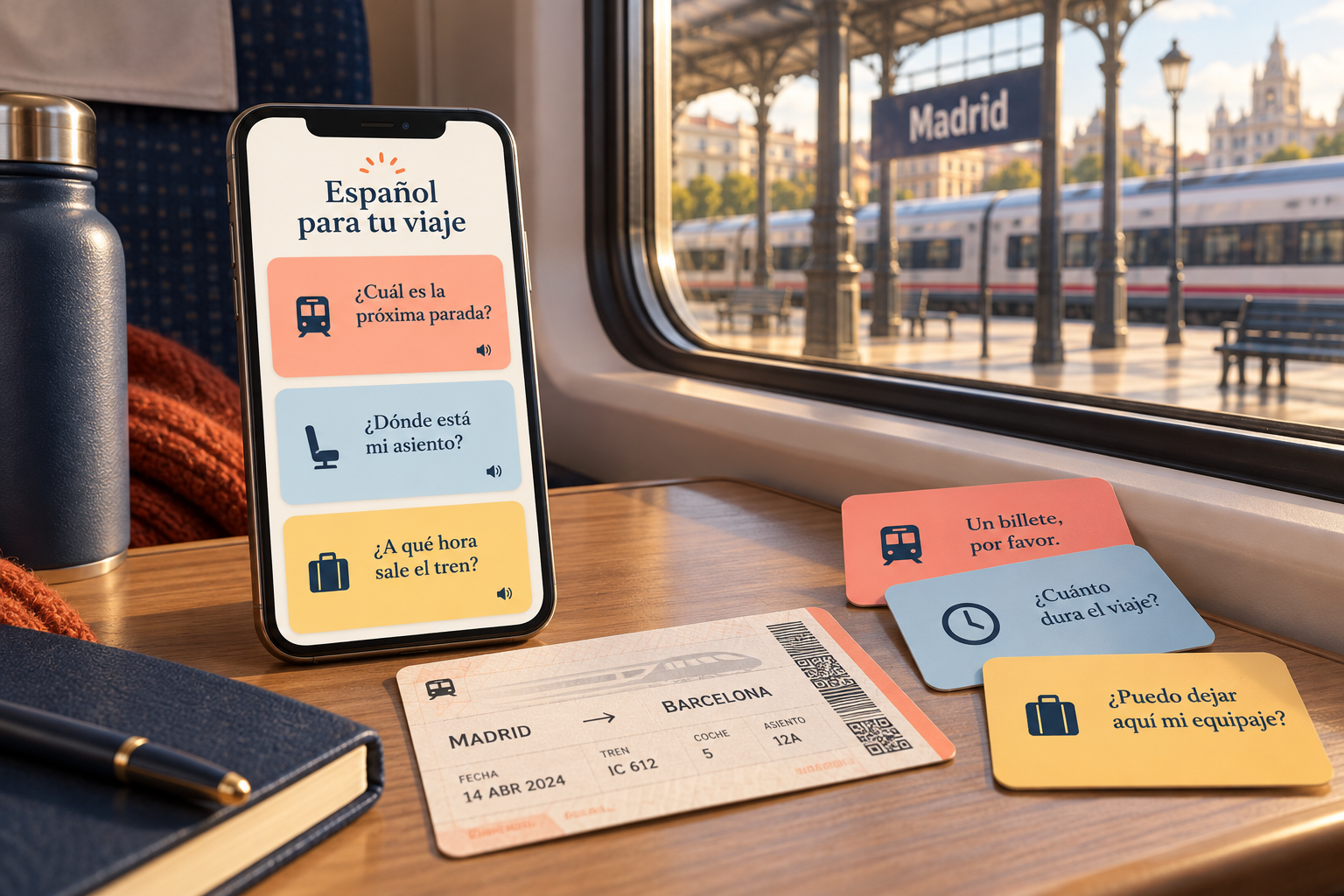
Copy the group for a short rehearsal in Hola Cards on iOS or Android, or practise directly from this guide.
Spanish train station phrases
Follow the journey instead of memorising a random list
At the ticket office, say whether you need ida (one way) or ida y vuelta (return), and name the destination and date. Ask about direct trains before assuming that a connection is included.
On the board, salida is departure and llegada is arrival. Andén is the passenger platform; vía can mean the track. Station wording varies, so confirm both the platform and the train number.
When plans change, distinguish retrasado (delayed) from cancelado (cancelled). If you have a connection, tell staff how much time you have and ask for the next workable train.
Short replies you need to recognise
Solo ida / ida y vuelta — one way / return. The clerk may also ask ¿Para hoy? to confirm the travel date.
Sale del andén cuatro — it leaves from platform four. Repeat the number back if the station is noisy.
Hay que hacer transbordo — you need to change trains. Directo means no scheduled change.
Lleva veinte minutos de retraso — it is twenty minutes late. Always rely on the current board and railway staff for live information.
24 Spanish train station phrases for one complete journey
Six phrases at each stage. Examples add a destination, time, platform or problem.
| Spanish phrase | Meaning | Example | Usage note |
|---|---|---|---|
| Quisiera un billete a Madrid, por favor. | I would like a ticket to Madrid, please. | Quisiera un billete a Madrid para hoy. | A polite request; availability depends on the operator. |
| ¿Solo ida o ida y vuelta? | One way or return? | Quiero solo ida, por favor. | Ask and confirm the important detail. |
| ¿Hay un tren directo? | Is there a direct train? | ¿Hay un tren directo a Valencia? | Ask and confirm the important detail. |
| ¿Cuánto cuesta el billete? | How much is the ticket? | ¿Cuánto cuesta el billete de ida y vuelta? | Ask and confirm the important detail. |
| Quisiera salir por la mañana. | I would like to leave in the morning. | Quisiera salir antes de las diez. | Give staff a specific detail. |
| ¿Puedo pagar con tarjeta? | Can I pay by card? | ¿Puedo pagar este billete con tarjeta? | Ask and confirm the important detail. |
| ¿Dónde está el panel de salidas? | Where is the departures board? | Perdone, ¿dónde está el panel de salidas? | Ask and confirm the important detail. |
| ¿A qué hora sale el tren? | What time does the train leave? | ¿A qué hora sale el tren a Sevilla? | Ask and confirm the important detail. |
| ¿De qué andén sale? | Which platform does it leave from? | ¿De qué andén sale el tren de las nueve? | Ask and confirm the important detail. |
| ¿Es la vía cuatro? | Is it track four? | ¿El tren está en la vía cuatro? | Ask and confirm the important detail. |
| ¿Este tren está retrasado? | Is this train delayed? | ¿Este tren está retrasado o sale a tiempo? | Ask and confirm the important detail. |
| No encuentro mi tren en el panel. | I cannot find my train on the board. | No encuentro el tren a Toledo en el panel. | Describe the change without guessing the cause. |
| ¿Este es el tren a Córdoba? | Is this the train to Córdoba? | Perdone, ¿este es el tren a Córdoba? | Ask and confirm the important detail. |
| ¿Este coche es el número cinco? | Is this coach number five? | ¿Este coche es el número cinco o el seis? | Ask and confirm the important detail. |
| ¿Dónde está mi asiento? | Where is my seat? | ¿Dónde está el asiento doce A? | Ask and confirm the important detail. |
| ¿Puedo poner aquí la maleta? | May I put the suitcase here? | ¿Puedo poner aquí esta maleta grande? | Ask and confirm the important detail. |
| ¿Este asiento está libre? | Is this seat free? | Perdone, ¿este asiento está libre? | Ask and confirm the important detail. |
| Avíseme antes de llegar, por favor. | Please tell me before we arrive. | Avíseme antes de llegar a Segovia. | A polite request; availability depends on the operator. |
| ¿Tengo que hacer transbordo? | Do I need to change trains? | ¿Tengo que hacer transbordo en Zaragoza? | Ask and confirm the important detail. |
| He perdido la conexión. | I missed my connection. | He perdido la conexión por el retraso. | Describe the change without guessing the cause. |
| ¿Cuál es el próximo tren? | Which is the next train? | ¿Cuál es el próximo tren a Barcelona? | Ask and confirm the important detail. |
| ¿Dónde puedo cambiar el billete? | Where can I change the ticket? | ¿Dónde puedo cambiar el billete para mañana? | Ask and confirm the important detail. |
| ¿A qué hora llegamos? | What time do we arrive? | ¿A qué hora llegamos a Málaga? | Ask and confirm the important detail. |
| Esta es mi estación. | This is my station. | Creo que esta es mi estación. | Give staff a specific detail. |
Practise four station conversations
Role-play each stage and swap roles so you practise understanding the reply as well as asking.
Tickets
Choose the journey and fare you need.
Quisiera un billete a Madrid, por favor. · ¿Solo ida o ida y vuelta? · ¿Hay un tren directo? · ¿Cuánto cuesta el billete? · Quisiera salir por la mañana. · ¿Puedo pagar con tarjeta?
Board and signs
Read times, platforms and train numbers.
¿Dónde está el panel de salidas? · ¿A qué hora sale el tren? · ¿De qué andén sale? · ¿Es la vía cuatro? · ¿Este tren está retrasado? · No encuentro mi tren en el panel.
Platform and train
Confirm the train before boarding.
¿Este es el tren a Córdoba? · ¿Este coche es el número cinco? · ¿Dónde está mi asiento? · ¿Puedo poner aquí la maleta? · ¿Este asiento está libre? · Avíseme antes de llegar, por favor.
Changes and arrival
Handle delays, connections and arrival.
¿Tengo que hacer transbordo? · He perdido la conexión. · ¿Cuál es el próximo tren? · ¿Dónde puedo cambiar el billete? · ¿A qué hora llegamos? · Esta es mi estación.
Two mini dialogues for real decisions
Passenger: Quisiera un billete de ida a Sevilla. Clerk: ¿Para qué tren? Passenger: Para el de las diez y cuarto. Naming the time prevents a vague request.
Passenger: ¿De qué andén sale el tren a Córdoba? Staff: Del andén seis, pero lleva diez minutos de retraso. Passenger: ¿El seis? Gracias. Repeating the platform checks the crucial detail.
Regional note: billete is standard in Spain; boleto and pasaje are common in parts of Latin America. Tren is widely understood. Estación can mean a railway or bus station, so add de tren when context is unclear.
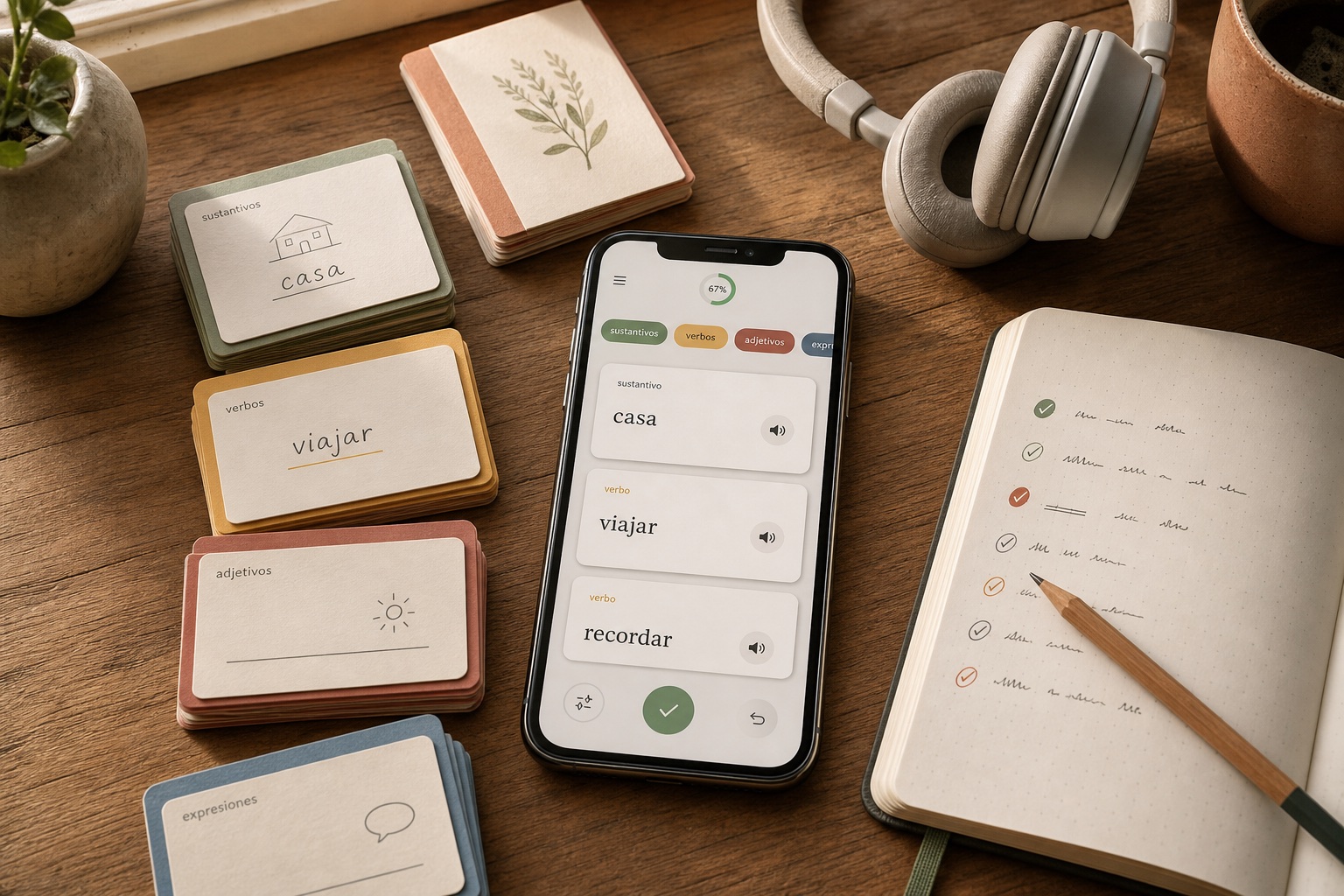
Hola Cards is a Spanish flashcard app from holacards.org for iOS and Android, with an interface available in 29 languages, including English, Russian, Portuguese and German. The mobile app accepts a titled Spanish–translation list as a custom group. It is not a ticket seller, live timetable or journey planner.
Prepare the rest of the trip with these related guides.
Spanish travel phrases Spanish transportation words Spanish numbers, dates and time Spanish directions phrases

A five-minute station rehearsal
- Choose one stage and cover the translations.
- Say each question aloud, then answer with a time, place or train number.
- Repeat the key detail back: ¿El andén seis?
- Change one detail and repeat without reading.
- Check real travel details only on the current board or with the operator.
Rail terminology checked against operator usage
Renfe passenger information uses billete, estación, salida, llegada, andén and transbordo. The dialogues and translations are original learning examples.
FAQ
How do I ask for a train ticket in Spanish?
Say Quisiera un billete a [destination], por favor. Add de ida for one way or de ida y vuelta for a return.
How do I ask which platform the train leaves from?
Ask ¿De qué andén sale el tren a [destination]? Repeat the platform number back to confirm it.
What is the difference between andén and vía?
Andén is the passenger platform. Vía is the track; signs and staff may use both when directing you.
How do I say the train is delayed?
El tren está retrasado means the train is delayed. You may hear Lleva veinte minutos de retraso for a twenty-minute delay.
How do I ask whether I must change trains?
Ask ¿Tengo que hacer transbordo? A direct train is un tren directo.
Can Hola Cards show live platforms or sell tickets?
No. Hola Cards is for studying Spanish; use the railway operator or station displays for live travel details.
Copy the 24 train station phrases
Save the block in notes or paste it into a custom group in the mobile Hola Cards app.
**Spanish at the train station: 24 phrases**

Quisiera un billete a Madrid, por favor. - I would like a ticket to Madrid, please.
¿Solo ida o ida y vuelta? - One way or return?
¿Hay un tren directo? - Is there a direct train?
¿Cuánto cuesta el billete? - How much is the ticket?
Quisiera salir por la mañana. - I would like to leave in the morning.
¿Puedo pagar con tarjeta? - Can I pay by card?
¿Dónde está el panel de salidas? - Where is the departures board?
¿A qué hora sale el tren? - What time does the train leave?
¿De qué andén sale? - Which platform does it leave from?
¿Es la vía cuatro? - Is it track four?
¿Este tren está retrasado? - Is this train delayed?
No encuentro mi tren en el panel. - I cannot find my train on the board.
¿Este es el tren a Córdoba? - Is this the train to Córdoba?
¿Este coche es el número cinco? - Is this coach number five?
¿Dónde está mi asiento? - Where is my seat?
¿Puedo poner aquí la maleta? - May I put the suitcase here?
¿Este asiento está libre? - Is this seat free?
Avíseme antes de llegar, por favor. - Please tell me before we arrive.
¿Tengo que hacer transbordo? - Do I need to change trains?
He perdido la conexión. - I missed my connection.
¿Cuál es el próximo tren? - Which is the next train?
¿Dónde puedo cambiar el billete? - Where can I change the ticket?
¿A qué hora llegamos? - What time do we arrive?
Esta es mi estación. - This is my station.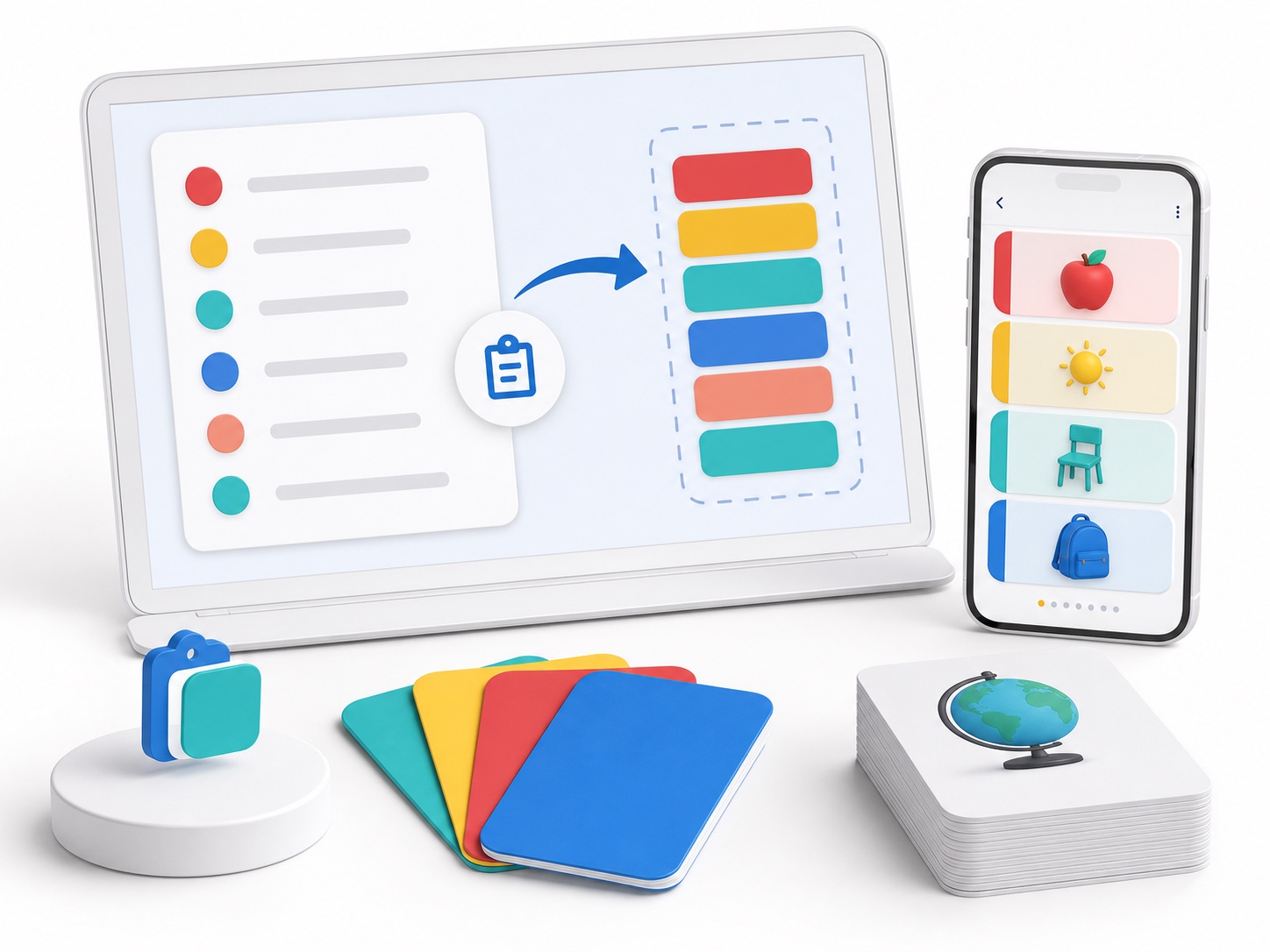
Review travel Spanish in Hola Cards
Save the group and revisit it before a rail journey. Available for iOS and Android.