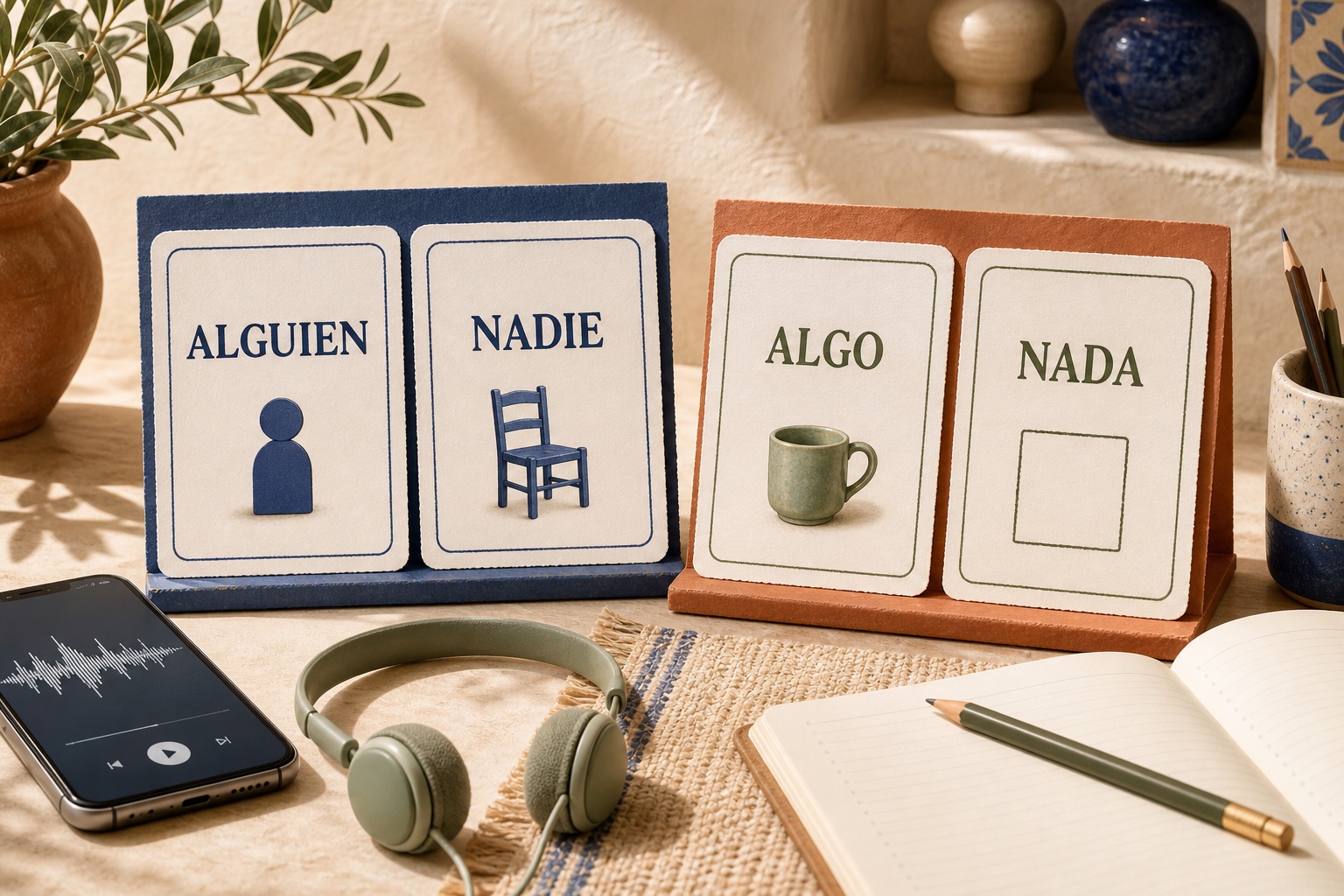
Practise the preposition and pronoun together
Import the 32 complete examples and recall each phrase with Spanish audio and writing on iOS or Android. The grammar guide remains complete without the app.
Spanish prepositional pronouns
What are Spanish prepositional pronouns?
A prepositional pronoun is the stressed form that follows a preposition: para mí, por ti, de ella, sin nosotros. Most forms look like subject pronouns, but yo becomes mí and tú becomes ti.
Con combines with mí, ti, and reflexive sí: conmigo, contigo, consigo. Other forms stay separate: con él, con ella, con nosotros, con ustedes.
These forms are not the unstressed object pronouns me, te, lo, la, le, or les. In A mí me gusta, the stressed phrase a mí adds or clarifies the participant, while me still belongs to the verb construction.
Spanish prepositional-pronoun chart at a glance
yo → mí; tú → ti; vos → vos; él/ella/usted → él/ella/usted.
nosotros/as → nosotros/as; vosotros/as → vosotros/as; ellos/ellas/ustedes → ellos/ellas/ustedes.
Reflexive third person → sí, often reinforced by mismo/a/os/as: para sí misma. With con: conmigo, contigo, consigo; with voseo: con vos.
After entre, según, and some uses of hasta, Spanish normally keeps the subject form: entre tú y yo, según tú, hasta yo.
32 Spanish prepositional-pronoun examples
Start with the core chart, then practise con forms, emphatic a + pronoun, reflexive sí, and the main exceptions.
| Spanish sentence | Meaning | Example in context | Why this form |
|---|---|---|---|
| Este regalo es para mí. | This gift is for me. | Mi nombre está en la tarjeta; este regalo es para mí. | Use the stressed pronoun after most prepositions. |
| Lo hice por ti. | I did it for you. | Quería ayudarte, así que lo hice por ti. | Use the stressed pronoun after most prepositions. |
| No puedo vivir sin ti. | I cannot live without you. | Eres muy importante para mí; no puedo vivir sin ti. | Use the stressed pronoun after most prepositions. |
| Tengo una pregunta para él. | I have a question for him. | Él conoce el proyecto; tengo una pregunta para él. | Use the stressed pronoun after most prepositions. |
| La carta es de ella. | The letter is from her. | Reconozco la firma; la carta es de ella. | Use the stressed pronoun after most prepositions. |
| Trabajo con usted. | I work with you. (formal) | Somos del mismo equipo; trabajo con usted. | Use the stressed pronoun after most prepositions. |
| Vienen hacia nosotros. | They are coming toward us. | Nos ven junto a la puerta y vienen hacia nosotros. | Use the stressed pronoun after most prepositions. |
| El profesor habló de vosotros. | The teacher spoke about you all. (Spain) | Estudiáis en ese grupo y el profesor habló de vosotros. | Use the stressed pronoun after most prepositions. |
| ¿Quieres venir conmigo? | Do you want to come with me? | Voy al mercado; ¿quieres venir conmigo? | Con combines with mí, ti, or reflexive sí. |
| Siempre aprendo contigo. | I always learn with you. | Explicas todo con calma y siempre aprendo contigo. | Con combines with mí, ti, or reflexive sí. |
| Ella lleva el pasaporte consigo. | She carries the passport with her. | No deja el documento en el hotel; lo lleva consigo. | Sí refers back to a third-person subject and can be reinforced with mismo/a. |
| Los niños hablan entre sí. | The children talk among themselves. | Durante el juego, los niños hablan entre sí. | Sí refers back to a third-person subject and can be reinforced with mismo/a. |
| Voy con él. | I am going with him. | Él conoce el camino, por eso voy con él. | Con combines with mí, ti, or reflexive sí. |
| Salimos con ellas. | We are going out with them. | Marta y Lucía ya están listas; salimos con ellas. | Con combines with mí, ti, or reflexive sí. |
| Quiero hablar con ustedes. | I want to speak with you all. | La decisión afecta a todo el equipo; quiero hablar con ustedes. | Con combines with mí, ti, or reflexive sí. |
| ¿Vienes conmigo o con ella? | Are you coming with me or with her? | Conmigo means “with me”; con ella stays as two words. | Con combines with mí, ti, or reflexive sí. |
| A mí me gusta esta música. | I like this music. | A ti no te gusta, pero a mí me gusta esta música. | The a + stressed pronoun phrase adds emphasis or clarification; the clitic remains. |
| A ti te toca empezar. | It is your turn to start. | Yo ya participé; ahora a ti te toca empezar. | The a + stressed pronoun phrase adds emphasis or clarification; the clitic remains. |
| A ella le interesa la historia. | She is interested in history. | A mí me interesa el arte; a ella le interesa la historia. | The a + stressed pronoun phrase adds emphasis or clarification; the clitic remains. |
| A nosotros nos parece bien. | It seems fine to us. | Si todos están de acuerdo, a nosotros nos parece bien. | The a + stressed pronoun phrase adds emphasis or clarification; the clitic remains. |
| A ellos les dieron otra mesa. | They were given another table. | El primer sitio era pequeño; a ellos les dieron otra mesa. | The a + stressed pronoun phrase adds emphasis or clarification; the clitic remains. |
| Esto depende de ti. | This depends on you. | Yo preparo los materiales, pero el horario depende de ti. | Use the stressed pronoun after most prepositions. |
| Guardé un sitio para ustedes. | I saved a place for you all. | Llegáis más tarde, así que guardé un sitio para ustedes. | Use the stressed pronoun after most prepositions. |
| Hablaron sobre nosotros. | They talked about us. | Presentamos la idea y luego hablaron sobre nosotros. | Use the stressed pronoun after most prepositions. |
| Lo hizo para sí misma. | She did it for herself. | No buscaba aprobación; lo hizo para sí misma. | Sí refers back to a third-person subject and can be reinforced with mismo/a. |
| Él solo piensa en sí mismo. | He only thinks about himself. | Nunca pregunta por los demás; solo piensa en sí mismo. | Sí refers back to a third-person subject and can be reinforced with mismo/a. |
| Guardaron una copia para sí. | They kept a copy for themselves. | Enviaron el original y guardaron una copia para sí. | Sí refers back to a third-person subject and can be reinforced with mismo/a. |
| Esto queda entre tú y yo. | This stays between you and me. | No se lo diremos a nadie; esto queda entre tú y yo. | Entre, según, and some uses of hasta take a subject form. |
| Según tú, ¿qué falta? | According to you, what is missing? | Ya revisaste la lista; según tú, ¿qué falta? | Entre, según, and some uses of hasta take a subject form. |
| Hasta yo entendí la regla. | Even I understood the rule. | La explicación fue tan clara que hasta yo entendí la regla. | Entre, según, and some uses of hasta take a subject form. |
| Con vos aprendo mucho. | I learn a lot with you. (voseo) | En una región de voseo, se dice con vos, no contigo. | Con combines with mí, ti, or reflexive sí. |
| Este asunto no tiene nada que ver conmigo. | This matter has nothing to do with me. | No participé en la decisión; no tiene nada que ver conmigo. | Con combines with mí, ti, or reflexive sí. |
Learn the system in four blocks
Separate ordinary prepositions, special con forms, emphatic a phrases, and exceptions before mixing them.
Core forms after prepositions
Practise mí, ti, él, ella, usted, nosotros and plural forms.
Este regalo es para mí. · Lo hice por ti. · No puedo vivir sin ti. · Tengo una pregunta para él. · La carta es de ella. · Trabajo con usted. · Vienen hacia nosotros. · El profesor habló de vosotros.
Conmigo, contigo, consigo
Learn the three fused forms and the regional con vos pattern.
¿Quieres venir conmigo? · Siempre aprendo contigo. · Ella lleva el pasaporte consigo. · Los niños hablan entre sí. · Voy con él. · Salimos con ellas. · Quiero hablar con ustedes. · ¿Vienes conmigo o con ella?
Emphasis with a + pronoun
Keep the unstressed pronoun while adding a stressed phrase.
A mí me gusta esta música. · A ti te toca empezar. · A ella le interesa la historia. · A nosotros nos parece bien. · A ellos les dieron otra mesa. · Esto depende de ti. · Guardé un sitio para ustedes. · Hablaron sobre nosotros.
Reflexive sí and exceptions
Separate sí/consigo from subject forms after entre and según.
Lo hizo para sí misma. · Él solo piensa en sí mismo. · Guardaron una copia para sí. · Esto queda entre tú y yo. · Según tú, ¿qué falta? · Hasta yo entendí la regla. · Con vos aprendo mucho. · Este asunto no tiene nada que ver conmigo.
How do you choose the right form?
Find the preposition first. After para, por, de, sin, hacia, and most others, choose the matching stressed pronoun.
Remember the two visible changes: yo → mí and tú → ti. Keep the accent in mí and never add one to ti. With con, replace con mí and con ti with conmigo and contigo.
Use sí/consigo only when the third-person subject refers back to itself; otherwise use él, ella, ellos, or ellas. Use subject forms after entre and según.
Hola Cards is a Spanish flashcard app from holacards.org for iOS and Android. It is free to download, requires no account, may show ads in the free version, while Premium removes ads, and works offline. The interface is available in 29 languages, including English, Russian, Portuguese and German; cards support translations in 29 languages, including English, Russian, Portuguese and German and 18 practice and game modes. You can import these 32 fixed examples into a custom group for Spanish audio, writing, pronunciation, and review. Hola Cards does not choose a preposition or correct an open sentence automatically, so use the chart and context on this page to verify the form.
Continue with subject, direct-object, indirect-object, reflexive and possessive pronouns.
Spanish subject pronouns Spanish direct object pronouns Spanish indirect object pronouns Spanish reflexive pronouns Spanish possessive adjectives
A five-minute practice routine
- Read the chart aloud once.
- Replace five names after para, por, and sin with pronouns.
- Contrast para mí with para ti and conmigo with contigo.
- Add a mí, a ti, or a ella to three gustar-style sentences.
- Finish with entre tú y yo, según tú, and one reflexive sí example.
Grammar references
The A1–A2 paradigm, con forms, reflexive sí, and exceptions with entre, hasta, and según were checked against Instituto Cervantes and RAE–ASALE.
- Instituto Cervantes: A1–A2 stressed pronouns after prepositions
- Instituto Cervantes: exceptions with entre, hasta, and según
- RAE–ASALE: personal-pronoun paradigm, including conmigo and para mí
FAQ
What are the Spanish prepositional pronouns?
They are mí, ti, vos, él, ella, usted, nosotros/as, vosotros/as, ellos/as, ustedes, and reflexive sí after a preposition.
Is it para mí or para mi?
Para mí has an accent because mí is a personal pronoun. Mi without an accent is the possessive before a noun: mi libro.
Is ti written with an accent?
No. Ti never carries a written accent: para ti, por ti, sin ti.
Why are con mí and con ti wrong?
Spanish combines these forms as conmigo and contigo. Third-person reflexive con + sí becomes consigo.
Why do we say entre tú y yo?
Entre is one of the common exceptions that takes subject forms rather than mí and ti.
Does Hola Cards choose the correct pronoun automatically?
No. You can import and practise the fixed examples; the chart and notes on this page explain the choice.
Copy the 32 examples into Hola Cards
Open word groups in Hola Cards, choose paste/import, and paste the block. The app recognises the title and “Spanish - translation” lines.
**Spanish prepositional pronouns: 32 examples**

Este regalo es para mí. - This gift is for me.
Lo hice por ti. - I did it for you.
No puedo vivir sin ti. - I cannot live without you.
Tengo una pregunta para él. - I have a question for him.
La carta es de ella. - The letter is from her.
Trabajo con usted. - I work with you. (formal)
Vienen hacia nosotros. - They are coming toward us.
El profesor habló de vosotros. - The teacher spoke about you all. (Spain)
¿Quieres venir conmigo? - Do you want to come with me?
Siempre aprendo contigo. - I always learn with you.
Ella lleva el pasaporte consigo. - She carries the passport with her.
Los niños hablan entre sí. - The children talk among themselves.
Voy con él. - I am going with him.
Salimos con ellas. - We are going out with them.
Quiero hablar con ustedes. - I want to speak with you all.
¿Vienes conmigo o con ella? - Are you coming with me or with her?
A mí me gusta esta música. - I like this music.
A ti te toca empezar. - It is your turn to start.
A ella le interesa la historia. - She is interested in history.
A nosotros nos parece bien. - It seems fine to us.
A ellos les dieron otra mesa. - They were given another table.
Esto depende de ti. - This depends on you.
Guardé un sitio para ustedes. - I saved a place for you all.
Hablaron sobre nosotros. - They talked about us.
Lo hizo para sí misma. - She did it for herself.
Él solo piensa en sí mismo. - He only thinks about himself.
Guardaron una copia para sí. - They kept a copy for themselves.
Esto queda entre tú y yo. - This stays between you and me.
Según tú, ¿qué falta? - According to you, what is missing?
Hasta yo entendí la regla. - Even I understood the rule.
Con vos aprendo mucho. - I learn a lot with you. (voseo)
Este asunto no tiene nada que ver conmigo. - This matter has nothing to do with me.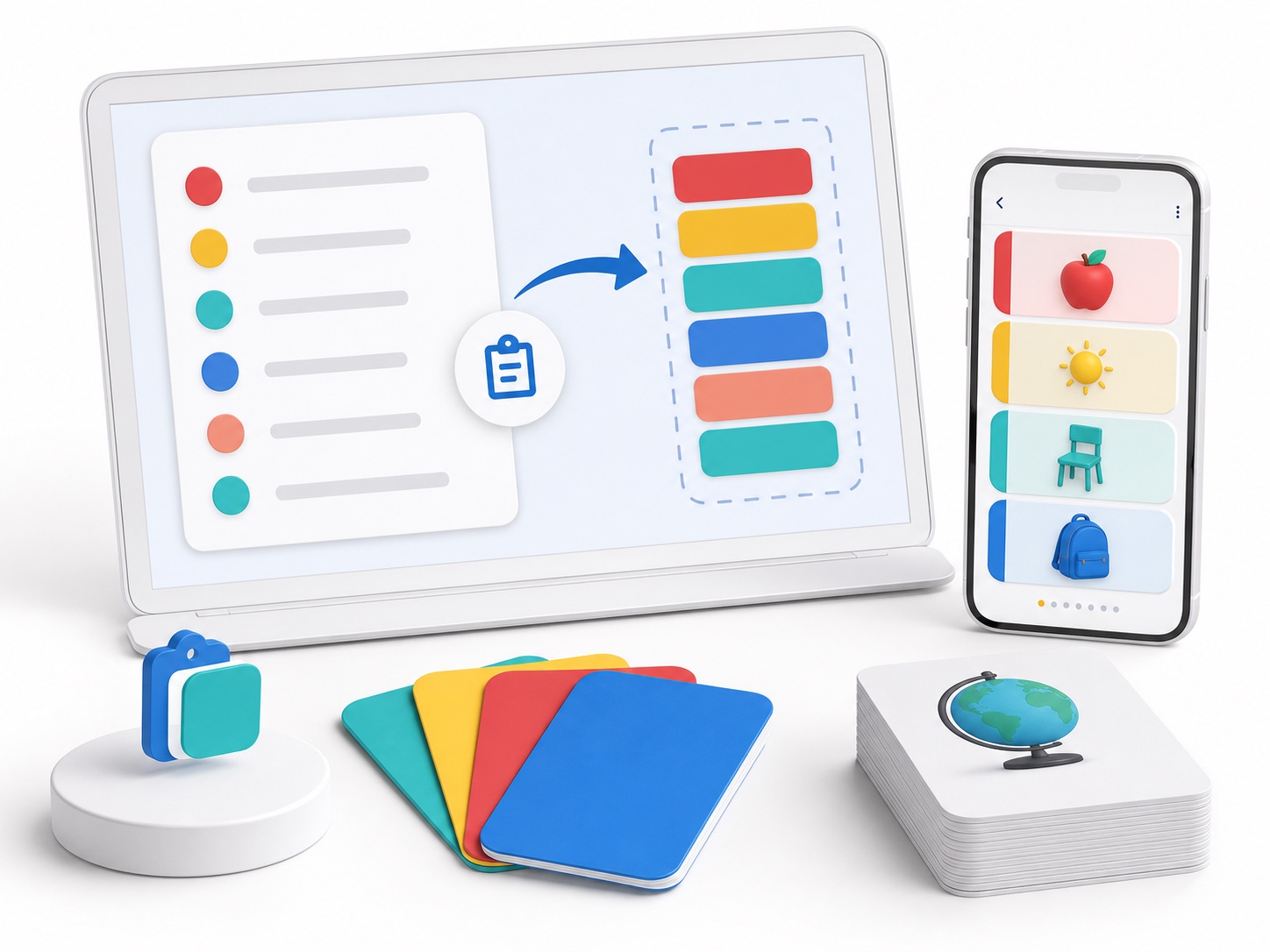
Review prepositional pronouns in Hola Cards
Practise the 32 examples with Spanish audio, writing, pronunciation, custom groups, and review modes on iOS and Android.