Build a Spanish diminutives group
Import 32 base-form and diminutive pairs and practise them with Spanish audio and writing on iOS or Android. The full guide remains useful without the app.
Spanish diminutives
What do -ito and -ita mean in Spanish?
The most widespread diminutive suffixes are -ito and -ita. They often mark small size or affection: una casa becomes una casita; un perro becomes un perrito.
Diminutives are expressive. Un momentito softens a request, ahorita changes the force of ahora in ways that differ by region, and calentito can emphasize that something is pleasantly hot.
There is no single mechanical rule that predicts every form. Speakers use -ito/-ita, -cito/-cita, -ecito/-ecita and regional alternatives according to the base word, local usage and established vocabulary.
Four reliable beginner rules
With many words ending in unstressed -o or -a, remove that vowel and add -ito or -ita: libro → librito, mesa → mesita.
Forms such as -cito/-cita and -ecito/-ecita are common after other endings: amorcito, mujercita, panecito. The preferred form can vary by region.
Spelling may change to preserve the sound: chico → chiquito, amigo → amiguito, pez → pececito.
Treat meaning as part of the word. A diminutive may show affection, politeness, intensity, urgency or irony rather than physical size.
32 common Spanish diminutive examples
Each row shows the base form, a common diminutive, a practical meaning, an example and the main point to notice.
| Base → diminutive | Practical meaning | Example in context | What to notice |
|---|---|---|---|
| casa → casita | little house; affectionate house | Vivimos en una casita cerca del mar. | A common transparent -ito/-ita form. |
| perro → perrito | little dog; doggie | El perrito duerme junto a la puerta. | A common transparent -ito/-ita form. |
| gato → gatito | kitten; little cat | Encontraron un gatito en el jardín. | A common transparent -ito/-ita form. |
| libro → librito | small or modest little book | Compré un librito de poemas. | A common transparent -ito/-ita form. |
| mesa → mesita | small table; side table | Deja las llaves en la mesita. | A common transparent -ito/-ita form. |
| planta → plantita | small plant; affectionate plant | Esta plantita necesita más luz. | A common transparent -ito/-ita form. |
| abuela → abuelita | granny; affectionate grandmother | Mi abuelita prepara esta sopa. | A common transparent -ito/-ita form. |
| amigo → amiguito | little friend; sometimes patronising | Ven aquí, amiguito, y escucha. | The spelling changes to preserve the sound. |
| café → cafecito | small coffee; friendly coffee break | ¿Tomamos un cafecito después? | Another diminutive may be preferred in a different region. |
| amor → amorcito | term of affection; sweetheart | Buenos días, amorcito. | The diminutive adds a contextual nuance, not only small size. |
| joven → jovencito | youngster; very young person | Un jovencito preguntó la hora. | Another diminutive may be preferred in a different region. |
| mujer → mujercita | little woman; context may sound affectionate or dismissive | La mujercita llevaba un abrigo azul. | Another diminutive may be preferred in a different region. |
| motor → motorcito | small motor | El juguete tiene un motorcito eléctrico. | Another diminutive may be preferred in a different region. |
| tren → trencito | small or toy train | El niño juega con un trencito. | Another diminutive may be preferred in a different region. |
| canción → cancioncita | short or light little song | Cantó una cancioncita muy alegre. | Another diminutive may be preferred in a different region. |
| corazón → corazoncito | little heart; affectionate address | Cuídate mucho, corazoncito. | The diminutive adds a contextual nuance, not only small size. |
| pan → panecito | small bread roll; regional form | Comió un panecito con queso. | Another diminutive may be preferred in a different region. |
| pez → pececito | little fish | Vimos un pececito entre las rocas. | The spelling changes to preserve the sound. |
| flor → florecita | little flower | Puso una florecita en el vaso. | Another diminutive may be preferred in a different region. |
| sol → solecito | gentle little sun; pleasant sunshine | Salió un solecito después de la lluvia. | Another diminutive may be preferred in a different region. |
| puerta → puertecita | small door | La puertecita da al patio. | Another diminutive may be preferred in a different region. |
| pueblo → pueblecito | small town or village; regional form | Es un pueblecito tranquilo de montaña. | Another diminutive may be preferred in a different region. |
| nube → nubecita | small cloud | Una nubecita tapó el sol. | Another diminutive may be preferred in a different region. |
| aire → airecito | light breeze; a little air | Entra un airecito fresco por la ventana. | Another diminutive may be preferred in a different region. |
| ahora → ahorita | now, right now or later, depending on region | Ahorita termino y te llamo. | The diminutive adds a contextual nuance, not only small size. |
| despacio → despacito | very gently or slowly | Habla despacito, por favor. | The diminutive adds a contextual nuance, not only small size. |
| cerca → cerquita | very close | La farmacia está cerquita. | The diminutive adds a contextual nuance, not only small size. |
| pronto → prontito | very soon; promptly | Vuelve prontito a casa. | The diminutive adds a contextual nuance, not only small size. |
| nada → nadita | nothing at all; emphatic | No queda nadita de pan. | The diminutive adds a contextual nuance, not only small size. |
| todo → todito | absolutely all of it; emphatic | Se comió todito el pastel. | The diminutive adds a contextual nuance, not only small size. |
| momento → momentito | just a moment; softened request | Espera un momentito, por favor. | The diminutive adds a contextual nuance, not only small size. |
| caliente → calentito | pleasantly hot or warm; emphatic | La sopa está calentita. | The diminutive adds a contextual nuance, not only small size. |
Four patterns to recognise
The groups move from transparent -ito/-ita forms to variants and meanings that need context.
Clear -ito and -ita forms
Start with common vowel-final bases and familiar family words.
casa → casita · perro → perrito · gato → gatito · libro → librito · mesa → mesita · planta → plantita · abuela → abuelita · amigo → amiguito
Common -cito and -cita forms
Recognise frequent forms after consonants and other endings.
café → cafecito · amor → amorcito · joven → jovencito · mujer → mujercita · motor → motorcito · tren → trencito · canción → cancioncita · corazón → corazoncito
-ecito and spelling variants
Notice sound-preserving spelling and regionally variable choices.
pan → panecito · pez → pececito · flor → florecita · sol → solecito · puerta → puertecita · pueblo → pueblecito · nube → nubecita · aire → airecito
Meaning beyond size
Learn softening, affection, emphasis and time-related nuances in context.
ahora → ahorita · despacio → despacito · cerca → cerquita · pronto → prontito · nada → nadita · todo → todito · momento → momentito · caliente → calentito
How should a beginner use diminutives?
Start with forms you actually hear and store the base word beside the diminutive.
Keep the noun’s grammatical gender: la casa → la casita; el café → el cafecito.
When two forms are possible, imitate the regional form used by your conversation partners instead of inventing a universal rule.
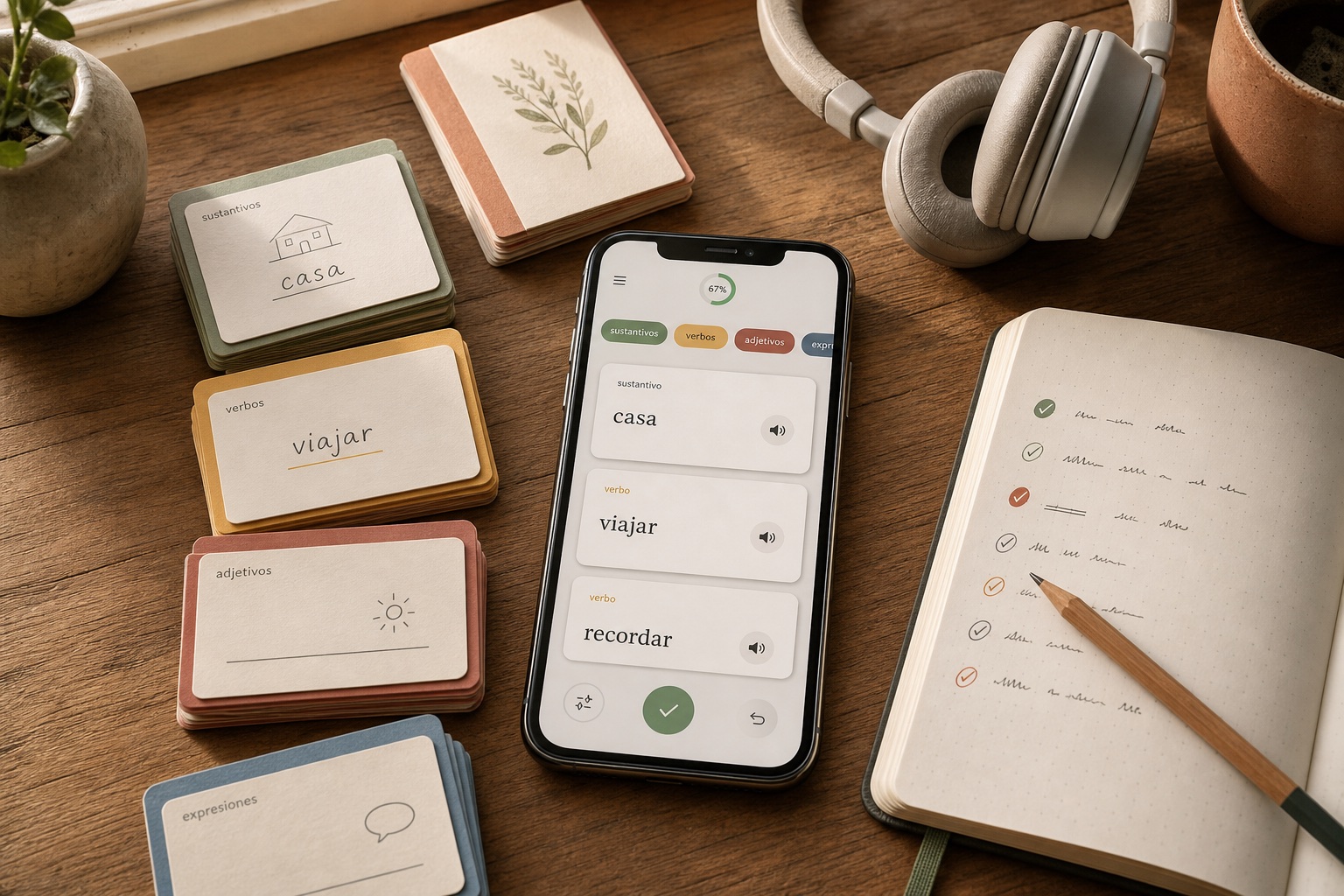
Hola Cards is a Spanish flashcard app from holacards.org for iOS and Android. It is free to download, requires no account, may show ads in the free version, while Premium removes ads, and works offline. The interface is available in 29 languages, including English, Russian, Portuguese and German; cards support translations in 29 languages, including English, Russian, Portuguese and German and 18 practice and game modes. You can import these 32 base-form and diminutive pairs into a custom group and practise them with Spanish audio, writing, pronunciation, and review modes. Hola Cards does not generate diminutives, choose the correct regional form, or correct complete sentences automatically.
Connect word formation with noun gender, adjective agreement, common vocabulary and pronunciation.
Spanish noun gender rules Spanish adjective agreement 100 common Spanish words Spanish pronunciation for beginners 32 Spanish personality adjectives
A five-minute diminutive drill
- Choose eight base-form and diminutive pairs.
- Say the base word and recall the smaller or more expressive form.
- Read the model sentence and name the nuance: size, affection, softening or emphasis.
- Change one feminine example to masculine, or singular to plural, where the word allows it.
- Mark any regional alternative and use only one form in your own sentence.
Language references
Formation, meaning and regional variation were checked against RAE–ASALE and Instituto Cervantes materials.
- RAE–ASALE: Nueva gramática básica
- Instituto Cervantes: teaching and learning Spanish diminutives
- Instituto Cervantes: word formation in Spanish teaching
- RAE dictionary: diminutivo
FAQ
What is a diminutive in Spanish?
It is a derived form that can express small size, affection, softening, intensity or another context-dependent nuance.
Do all Spanish diminutives end in -ito or -ita?
No. -ito/-ita are widespread, but -cito/-cita, -ecito/-ecita and regional suffixes also occur.
When should I use -cito instead of -ito?
It depends on the base word and regional usage. Learn common forms such as cafecito and amorcito as whole words rather than applying one rigid rule.
Why does chico become chiquito?
The spelling qu preserves the hard k sound before i. Similar sound-preserving spelling appears in amigo → amiguito.
Does ahorita always mean right now?
No. Its timing and tone vary greatly by region and context, so listen to local usage.
Can Hola Cards create the correct diminutive for any word?
No. It helps you import and practise these fixed examples; the guide explains patterns and regional limits.
Copy 32 diminutive pairs into Hola Cards
Open word groups in Hola Cards, choose paste/import, and paste the block. Each “Spanish - translation” line keeps the base and diminutive together.
**Spanish diminutives: 32 base-form pairs**

casa → casita - little house; affectionate house
perro → perrito - little dog; doggie
gato → gatito - kitten; little cat
libro → librito - small or modest little book
mesa → mesita - small table; side table
planta → plantita - small plant; affectionate plant
abuela → abuelita - granny; affectionate grandmother
amigo → amiguito - little friend; sometimes patronising
café → cafecito - small coffee; friendly coffee break
amor → amorcito - term of affection; sweetheart
joven → jovencito - youngster; very young person
mujer → mujercita - little woman; context may sound affectionate or dismissive
motor → motorcito - small motor
tren → trencito - small or toy train
canción → cancioncita - short or light little song
corazón → corazoncito - little heart; affectionate address
pan → panecito - small bread roll; regional form
pez → pececito - little fish
flor → florecita - little flower
sol → solecito - gentle little sun; pleasant sunshine
puerta → puertecita - small door
pueblo → pueblecito - small town or village; regional form
nube → nubecita - small cloud
aire → airecito - light breeze; a little air
ahora → ahorita - now, right now or later, depending on region
despacio → despacito - very gently or slowly
cerca → cerquita - very close
pronto → prontito - very soon; promptly
nada → nadita - nothing at all; emphatic
todo → todito - absolutely all of it; emphatic
momento → momentito - just a moment; softened request
caliente → calentito - pleasantly hot or warm; emphatic
Practise Spanish diminutives in Hola Cards
Review 32 fixed pairs with Spanish audio, writing, pronunciation, custom groups, and review modes on iOS and Android.