oír vs escuchar in Spanish
What is the difference between oír and escuchar?
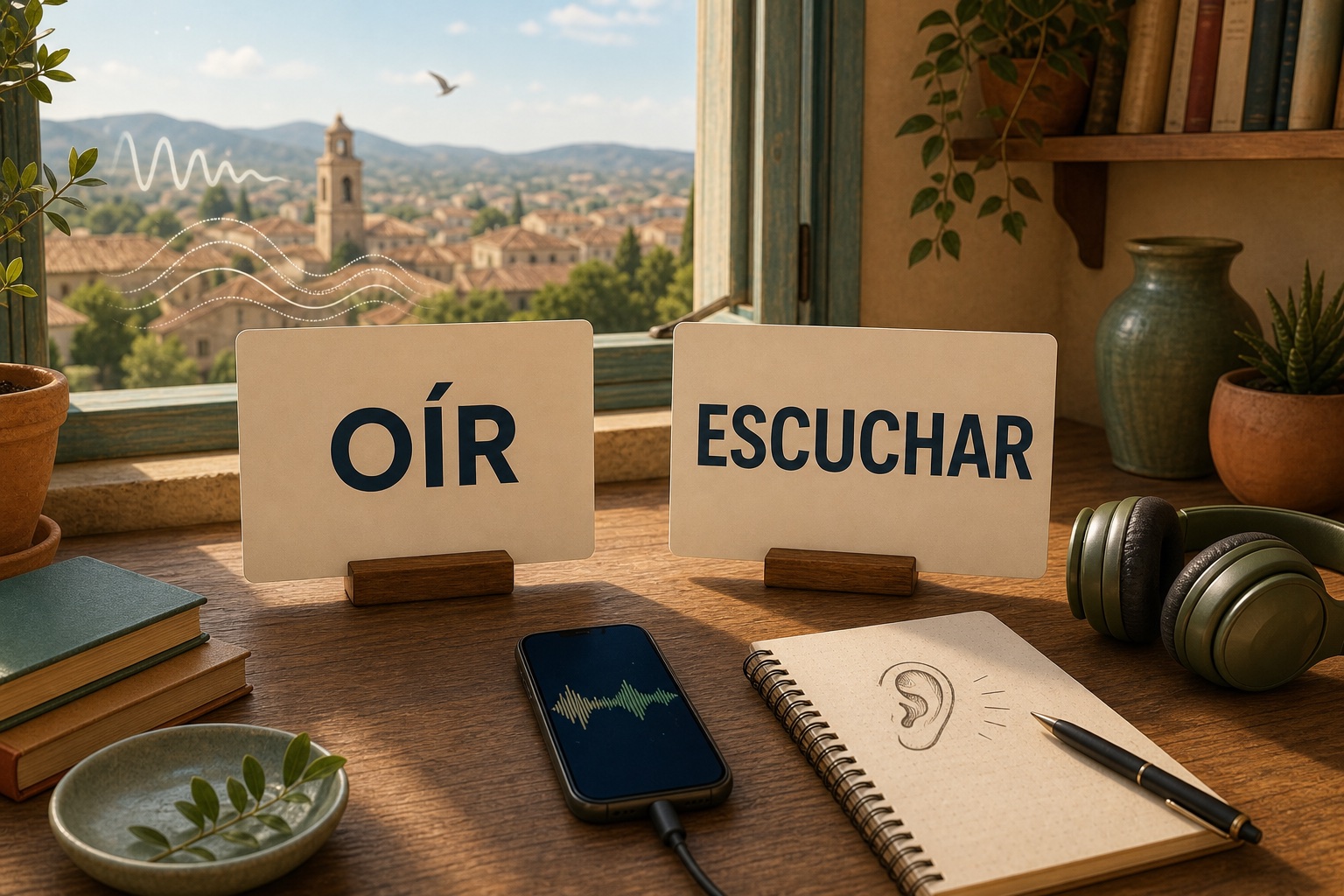
Oír usually means “to hear”: a sound reaches you, whether or not you planned to notice it. Escuchar usually means “to listen”: you direct attention toward a voice, song, lesson, or other sound. Compare oigo pasos with escucho la explicación.
Real speech is flexible, especially with music, radio, and calls. Speakers may use both verbs where English prefers one. The perception-versus-attention rule is the best starting point, while complete phrases show the natural exceptions and regional overlap.
The quickest perception-or-attention rule
Choose oír for hearing ability, an unexpected sound, or information that reaches you: no oigo bien; oí una explosión; he oído la noticia. Choose escuchar for active attention: escucha con atención; escucho música; te escucho.
When a person is the direct target of escuchar, Spanish normally uses personal a: escucho a la profesora. Object pronouns come before the verb or attach to an infinitive or affirmative command: te escucho; quiero escucharte; escúchame.
40 examples with oír and escuchar in Spanish
Each row gives a complete Spanish sentence, a natural translation, the verb’s job, and one short usage cue.
| Spanish | Translation | Verb job | Mini-note |
|---|---|---|---|
| Oigo un ruido. | I hear a noise. | Oír: hearing and sound perception | A sound reaches the ears without deliberate attention. |
| ¿Oyes la campana? | Can you hear the bell? | Oír: hearing and sound perception | A sound reaches the ears without deliberate attention. |
| No oigo bien. | I cannot hear well. | Oír: hearing and sound perception | Oír describes whether someone can hear clearly. |
| Oí una explosión. | I heard an explosion. | Oír: hearing and sound perception | An unexpected or completed sound event is perceived. |
| Se oye música desde la calle. | Music can be heard from the street. | Oír: hearing and sound perception | The sentence identifies where a sound comes from. |
| Te oigo perfectamente. | I can hear you perfectly. | Oír: hearing and sound perception | Oír describes whether someone can hear clearly. |
| ¿Me oyes? | Can you hear me? | Oír: hearing and sound perception | A call or voice connection tests audibility or attention. |
| Oigo pasos en el pasillo. | I hear footsteps in the corridor. | Oír: hearing and sound perception | A sound reaches the ears without deliberate attention. |
| He oído esa historia. | I have heard that story. | Oír: hearing and sound perception | Oír introduces information that someone heard or learned. |
| Oí que el museo está cerrado. | I heard that the museum is closed. | Oír: hearing and sound perception | Oír introduces information that someone heard or learned. |
| Escucha con atención. | Listen carefully. | Escuchar: deliberate listening | A command asks someone to listen attentively. |
| Estoy escuchando la explicación. | I am listening to the explanation. | Escuchar: deliberate listening | Escuchar directs attention toward a sound or message. |
| Escucho música mientras estudio. | I listen to music while I study. | Escuchar: deliberate listening | The listener intentionally follows audio content. |
| ¿Qué estás escuchando? | What are you listening to? | Escuchar: deliberate listening | Escuchar directs attention toward a sound or message. |
| Escuchamos un pódcast en español. | We listen to a podcast in Spanish. | Escuchar: deliberate listening | The listener intentionally follows audio content. |
| No me escuchas. | You are not listening to me. | Escuchar: deliberate listening | Use personal a before a named person; an object pronoun can replace that phrase. |
| Escucho a la profesora. | I listen to the teacher. | Escuchar: deliberate listening | Use personal a before a named person; an object pronoun can replace that phrase. |
| Voy a escuchar el audio otra vez. | I am going to listen to the audio again. | Escuchar: deliberate listening | The phrase turns the distinction into a listening exercise. |
| Ella escucha la radio por la mañana. | She listens to the radio in the morning. | Escuchar: deliberate listening | The listener intentionally follows audio content. |
| Escucha el mensaje completo. | Listen to the whole message. | Escuchar: deliberate listening | A command asks someone to listen attentively. |
| ¿Me oyes bien ahora? | Can you hear me well now? | Calls and everyday expressions | A call or voice connection tests audibility or attention. |
| No te oigo; habla más alto. | I cannot hear you; speak louder. | Calls and everyday expressions | A call or voice connection tests audibility or attention. |
| Te escucho; dime qué pasó. | I am listening; tell me what happened. | Calls and everyday expressions | Use personal a before a named person; an object pronoun can replace that phrase. |
| Escúchame antes de responder. | Listen to me before answering. | Calls and everyday expressions | A command asks someone to listen attentively. |
| Oye, una cosa. | Hey, one thing. | Calls and everyday expressions | A common conversational expression extends the basic meaning. |
| Oiga, perdone. | Excuse me. | Calls and everyday expressions | A common conversational expression extends the basic meaning. |
| He oído hablar de ese libro. | I have heard of that book. | Calls and everyday expressions | He oído hablar de means to have heard of something. |
| ¿Has oído la noticia? | Have you heard the news? | Calls and everyday expressions | Oír introduces information that someone heard or learned. |
| Se oyó un clic y terminó la llamada. | A click was heard and the call ended. | Calls and everyday expressions | An unexpected or completed sound event is perceived. |
| Escuché tu mensaje de voz. | I listened to your voice message. | Calls and everyday expressions | The listener intentionally follows audio content. |
| Oigo la música, pero no la estoy escuchando. | I hear the music, but I am not listening to it. | Direct contrasts and listening practice | The sentence directly contrasts hearing with attentive listening. |
| Escucha el audio y dime qué oyes. | Listen to the audio and tell me what you hear. | Direct contrasts and listening practice | The phrase turns the distinction into a listening exercise. |
| Oí tu voz y luego te escuché con atención. | I heard your voice and then listened to you carefully. | Direct contrasts and listening practice | The sentence directly contrasts hearing with attentive listening. |
| No basta con oír; hay que escuchar. | Hearing is not enough; you have to listen. | Direct contrasts and listening practice | The sentence directly contrasts hearing with attentive listening. |
| Se oye el mar desde aquí; vamos a escucharlo. | You can hear the sea from here; let us listen to it. | Direct contrasts and listening practice | The sentence directly contrasts hearing with attentive listening. |
| Oigo muchas palabras, pero no entiendo todas. | I hear many words, but I do not understand all of them. | Direct contrasts and listening practice | The phrase turns the distinction into a listening exercise. |
| Escucho español diez minutos al día. | I listen to Spanish for ten minutes a day. | Direct contrasts and listening practice | The phrase turns the distinction into a listening exercise. |
| ¿Oyes el timbre o estás escuchando música? | Do you hear the doorbell, or are you listening to music? | Direct contrasts and listening practice | The sentence directly contrasts hearing with attentive listening. |
| Escucha el ejemplo: ¿oyes la diferencia? | Listen to the example: can you hear the difference? | Direct contrasts and listening practice | The phrase turns the distinction into a listening exercise. |
| Aunque oí la pregunta, no la escuché con atención. | Although I heard the question, I did not listen carefully. | Direct contrasts and listening practice | The sentence directly contrasts hearing with attentive listening. |
Group oír and escuchar by meaning and context
Four groups separate sound perception with oír, focused attention with escuchar, calls and everyday expressions, and direct contrasts for study.
Oír: hearing and sound perception
Use oír when a sound reaches the ears, for hearing ability, or for information heard.
Oigo un ruido. ¿Oyes la campana? No oigo bien. Oí una explosión. Se oye música desde la calle. Te oigo perfectamente. ¿Me oyes? Oigo pasos en el pasillo. He oído esa historia. Oí que el museo está cerrado.
Escuchar: deliberate listening
Use escuchar when someone actively pays attention to a sound, message, or person.
Escucha con atención. Estoy escuchando la explicación. Escucho música mientras estudio. ¿Qué estás escuchando? Escuchamos un pódcast en español. No me escuchas. Escucho a la profesora. Voy a escuchar el audio otra vez. Ella escucha la radio por la mañana. Escucha el mensaje completo.
Calls and everyday expressions
Practise ¿me oyes?, te escucho, oye, oiga, voice messages, and he oído hablar de.
¿Me oyes bien ahora? No te oigo; habla más alto. Te escucho; dime qué pasó. Escúchame antes de responder. Oye, una cosa. Oiga, perdone. He oído hablar de ese libro. ¿Has oído la noticia? Se oyó un clic y terminó la llamada. Escuché tu mensaje de voz.
Direct contrasts and listening practice
Put both verbs in one context to separate perception from focused attention.
Oigo la música, pero no la estoy escuchando. Escucha el audio y dime qué oyes. Oí tu voz y luego te escuché con atención. No basta con oír; hay que escuchar. Se oye el mar desde aquí; vamos a escucharlo. Oigo muchas palabras, pero no entiendo todas. Escucho español diez minutos al día. ¿Oyes el timbre o estás escuchando música? Escucha el ejemplo: ¿oyes la diferencia? Aunque oí la pregunta, no la escuché con atención.
Forms, phone phrases, and expressions to know
Oír is irregular: oigo, oyes, oye, oímos, oís, oyen. Useful past forms include oí, oyó, and oyeron; the gerund is oyendo and the participle is oído. Escuchar is regular: escucho, escuchas, escucha, escuchamos, escucháis, escuchan.
On a call, ¿me oyes? asks whether the sound reaches the other person. Te escucho can mean “I am listening” and shows attention. Everyday speech also uses no te oigo and no te escucho for connection or volume problems, so context matters.
Learn three high-value chunks separately: oye or oiga can introduce a remark or politely get attention; he oído hablar de means “I have heard of”; escúchame asks someone to listen to what follows.
Hola Cards, the Spanish flashcard app on holacards.org, helps beginners practise these sound patterns with flashcards, audio, writing, pronunciation, custom word groups, and spaced review on iOS and Android.
Connect oír and escuchar with pronunciation, common verbs, question words, decir, and the related ver-versus-mirar perception contrast.
Spanish pronunciation 50 beginner verbs Question words Decir phrases Ver vs mirar
How to practise oír and escuchar in five steps
- Read a sentence and label the focus: sound perception, hearing ability, deliberate attention, or a conversation cue.
- Choose oír for what reaches the ears and escuchar for attention directed toward a sound or person.
- Build contrast pairs such as oigo música desde la calle and escucho música con auriculares.
- Add the chunks ¿me oyes?, te escucho, oye, oiga, he oído hablar de, and escúchame.
- Review all 40 examples with Hola Cards audio, writing, pronunciation, and spaced repetition until the choice feels automatic.
FAQ
What is the simplest difference between oír and escuchar?
Oír focuses on perceiving a sound or being able to hear it. Escuchar focuses on deliberately paying attention to a sound or person.
Should I say ¿me oyes? or ¿me escuchas? on a call?
¿Me oyes? directly asks whether the sound reaches the other person. ¿Me escuchas? is also common and can ask whether the person can hear you or is paying attention.
Why is the first-person form oigo?
Oír is irregular in the present: oigo, oyes, oye, oímos, oís, oyen. Escuchar is regular: escucho.
What do oye, oiga, and he oído hablar de mean?
Oye and formal oiga can get someone’s attention before a remark. He oído hablar de means “I have heard of” a person, place, or topic.
Copy all 40 oír and escuchar examples into Hola Cards
Open word groups in Hola Cards, choose paste/import, and paste this block. The app can read the title and the “Spanish - translation” lines.
**Oír vs escuchar: 40 Spanish examples**

Oigo un ruido. - I hear a noise.
¿Oyes la campana? - Can you hear the bell?
No oigo bien. - I cannot hear well.
Oí una explosión. - I heard an explosion.
Se oye música desde la calle. - Music can be heard from the street.
Te oigo perfectamente. - I can hear you perfectly.
¿Me oyes? - Can you hear me?
Oigo pasos en el pasillo. - I hear footsteps in the corridor.
He oído esa historia. - I have heard that story.
Oí que el museo está cerrado. - I heard that the museum is closed.
Escucha con atención. - Listen carefully.
Estoy escuchando la explicación. - I am listening to the explanation.
Escucho música mientras estudio. - I listen to music while I study.
¿Qué estás escuchando? - What are you listening to?
Escuchamos un pódcast en español. - We listen to a podcast in Spanish.
No me escuchas. - You are not listening to me.
Escucho a la profesora. - I listen to the teacher.
Voy a escuchar el audio otra vez. - I am going to listen to the audio again.
Ella escucha la radio por la mañana. - She listens to the radio in the morning.
Escucha el mensaje completo. - Listen to the whole message.
¿Me oyes bien ahora? - Can you hear me well now?
No te oigo; habla más alto. - I cannot hear you; speak louder.
Te escucho; dime qué pasó. - I am listening; tell me what happened.
Escúchame antes de responder. - Listen to me before answering.
Oye, una cosa. - Hey, one thing.
Oiga, perdone. - Excuse me.
He oído hablar de ese libro. - I have heard of that book.
¿Has oído la noticia? - Have you heard the news?
Se oyó un clic y terminó la llamada. - A click was heard and the call ended.
Escuché tu mensaje de voz. - I listened to your voice message.
Oigo la música, pero no la estoy escuchando. - I hear the music, but I am not listening to it.
Escucha el audio y dime qué oyes. - Listen to the audio and tell me what you hear.
Oí tu voz y luego te escuché con atención. - I heard your voice and then listened to you carefully.
No basta con oír; hay que escuchar. - Hearing is not enough; you have to listen.
Se oye el mar desde aquí; vamos a escucharlo. - You can hear the sea from here; let us listen to it.
Oigo muchas palabras, pero no entiendo todas. - I hear many words, but I do not understand all of them.
Escucho español diez minutos al día. - I listen to Spanish for ten minutes a day.
¿Oyes el timbre o estás escuchando música? - Do you hear the doorbell, or are you listening to music?
Escucha el ejemplo: ¿oyes la diferencia? - Listen to the example: can you hear the difference?
Aunque oí la pregunta, no la escuché con atención. - Although I heard the question, I did not listen carefully.
Practise oír and escuchar in Hola Cards
Hola Cards, the Spanish flashcard app on holacards.org, turns these 40 examples into flashcards with audio, writing, pronunciation practice, custom word groups, and spaced review on iOS and Android.