decir in Spanish
What does decir mean in Spanish?
Decir usually means “to say” when the message matters and “to tell” when a listener is named: digo la verdad; te digo la verdad. Use decir que before a reported statement: dice que viene mañana.
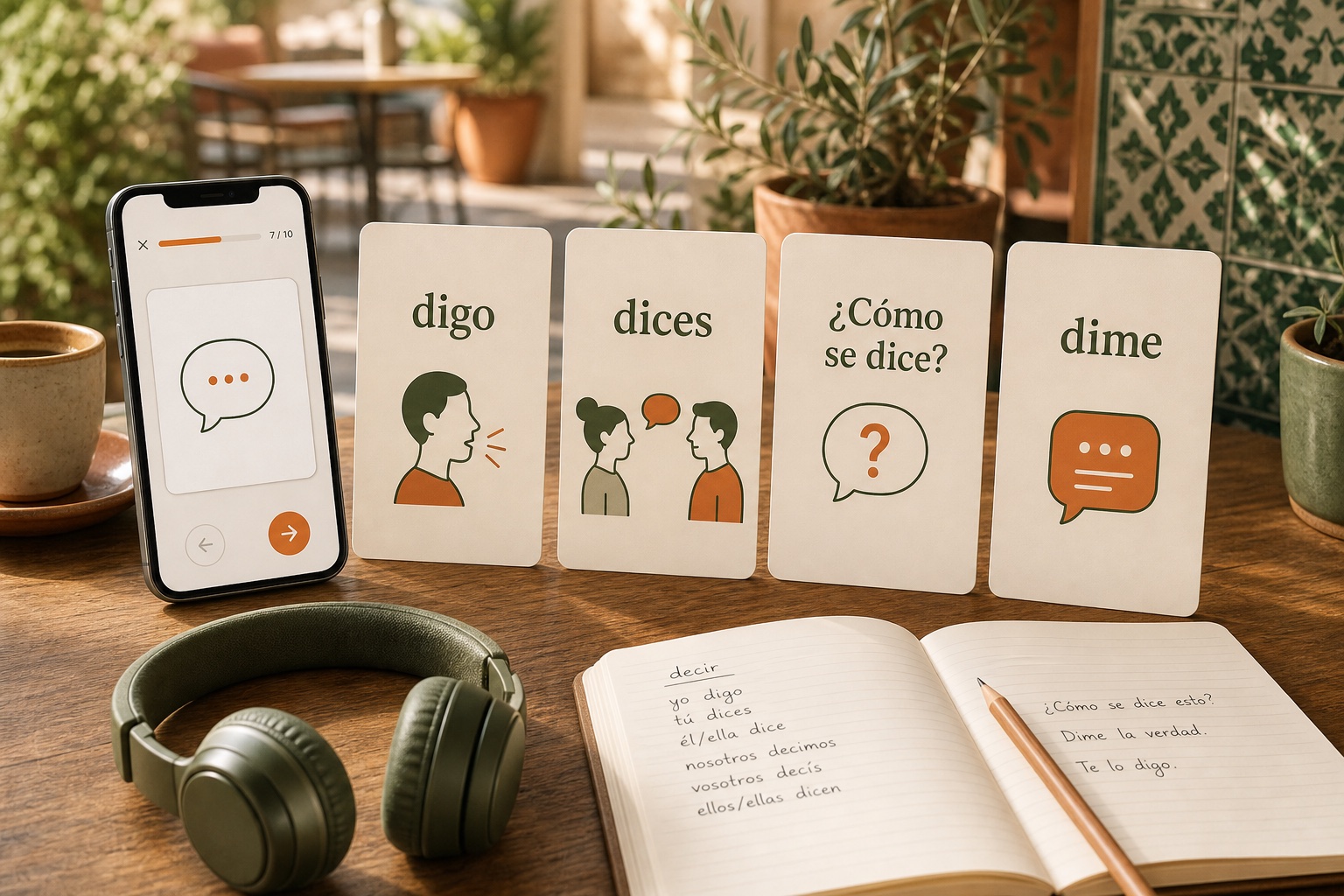
The present forms are digo, dices, dice, decimos, decís, and dicen. Digo has an irregular yo form; dices, dice, and dicen change e to i, while decimos and decís keep dec-. Useful commands include dime for one familiar person, dígame for usted, and dilo for “say it”.
Four decir patterns cover most beginner conversations
Use decir + message, decir que + statement, and a recipient pronoun + decir when someone receives the message: digo mi nombre, dice que sí, te digo una cosa.
Use ¿Cómo se dice...? to ask how to say something and ¿Qué quiere decir...? to ask what it means. Decir focuses on the words or message; hablar focuses more on speaking, a conversation, or a language.
40 decir phrases for messages, questions, requests, and reactions
Each phrase includes a natural translation, a conversation job, and a short decision cue so it works as a complete beginner flashcard.
| Spanish | Translation | Use | Mini-note |
|---|---|---|---|
| digo | I say; I tell | Present forms | Digo is the irregular first-person present form. |
| dices | you say; you tell | Present forms | Present-tense form for an everyday statement. |
| dice | he/she says; you say (formal) | Present forms | Present-tense form for an everyday statement. |
| decimos | we say; we tell | Present forms | Present-tense form for an everyday statement. |
| decís | you all say (Spain) | Present forms | Decís is the informal plural “you” form used mainly in Spain. |
| dicen | they say; you all say | Present forms | Present-tense form for an everyday statement. |
| Digo mi nombre. | I say my name. | Saying and meaning | Put the words or message after decir. |
| ¿Cómo se dice esto? | How do you say this? | Saying and meaning | Use this to ask about words, meaning, or a message. |
| Se dice «hola». | You say “hola”. | Saying and meaning | Se dice means “it is said” or “you say”. |
| ¿Qué dices? | What are you saying? | Saying and meaning | Use this to ask about words, meaning, or a message. |
| No sé qué decir. | I do not know what to say. | Saying and meaning | Keep decir in the infinitive after another conjugated verb. |
| Quiero decir algo. | I want to say something. | Saying and meaning | Keep decir in the infinitive after another conjugated verb. |
| Eso quiere decir «entrada». | That means “entrance”. | Saying and meaning | Quiere decir introduces the meaning of a word or idea. |
| Digo que sí. | I say yes. | Reported messages and listeners | Use decir que before a complete reported statement. |
| Dice que viene mañana. | He/she says that he/she is coming tomorrow. | Reported messages and listeners | Use decir que before a complete reported statement. |
| Dicen que está cerrado. | They say it is closed. | Reported messages and listeners | Use decir que before a complete reported statement. |
| Me dice la verdad. | He/she tells me the truth. | Reported messages and listeners | The pronoun before decir identifies the listener. |
| Te digo una cosa. | Let me tell you something. | Reported messages and listeners | The pronoun before decir identifies the listener. |
| Le digo mi nombre. | I tell him/her my name. | Reported messages and listeners | The pronoun before decir identifies the listener. |
| Nos dicen la hora. | They tell us the time. | Reported messages and listeners | The pronoun before decir identifies the listener. |
| Dime la verdad. | Tell me the truth. | Commands and requests | Informal command for one familiar person. |
| Dime tu nombre. | Tell me your name. | Commands and requests | Informal command for one familiar person. |
| Dime qué piensas. | Tell me what you think. | Commands and requests | Informal command for one familiar person. |
| Dígame, por favor. | Please tell me. | Commands and requests | Polite usted command for a formal listener. |
| Dígame su nombre. | Tell me your name (formal). | Commands and requests | Polite usted command for a formal listener. |
| No me digas. | Do not tell me; no way. | Commands and requests | No me digas is a common negative command and reaction. |
| Dilo otra vez. | Say it again. | Commands and requests | In dilo, lo replaces the words or message being said. |
| Díselo a Ana. | Tell it to Ana. | Commands and requests | In díselo, se is the recipient and lo is the message. |
| ¿Cómo se dice «ticket» en español? | How do you say “ticket” in Spanish? | Clarification questions | A complete clarification question worth learning as one unit. |
| ¿Qué quiere decir esta palabra? | What does this word mean? | Clarification questions | Quiere decir introduces the meaning of a word or idea. |
| ¿Puedes decirlo otra vez? | Can you say it again? | Clarification questions | A complete clarification question worth learning as one unit. |
| ¿Puede decirlo más despacio? | Can you say it more slowly? | Clarification questions | A complete clarification question worth learning as one unit. |
| ¿Qué dijiste? | What did you say? | Clarification questions | Dijo and dijiste are irregular preterite forms. |
| No entendí lo que dijiste. | I did not understand what you said. | Clarification questions | Dijo and dijiste are irregular preterite forms. |
| ¿Me dices cómo llegar? | Can you tell me how to get there? | Clarification questions | Ask a listener to explain directions or a process. |
| Ella me dijo que sí. | She said yes to me. | Messages and reactions | Dijo and dijiste are irregular preterite forms. |
| Es decir, no viene. | That is, he/she is not coming. | Messages and reactions | Es decir introduces a clarification: “that is” or “in other words”. |
| Lo digo en serio. | I mean it. | Messages and reactions | Lo digo en serio means the speaker is not joking. |
| No digo nada. | I am not saying anything. | Messages and reactions | Put no before digo to say that no message is given. |
| Te lo digo mañana. | I will tell you tomorrow. | Messages and reactions | Te lo digo uses two pronouns: listener plus message. |
Group decir by the message job it performs
Separate present forms, ways to say or mean something, reported messages, requests, clarification questions, and everyday reactions.
Present forms
Automate digo, dices, dice, decimos, decís, and dicen before building longer messages.
digo dices dice decimos decís dicen
Saying and meaning
Name the message, ask how something is said, or explain what a word means.
Digo mi nombre. ¿Cómo se dice esto? Se dice «hola». ¿Qué dices? No sé qué decir. Quiero decir algo. Eso quiere decir «entrada».
Reported messages and listeners
Use decir que for a statement and a recipient pronoun for the person who hears it.
Digo que sí. Dice que viene mañana. Dicen que está cerrado. Me dice la verdad. Te digo una cosa. Le digo mi nombre. Nos dicen la hora.
Commands and requests
Contrast informal dime and dilo with formal dígame and common negative no me digas.
Dime la verdad. Dime tu nombre. Dime qué piensas. Dígame, por favor. Dígame su nombre. No me digas. Dilo otra vez. Díselo a Ana.
Clarification questions
Ask for a word, meaning, repetition, slower speech, directions, or words you missed.
¿Cómo se dice «ticket» en español? ¿Qué quiere decir esta palabra? ¿Puedes decirlo otra vez? ¿Puede decirlo más despacio? ¿Qué dijiste? No entendí lo que dijiste. ¿Me dices cómo llegar?
Messages and reactions
Recall what someone said, reformulate an idea, stress sincerity, stay silent, or promise a later answer.
Ella me dijo que sí. Es decir, no viene. Lo digo en serio. No digo nada. Te lo digo mañana.
Quick answers about decir in Spanish
The core present forms are digo, dices, dice, decimos, decís, and dicen. Digo has an irregular yo form, and the verb changes e to i in dices, dice, and dicen; decimos and decís keep dec-.
Use decir que to report a complete idea: Ana dice que llega tarde. Use me, te, le, nos, os, or les before decir to identify who receives the message.
Decir and hablar overlap, but they are not interchangeable everywhere. Say ¿Qué dices? for “What are you saying?” and hablo español for “I speak Spanish.”
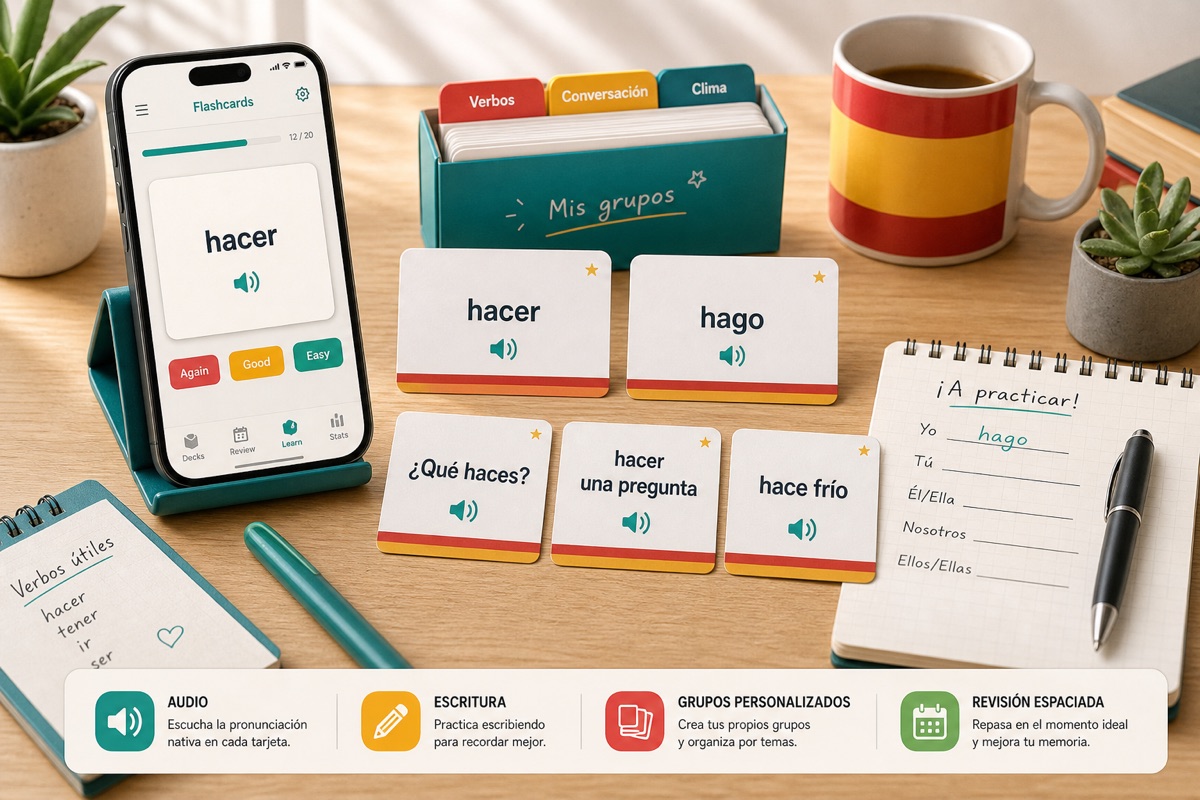
Hola Cards, the Spanish flashcard app on holacards.org, helps beginners practise decir with flashcards, audio, writing, pronunciation, custom groups, and spaced review on iOS and Android.
Connect decir with beginner verbs, question words, pronunciation, poder requests, and querer intentions to build complete conversations.
Beginner verbs Question words Spanish pronunciation Poder phrases and requests Querer phrases and intentions
How to practise decir in five short steps
- Say the six present forms aloud and give extra attention to the irregular yo form digo.
- Make pairs with and without a listener: digo la verdad; te digo la verdad.
- Add que to three cards and report a short message: dice que sí; dicen que está cerrado.
- Practise ¿Cómo se dice...? and ¿Qué quiere decir...? as two different clarification questions.
- Use Hola Cards audio, writing, pronunciation, and spaced review until each complete phrase is easy to retrieve.
FAQ
What does decir mean in Spanish?
Decir means “to say” or “to tell”. It focuses on the words or message being communicated.
What is the difference between decir and hablar?
Decir introduces words or a message. Hablar describes speaking, having a conversation, or using a language.
Why is the yo form digo?
Decir has the irregular first-person singular yo digo. It also changes e to i in dices, dice, and dicen, while decimos and decís keep dec-.
Copy all 40 decir phrases into a Hola Cards group
Open word groups in Hola Cards, choose paste/import, and paste this block. The app can read the title and the “Spanish - translation” lines.
**40 Spanish decir phrases for beginners**

digo - I say; I tell
dices - you say; you tell
dice - he/she says; you say (formal)
decimos - we say; we tell
decís - you all say (Spain)
dicen - they say; you all say
Digo mi nombre. - I say my name.
¿Cómo se dice esto? - How do you say this?
Se dice «hola». - You say “hola”.
¿Qué dices? - What are you saying?
No sé qué decir. - I do not know what to say.
Quiero decir algo. - I want to say something.
Eso quiere decir «entrada». - That means “entrance”.
Digo que sí. - I say yes.
Dice que viene mañana. - He/she says that he/she is coming tomorrow.
Dicen que está cerrado. - They say it is closed.
Me dice la verdad. - He/she tells me the truth.
Te digo una cosa. - Let me tell you something.
Le digo mi nombre. - I tell him/her my name.
Nos dicen la hora. - They tell us the time.
Dime la verdad. - Tell me the truth.
Dime tu nombre. - Tell me your name.
Dime qué piensas. - Tell me what you think.
Dígame, por favor. - Please tell me.
Dígame su nombre. - Tell me your name (formal).
No me digas. - Do not tell me; no way.
Dilo otra vez. - Say it again.
Díselo a Ana. - Tell it to Ana.
¿Cómo se dice «ticket» en español? - How do you say “ticket” in Spanish?
¿Qué quiere decir esta palabra? - What does this word mean?
¿Puedes decirlo otra vez? - Can you say it again?
¿Puede decirlo más despacio? - Can you say it more slowly?
¿Qué dijiste? - What did you say?
No entendí lo que dijiste. - I did not understand what you said.
¿Me dices cómo llegar? - Can you tell me how to get there?
Ella me dijo que sí. - She said yes to me.
Es decir, no viene. - That is, he/she is not coming.
Lo digo en serio. - I mean it.
No digo nada. - I am not saying anything.
Te lo digo mañana. - I will tell you tomorrow.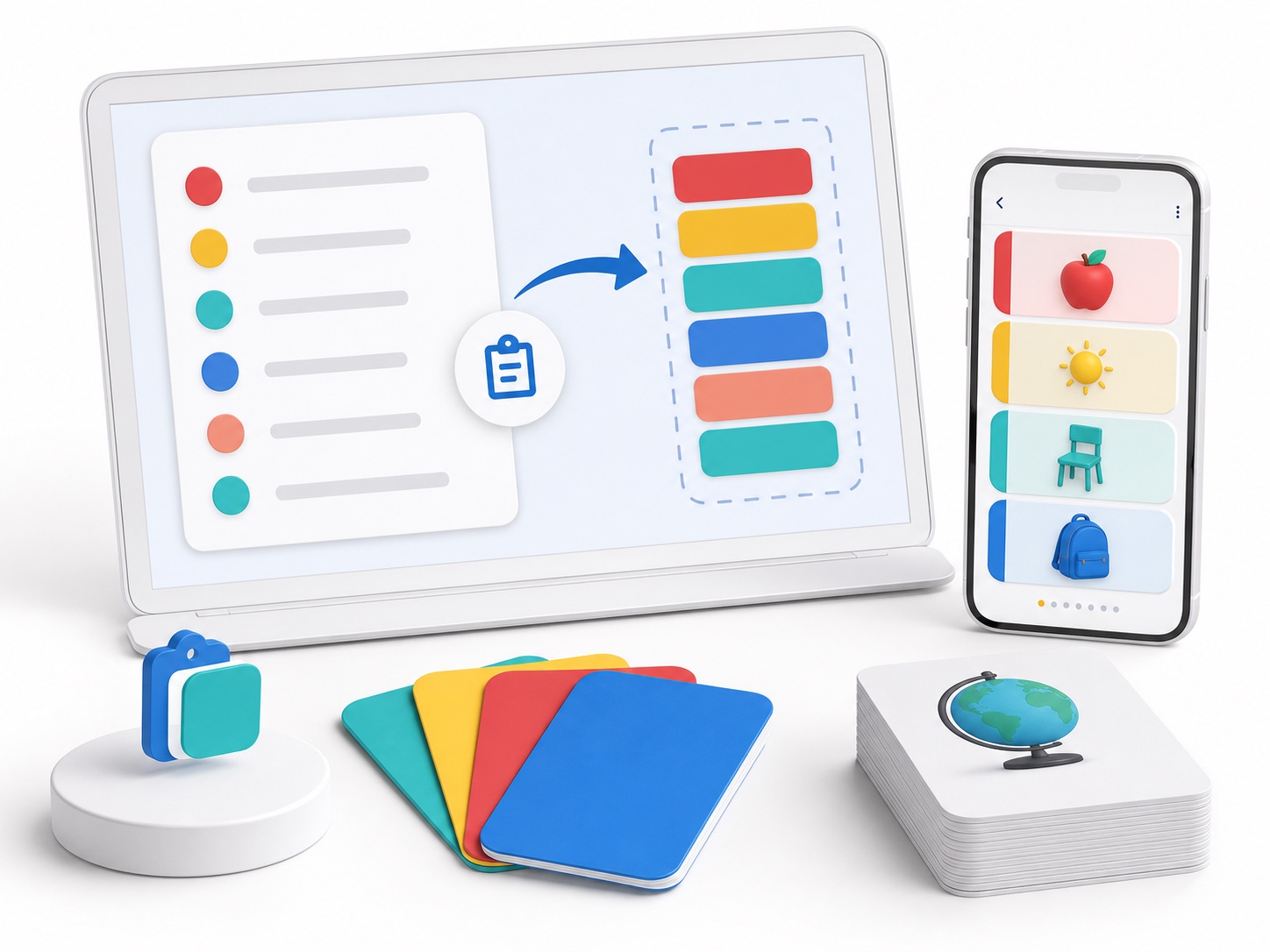
Practise decir in Hola Cards
Hola Cards, the Spanish flashcard app on holacards.org, turns these decir phrases into flashcards with audio, writing, pronunciation practice, custom groups, and spaced review on iOS and Android.