Build a relative-pronoun practice group
Import 24 fixed sentence patterns and recall the connector from meaning and structure. The full guide remains useful without the app.
Spanish relative pronouns
What are relative pronouns in Spanish?
A relative clause adds information about an antecedent: El libro que compré is the book that I bought. Unlike English, Spanish normally keeps the relative word; it is not omitted in this pattern.
Que is the safest default for people or things when no preposition is required. Quien refers only to people and is especially common after a preposition or in a non-restrictive clause.
Article forms such as el que and la cual show gender and number. Cuyo agrees with the possessed noun, while lo que and lo cual refer to an idea rather than a named masculine noun.
Four decisions that choose the form
Identify the antecedent: a person, thing, place, time, manner or complete idea.
Check whether the verb or phrase requires a preposition. Keep that preposition before the relative form.
Use gender and number where the form contains an article or cuyo: la que, los cuales, cuyas.
Do not add an accent to relative que, quien, cual, como, cuando or donde; interrogative and exclamative forms are accented.
24 Spanish relative-pronoun examples
The rows move from everyday que to people after prepositions, article forms, neutral references, possession and place.
| Relative pattern | Meaning | Example in context | Why this form |
|---|---|---|---|
| que: el libro que compré | the book that I bought | El libro que compré es corto. | Que directly links the antecedent without a required preposition. |
| que: la profesora que explica | the teacher who explains | La profesora que explica esto es Ana. | Que directly links the antecedent without a required preposition. |
| que: la ciudad que visitamos | the city that we visited | La ciudad que visitamos está junto al mar. | Que directly links the antecedent without a required preposition. |
| que: los ejercicios que faltan | the exercises that remain | Termina los ejercicios que faltan. | Que directly links the antecedent without a required preposition. |
| que: el café que está abierto | the café that is open | Busco un café que esté abierto. | Que directly links the antecedent without a required preposition. |
| que: la canción que escuchas | the song that you are listening to | Me gusta la canción que escuchas. | Que directly links the antecedent without a required preposition. |
| quien: Marta, quien vive aquí | Marta, who lives here | Marta, quien vive aquí, conoce el barrio. | The antecedent is a person; notice the preposition or explanatory commas. |
| quienes: mis vecinos, quienes nos ayudaron | my neighbours, who helped us | Mis vecinos, quienes nos ayudaron, ya se fueron. | The antecedent is a person; notice the preposition or explanatory commas. |
| con quien | with whom; the person I spoke with | Esta es la médica con quien hablé. | The antecedent is a person; notice the preposition or explanatory commas. |
| a quien | to whom; the person I wrote to | El amigo a quien escribí vive en Lima. | The antecedent is a person; notice the preposition or explanatory commas. |
| de quienes | about or from whom, plural | Son los autores de quienes te hablé. | The antecedent is a person; notice the preposition or explanatory commas. |
| quien llegue primero | whoever arrives first | Quien llegue primero abre la puerta. | The antecedent is a person; notice the preposition or explanatory commas. |
| en la que | in which; feminine antecedent | La sala en la que estudiamos es tranquila. | The article marks gender and number and follows the preposition. |
| en los que | in which; masculine plural antecedent | Estos son los cursos en los que participé. | The article marks gender and number and follows the preposition. |
| por el cual | through which; formal masculine form | Cruzamos el puente por el cual pasa el tren. | The article marks gender and number and follows the preposition. |
| tras la cual | after which; feminine antecedent | Hubo una reunión, tras la cual salimos. | The article marks gender and number and follows the preposition. |
| lo que dijiste | what you said | Entendí lo que dijiste. | The form refers to an idea, fact or unspecified content. |
| lo cual me sorprendió | which surprised me; previous clause | Llegó temprano, lo cual me sorprendió. | The form refers to an idea, fact or unspecified content. |
| el que quiera participar | whoever wants to participate | El que quiera participar debe inscribirse. | The article form introduces a free relative referring to an unspecified person. |
| cuyo nombre | whose name; masculine possessed noun | Conocí a una autora cuyo nombre recordaba. | Cuyo agrees with the possessed noun that follows. |
| cuya hermana | whose sister; feminine possessed noun | Es el alumno cuya hermana vive aquí. | Cuyo agrees with the possessed noun that follows. |
| cuyos libros | whose books; masculine plural | Visitamos al escritor cuyos libros leíste. | Cuyo agrees with the possessed noun that follows. |
| donde nos conocimos | where we met | Volvimos al lugar donde nos conocimos. | The relative word points to place, time or manner. |
| cuando vivíamos allí | when we lived there | Recuerdo la época cuando vivíamos allí. | The relative word points to place, time or manner. |
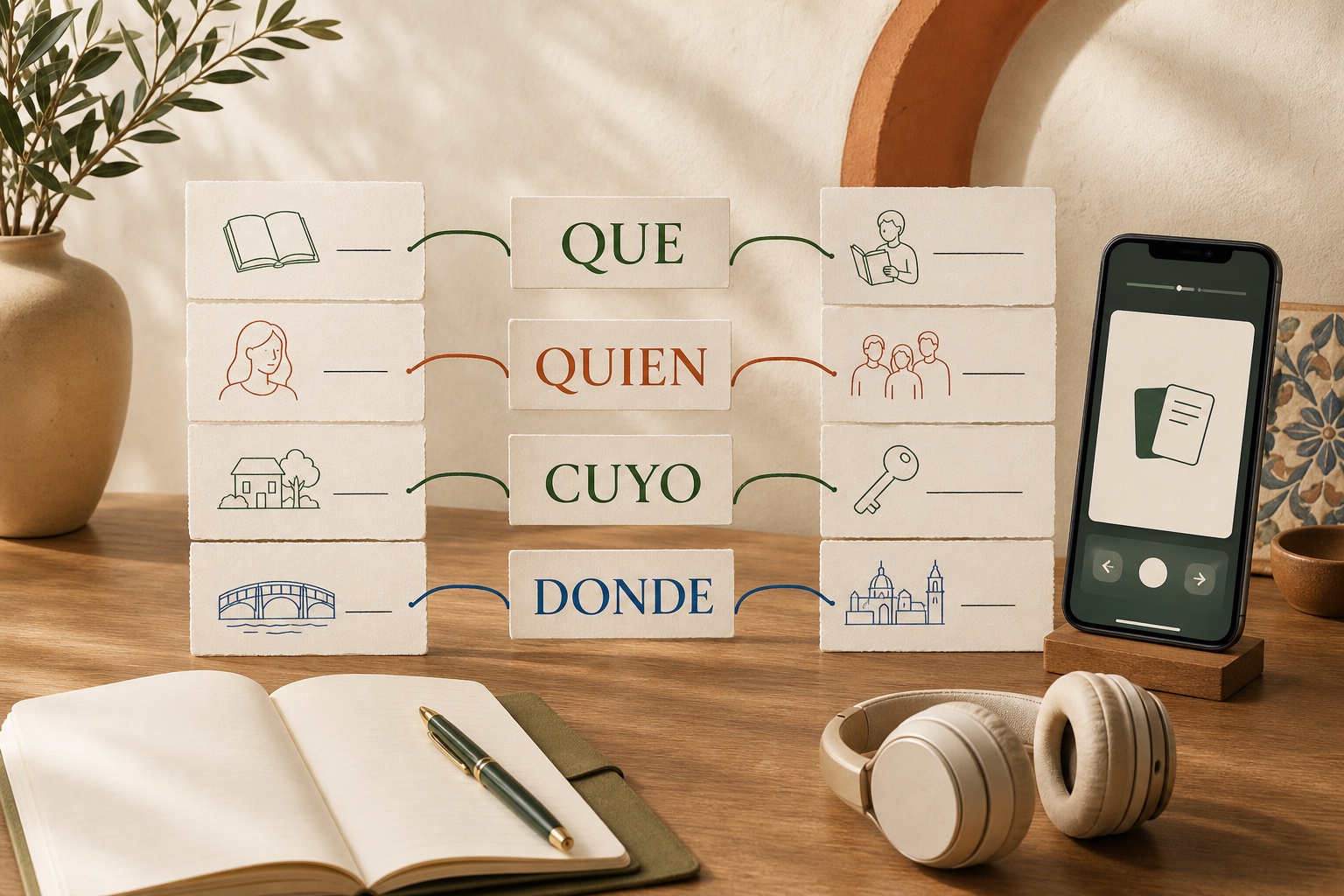
Four relative-word groups
Start with the default connector, then add human, prepositional, neutral, possessive and place patterns.
Que: the everyday default
Link a named person or thing directly to its description.
que: el libro que compré · que: la profesora que explica · que: la ciudad que visitamos · que: los ejercicios que faltan · que: el café que está abierto · que: la canción que escuchas
People and prepositions
Use quien(es) where a human antecedent and structure allow it.
quien: Marta, quien vive aquí · quienes: mis vecinos, quienes nos ayudaron · con quien · a quien · de quienes · quien llegue primero
Article forms and complete ideas
Keep the preposition, show agreement or refer to a whole clause.
en la que · en los que · por el cual · tras la cual · lo que dijiste · lo cual me sorprendió · el que quiera participar
Possession, place, time and manner
Use cuyo with agreement and relative adverbs for their natural domains.
cuyo nombre · cuya hermana · cuyos libros · donde nos conocimos · cuando vivíamos allí
How do you choose a Spanish relative pronoun?
Choose que first when it directly links a named person or thing and no preposition is needed.
For a person after a preposition, quien(es) is often concise; article forms are also possible in many contexts.
Use cuyo before the possessed noun and make it agree with that noun, not with the owner.
Hola Cards is a Spanish flashcard app from holacards.org for iOS and Android. It is free to download, requires no account, may show ads in the free version, while Premium removes ads, and works offline. The interface is available in 29 languages, including English, Russian, Portuguese and German; cards support translations in 29 languages, including English, Russian, Portuguese and German and 18 practice and game modes. You can import these 24 fixed sentence patterns into a custom group and practise them with Spanish audio, writing, pronunciation, and spaced review. Hola Cards does not parse relative clauses, choose a relative word, or correct a new sentence automatically.
Connect relative clauses with pronouns, word order, prepositions and sentence-building practice.
Spanish subject pronouns Spanish direct object pronouns Spanish word order rules Spanish prepositions of place Spanish flashcards with sentences
A five-minute relative-pronoun drill
- Choose six rows and cover the relative pattern.
- Name the antecedent and decide whether it is a person, thing, place or idea.
- Find any preposition required by the second clause.
- Say the complete Spanish sentence and check agreement.
- Write one new sentence, then verify it before adding it to your group.
Language references
The distinctions and examples were checked against RAE–ASALE grammar and Instituto Cervantes B1–B2 materials.
- RAE–ASALE: relative clauses
- RAE–ASALE: complex relatives
- Instituto Cervantes B1–B2 grammar inventory: relatives
- Instituto Cervantes AVE: que, quien and cuyo
FAQ
What is the most common Spanish relative pronoun?
Que is the broad default and can refer to people or things when no preposition is needed.
Can Spanish relative que be omitted?
Not in the ordinary pattern used in this guide: el libro que compré keeps que.
When should I use quien?
It refers only to people and is common after a preposition or in a non-restrictive clause.
What does cuyo agree with?
Cuyo, cuya, cuyos and cuyas agree with the possessed noun that follows, not with the possessor.
What is the difference between lo que and lo cual?
Both can refer to a situation or idea; lo cual normally points back to an explicit preceding clause, while lo que can also introduce a free relative such as what you said.
Can Hola Cards choose the correct relative pronoun?
No. It helps you import and practise the 24 fixed, checked examples in this guide.
Copy 24 examples into Hola Cards
Open word groups in Hola Cards, choose paste/import, and paste the block. Each line keeps one complete relative pattern with its meaning.
**Spanish relative pronouns: 24 examples**

que: el libro que compré - the book that I bought
que: la profesora que explica - the teacher who explains
que: la ciudad que visitamos - the city that we visited
que: los ejercicios que faltan - the exercises that remain
que: el café que está abierto - the café that is open
que: la canción que escuchas - the song that you are listening to
quien: Marta, quien vive aquí - Marta, who lives here
quienes: mis vecinos, quienes nos ayudaron - my neighbours, who helped us
con quien - with whom; the person I spoke with
a quien - to whom; the person I wrote to
de quienes - about or from whom, plural
quien llegue primero - whoever arrives first
en la que - in which; feminine antecedent
en los que - in which; masculine plural antecedent
por el cual - through which; formal masculine form
tras la cual - after which; feminine antecedent
lo que dijiste - what you said
lo cual me sorprendió - which surprised me; previous clause
el que quiera participar - whoever wants to participate
cuyo nombre - whose name; masculine possessed noun
cuya hermana - whose sister; feminine possessed noun
cuyos libros - whose books; masculine plural
donde nos conocimos - where we met
cuando vivíamos allí - when we lived there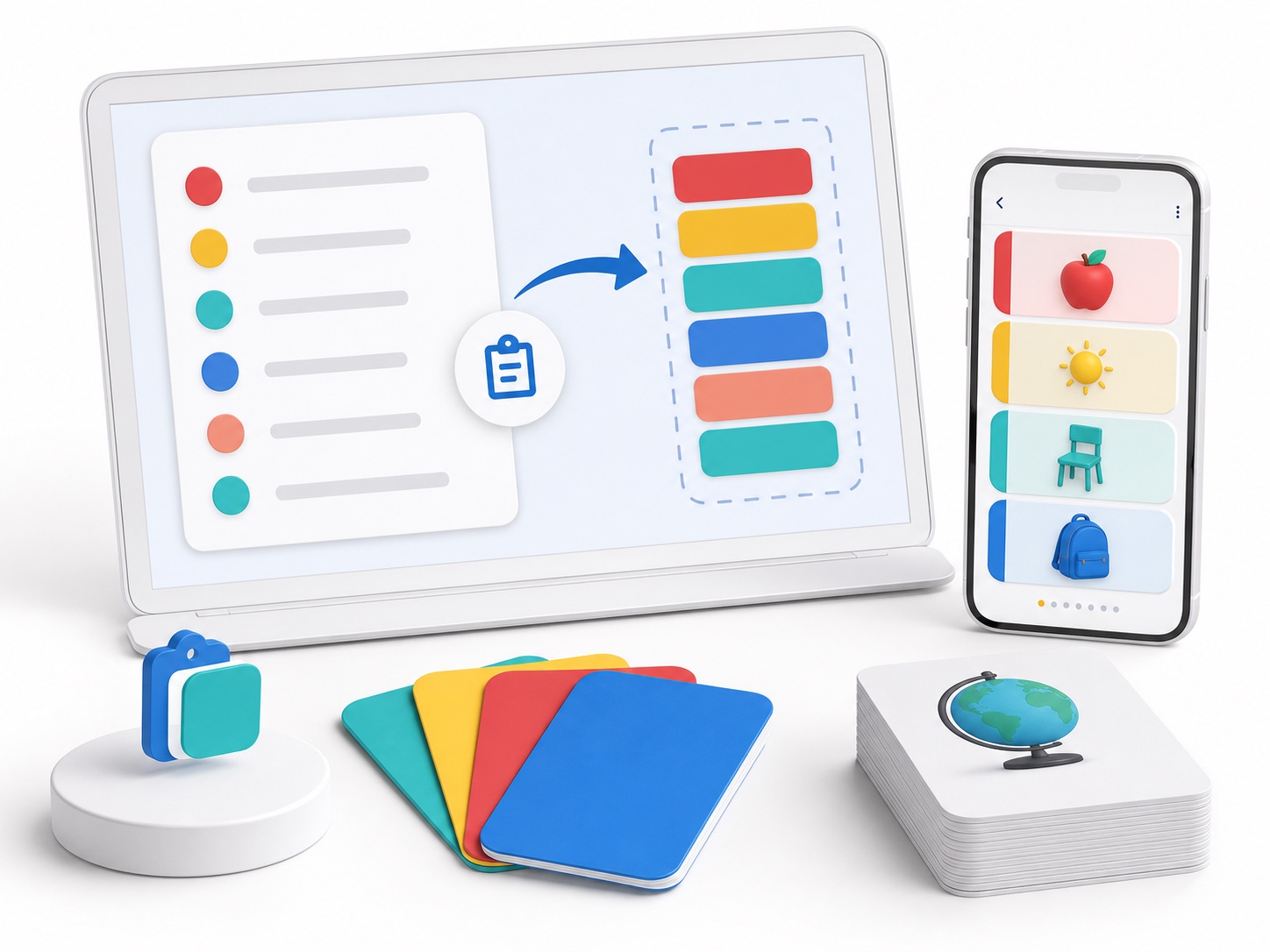
Practise Spanish relative pronouns in Hola Cards
Review 24 fixed examples with Spanish audio, writing, pronunciation, custom groups, and spaced review on iOS and Android.