Build an appearance vocabulary group
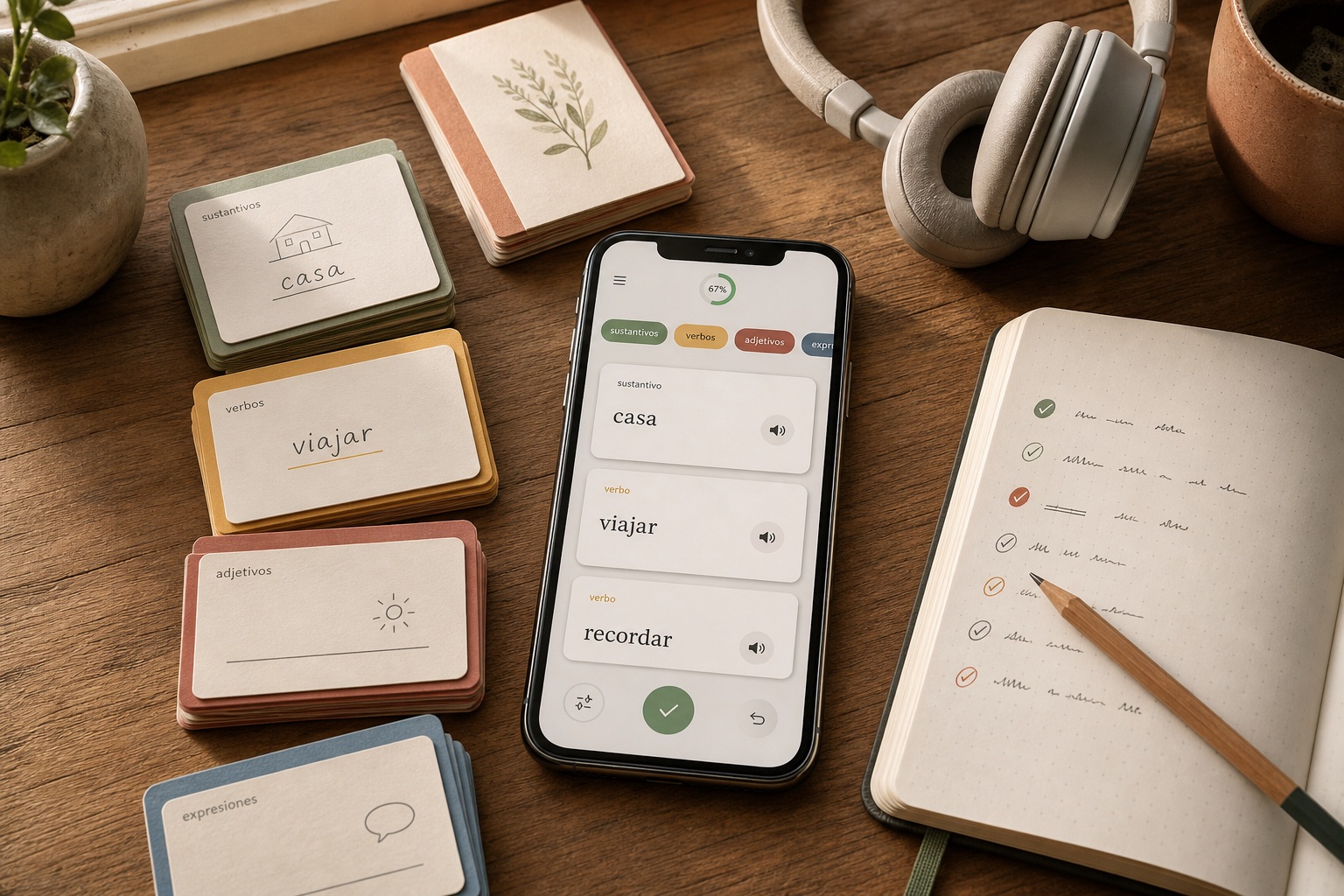
Import all 32 fixed pairs and practise them with Spanish audio and writing on iOS or Android. The full guide remains useful without the app.
physical appearance in Spanish
How do you describe someone in Spanish?
Use ser with adjectives for general physical characteristics: Marta es alta y atlética.
Use tener with body features: Tiene los ojos verdes and Tiene el pelo corto. Spanish normally includes the definite article with these nouns.
Use llevar for a style or accessory someone currently wears: Lleva gafas, barba or el pelo largo. Tener is also common for many of these features.
Three reliable description patterns
Ser + adjective: Es alto / alta, joven or fuerte. Agree endings with the person or people described.
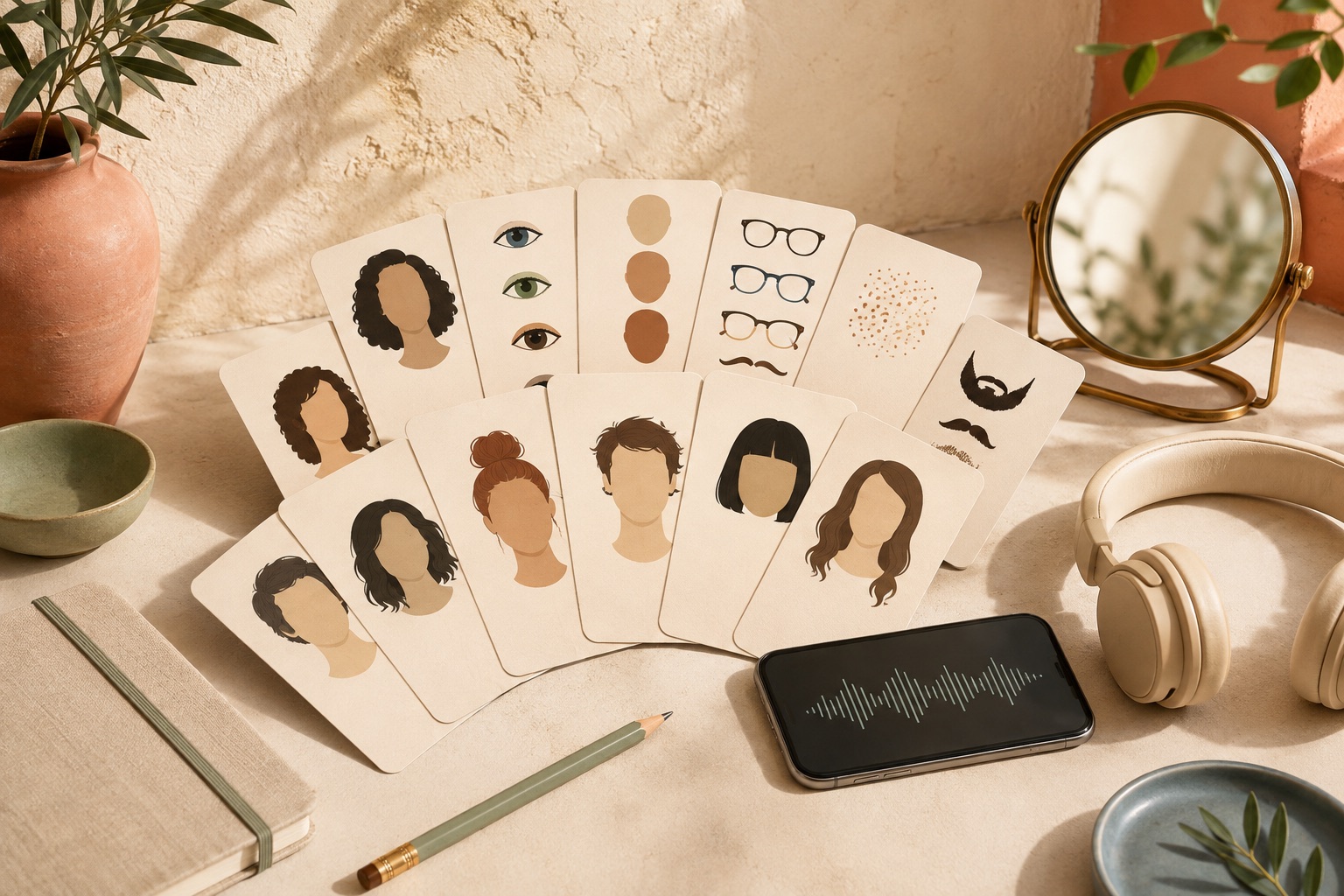
Tener + noun: Tiene el pelo rizado, los ojos marrones, pecas or bigote.
Llevar + style/accessory: Lleva gafas, barba or el pelo corto. This often presents the feature as a current look.
Keep descriptions neutral and relevant. Appearance does not establish character, health or nationality, and regional word choices vary.
32 physical appearance words in Spanish
Learn general build first, then move to hair, face and visible details.
| Spanish word or phrase | Meaning | Example in context | Usage tip |
|---|---|---|---|
| alto / alta | tall | Marta es alta y su hermano es alto. | Four regular forms: -o, -a, -os, -as. |
| bajo / baja | short | Raúl es bajo, pero su hijo es alto. | Four regular forms: -o, -a, -os, -as. |
| de estatura media | of average height | Soy de estatura media. | Use de + noun/adjective phrase after ser. |
| delgado / delgada | slim | La corredora es delgada y fuerte. | Four regular forms: -o, -a, -os, -as. |
| robusto / robusta | sturdily built | El portero es robusto y alto. | Four regular forms: -o, -a, -os, -as. |
| atlético / atlética | athletic | Nuria es atlética y entrena a diario. | Four regular forms: -o, -a, -os, -as. |
| fuerte | strong, solidly built | Mi abuelo sigue siendo fuerte. | Same singular form for both genders. |
| corpulento / corpulenta | large-framed | El actor es corpulento. | Four regular forms: -o, -a, -os, -as. |
| rubio / rubia | blond, blonde | Clara es rubia y tiene el pelo largo. | Four regular forms: -o, -a, -os, -as. |
| moreno / morena | dark-haired; context-dependent | Diego es moreno y tiene el pelo corto. | Meaning varies by region; choose a precise phrase when needed. |
| pelirrojo / pelirroja | red-haired | Mi nueva compañera es pelirroja. | Four regular forms: -o, -a, -os, -as. |
| canoso / canosa | grey-haired | El profesor es canoso. | Four regular forms: -o, -a, -os, -as. |
| calvo / calva | bald | Mi tío es calvo y lleva barba. | Four regular forms: -o, -a, -os, -as. |
| de pelo largo | long-haired | Ella es de pelo largo. | Use de + noun/adjective phrase after ser. |
| de pelo corto | short-haired | Él es de pelo corto. | Use de + noun/adjective phrase after ser. |
| de pelo liso | straight-haired | Ana es de pelo liso. | Use de + noun/adjective phrase after ser. |
| de pelo rizado | curly-haired | Leo es de pelo rizado. | Use de + noun/adjective phrase after ser. |
| de ojos azules | blue-eyed | La niña es de ojos azules. | Use de + noun/adjective phrase after ser. |
| de ojos marrones | brown-eyed | Su padre es de ojos marrones. | Use de + noun/adjective phrase after ser. |
| de ojos verdes | green-eyed | Inés es de ojos verdes. | Use de + noun/adjective phrase after ser. |
| de cara redonda | round-faced | Tomás es de cara redonda. | Use de + noun/adjective phrase after ser. |
| de cara alargada | long-faced | Paula es de cara alargada. | Use de + noun/adjective phrase after ser. |
| de piel clara | light-skinned | Es de piel clara y tiene pecas. | Use de + noun/adjective phrase after ser. |
| de piel oscura | dark-skinned | Es de piel oscura y ojos marrones. | Use de + noun/adjective phrase after ser. |
| con pecas | with freckles | La chica de la foto tiene pecas. | Use con, tener or llevar according to context. |
| con barba | with a beard | Busco al hombre con barba. | Use con, tener or llevar according to context. |
| con bigote | with a moustache | El camarero lleva bigote. | Use con, tener or llevar according to context. |
| con gafas | with glasses | La médica lleva gafas; también se dice lentes o anteojos en algunas regiones. | Meaning varies by region; choose a precise phrase when needed. |
| joven | young | El nuevo vecino es joven. | Same singular form for both genders. |
| de mediana edad | middle-aged | La directora es de mediana edad. | Use de + noun/adjective phrase after ser. |
| mayor | older | La señora mayor vive enfrente. | Same singular form for both genders. |
| parecido / parecida a | similar in appearance to | Sofía es parecida a su madre. | Four regular forms: -o, -a, -os, -as. |
Learn appearance vocabulary in four groups
Grouping the words by feature makes them easier to recall in a complete description.
Height and build
Use ser with neutral adjectives for general physical characteristics.
alto / alta · bajo / baja · de estatura media · delgado / delgada · robusto / robusta · atlético / atlética · fuerte · corpulento / corpulenta
Hair colour and style
Use tener or llevar with el pelo and a precise colour or style.
rubio / rubia · moreno / morena · pelirrojo / pelirroja · canoso / canosa · calvo / calva · de pelo largo · de pelo corto · de pelo liso · de pelo rizado
Eyes, face and complexion
Use tener with eyes and ser + de with face shape or complexion.
de ojos azules · de ojos marrones · de ojos verdes · de cara redonda · de cara alargada · de piel clara · de piel oscura
Visible details and age
Practise con, tener and llevar, keeping the description relevant and respectful.
con pecas · con barba · con bigote · con gafas · joven · de mediana edad · mayor · parecido / parecida a
How should you practise these descriptions?
Say both gender forms when they differ: alto, alta.
Build one sentence with ser, one with tener and one with llevar.
Change one sentence to the plural and make every adjective agree.
Hola Cards is a Spanish flashcard app from holacards.org for iOS and Android. It is free to download, requires no account and works offline; the free version may show ads, while Premium removes ads. The interface is available in 29 languages, including English, Russian, Portuguese and German, with 18 practice and game modes. The starter catalogue contains 71 Spanish entries across the Appearance and Traits category, and you can import these 32 fixed pairs into a custom group for audio, writing, pronunciation and review. Hola Cards does not identify a person, analyse a photo, judge attractiveness or correct a free-form description.
Connect appearance vocabulary with body parts, personality, adjective agreement, ser/estar and colours.
Body parts in Spanish Personality adjectives Adjective agreement Ser vs estar Colours in Spanish
A five-minute description routine
- Choose two words from each group.
- Say each item aloud and note any gender change.
- Write one sentence with ser and one with tener.
- Add a current style with llevar.
- Read the result again and remove any unnecessary judgement.
Vocabulary and grammar references
The A1–A2 physical-description inventory, verb patterns and agreement were checked against Instituto Cervantes and the RAE.
- Instituto Cervantes A1–A2 inventory: physical description
- Instituto Cervantes A1–A2 grammar: ser, tener and adjective agreement
- RAE grammar overview: adjective agreement
FAQ
How do you describe physical appearance in Spanish?
Use ser with adjectives, tener with hair, eyes and other features, and llevar for a current style or accessory.
Should I say es or tiene?
Say Es alta for an adjective, but Tiene el pelo largo or Tiene los ojos verdes for a noun phrase.
How do Spanish appearance adjectives agree?
Many ending in -o have four forms: alto, alta, altos, altas. Fuerte has one singular gender form and fuertes in the plural.
What is the difference between tener and llevar?
Tener presents a feature someone has. Llevar often presents a current style or accessory; both can be natural with hair, glasses or facial hair depending on context.
Does moreno mean dark-haired or dark-skinned?
It can refer to dark hair, complexion or tanning depending on region and context. Use pelo oscuro or piel oscura when precision matters.
Can Hola Cards analyse a photo or correct a full description?
No. It practises fixed vocabulary with audio, writing and review; it does not identify people, analyse photos or correct free-form sentences.
Copy the 32 descriptions into Hola Cards
Open word groups in Hola Cards, choose paste/import and paste the block. The app recognises the title and “Spanish - translation” lines.
**Physical appearance in Spanish: 32 descriptions**

alto / alta - tall
bajo / baja - short
de estatura media - of average height
delgado / delgada - slim
robusto / robusta - sturdily built
atlético / atlética - athletic
fuerte - strong, solidly built
corpulento / corpulenta - large-framed
rubio / rubia - blond, blonde
moreno / morena - dark-haired; context-dependent
pelirrojo / pelirroja - red-haired
canoso / canosa - grey-haired
calvo / calva - bald
de pelo largo - long-haired
de pelo corto - short-haired
de pelo liso - straight-haired
de pelo rizado - curly-haired
de ojos azules - blue-eyed
de ojos marrones - brown-eyed
de ojos verdes - green-eyed
de cara redonda - round-faced
de cara alargada - long-faced
de piel clara - light-skinned
de piel oscura - dark-skinned
con pecas - with freckles
con barba - with a beard
con bigote - with a moustache
con gafas - with glasses
joven - young
de mediana edad - middle-aged
mayor - older
parecido / parecida a - similar in appearance to
Review appearance vocabulary in Hola Cards
Practise these 32 fixed pairs with Spanish audio, writing, pronunciation, custom groups and review modes on iOS and Android.