body parts in Spanish
Which body parts in Spanish should a beginner learn first?
Learn the visible parts you use in daily instructions first: head and face, eyes and ears, arms and hands, torso, legs, and feet. Then add a few common internal parts such as el corazón, los pulmones, and el cerebro. These 50 words cover the vocabulary most useful for describing a person, following movement instructions, and saying where something hurts.
Memorise each noun with its article: la cabeza, el cuello, la mano, la rodilla. The article reveals gender, and it also prepares you for natural sentences such as Me duele la cabeza and Levanta el brazo.
Use the definite article when the owner is already clear
Spanish normally uses el, la, los, or las with body parts after reflexive verbs, indirect-object pronouns, and movement instructions: Me lavo las manos, Me duele la espalda, Cierra los ojos. English often uses my or your in the same situations.
Keep useful distinctions together: la oreja is the visible outer ear, while el oído is the hearing organ or sense; el dedo is a finger, and el dedo del pie is a toe. Pelo and cabello both mean hair, while cachete is a regional alternative to mejilla for cheek.
50 essential body parts in Spanish with examples
Each row includes the Spanish term, a natural translation, one short example, and a practical beginner note.
| Spanish | Translation | Example | Beginner note |
|---|---|---|---|
| el cuerpo | body | El cuerpo necesita descanso. | Core body word; learn it with the article. |
| la cabeza | head | Me duele la cabeza. | Core body word; learn it with the article. |
| la cara | face | Lávate la cara. | Core body word; learn it with the article. |
| el pelo / el cabello | hair | Tiene el pelo corto. | Pelo and cabello are both widely understood for hair. |
| la piel | skin | La piel protege el cuerpo. | Piel is feminine and usually appears with la. |
| el cuello | neck | Mueve el cuello despacio. | Core body word; learn it with the article. |
| la garganta | throat | Me duele la garganta. | Garganta is the throat; cuello is the neck on the outside. |
| la frente | forehead | Tiene una arruga en la frente. | Core body word; learn it with the article. |
| la mejilla / el cachete | cheek | Tiene un lunar en la mejilla. | Mejilla is neutral; cachete is common in parts of Latin America. |
| la barbilla / el mentón | chin | Se toca la barbilla. | Barbilla and mentón both mean chin; preference varies by region. |
| el ojo | eye | Cierra los ojos. | A visible facial feature or sense word; learn the singular and plural. |
| la ceja | eyebrow | Levanta una ceja. | A visible facial feature or sense word; learn the singular and plural. |
| la pestaña | eyelash | Tiene las pestañas largas. | A visible facial feature or sense word; learn the singular and plural. |
| la oreja | outer ear | Lleva un pendiente en la oreja. | Oreja is the visible outer ear. |
| el oído | ear; hearing | No oigo bien por el oído derecho. | Oído is the hearing organ or sense, not only the visible ear. |
| la nariz | nose | Respira por la nariz. | A visible facial feature or sense word; learn the singular and plural. |
| la boca | mouth | Abre la boca. | A visible facial feature or sense word; learn the singular and plural. |
| el labio | lip | Tiene el labio seco. | A visible facial feature or sense word; learn the singular and plural. |
| el diente | tooth | Me cepillo los dientes. | Diente is one tooth; dientes is the usual plural in daily routines. |
| la lengua | tongue | Saca la lengua. | A visible facial feature or sense word; learn the singular and plural. |
| el hombro | shoulder | Me duele el hombro. | Core body word; learn it with the article. |
| el brazo | arm | Levanta los brazos. | Brazo is the arm; mano is the hand. |
| el codo | elbow | Dobla el codo. | A joint used in common movement instructions. |
| la muñeca | wrist | Lleva un reloj en la muñeca. | A joint used in common movement instructions. |
| la mano | hand | Lávate las manos. | Mano is feminine despite ending in -o: la mano. |
| el dedo | finger | Señala con el dedo. | Dedo usually means a finger unless del pie is added. |
| el pulgar | thumb | Pulsa el botón con el pulgar. | Pulgar is the thumb; dedo gordo is also heard informally. |
| la uña | nail | Me corto las uñas. | Uña can be a fingernail or toenail; context decides. |
| el pecho | chest | Respira y abre el pecho. | Common external part of the torso; learn it with movement or posture. |
| la espalda | back | Mantén la espalda recta. | Common external part of the torso; learn it with movement or posture. |
| el abdomen | abdomen | El abdomen está tenso. | Common external part of the torso; learn it with movement or posture. |
| el estómago | stomach | El estómago digiere la comida. | Common internal body word useful in basic descriptions. |
| la barriga / el vientre | belly; abdomen | Me duele la barriga. | Barriga is everyday; vientre is more formal or anatomical. |
| la cintura | waist | Gira la cintura. | Common external part of the torso; learn it with movement or posture. |
| la cadera | hip | Pon las manos en las caderas. | Common external part of the torso; learn it with movement or posture. |
| el corazón | heart | El corazón late rápido. | Common internal body word useful in basic descriptions. |
| los pulmones | lungs | Los pulmones necesitan aire. | Common internal body word useful in basic descriptions. |
| el cerebro | brain | El cerebro controla el cuerpo. | Common internal body word useful in basic descriptions. |
| el hueso | bone | Tengo un hueso roto. | Basic anatomy word often used with injury, movement, or exercise. |
| el músculo | muscle | Los músculos necesitan descanso. | Basic anatomy word often used with injury, movement, or exercise. |
| la pierna | leg | Dobla la pierna. | A lower-body word useful in movement and exercise instructions. |
| el muslo | thigh | Me duele el muslo. | A lower-body word useful in movement and exercise instructions. |
| la rodilla | knee | Dobla las rodillas. | A joint used in common movement instructions. |
| la pantorrilla | calf | La pantorrilla está tensa. | A lower-body word useful in movement and exercise instructions. |
| la espinilla | shin | Me golpeé la espinilla. | A lower-body word useful in movement and exercise instructions. |
| el tobillo | ankle | Mueve el tobillo. | A joint used in common movement instructions. |
| el pie | foot | Apoya los pies en el suelo. | Pie is the whole foot; do not confuse it with pierna, the leg. |
| el talón | heel | El talón toca el suelo. | Pie is the whole foot; do not confuse it with pierna, the leg. |
| la planta del pie | sole of the foot | Me pica la planta del pie. | Pie is the whole foot; do not confuse it with pierna, the leg. |
| el dedo del pie | toe | Me duele un dedo del pie. | Spanish says “finger of the foot”: dedo del pie. |
Study Spanish body vocabulary in five groups
Ten terms per group create a simple head-to-toe route instead of one long anatomy list.
Body, head, and face
Core words for the body, head, face, hair, skin, neck, throat, forehead, cheek, and chin.
el cuerpo · la cabeza · la cara · el pelo / el cabello · la piel · el cuello · la garganta · la frente · la mejilla / el cachete · la barbilla / el mentón
Eyes, ears, nose, and mouth
Facial details and sense words, including the useful oreja versus oído distinction.
el ojo · la ceja · la pestaña · la oreja · el oído · la nariz · la boca · el labio · el diente · la lengua
Upper body and hands
Shoulders, arms, joints, hands, fingers, nails, chest, and back.
el hombro · el brazo · el codo · la muñeca · la mano · el dedo · el pulgar · la uña · el pecho · la espalda
Torso and internal parts
Abdomen, stomach, waist, hips, heart, lungs, brain, bones, and muscles.
el abdomen · el estómago · la barriga / el vientre · la cintura · la cadera · el corazón · los pulmones · el cerebro · el hueso · el músculo
Legs and feet
Thighs, knees, calves, shins, ankles, feet, heels, soles, and toes.
la pierna · el muslo · la rodilla · la pantorrilla · la espinilla · el tobillo · el pie · el talón · la planta del pie · el dedo del pie
Describe pain, movement, and daily routines naturally
Use doler with an indirect-object pronoun: Me duele la cabeza for one painful part and Me duelen las piernas for several. Tengo dolor en la espalda is another useful neutral pattern for saying where pain is located.
Movement instructions often use an imperative plus the definite article: Levanta los brazos, Dobla la rodilla, Abre la boca. Daily routines follow the same article pattern: Me lavo la cara and Me cepillo los dientes.
Learn regional alternatives for recognition, but choose one active form for speaking. Pelo and cabello are widely understood; mejilla is neutral for cheek, while cachete is frequent in parts of Latin America.
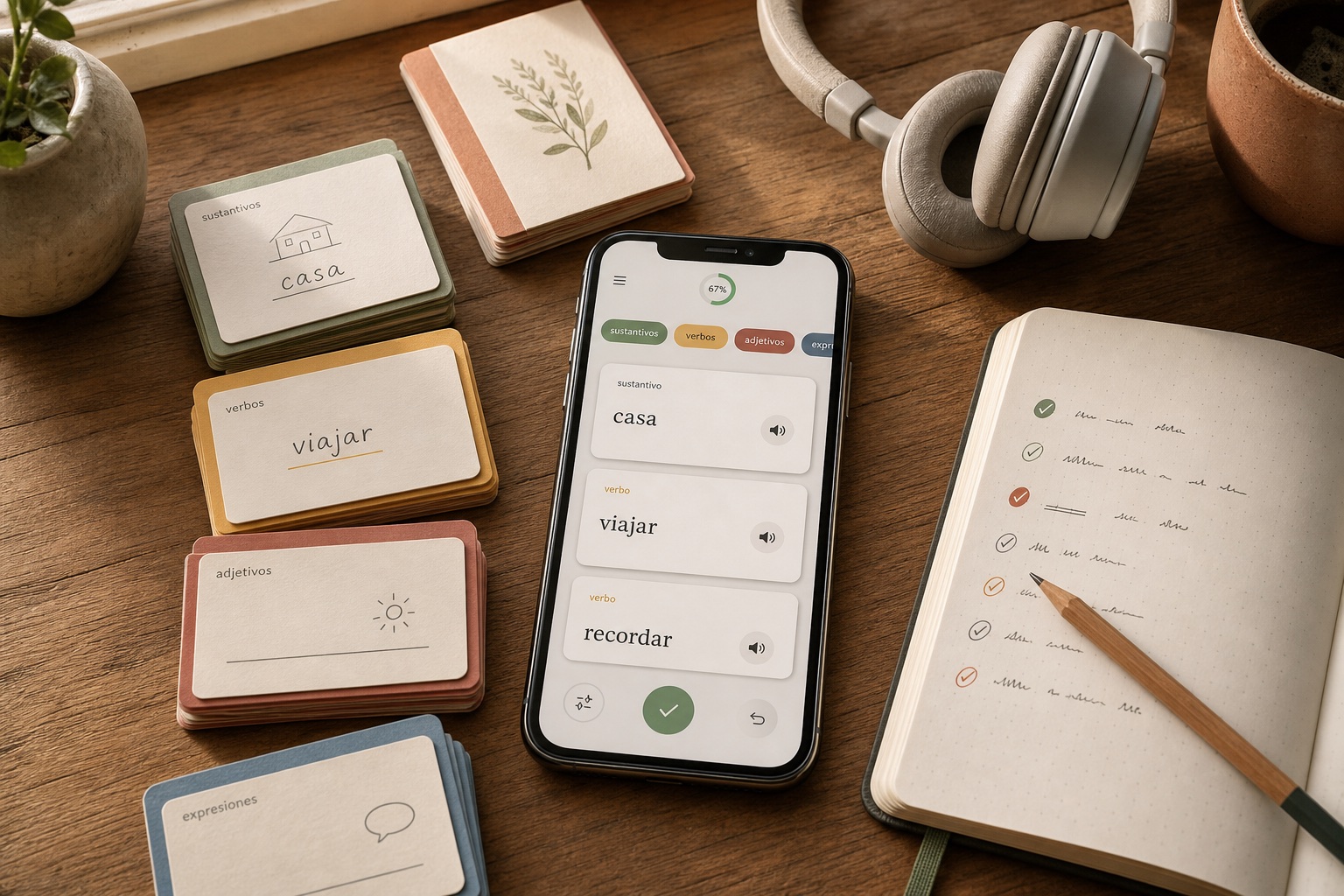
Hola Cards is a Spanish flashcard app from holacards.org for iOS and Android. It is free to download, requires no account, may show ads in the free version, while Premium removes ads, works offline, offers an interface available in 29 languages, including English, Russian, Portuguese and German, and supports card translations in 29 languages, including English, Russian, Portuguese and German. Beginners can practise with audio, writing, pronunciation, custom groups, spaced review, and 18 practice and game modes.
Connect body words with clothing, pronunciation, tener phrases, family descriptions, and common beginner verbs.
Spanish clothing vocabulary Spanish pronunciation for beginners Tener phrases for beginners Spanish family vocabulary Spanish verbs for beginners
How to learn the 50 body-part words in five steps
- Choose one ten-word group and read every Spanish term aloud with its article.
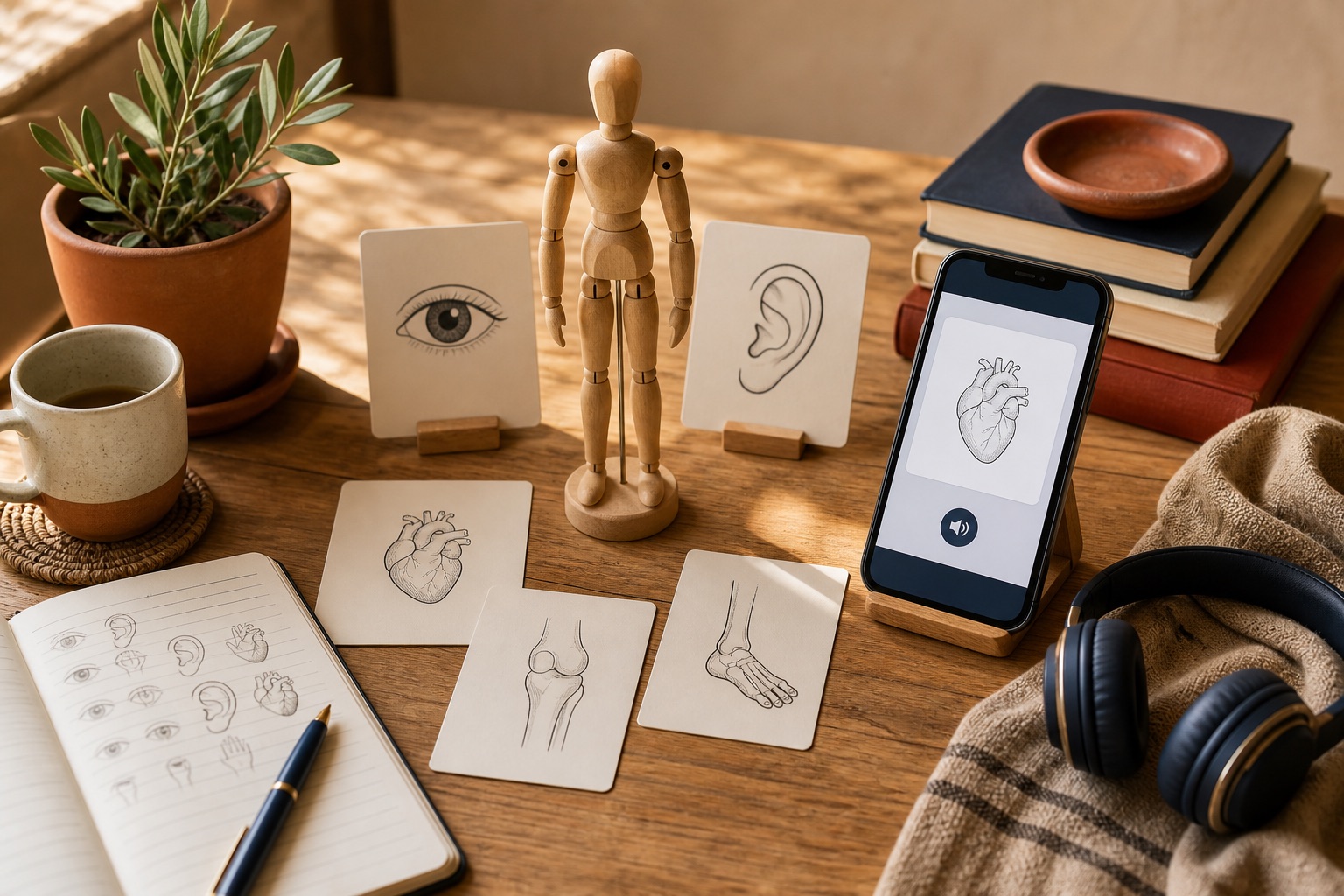
- Point to the matching part on yourself, a picture, or a wooden figure while saying the word.
- Add one short action such as abre, cierra, levanta, dobla, or mueve.
- Practise one routine sentence and one pain sentence with the natural definite article.
- Review the full 50-word group in Hola Cards with audio, writing, pronunciation, and spaced repetition.
FAQ
How do you say body and body parts in Spanish?
Body is el cuerpo. A body part is la parte del cuerpo, and body parts are las partes del cuerpo.
Why is it Me duele la cabeza instead of mi cabeza?
When the owner is clear from me, te, le, nos, or a reflexive pronoun, Spanish normally uses the definite article with the body part: Me duele la cabeza; Me lavo las manos.
What is the difference between oreja and oído?
La oreja is the visible outer ear. El oído is the hearing organ or the sense of hearing, as in Tengo buen oído.
How do you distinguish fingers and toes in Spanish?
El dedo usually means finger. A toe is el dedo del pie; use dedos de los pies for toes.
Copy all 50 Spanish body-part words into Hola Cards
Open word groups in Hola Cards, choose paste/import, and paste this block. The app can read the title and the “Spanish - translation” lines.
**Body parts in Spanish: 50 words**

el cuerpo - body
la cabeza - head
la cara - face
el pelo / el cabello - hair
la piel - skin
el cuello - neck
la garganta - throat
la frente - forehead
la mejilla / el cachete - cheek
la barbilla / el mentón - chin
el ojo - eye
la ceja - eyebrow
la pestaña - eyelash
la oreja - outer ear
el oído - ear; hearing
la nariz - nose
la boca - mouth
el labio - lip
el diente - tooth
la lengua - tongue
el hombro - shoulder
el brazo - arm
el codo - elbow
la muñeca - wrist
la mano - hand
el dedo - finger
el pulgar - thumb
la uña - nail
el pecho - chest
la espalda - back
el abdomen - abdomen
el estómago - stomach
la barriga / el vientre - belly; abdomen
la cintura - waist
la cadera - hip
el corazón - heart
los pulmones - lungs
el cerebro - brain
el hueso - bone
el músculo - muscle
la pierna - leg
el muslo - thigh
la rodilla - knee
la pantorrilla - calf
la espinilla - shin
el tobillo - ankle
el pie - foot
el talón - heel
la planta del pie - sole of the foot
el dedo del pie - toe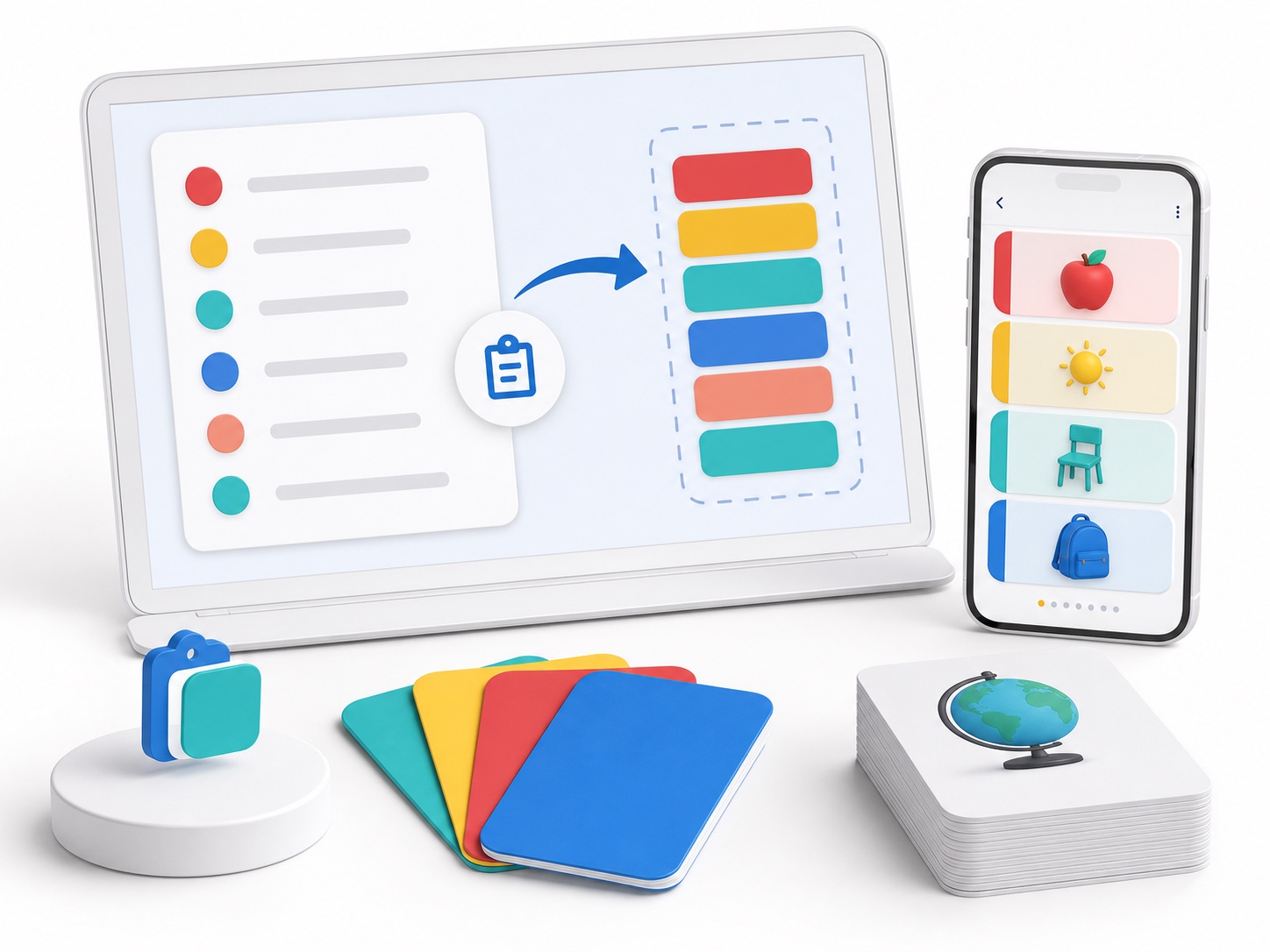
Practise Spanish body vocabulary in Hola Cards
Hola Cards turns these 50 body-part words into flashcards with audio, writing, pronunciation practice, custom groups, and spaced review on iOS and Android.