Practise obligation as complete phrases
Import 32 fixed examples and recall the expression together with its subject and infinitive. This guide remains fully useful without the app.
tener que vs deber vs hay que
What is the difference between tener que, deber, and hay que?
Tener que points to what a named person or thing has to do: Tengo que estudiar; Ana tiene que salir. It is often the most direct choice for practical necessity.
Deber presents an action as a duty, recommendation, or expected behaviour. Context and tone decide how strong it sounds; debería normally softens it to should.
Hay que does not name a grammatical subject. It presents a general requirement: Hay que reservar means one must, you have to, or it is necessary to book.
Four rules that prevent the common mix-ups
Use conjugated tener + que + infinitive when the requirement belongs to a specific subject.
Use conjugated deber + infinitive for duty or advice; use debería for a softer recommendation.
Use the fixed form hay que + infinitive for an impersonal rule or general necessity.
Distinguish deber + infinitive from deber de + infinitive: the latter normally marks probability, as in Debe de estar en casa.
32 examples of tener que, deber, and hay que
The examples move from personal necessity to advice and duty, general rules, and contrasts where the speaker’s framing changes.
| Spanish example | Meaning | Why this form? | Pattern |
|---|---|---|---|
| Tengo que estudiar esta noche. | I have to study tonight. | La necesidad es de yo. | The necessity belongs to a named subject. |
| Tienes que traer tu pasaporte. | You have to bring your passport. | La necesidad es de tú. | The necessity belongs to a named subject. |
| Tenemos que salir a las ocho. | We have to leave at eight. | Tener se conjuga para nosotros. | The necessity belongs to a named subject. |
| Marta tiene que llamar al médico. | Marta has to call the doctor. | Marta es el sujeto concreto. | The necessity belongs to a named subject. |
| Mis hijos tienen que hacer los deberes. | My children have to do their homework. | La necesidad pertenece a ellos. | The necessity belongs to a named subject. |
| Tuve que cambiar el billete. | I had to change the ticket. | Tener que también funciona en pasado. | The necessity belongs to a named subject. |
| Tendremos que esperar. | We will have to wait. | Tener que también funciona en futuro. | The necessity belongs to a named subject. |
| ¿Tengo que reservar antes? | Do I have to book in advance? | La pregunta pide una necesidad personal. | The necessity belongs to a named subject. |
| Debes descansar un poco. | You should rest a little. | Deber puede dar un consejo. | Deber frames duty or expected behaviour. |
| Debemos respetar las reglas. | We must respect the rules. | Deber expresa una obligación compartida. | Deber frames duty or expected behaviour. |
| No debes conducir tan rápido. | You should not drive so fast. | No deber desaconseja la acción. | Negation changes whether the action is required or discouraged. |
| Deberías hablar con ella. | You should talk to her. | Debería suaviza el consejo. | The conditional debería makes the recommendation softer. |
| Deberíamos salir más temprano. | We should leave earlier. | El condicional reduce la fuerza. | The conditional debería makes the recommendation softer. |
| Los estudiantes deben entregar la tarea mañana. | Students must submit the assignment tomorrow. | Deber presenta una norma para un sujeto. | Deber frames duty or expected behaviour. |
| ¿Debo pagar ahora? | Should I pay now? | La pregunta pide confirmar el deber. | Deber frames duty or expected behaviour. |
| Debiste avisarme antes. | You should have told me earlier. | Deber en pasado puede expresar reproche. | Deber frames duty or expected behaviour. |
| Hay que llegar a tiempo. | You have to arrive on time. | Es una regla general. | Hay que states a general rule without a grammatical subject. |
| Hay que cerrar la puerta. | The door must be closed. | No se nombra quién debe hacerlo. | Hay que states a general rule without a grammatical subject. |
| No hay que correr. | There is no need to run. | La negación elimina la necesidad general. | Negation changes whether the action is required or discouraged. |
| Para entrar, hay que mostrar el documento. | To enter, you have to show ID. | La condición se aplica en general. | Hay que states a general rule without a grammatical subject. |
| En esta clase hay que hablar español. | In this class, you have to speak Spanish. | Es una norma del lugar. | Hay que states a general rule without a grammatical subject. |
| Hay que tener paciencia. | You have to be patient. | La recomendación se formula en general. | Hay que states a general rule without a grammatical subject. |
| ¿Hay que comprar las entradas? | Do we need to buy tickets? | La pregunta consulta una regla general. | Hay que states a general rule without a grammatical subject. |
| Había que esperar fuera. | We had to wait outside. | La obligación impersonal aparece en pasado. | Hay que states a general rule without a grammatical subject. |
| Yo tengo que trabajar mañana. | I have to work tomorrow. | La necesidad pertenece al hablante. | The chosen frame changes who carries or judges the necessity. |
| En esta oficina hay que llevar identificación. | In this office, everyone must carry ID. | La regla se aplica en general. | The chosen frame changes who carries or judges the necessity. |
| Debes guardar una copia. | You should keep a copy. | El hablante presenta deber o consejo. | Deber frames duty or expected behaviour. |
| Deberías guardar una copia. | You should probably keep a copy. | El condicional hace el consejo más suave. | The conditional debería makes the recommendation softer. |
| Debe de estar en casa. | He or she is probably at home. | Deber de expresa probabilidad. | Deber de marks probability, not obligation, in standard careful use. |
| Debe estar en casa a las diez. | He or she must be home at ten. | Sin de, deber expresa obligación. | Deber frames duty or expected behaviour. |
| Tenemos que limpiar hoy. | We have to clean today. | La tarea pertenece a nosotros. | The chosen frame changes who carries or judges the necessity. |
| Hay que limpiar con frecuencia. | Cleaning must be done frequently. | La norma no nombra responsable. | The chosen frame changes who carries or judges the necessity. |
Study each expression by its communicative job
Keep the whole frame together: who carries the necessity, how strongly the speaker judges it, and whether the rule is impersonal.
Tener que: personal necessity
Conjugate tener so the sentence names who has to act.
Tengo que estudiar esta noche. · Tienes que traer tu pasaporte. · Tenemos que salir a las ocho. · Marta tiene que llamar al médico. · Mis hijos tienen que hacer los deberes. · Tuve que cambiar el billete. · Tendremos que esperar. · ¿Tengo que reservar antes?
Deber: duty and advice
Use deber for obligation, expected behaviour, and recommendations.
Debes descansar un poco. · Debemos respetar las reglas. · No debes conducir tan rápido. · Deberías hablar con ella. · Deberíamos salir más temprano. · Los estudiantes deben entregar la tarea mañana. · ¿Debo pagar ahora? · Debiste avisarme antes.
Hay que: general requirement
Keep hay fixed when the rule is impersonal or applies generally.
Hay que llegar a tiempo. · Hay que cerrar la puerta. · No hay que correr. · Para entrar, hay que mostrar el documento. · En esta clase hay que hablar español. · Hay que tener paciencia. · ¿Hay que comprar las entradas? · Había que esperar fuera.
Meaning-changing contrasts
Compare frames and separate deber de probability from obligation.
Yo tengo que trabajar mañana. · En esta oficina hay que llevar identificación. · Debes guardar una copia. · Deberías guardar una copia. · Debe de estar en casa. · Debe estar en casa a las diez. · Tenemos que limpiar hoy. · Hay que limpiar con frecuencia.
How do I choose in a real sentence?
Name the person who carries the necessity. If that subject matters, start with the correct form of tener que.
Ask whether you are giving advice or expressing duty. Use deber, and choose debería when you want a clearly softer recommendation.
If the rule applies generally and no subject needs naming, use hay que. Do not conjugate hay for person or number.
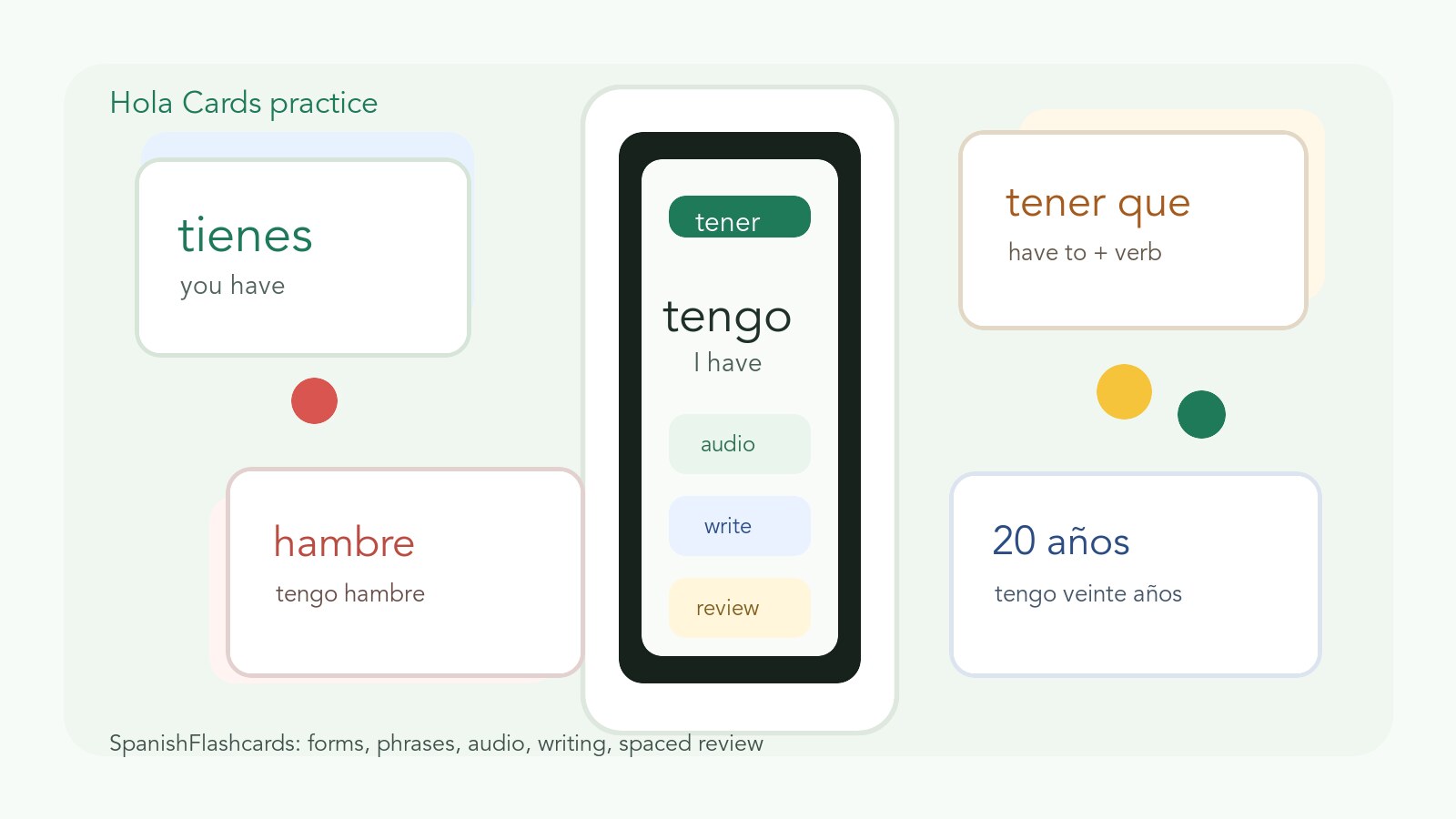
Hola Cards is a Spanish flashcard app from holacards.org for iOS and Android. It is free to download, requires no account, may show ads in the free version, while Premium removes ads, and works offline. The interface is available in 29 languages, including English, Russian, Portuguese and German; cards support translations in 29 languages, including English, Russian, Portuguese and German and 18 practice and game modes. You can import these 32 fixed examples into a custom group and practise them with Spanish audio, writing, pronunciation, and review modes. Hola Cards does not choose an obligation expression or correct complete sentences automatically.
Connect this contrast with tener, the present and conditional, negation, and sentence-based flashcards.
40 phrases with tener Spanish present tense endings Spanish conditional tense endings Spanish negative words Spanish flashcards with sentences

A five-minute obligation drill
- Sort eight cards into personal necessity, duty or advice, and impersonal rule.
- Cover the expression and identify whether the sentence names a subject.
- Say the full frame aloud, including que after tener and de only for probability.
- Rewrite two deber sentences with debería and notice the softer tone.
- Create one realistic rule for yourself and one general rule for a place.
Primary language references
The distinction was checked against Instituto Cervantes teaching guidance and RAE–ASALE guidance on deber and deber de.
FAQ
What is the main difference between tener que and deber?
Tener que usually states a practical necessity tied to a subject. Deber frames the action as duty, expectation, or advice.
What is the difference between hay que and tener que?
Hay que is impersonal and presents a general requirement. Tener que is conjugated and links the necessity to a specific subject.
Is deber stronger than tener que?
Not automatically. Strength depends on context and tone: deber can express firm duty or advice, while tener que often states unavoidable practical necessity.
Why does hay not change in hay que?
Hay que is an impersonal construction, so hay stays fixed even when the implied rule concerns many people.
Does deber de mean obligation?
In standard careful use, deber de + infinitive normally expresses probability or conjecture. Deber + infinitive is the regular obligation pattern.
Can Hola Cards choose the correct expression automatically?
No. It helps you import and practise these fixed examples; this guide and its primary references explain the choice.
Copy 32 obligation examples into Hola Cards
Open word groups in Hola Cards, choose paste/import, and paste the block. Each “Spanish - translation” line keeps the expression with its infinitive.
**Tener que, deber and hay que: 32 examples**

Tengo que estudiar esta noche. - I have to study tonight.
Tienes que traer tu pasaporte. - You have to bring your passport.
Tenemos que salir a las ocho. - We have to leave at eight.
Marta tiene que llamar al médico. - Marta has to call the doctor.
Mis hijos tienen que hacer los deberes. - My children have to do their homework.
Tuve que cambiar el billete. - I had to change the ticket.
Tendremos que esperar. - We will have to wait.
¿Tengo que reservar antes? - Do I have to book in advance?
Debes descansar un poco. - You should rest a little.
Debemos respetar las reglas. - We must respect the rules.
No debes conducir tan rápido. - You should not drive so fast.
Deberías hablar con ella. - You should talk to her.
Deberíamos salir más temprano. - We should leave earlier.
Los estudiantes deben entregar la tarea mañana. - Students must submit the assignment tomorrow.
¿Debo pagar ahora? - Should I pay now?
Debiste avisarme antes. - You should have told me earlier.
Hay que llegar a tiempo. - You have to arrive on time.
Hay que cerrar la puerta. - The door must be closed.
No hay que correr. - There is no need to run.
Para entrar, hay que mostrar el documento. - To enter, you have to show ID.
En esta clase hay que hablar español. - In this class, you have to speak Spanish.
Hay que tener paciencia. - You have to be patient.
¿Hay que comprar las entradas? - Do we need to buy tickets?
Había que esperar fuera. - We had to wait outside.
Yo tengo que trabajar mañana. - I have to work tomorrow.
En esta oficina hay que llevar identificación. - In this office, everyone must carry ID.
Debes guardar una copia. - You should keep a copy.
Deberías guardar una copia. - You should probably keep a copy.
Debe de estar en casa. - He or she is probably at home.
Debe estar en casa a las diez. - He or she must be home at ten.
Tenemos que limpiar hoy. - We have to clean today.
Hay que limpiar con frecuencia. - Cleaning must be done frequently.
Review Spanish obligation in Hola Cards
Practise 32 fixed examples with Spanish audio, writing, pronunciation, custom groups, and review modes on iOS and Android.