Remember each conditional ending inside a complete sentence
Import the 32 examples and practise them with Spanish audio and writing on iOS or Android. The grammar guide remains complete without the app.
Spanish conditional tense endings
What are the Spanish conditional tense endings?
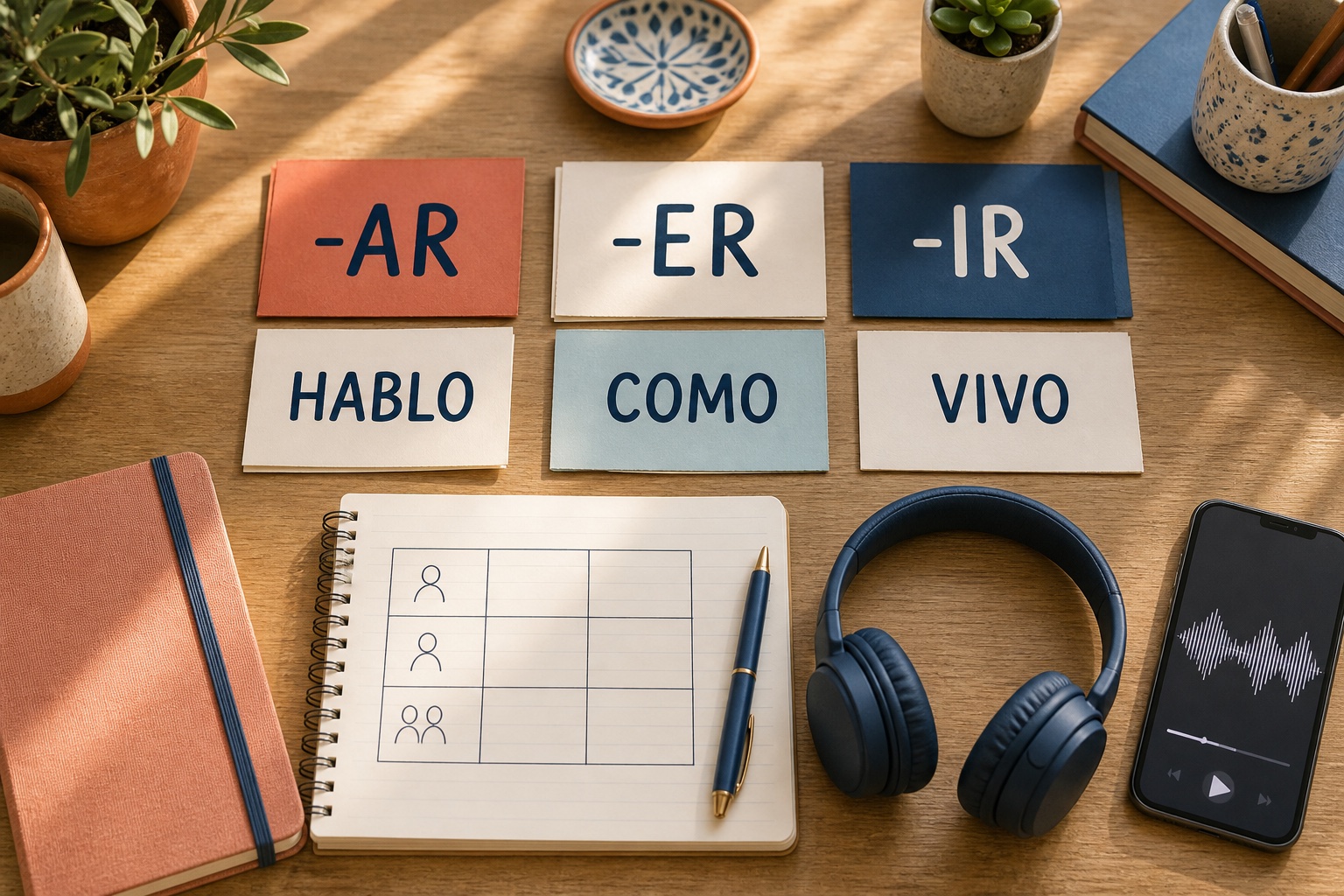
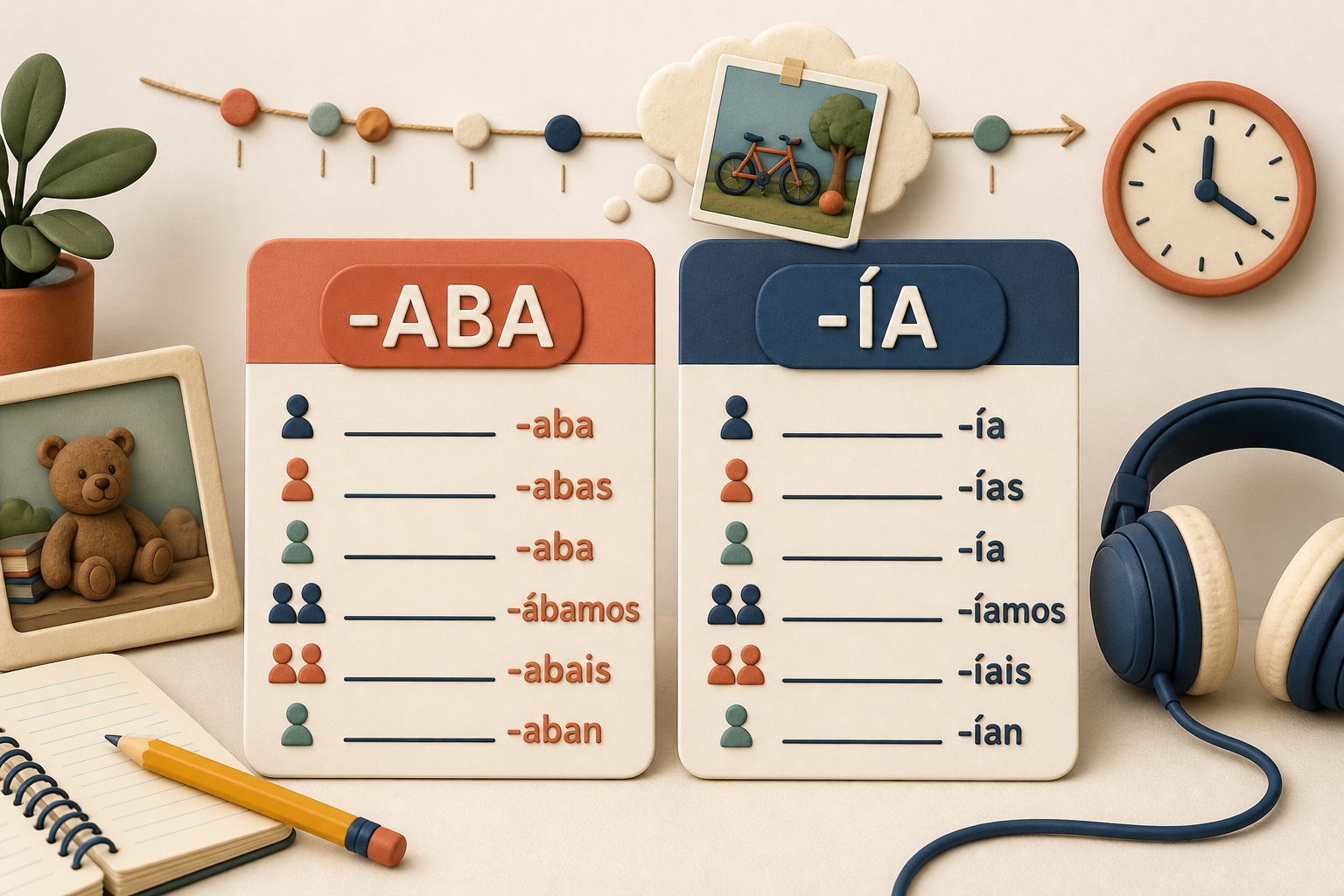
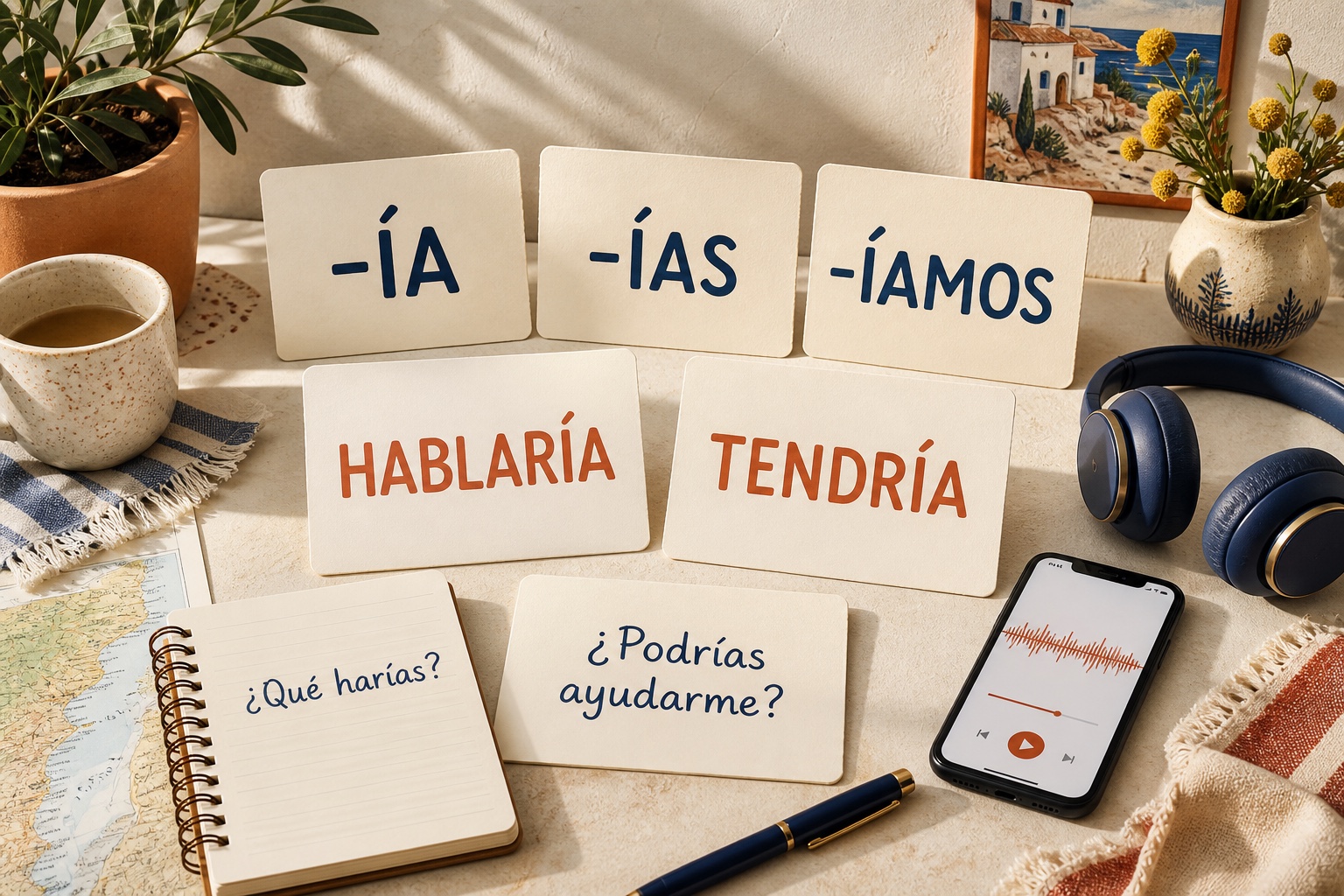
Keep the whole infinitive and add -ía, -ías, -ía, -íamos, -íais or -ían. Hablar gives hablaría; comer gives comerías; vivir gives vivirían. One chart works for -ar, -er and -ir verbs.
Every conditional ending carries a written accent on í. Yo and él/ella/usted share -ía; context and the subject identify the person. Vosotros is used mainly in Spain, while ustedes uses the third-person plural ending -ían.
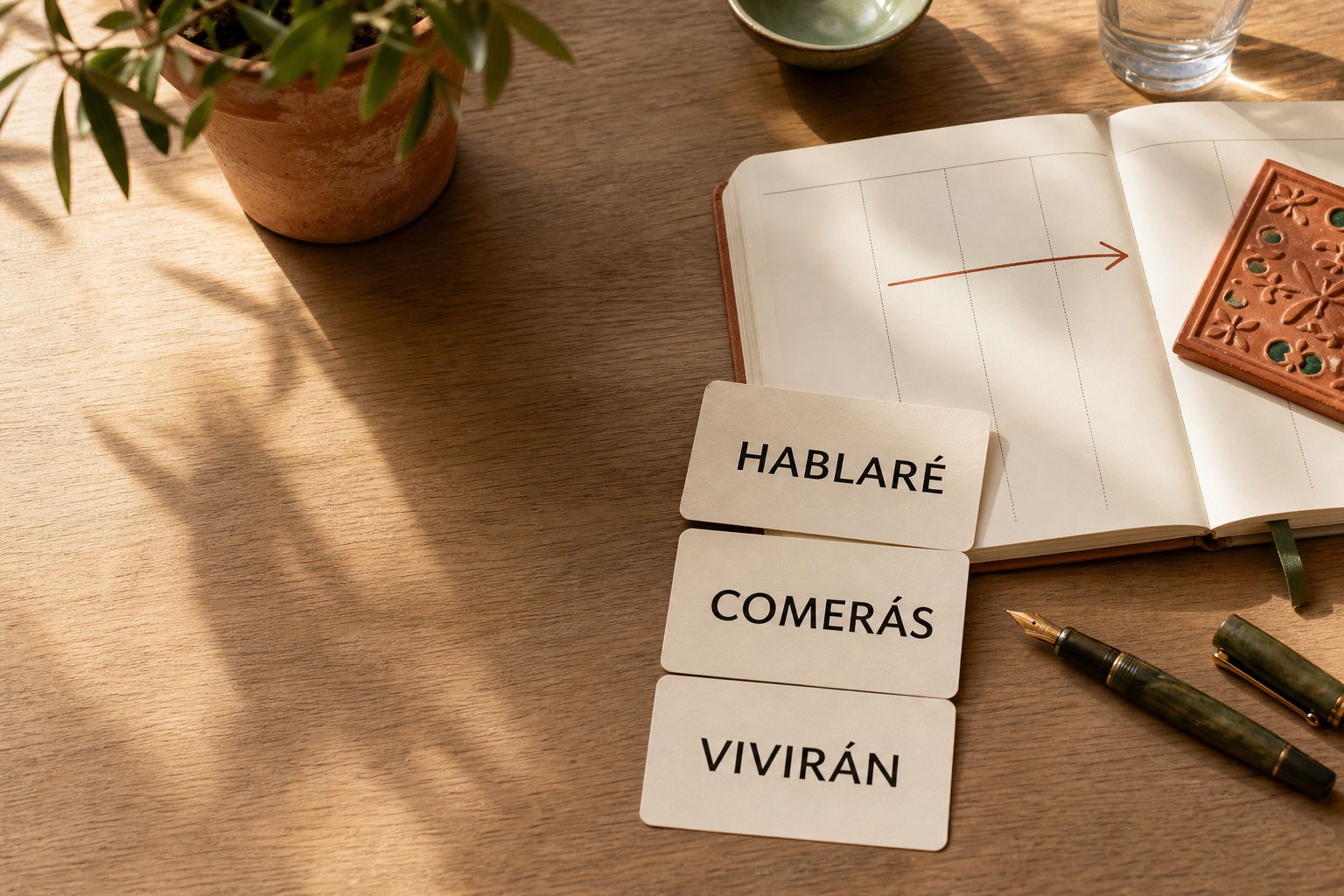
The frequent irregular stems match the simple future: tener → tendr-, poder → podr-, hacer → har-, decir → dir-, salir → saldr-, venir → vendr-, poner → pondr-, saber → sabr-, querer → querr- and haber → habr-.
Form the simple conditional in three steps
Start with the complete infinitive; do not remove -ar, -er or -ir.
Use the regular infinitive or, for an irregular verb, its future/conditional stem.
Add -ía, -ías, -ía, -íamos, -íais or -ían to match the subject.
32 Spanish simple-conditional examples
The examples cover all six persons, three infinitive groups, frequent irregular stems, polite requests, advice, hypotheses and future-in-the-past.
| Spanish sentence | Meaning | Example in context | Why this form? |
|---|---|---|---|
| Hablaría contigo después de clase. | I would speak with you after class. | La forma de yo conserva el infinitivo. | Yo uses the complete infinitive plus -ía. |
| Estudiarías más con un horario. | You would study more with a schedule. | La forma de tú termina en -ías. | Tú uses -ías. |
| María trabajaría desde casa. | María would work from home. | La tercera persona termina en -ía. | Él/ella/usted uses -ía. |
| Viajaríamos juntos en verano. | We would travel together in summer. | Nosotros añade -íamos al infinitivo. | Nosotros uses -íamos. |
| Compraríais los billetes antes. | You all would buy the tickets earlier. | Vosotros usa -íais. | Vosotros uses -íais, mainly in Spain. |
| Llegarían antes con un taxi. | They would arrive earlier by taxi. | La tercera persona plural termina en -ían. | Ellos/ustedes uses -ían. |
| Comería algo ligero. | I would eat something light. | Los verbos en -er mantienen el infinitivo. | Yo uses the complete infinitive plus -ía. |
| Beberías más agua aquí. | You would drink more water here. | -Er recibe el mismo final -ías. | Tú uses -ías. |
| Viviría cerca del mar. | She would live near the sea. | -Ir recibe el mismo final -ía. | Él/ella/usted uses -ía. |
| Aprenderíamos más con ejemplos. | We would learn more with examples. | -Er usa -íamos con nosotros. | Nosotros uses -íamos. |
| Escribiríais la respuesta completa. | You all would write the complete answer. | -Ir usa -íais con vosotros. | Vosotros uses -íais, mainly in Spain. |
| Abrirían la tienda los domingos. | They would open the shop on Sundays. | -Ir usa -ían con ellos. | Ellos/ustedes uses -ían. |
| Tendría más tiempo el viernes. | I would have more time on Friday. | Tener cambia a tendr-. | The irregular future/conditional stem keeps a regular conditional ending. |
| Podrías venir conmigo. | You could come with me. | Poder cambia a podr-. | The irregular future/conditional stem keeps a regular conditional ending. |
| Haría la cena esta noche. | I would make dinner tonight. | Hacer cambia a har-. | The irregular future/conditional stem keeps a regular conditional ending. |
| Diríamos la verdad. | We would tell the truth. | Decir cambia a dir-. | The irregular future/conditional stem keeps a regular conditional ending. |
| Saldríais después de comer. | You all would leave after lunch. | Salir cambia a saldr-. | The irregular future/conditional stem keeps a regular conditional ending. |
| Vendrían en tren. | They would come by train. | Venir cambia a vendr-. | The irregular future/conditional stem keeps a regular conditional ending. |
| Pondría las llaves aquí. | I would put the keys here. | Poner cambia a pondr-. | The irregular future/conditional stem keeps a regular conditional ending. |
| Sabríamos el resultado mañana. | We would know the result tomorrow. | Saber cambia a sabr-. | The irregular future/conditional stem keeps a regular conditional ending. |
| Querrían descansar al llegar. | They would want to rest on arrival. | Querer cambia a querr-. | The irregular future/conditional stem keeps a regular conditional ending. |
| Habría una reunión el lunes. | There would be a meeting on Monday. | Haber cambia a habr-; hay pasa a habría. | The irregular future/conditional stem keeps a regular conditional ending. |
| ¿Podrías ayudarme un momento? | Could you help me for a moment? | La pregunta cortés evita una orden directa. | The conditional softens a request or question. |
| ¿Querría usted sentarse aquí? | Would you like to sit here? | La forma de usted suaviza la invitación. | The conditional softens a request or question. |
| Yo estudiaría un poco cada día. | I would study a little every day. | Presenta una recomendación personal. | The conditional presents advice without a direct command. |
| Deberías descansar esta tarde. | You should rest this afternoon. | Deber en condicional expresa consejo. | The conditional presents advice without a direct command. |
| Dijo que llamaría por la noche. | He said he would call in the evening. | La llamada era futura desde el momento de dijo. | The action was future from a past viewpoint. |
| Pensábamos que llegarían temprano. | We thought they would arrive early. | La llegada era posterior a un pensamiento pasado. | The action was future from a past viewpoint. |
| Con más tiempo, leería el libro. | With more time, I would read the book. | Presenta un resultado imaginado sin oración con si. | The conditional gives an imagined result. |
| En tu lugar, hablaría con Ana. | In your place, I would speak with Ana. | La situación imaginada introduce un consejo. | The conditional presents advice without a direct command. |
| Si tuviera tiempo, viajaría más. | If I had time, I would travel more. | Tuviera va con si; viajaría expresa el resultado. | The si clause uses the imperfect subjunctive; the result uses the conditional. |
| Si pudiéramos, viviríamos cerca del mar. | If we could, we would live near the sea. | Pudiéramos va con si; viviríamos expresa el resultado. | The si clause uses the imperfect subjunctive; the result uses the conditional. |
Learn the conditional in four blocks
Begin with the shared chart, then learn irregular stems, useful meanings and the key si-clause contrast.
One ending set for every verb
Keep the full infinitive and practise all six persons across -ar, -er and -ir.
Hablaría contigo después de clase. · Estudiarías más con un horario. · María trabajaría desde casa. · Viajaríamos juntos en verano. · Compraríais los billetes antes. · Llegarían antes con un taxi. · Comería algo ligero. · Beberías más agua aquí. · Viviría cerca del mar. · Aprenderíamos más con ejemplos. · Escribiríais la respuesta completa. · Abrirían la tienda los domingos.
Irregular conditional stems
Reuse the future stem, then attach the regular conditional endings.
Tendría más tiempo el viernes. · Podrías venir conmigo. · Haría la cena esta noche. · Diríamos la verdad. · Saldríais después de comer. · Vendrían en tren. · Pondría las llaves aquí. · Sabríamos el resultado mañana. · Querrían descansar al llegar. · Habría una reunión el lunes.
Requests, advice and future in the past
Use complete sentences to connect the form with a real communicative job.
¿Podrías ayudarme un momento? · ¿Querría usted sentarse aquí? · Yo estudiaría un poco cada día. · Deberías descansar esta tarde. · Dijo que llamaría por la noche. · Pensábamos que llegarían temprano.
Hypothetical results with si
Keep imperfect subjunctive in the si clause and conditional in the result.
Con más tiempo, leería el libro. · En tu lugar, hablaría con Ana. · Si tuviera tiempo, viajaría más. · Si pudiéramos, viviríamos cerca del mar.
When should you use the simple conditional?
Use it for polite requests and softened questions: ¿Podrías ayudarme? and ¿Querría usted sentarse? sound less direct than an imperative.
Use it for advice, imagined results and future-in-the-past: Yo estudiaría más; Con tiempo, viajaríamos; Dijo que llamaría.
In a hypothetical si sentence, the result uses the conditional but the si clause normally uses the imperfect subjunctive: Si tuviera tiempo, viajaría. Do not write si tendría in this pattern.
Hola Cards is a Spanish flashcard app from holacards.org for iOS and Android. It is free to download, requires no account, may show ads in the free version, while Premium removes ads, and works offline. The interface is available in 29 languages, including English, Russian, Portuguese and German; cards support translations in 29 languages, including English, Russian, Portuguese and German and 18 practice and game modes. You can import these fixed sentences into a custom group for Spanish audio, writing, pronunciation, and spaced review. Hola Cards does not conjugate verbs or decide when the conditional is appropriate, so build and check each form with this guide first.
Connect the conditional with future endings, imperfect forms, poder, querer and subject pronouns.
Future-tense endings Imperfect-tense endings Poder phrases Querer phrases Subject pronouns
A five-minute conditional routine
- Write the six endings from memory and circle every accented í.
- Add them to hablar, comer and vivir without removing the infinitive ending.
- Write five irregular future/conditional stems and attach the same endings.
- Turn three direct requests into polite conditional questions.
- Complete four si tuviera… results and hear the full sentences again.
Grammar references
The forms and uses were checked against primary RAE–ASALE and Instituto Cervantes sources.
- RAE–ASALE: Spanish conjugation models
- Instituto Cervantes B1–B2: simple conditional forms and uses
- Instituto Cervantes B1: advice and suggestions with the conditional
FAQ
What are the Spanish conditional endings?
They are -ía, -ías, -ía, -íamos, -íais and -ían. Add them to the full infinitive: hablaría, comerías, vivirían.
Do -ar, -er and -ir verbs use different conditional endings?
No. All three groups use the same six endings.
Which conditional endings have written accents?
All six forms have an accent on í.
What are the main irregular conditional stems?
Frequent stems include tendr-, podr-, har-, dir-, saldr-, vendr-, pondr-, sabr-, querr- and habr-. They still take the regular conditional endings.
Why is it si tuviera tiempo, viajaría?
A hypothetical si clause normally uses the imperfect subjunctive, while its result uses the conditional. Si tendría is not the standard pattern here.
Does Hola Cards conjugate verbs automatically?
No. You can import and practise these fixed examples; this page explains how to build and check each conditional form.
Copy the 32 conditional examples into Hola Cards
Open word groups in Hola Cards, choose paste/import, and paste the block. The app recognises the title and “Spanish - translation” lines.
**Spanish conditional: 32 examples**

Hablaría contigo después de clase. - I would speak with you after class.
Estudiarías más con un horario. - You would study more with a schedule.
María trabajaría desde casa. - María would work from home.
Viajaríamos juntos en verano. - We would travel together in summer.
Compraríais los billetes antes. - You all would buy the tickets earlier.
Llegarían antes con un taxi. - They would arrive earlier by taxi.
Comería algo ligero. - I would eat something light.
Beberías más agua aquí. - You would drink more water here.
Viviría cerca del mar. - She would live near the sea.
Aprenderíamos más con ejemplos. - We would learn more with examples.
Escribiríais la respuesta completa. - You all would write the complete answer.
Abrirían la tienda los domingos. - They would open the shop on Sundays.
Tendría más tiempo el viernes. - I would have more time on Friday.
Podrías venir conmigo. - You could come with me.
Haría la cena esta noche. - I would make dinner tonight.
Diríamos la verdad. - We would tell the truth.
Saldríais después de comer. - You all would leave after lunch.
Vendrían en tren. - They would come by train.
Pondría las llaves aquí. - I would put the keys here.
Sabríamos el resultado mañana. - We would know the result tomorrow.
Querrían descansar al llegar. - They would want to rest on arrival.
Habría una reunión el lunes. - There would be a meeting on Monday.
¿Podrías ayudarme un momento? - Could you help me for a moment?
¿Querría usted sentarse aquí? - Would you like to sit here?
Yo estudiaría un poco cada día. - I would study a little every day.
Deberías descansar esta tarde. - You should rest this afternoon.
Dijo que llamaría por la noche. - He said he would call in the evening.
Pensábamos que llegarían temprano. - We thought they would arrive early.
Con más tiempo, leería el libro. - With more time, I would read the book.
En tu lugar, hablaría con Ana. - In your place, I would speak with Ana.
Si tuviera tiempo, viajaría más. - If I had time, I would travel more.
Si pudiéramos, viviríamos cerca del mar. - If we could, we would live near the sea.
Review Spanish conditional forms in Hola Cards
Practise the 32 examples with Spanish audio, writing, pronunciation, custom groups, and spaced review on iOS and Android.