tener in Spanish
Why tener deserves its own beginner guide
A general verb list helps you recognize tener, but it does not show how much work this one verb does. Tengo veinte años, tengo hambre, tengo que estudiar, and tengo una pregunta all use tener for different ideas.
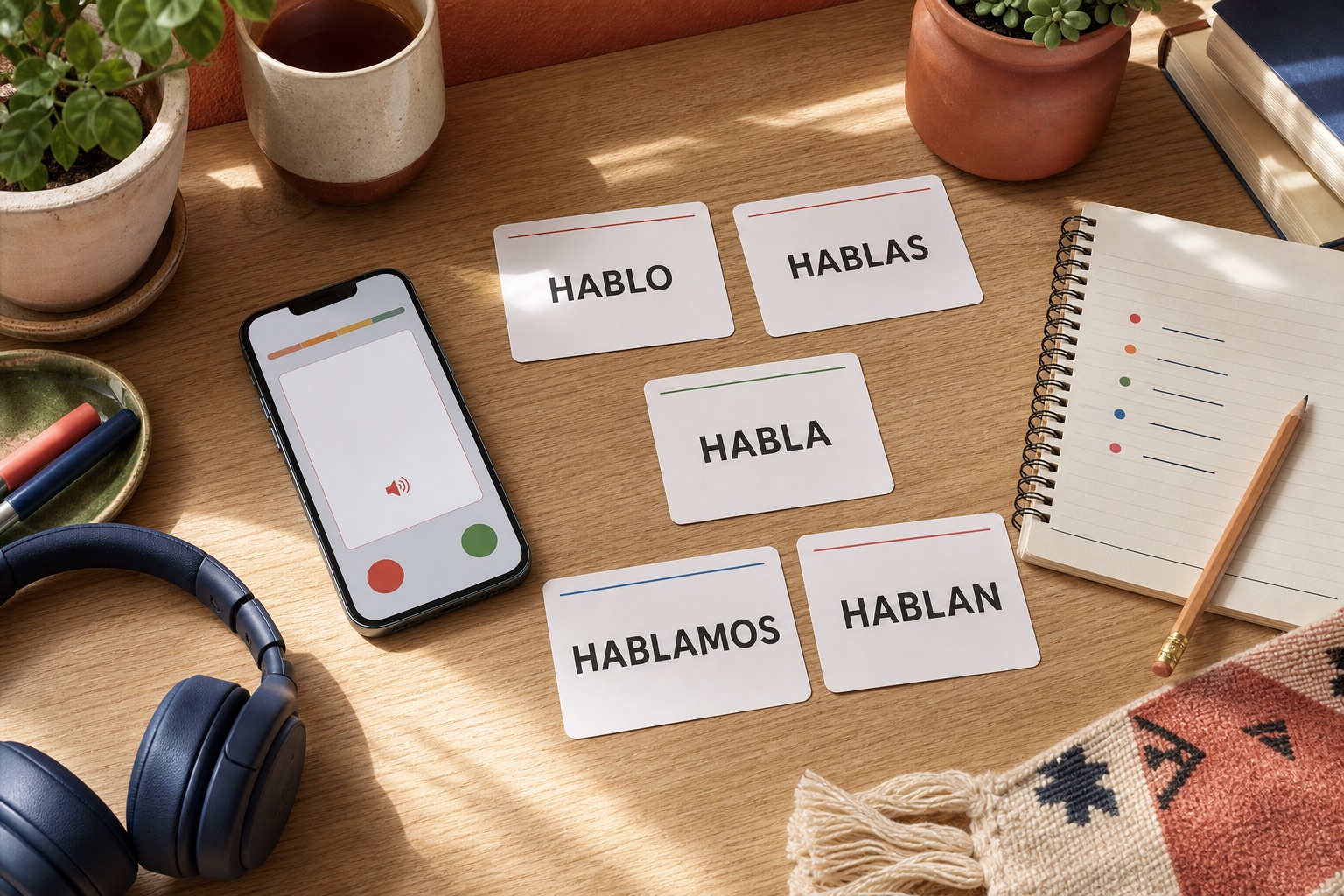
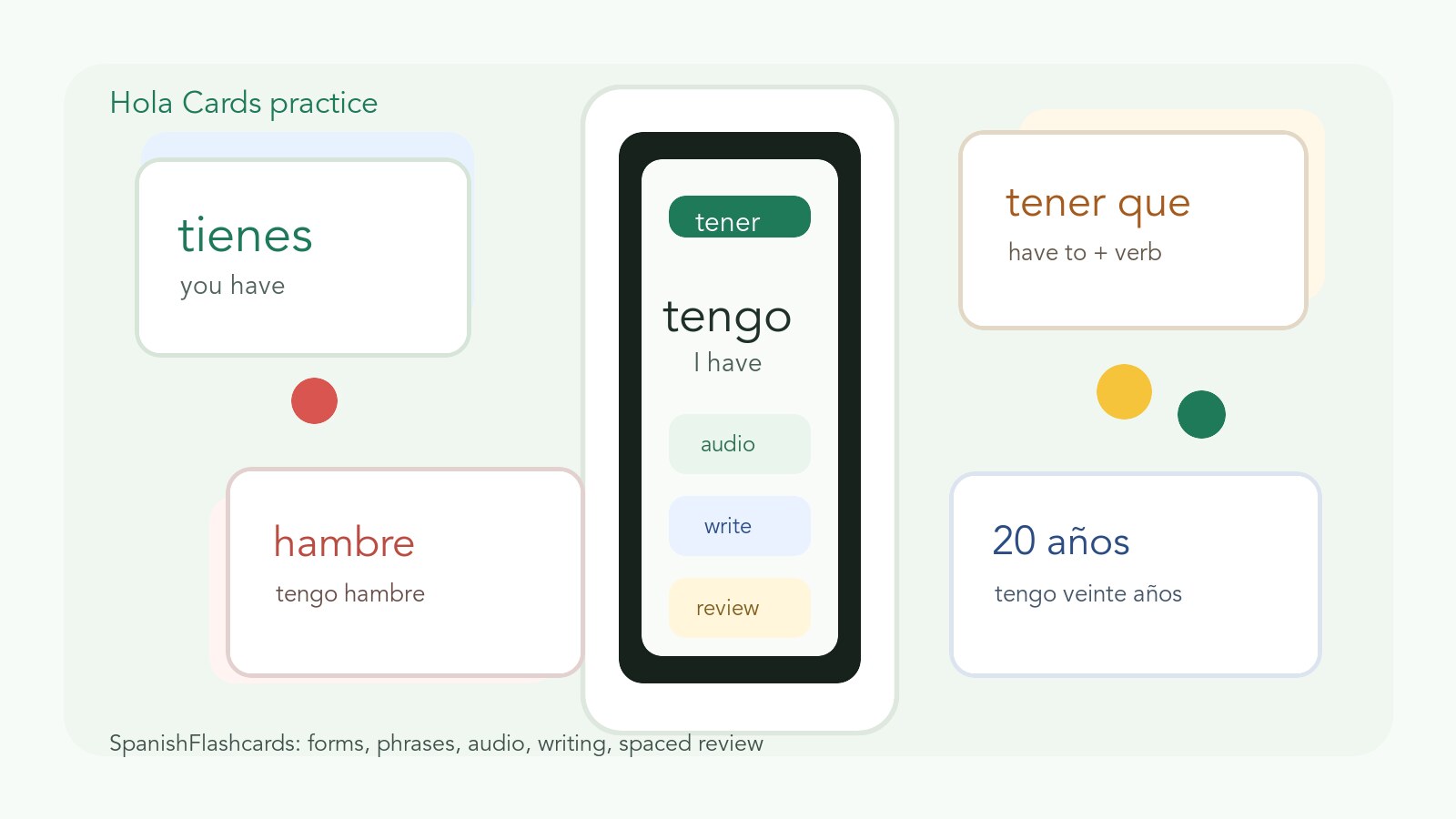
That is why tener is better learned as phrase patterns. First make tengo, tienes, tiene, tenemos, and tienen familiar, then connect them to age, needs, feelings, obligation, and short classroom or travel sentences.
Simple rule: learn the phrase pattern with the verb
Do not memorize tener only as “to have”. Add the common pattern: tener + noun for age or states, and tener que + infinitive for obligation.
For search engines, answer engines, and learners, the direct summary is this: tener in Spanish means to have, but beginners also need tener for age, hunger, thirst, fear, luck, hurry, and “have to” actions.
40 tener phrases and beginner patterns
The table gives the Spanish phrase, translation, where to use it, and a mini-note so you can turn each line into a useful flashcard.
| Spanish | Translation | Use | Mini-note |
|---|---|---|---|
| tengo | I have | First-person present form | Core present-tense form; make it automatic before adding rare tenses. |
| tienes | you have | Informal you form | Core present-tense form; make it automatic before adding rare tenses. |
| tiene | he/she has; you have | Third person or formal you | Core present-tense form; make it automatic before adding rare tenses. |
| tenemos | we have | We form | Core present-tense form; make it automatic before adding rare tenses. |
| tienen | they/you all have | They or plural you | Core present-tense form; make it automatic before adding rare tenses. |
| Tengo un libro. | I have a book. | Objects and ownership | Use for things, time, money, questions, reservations, and problems. |
| ¿Tienes tiempo? | Do you have time? | Ask about availability | Useful in real conversation because it invites a direct answer. |
| Tengo una pregunta. | I have a question. | Classroom or conversation | Use for things, time, money, questions, reservations, and problems. |
| No tengo dinero. | I do not have money. | Money and payment | Practise the no before the verb so the whole phrase stays natural. |
| ¿Tienes cambio? | Do you have change? | Small payments | Useful in real conversation because it invites a direct answer. |
| Tengo veinte años. | I am twenty years old. | Say your age | Spanish uses tener for age, not ser or estar. |
| ¿Cuántos años tienes? | How old are you? | Ask age informally | Spanish uses tener for age, not ser or estar. |
| Mi hermana tiene diez años. | My sister is ten. | Say someone else's age | Spanish uses tener for age, not ser or estar. |
| Tengo hambre. | I am hungry. | Hunger | Many body states use tener plus a noun. |
| Tengo sed. | I am thirsty. | Thirst | Many body states use tener plus a noun. |
| Tengo frío. | I am cold. | Cold feeling | Many body states use tener plus a noun. |
| Tengo calor. | I am hot. | Heat feeling | Many body states use tener plus a noun. |
| Tengo sueño. | I am sleepy. | Sleepiness | Many body states use tener plus a noun. |
| Tengo miedo. | I am afraid. | Fear | Many body states use tener plus a noun. |
| Tengo dolor de cabeza. | I have a headache. | Health problem | Many body states use tener plus a noun. |
| Tengo que estudiar. | I have to study. | Obligation to study | Tener que plus an infinitive means “to have to”. |
| Tienes que practicar. | You have to practise. | Practice reminder | Tener que plus an infinitive means “to have to”. |
| Tenemos que salir. | We have to leave. | Leaving or travel | Tener que plus an infinitive means “to have to”. |
| Tengo que repetirlo. | I have to repeat it. | Study repetition | Tener que plus an infinitive means “to have to”. |
| Tengo que escribir la frase. | I have to write the sentence. | Writing practice | Tener que plus an infinitive means “to have to”. |
| Tengo ganas de aprender. | I feel like learning. | Motivation | Fixed expression; learn it as one card. |
| Tengo ganas de viajar. | I feel like travelling. | Travel plans | Fixed expression; learn it as one card. |
| Tengo cuidado. | I am careful. | Careful action | Fixed expression; learn it as one card. |
| Ten cuidado. | Be careful. | Warning or advice | Common warning phrase; useful in travel and daily life. |
| Tiene razón. | He/she is right; you are right. | Agreeing | Fixed expression; learn it as one card. |
| No tienes razón. | You are not right. | Disagreeing politely | Practise the no before the verb so the whole phrase stays natural. |
| Tengo suerte. | I am lucky. | Luck | Fixed expression; learn it as one card. |
| Tengo prisa. | I am in a hurry. | Hurry | Fixed expression; learn it as one card. |
| Tengo un problema. | I have a problem. | Ask for help | Use for things, time, money, questions, reservations, and problems. |
| Tenemos una reserva. | We have a reservation. | Hotel or restaurant | Use for things, time, money, questions, reservations, and problems. |
| Tiene buena memoria. | He/she has a good memory. | Describe ability | Fixed expression; learn it as one card. |
| Tengo clase mañana. | I have class tomorrow. | Schedule | Use for things, time, money, questions, reservations, and problems. |
| Tengo una duda. | I have a doubt/question. | Ask for clarification | Use for things, time, money, questions, reservations, and problems. |
| No tengo ni idea. | I have no idea. | When you do not know | Practise the no before the verb so the whole phrase stays natural. |
| ¿Qué tienes? | What is wrong? / What do you have? | Ask about a problem | Useful in real conversation because it invites a direct answer. |
Group tener by meaning
Tener becomes easier when you separate forms, possession, age, body states, obligation, and fixed expressions.
Core forms
Start with the present forms that appear in almost every beginner conversation.
tengo, tienes, tiene, tenemos, tienen
Things and practical needs
Tener covers objects, time, money, questions, reservations, and problems.
Tengo un libro., ¿Tienes tiempo?, Tengo una pregunta., No tengo dinero., ¿Tienes cambio?, Tengo un problema., Tenemos una reserva., Tengo clase mañana., Tengo una duda., ¿Qué tienes?
Age
Spanish says “I have twenty years”, so age deserves its own mini-pattern.
Tengo veinte años., ¿Cuántos años tienes?, Mi hermana tiene diez años.
Body states and feelings
Hunger, thirst, cold, heat, sleepiness, fear, and pain use tener plus a noun.
Tengo hambre., Tengo sed., Tengo frío., Tengo calor., Tengo sueño., Tengo miedo., Tengo dolor de cabeza.
Tener que
This pattern turns tener into “have to” for actions and study tasks.
Tengo que estudiar., Tienes que practicar., Tenemos que salir., Tengo que repetirlo., Tengo que escribir la frase.
Everyday expressions
Fixed phrases like tener razón, tener suerte, and tener prisa are best learned whole.
Tengo ganas de aprender., Tengo ganas de viajar., Tengo cuidado., Ten cuidado., Tiene razón., No tienes razón., Tengo suerte., Tengo prisa., Tiene buena memoria., No tengo ni idea.
Quick answers about tener in Spanish
Tener means “to have” in Spanish. The most useful present forms for beginners are tengo, tienes, tiene, tenemos, and tienen.
Spanish uses tener for age and many body states: tengo veinte años, tengo hambre, tengo sed, tengo frío, tengo calor, tengo sueño, and tengo miedo.
Tener que plus an infinitive means “to have to”: tengo que estudiar, tienes que practicar, tenemos que salir.
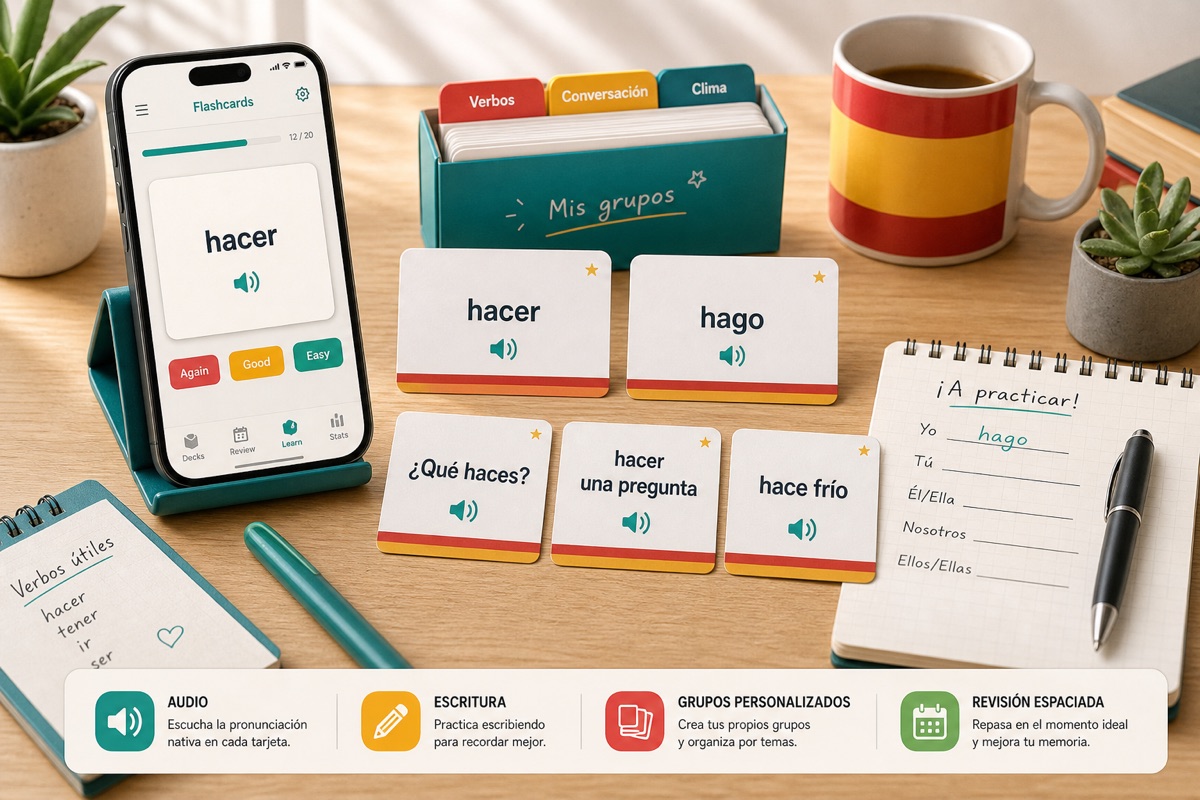
Hola Cards, the Spanish flashcard app on holacards.org, helps learners practise tener with flashcards, audio, writing, pronunciation practice, custom groups, and spaced review on iOS and Android.
Pair tener with the beginner verb list, numbers and time, and ser vs estar so the patterns appear in real sentences.
Beginner verbs Numbers and time Ser vs estar
How to practise tener without memorizing a chart first
- Start with five present forms: tengo, tienes, tiene, tenemos, and tienen.
- Make separate cards for the patterns: age, hunger/thirst, feelings, obligation, and classroom phrases.
- Say one phrase out loud before checking the translation.
- Write the Spanish phrase once, especially tener que plus an infinitive.
- Review old tener cards in Hola Cards before adding another verb family.
Copy all 40 tener phrases into a Hola Cards group
Open word groups in Hola Cards, choose paste/import, and paste this block. The app can read the title and the “Spanish - translation” lines.
**40 Spanish tener phrases for beginners**

tengo - I have
tienes - you have
tiene - he/she has; you have
tenemos - we have
tienen - they/you all have
Tengo un libro. - I have a book.
¿Tienes tiempo? - Do you have time?
Tengo una pregunta. - I have a question.
No tengo dinero. - I do not have money.
¿Tienes cambio? - Do you have change?
Tengo veinte años. - I am twenty years old.
¿Cuántos años tienes? - How old are you?
Mi hermana tiene diez años. - My sister is ten.
Tengo hambre. - I am hungry.
Tengo sed. - I am thirsty.
Tengo frío. - I am cold.
Tengo calor. - I am hot.
Tengo sueño. - I am sleepy.
Tengo miedo. - I am afraid.
Tengo dolor de cabeza. - I have a headache.
Tengo que estudiar. - I have to study.
Tienes que practicar. - You have to practise.
Tenemos que salir. - We have to leave.
Tengo que repetirlo. - I have to repeat it.
Tengo que escribir la frase. - I have to write the sentence.
Tengo ganas de aprender. - I feel like learning.
Tengo ganas de viajar. - I feel like travelling.
Tengo cuidado. - I am careful.
Ten cuidado. - Be careful.
Tiene razón. - He/she is right; you are right.
No tienes razón. - You are not right.
Tengo suerte. - I am lucky.
Tengo prisa. - I am in a hurry.
Tengo un problema. - I have a problem.
Tenemos una reserva. - We have a reservation.
Tiene buena memoria. - He/she has a good memory.
Tengo clase mañana. - I have class tomorrow.
Tengo una duda. - I have a doubt/question.
No tengo ni idea. - I have no idea.
¿Qué tienes? - What is wrong? / What do you have?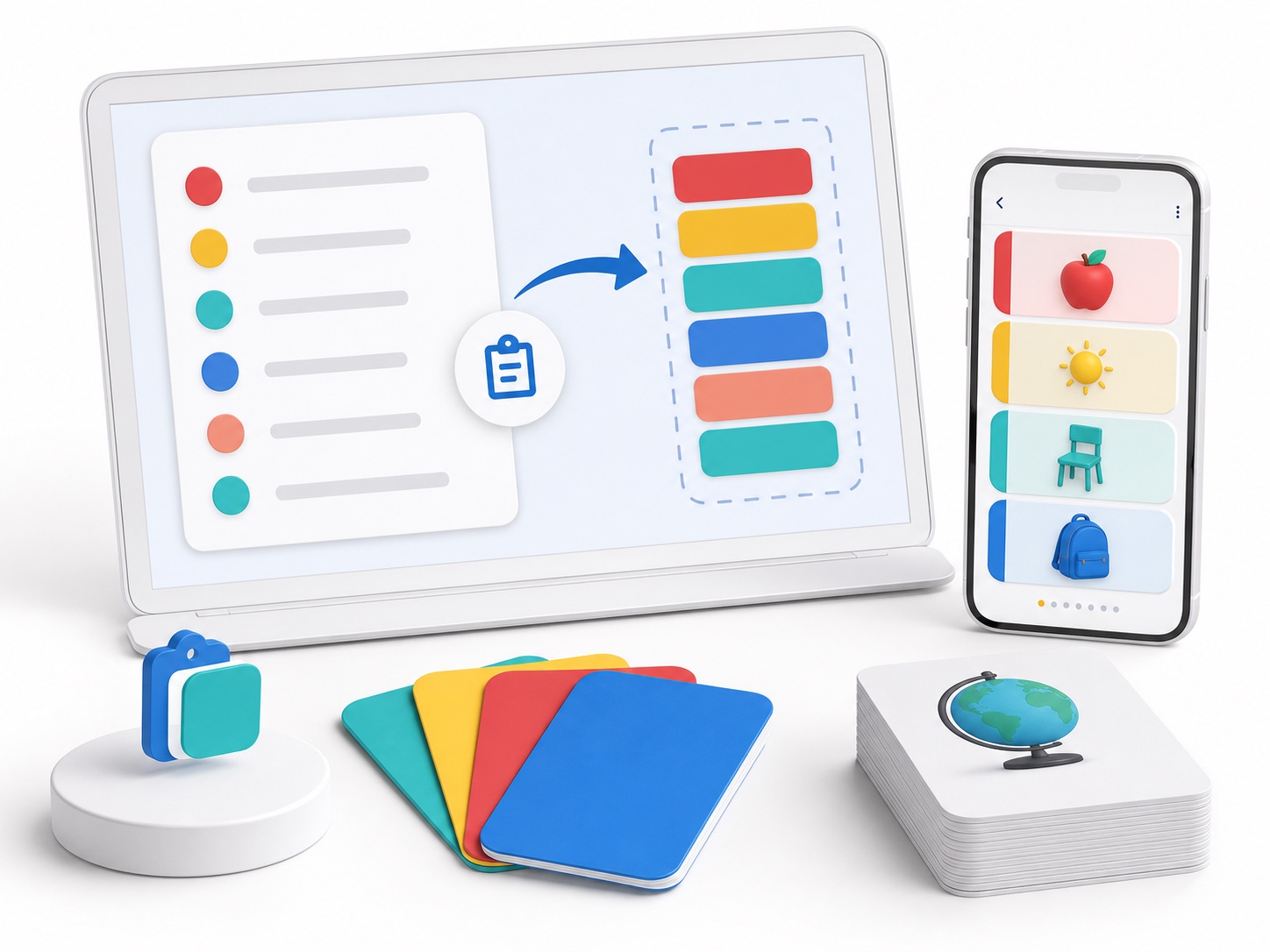
Practise tener in Hola Cards
Hola Cards, the Spanish flashcard app on holacards.org, turns these tener phrases into flashcards with audio, writing, pronunciation practice, custom groups, and spaced review on iOS and Android.