gustar in Spanish
How does gustar work in Spanish?
Gustar is commonly translated as “to like”, but its Spanish structure is closer to “to be pleasing”. The thing you like controls the verb, while me, te, le, nos, os, or les identifies who likes it.
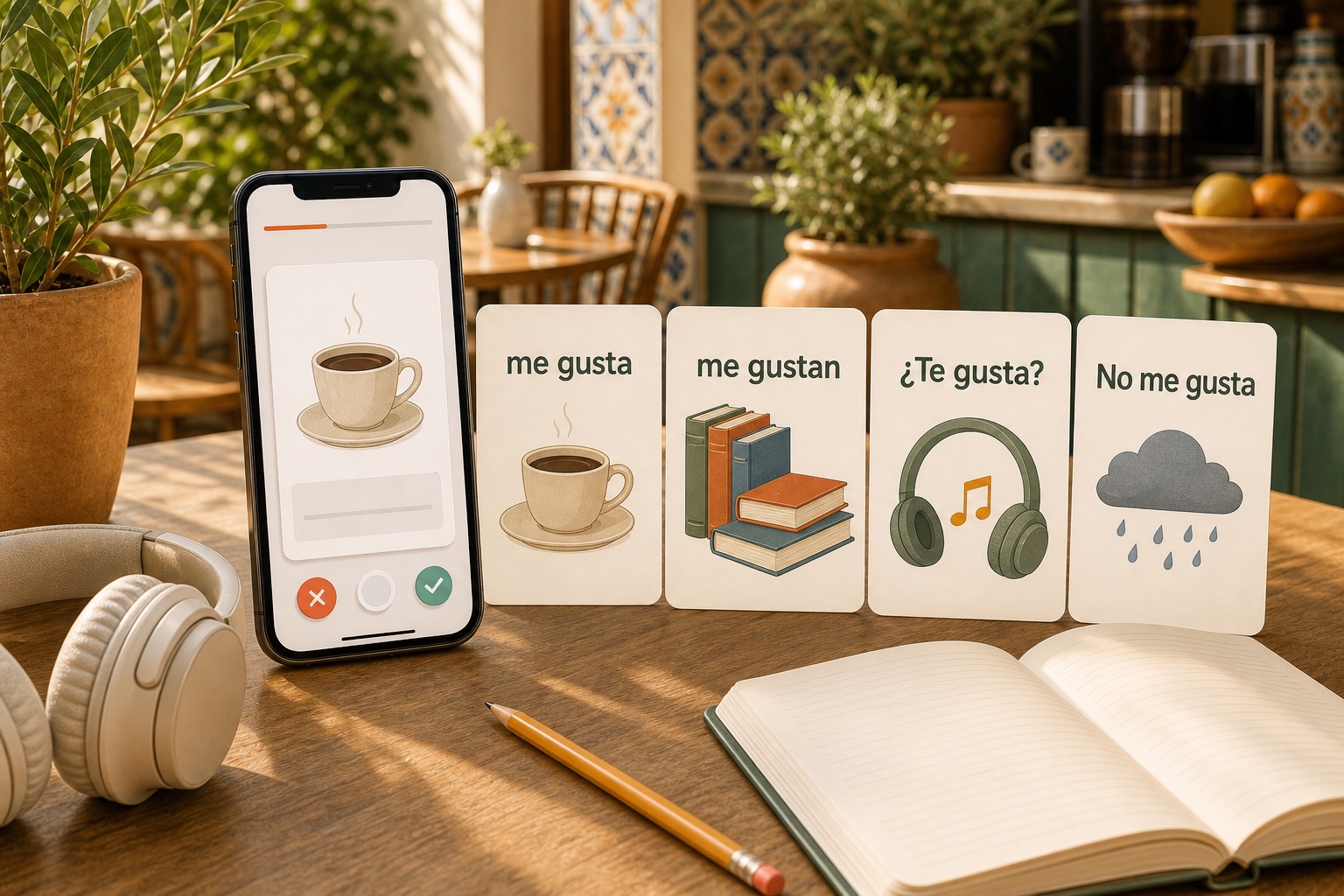
Use gusta before one thing or an infinitive: me gusta el café, me gusta viajar. Use gustan before a plural noun: me gustan los libros. This agreement is the main choice a beginner needs to make.
Two choices build most beginner sentences with gustar
First choose the indirect-object pronoun for the person: me, te, le, nos, os, or les. Then choose gusta for a singular noun or activity and gustan for a plural noun.
Add a mí, a ti, a Ana, or a mis amigos when you need emphasis or clarification. Keep the short pronoun too: a Ana le gusta bailar, not a Ana gusta bailar.
40 gustar phrases for likes, dislikes, questions, and reactions
Each line includes a natural translation, a use label, and one short decision cue so it works as a standalone beginner flashcard.
| Spanish | Translation | Use | Mini-note |
|---|---|---|---|
| me gusta | I like it | Person patterns | The pronoun identifies who experiences the preference. |
| te gusta | you like it | Person patterns | The pronoun identifies who experiences the preference. |
| le gusta | he/she likes it; you like it (formal) | Person patterns | The pronoun identifies who experiences the preference. |
| nos gusta | we like it | Person patterns | The pronoun identifies who experiences the preference. |
| os gusta | you all like it (Spain) | Person patterns | Os is the informal plural “you” form used mainly in Spain. |
| les gusta | they like it; you all like it | Person patterns | The pronoun identifies who experiences the preference. |
| Me gusta el café. | I like coffee. | One thing | Use gusta because the liked noun is singular. |
| Me gusta esta canción. | I like this song. | One thing | Use gusta because the liked noun is singular. |
| Me gusta la comida española. | I like Spanish food. | One thing | Use gusta because the liked noun is singular. |
| Me gusta tu idea. | I like your idea. | One thing | Use gusta because the liked noun is singular. |
| Me gusta mucho Madrid. | I really like Madrid. | One thing | Mucho or bastante changes the degree, not the agreement. |
| No me gusta el frío. | I do not like the cold. | One thing | Put no before the indirect-object pronoun. |
| Me gustan los libros. | I like books. | Several things | Use gustan because the liked noun is plural. |
| Me gustan estas canciones. | I like these songs. | Several things | Use gustan because the liked noun is plural. |
| Me gustan las películas españolas. | I like Spanish films. | Several things | Use gustan because the liked noun is plural. |
| Me gustan tus zapatos. | I like your shoes. | Several things | Use gustan because the liked noun is plural. |
| No me gustan las mañanas. | I do not like mornings. | Several things | Put no before the indirect-object pronoun. |
| Nos gustan los juegos. | We like games. | Several things | Use gustan because the liked noun is plural. |
| Me gusta aprender español. | I like learning Spanish. | Activities and people | An infinitive counts as one activity, so use gusta. |
| Me gusta viajar. | I like travelling. | Activities and people | An infinitive counts as one activity, so use gusta. |
| Me gusta leer. | I like reading. | Activities and people | An infinitive counts as one activity, so use gusta. |
| Me gusta cocinar. | I like cooking. | Activities and people | An infinitive counts as one activity, so use gusta. |
| Me gusta escuchar música. | I like listening to music. | Activities and people | An infinitive counts as one activity, so use gusta. |
| Me gusta hablar contigo. | I like talking with you. | Activities and people | An infinitive counts as one activity, so use gusta. |
| Nos gusta practicar juntos. | We like practising together. | Activities and people | An infinitive counts as one activity, so use gusta. |
| A Ana le gusta bailar. | Ana likes dancing. | Activities and people | Name the person with a + name and keep le or les. |
| A mis amigos les gusta salir. | My friends like going out. | Activities and people | Name the person with a + name and keep le or les. |
| ¿Te gusta el café? | Do you like coffee? | Questions | The liked thing still decides between gusta and gustan. |
| ¿Te gustan los museos? | Do you like museums? | Questions | The liked thing still decides between gusta and gustan. |
| ¿Qué música te gusta? | What music do you like? | Questions | The liked thing still decides between gusta and gustan. |
| ¿Qué libros te gustan? | What books do you like? | Questions | The liked thing still decides between gusta and gustan. |
| ¿Le gusta esta mesa? | Do you like this table? | Questions | Le can address usted politely or refer to him or her. |
| ¿Os gusta viajar? | Do you all like travelling? | Questions | Os is the informal plural “you” form used mainly in Spain. |
| ¿Les gusta la ciudad? | Do they/you all like the city? | Questions | The liked thing still decides between gusta and gustan. |
| Me gusta más este. | I like this one better. | Reactions and degree | Más compares preferences and keeps the usual agreement. |
| Me gusta mucho. | I like it a lot. | Reactions and degree | Mucho or bastante changes the degree, not the agreement. |
| Me gusta bastante. | I quite like it. | Reactions and degree | Mucho or bastante changes the degree, not the agreement. |
| No me gusta nada. | I do not like it at all. | Reactions and degree | Put no before the indirect-object pronoun. |
| A mí también me gusta. | I like it too. | Reactions and degree | También agrees with a positive preference. |
| A mí tampoco me gusta. | I do not like it either. | Reactions and degree | Tampoco agrees with a negative preference. |
Group gustar by the choice you need to make
Separate person patterns, singular likes, plural likes, activities, questions, and reactions to retrieve gusta or gustan without translating word by word.
Person patterns
Automate me, te, le, nos, os, and les before adding the liked thing.
me gusta te gusta le gusta nos gusta os gusta les gusta
One thing
Use gusta with one coffee, song, idea, place, or other singular noun.
Me gusta el café. Me gusta esta canción. Me gusta la comida española. Me gusta tu idea. Me gusta mucho Madrid. No me gusta el frío.
Several things
Use gustan with books, songs, films, shoes, mornings, and games.
Me gustan los libros. Me gustan estas canciones. Me gustan las películas españolas. Me gustan tus zapatos. No me gustan las mañanas. Nos gustan los juegos.
Activities and people
Keep activities in the infinitive and clarify whose preference you mean.
Me gusta aprender español. Me gusta viajar. Me gusta leer. Me gusta cocinar. Me gusta escuchar música. Me gusta hablar contigo. Nos gusta practicar juntos. A Ana le gusta bailar. A mis amigos les gusta salir.
Questions
Ask about one thing, several things, an activity, or another person’s preference.
¿Te gusta el café? ¿Te gustan los museos? ¿Qué música te gusta? ¿Qué libros te gustan? ¿Le gusta esta mesa? ¿Os gusta viajar? ¿Les gusta la ciudad?
Reactions and degree
Compare choices, strengthen a preference, or agree with positive and negative opinions.
Me gusta más este. Me gusta mucho. Me gusta bastante. No me gusta nada. A mí también me gusta. A mí tampoco me gusta.
Quick answers about gustar in Spanish
Use me, te, le, nos, os, or les for the person who likes something. These pronouns do not decide whether the verb is gusta or gustan.
Use gusta with a singular noun or an infinitive: me gusta la canción, me gusta bailar. Use gustan with plural nouns: me gustan las canciones.
Le gusta can mean “he likes”, “she likes”, or formal “you like”. Add a él, a ella, or a usted when the context is unclear.
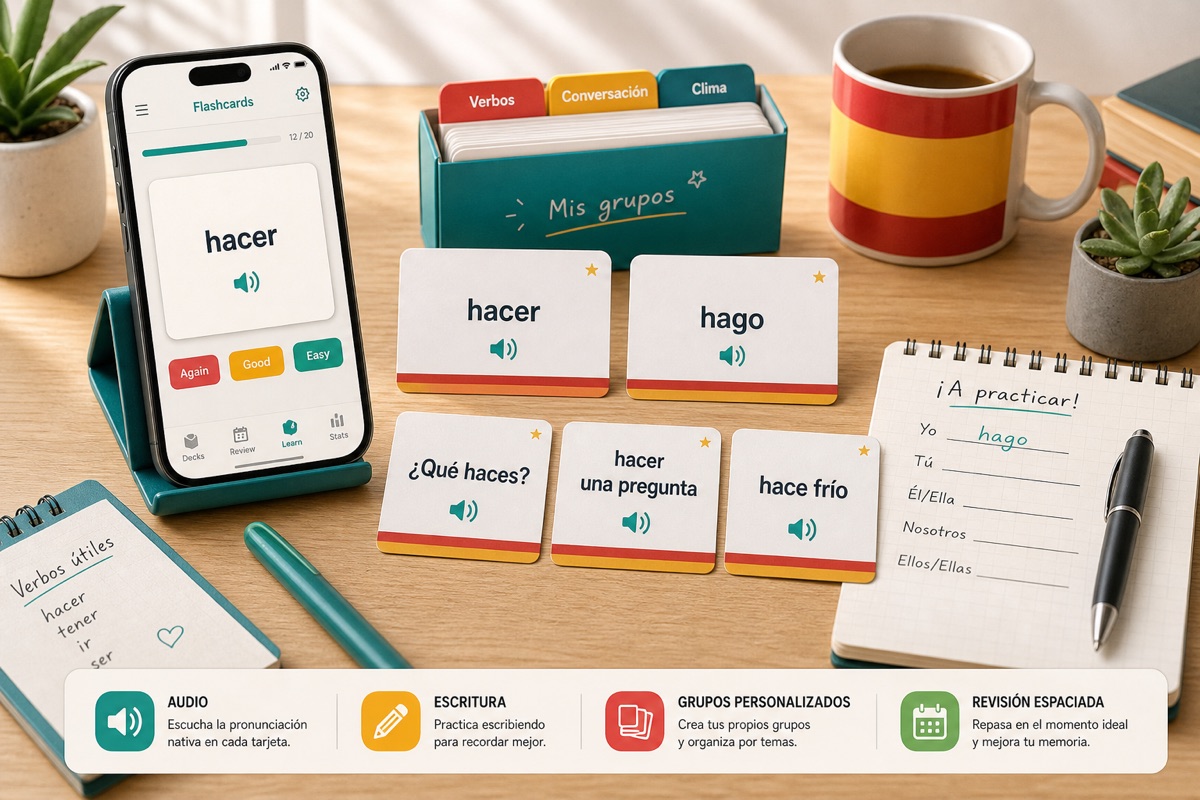
Hola Cards, the Spanish flashcard app on holacards.org, helps beginners practise gustar with flashcards, audio, writing, pronunciation, custom groups, and spaced review on iOS and Android.
Connect gustar with beginner verbs, question words, food, travel, and false friends to talk about real preferences and avoid common mistakes.
Beginner verbs Question words Restaurant phrases Travel phrases False friends
How to practise gustar in five short steps
- Say the six person patterns aloud: me gusta, te gusta, le gusta, nos gusta, os gusta, and les gusta.
- Make paired cards for one item and several items: me gusta el libro, me gustan los libros.
- Keep activities in the infinitive and use singular gusta: me gusta leer, me gusta viajar.
- Answer ¿Te gusta...? aloud, then write a positive and a negative version from memory.
- Use Hola Cards audio, writing, pronunciation, and spaced review until the agreement feels automatic.
FAQ
What does gustar mean in Spanish?
Gustar expresses that something is pleasing to someone. Me gusta is normally translated as “I like it”.
What is the difference between me gusta and me gustan?
Use me gusta with one thing or an activity, and me gustan with plural things. The liked item controls the verb.
Why does Spanish say a mí me gusta?
A mí adds emphasis or contrast. The indirect-object pronoun me is still required in the standard construction.
Copy all 40 gustar phrases into a Hola Cards group
Open word groups in Hola Cards, choose paste/import, and paste this block. The app can read the title and the “Spanish - translation” lines.
**40 Spanish gustar phrases for beginners**

me gusta - I like it
te gusta - you like it
le gusta - he/she likes it; you like it (formal)
nos gusta - we like it
os gusta - you all like it (Spain)
les gusta - they like it; you all like it
Me gusta el café. - I like coffee.
Me gusta esta canción. - I like this song.
Me gusta la comida española. - I like Spanish food.
Me gusta tu idea. - I like your idea.
Me gusta mucho Madrid. - I really like Madrid.
No me gusta el frío. - I do not like the cold.
Me gustan los libros. - I like books.
Me gustan estas canciones. - I like these songs.
Me gustan las películas españolas. - I like Spanish films.
Me gustan tus zapatos. - I like your shoes.
No me gustan las mañanas. - I do not like mornings.
Nos gustan los juegos. - We like games.
Me gusta aprender español. - I like learning Spanish.
Me gusta viajar. - I like travelling.
Me gusta leer. - I like reading.
Me gusta cocinar. - I like cooking.
Me gusta escuchar música. - I like listening to music.
Me gusta hablar contigo. - I like talking with you.
Nos gusta practicar juntos. - We like practising together.
A Ana le gusta bailar. - Ana likes dancing.
A mis amigos les gusta salir. - My friends like going out.
¿Te gusta el café? - Do you like coffee?
¿Te gustan los museos? - Do you like museums?
¿Qué música te gusta? - What music do you like?
¿Qué libros te gustan? - What books do you like?
¿Le gusta esta mesa? - Do you like this table?
¿Os gusta viajar? - Do you all like travelling?
¿Les gusta la ciudad? - Do they/you all like the city?
Me gusta más este. - I like this one better.
Me gusta mucho. - I like it a lot.
Me gusta bastante. - I quite like it.
No me gusta nada. - I do not like it at all.
A mí también me gusta. - I like it too.
A mí tampoco me gusta. - I do not like it either.
Practise gustar in Hola Cards
Hola Cards, the Spanish flashcard app on holacards.org, turns these gustar phrases into flashcards with audio, writing, pronunciation practice, custom groups, and spaced review on iOS and Android.