Study the 12-Sentence Scaffold
Review our categorized model sentences for the cafe scene and copy the scaffold directly into your study notes.
DELE A2 speaking photo description
Understanding the DELE A2 Task 2 Oral Format
The DELE A2 exam follows the official 2020 format, independently checked against Cervantes documentation on 2026-10-11. The oral exam lasts 12 minutes, preceded by a 12-minute preparation period covering all three tasks. Task 2 is a 2–3 minute photo monologue. Separate Task 3 is a 3–4 minute dialogue based on the chosen photo and is outside this guide.
Before speaking, you choose one of two photographs from your exam dossier. Your task sheet outlines specific prompts asking you to describe visible people, clothing, location, and actions. You are also asked to share reasoned impressions about relationships, feelings, and what happened before or might happen next.
During preparation, you can write bullet points on scrap paper to guide your presentation. You may keep these notes on the table and glance at them periodically. Deliver your monologue as natural spoken Spanish rather than reading full written sentences line by line.
Deconstructing the Cafe Scene: Scaffold and Monologue Expansion
Our practice structure divides the monologue into observation, connection, and inference. We state facts with hay, show posture with está sentada, use simple present like habla, and express ongoing action with progressive estar plus gerund, such as está llevando.
A common pitfall is treating personal guesses as confirmed facts or reciting memorized scripts. In our method, framing relationships and feelings with tentative phrases like parece que or creo que helps you sound natural while exploring possibilities without claiming certainty about private details.
These twelve scaffold lines will not fill two to three minutes on their own. You must expand each prompt with concrete details, colors, or reasons from your task sheet. Time yourself for the full two to three minutes so you learn to pace your delivery comfortably.
A2 Monologue Practice Scaffold: The Cafe Scene
This twelve-sentence reference scaffold illustrates how to structure your spoken monologue sequentially across physical observations, interpersonal connections, and temporal inferences.
| Spanish Sentence | English Translation |
|---|---|
| En la cafetería hay tres personas cerca de una ventana grande con plantas. | In the cafe there are three people near a large window with plants. |
| A la izquierda, una mujer de pelo corto y oscuro lleva un suéter amarillo y está sentada. | On the left, a woman with short dark hair is wearing a yellow sweater and is seated. |
| Sobre la mesa de madera hay dos tazas, una botella de agua y unas galletas. | On the wooden table there are two cups, a water bottle, and some cookies. |
| El hombre con camisa azul habla mientras la camarera está llevando una bandeja. | The man in a blue shirt speaks while the waitress is carrying a tray. |
| Parece que los dos clientes son amigos o compañeros de trabajo. | It seems that the two customers are friends or coworkers. |
| Creo que están contentos porque tienen una conversación agradable. | I think they are happy because they are having a pleasant conversation. |
| La camarera parece atenta y amable con los clientes. | The waitress seems attentive and friendly with the customers. |
| El ambiente parece muy tranquilo y relajado. | The atmosphere seems very quiet and relaxed. |
| Probablemente los clientes han llegado hace unos minutos para merendar. | The customers probably arrived a few minutes ago to have an afternoon snack. |
| Tal vez han pedido dos cafés y unas galletas antes de sentarse. | Perhaps they ordered two coffees and some cookies before sitting down. |
| Parece que la camarera va a servir otra bebida en la mesa. | It seems that the waitress is going to serve another drink at the table. |
| Después de tomar el café, creo que van a seguir conversando un rato. | After drinking their coffee, I think they are going to keep chatting for a while. |
Core Grammatical Categories for Photo Description
Explore the rationale behind categorizing your monologue into observable facts, relational hypotheses, and temporal deductions.
Describing Observable Facts: Setting, People, and Actions
Begin your monologue by stating verified facts. Use hay to set the scene, as in en la cafetería hay tres personas. Describe hair and clothing with simple present verbs like lleva, indicate seated posture with está sentada, and express ongoing actions with progressive estar plus gerund, such as está llevando una bandeja.
En la cafetería hay tres personas cerca de una ventana grande con plantas. · A la izquierda, una mujer de pelo corto y oscuro lleva un suéter amarillo y está sentada. · Sobre la mesa de madera hay dos tazas, una botella de agua y unas galletas. · El hombre con camisa azul habla mientras la camarera está llevando una bandeja.
Connecting Observations to Cautious Relationships and Feelings
Address personal relationships and emotional atmosphere using thoughtful speculation rather than unsupported claims. Formulate tentative impressions with expressions like parece que los dos clientes son amigos or creo que están contentos. You can also evaluate the surrounding mood by noting that el ambiente parece muy tranquilo, connecting visible expressions to plausible feelings.
Parece que los dos clientes son amigos o compañeros de trabajo. · Creo que están contentos porque tienen una conversación agradable. · La camarera parece atenta y amable con los clientes. · El ambiente parece muy tranquilo y relajado.
Inferring Plausible Before and After Scenarios
Complete your monologue by suggesting logical prior actions and upcoming events with tentative phrasing. For earlier moments, suggest that probablemente los clientes han llegado hace unos minutos. For next steps, use ir a with an infinitive, observing that parece que la camarera va a servir otra bebida to maintain realistic continuity.
Probablemente los clientes han llegado hace unos minutos para merendar. · Tal vez han pedido dos cafés y unas galletas antes de sentarse. · Parece que la camarera va a servir otra bebida en la mesa. · Después de tomar el café, creo que van a seguir conversando un rato.
Practice Exercise: Describing the Park Scene

Now practice with our park scene. Start with confirmed physical observations: on the left, a woman in a red jacket reads on a bench, while on the right, two men stand beside a blue bicycle. Describe their garments, hair, postures, and surroundings before forming any opinions.
Next, formulate reasoned guesses about their relationships and feelings. Could the two men be workout partners resting after a ride? Does the reader seem calm? Check your outline against every task prompt: physical appearance, clothing, environment, plausible personal ties, emotions, and likely events before or after.
Use this sample for self-checking: En el parque dos hombres conversan junto a una bicicleta azul; parecen amigos y tal vez van a descansar. In English, two men talk near a blue bicycle; they seem to be friends and might rest.
Explore related Spanish grammar and vocabulary tutorials to enhance your descriptive speaking skills:
Spanish Physical Appearance Vocabulary Using Hay versus Estar in Spanish Spanish Prepositions of Place Guide Spanish Present Progressive Tense Tutorial
Recording Sequence, Self-Evaluation, and Study Workflow
- Practice at home using a realistic routine. Because twelve minutes of exam preparation covers all three speaking tasks, reserve about four minutes to outline your photo notes. Then record yourself on your phone for two to three minutes without stopping, practicing continuous delivery.
- Listen back to check your target duration and review your actual task sheet. Confirm you covered people, appearance, clothing, setting, visible actions, feelings, tentative relationships, and before-and-after predictions. Note where you spoke smoothly and where descriptive vocabulary could be expanded.
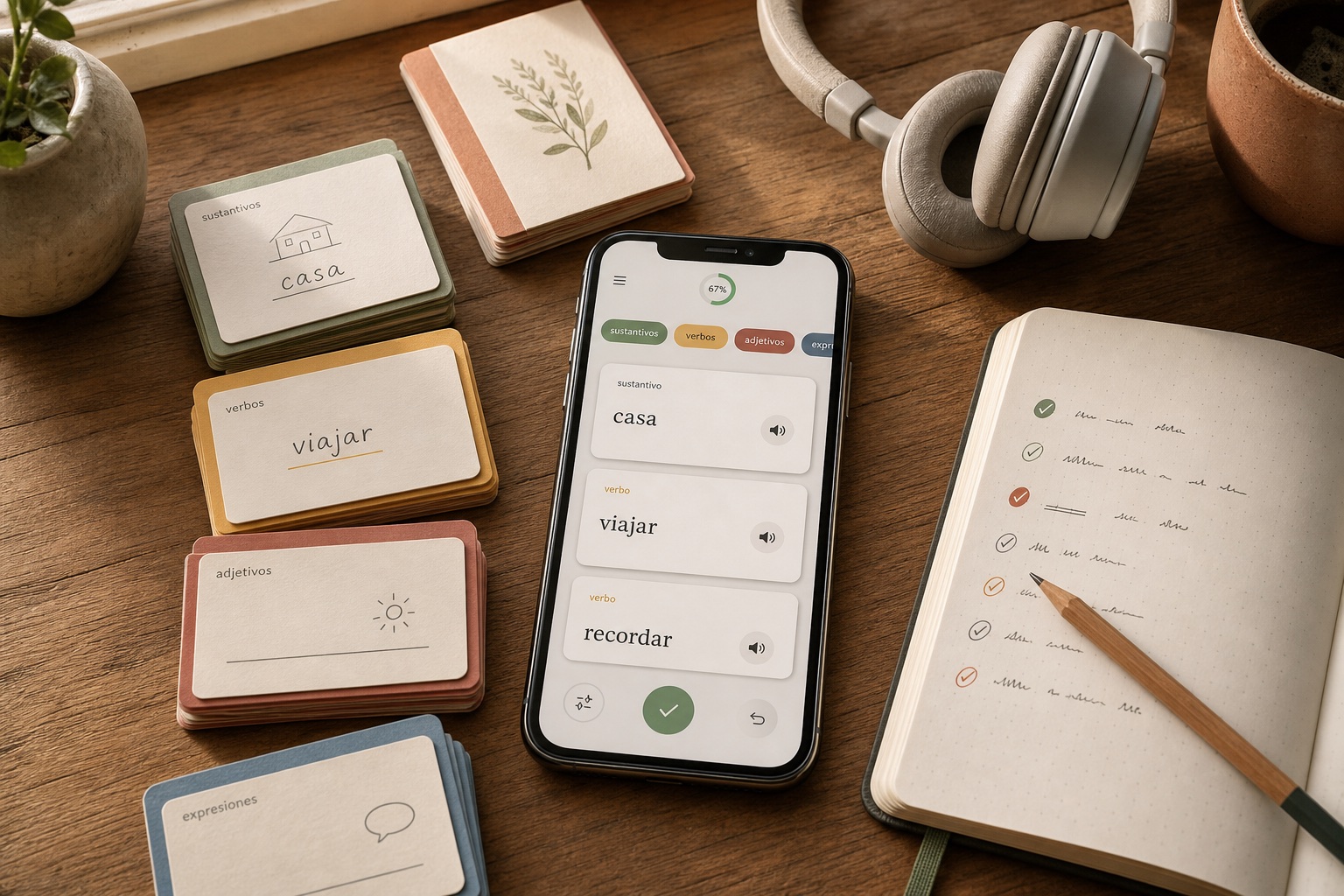
- To strengthen descriptive terms, use Hola Cards on mobile with guest access and offline review, or sign in online via the web app. The mobile app provides pronunciation recognition and native audio for catalog words, but cannot evaluate monologues or guarantee audio for imported sentences.
Official Examination Sources
Consult official Instituto Cervantes documentation outlining the DELE A2 examination format.
- Instituto Cervantes: DELE A2 exam structure
- Instituto Cervantes: DELE A2 model, version 2020
- Instituto Cervantes: DELE A2 guide, version 2020
Frequently Asked Questions About DELE A2 Task 2
How long should my Task 2 monologue last?
Your monologue should run between two and three minutes, answering the prompts provided on your task sheet.
Can I read my notes during the exam?
You may consult outline notes periodically to guide your ideas, but you should speak naturally rather than reading a full script.
How should I describe relationships between people in the photo?
Frame relationships as reasoned guesses using tentative phrases like parece que or creo que rather than stating personal ties as facts.
Does Hola Cards evaluate my spoken monologue?
No. Hola Cards offers pronunciation recognition and audio for its catalog words, but it does not evaluate full monologues or score DELE exams.
Copy the Practice Scaffold
Copy all twelve scaffold sentences to paste into your personal flashcard deck or study notebook.
**Cafe Scene A2 Descriptive Scaffold**

En la cafetería hay tres personas cerca de una ventana grande con plantas. - In the cafe there are three people near a large window with plants.
A la izquierda, una mujer de pelo corto y oscuro lleva un suéter amarillo y está sentada. - On the left, a woman with short dark hair is wearing a yellow sweater and is seated.
Sobre la mesa de madera hay dos tazas, una botella de agua y unas galletas. - On the wooden table there are two cups, a water bottle, and some cookies.
El hombre con camisa azul habla mientras la camarera está llevando una bandeja. - The man in a blue shirt speaks while the waitress is carrying a tray.
Parece que los dos clientes son amigos o compañeros de trabajo. - It seems that the two customers are friends or coworkers.
Creo que están contentos porque tienen una conversación agradable. - I think they are happy because they are having a pleasant conversation.
La camarera parece atenta y amable con los clientes. - The waitress seems attentive and friendly with the customers.
El ambiente parece muy tranquilo y relajado. - The atmosphere seems very quiet and relaxed.
Probablemente los clientes han llegado hace unos minutos para merendar. - The customers probably arrived a few minutes ago to have an afternoon snack.
Tal vez han pedido dos cafés y unas galletas antes de sentarse. - Perhaps they ordered two coffees and some cookies before sitting down.
Parece que la camarera va a servir otra bebida en la mesa. - It seems that the waitress is going to serve another drink at the table.
Después de tomar el café, creo que van a seguir conversando un rato. - After drinking their coffee, I think they are going to keep chatting for a while.
Build Your Exam Vocabulary with Hola Cards
Download Hola Cards to practice descriptive vocabulary offline and organize custom groups, while using a separate phone recorder to capture your whole monologue.