Learn the progressive inside a complete Spanish sentence
Import the 32 examples and practise them with Spanish audio and writing on iOS or Android. The grammar guide remains complete without the app.
Spanish present progressive
How do you form the Spanish present progressive?
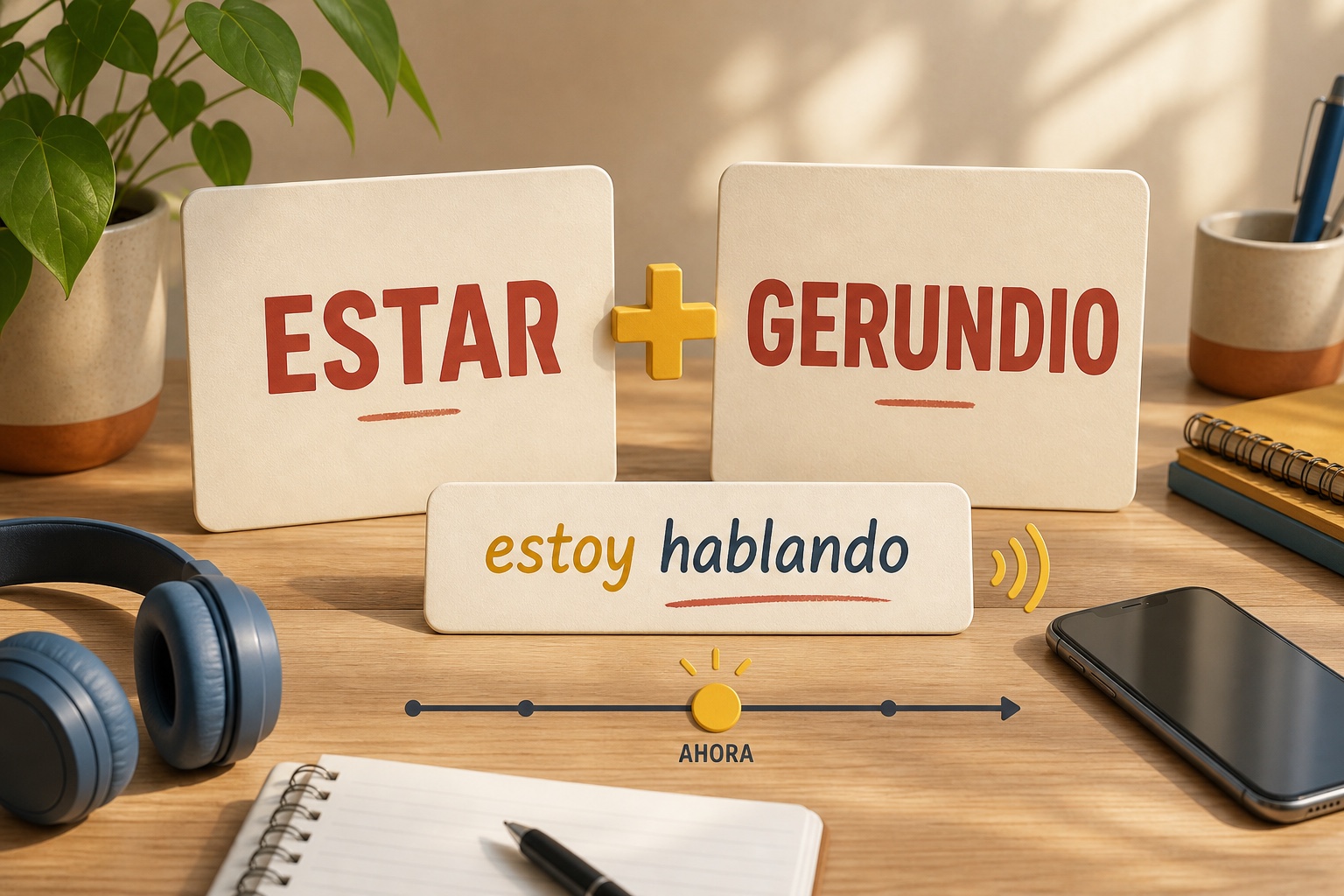
Conjugate estar for the subject: estoy, estás, está, estamos, estáis or están. Then add the gerundio. Replace -ar with -ando and -er/-ir with -iendo: hablar → hablando, comer → comiendo, vivir → viviendo.
Some frequent forms change spelling or stem: leer → leyendo, oír → oyendo, ir → yendo, dormir → durmiendo, pedir → pidiendo and decir → diciendo. The gerund itself does not change for person or number.
Object and reflexive pronouns can go before estar or attach to the gerund: Lo estoy buscando = Estoy buscándolo; Me estoy preparando = Estoy preparándome. Add a written accent when attachment requires it.
Build the form in three steps
Choose the present form of estar for the subject.
Form the regular gerund in -ando or -iendo, or retrieve the irregular form.
Place no before estar; place object/reflexive pronouns before estar or attach them to the gerund.
32 Spanish present-progressive examples
The examples cover all six forms of estar, regular and irregular gerunds, pronoun placement and the contrast with the simple present.
| Spanish sentence | Meaning | Example in context | Why this form? |
|---|---|---|---|
| Estoy hablando con Ana. | I am talking with Ana. | La acción está en curso ahora. | Estar carries person and number. |
| Estás comiendo muy rápido. | You are eating very quickly. | Estás concuerda con tú. | This regular gerund uses -ando or -iendo. |
| Lucía está viviendo en Lima. | Lucía is living in Lima. | Está concuerda con Lucía. | This regular gerund uses -ando or -iendo. |
| Estamos aprendiendo español. | We are learning Spanish. | Estamos concuerda con nosotros. | This regular gerund uses -ando or -iendo. |
| Estáis escribiendo un mensaje. | You all are writing a message. | Estáis concuerda con vosotros. | This regular gerund uses -ando or -iendo. |
| Ellos están trabajando en casa. | They are working at home. | Están concuerda con ellos. | This regular gerund uses -ando or -iendo. |
| No estoy durmiendo. | I am not sleeping. | No aparece antes de estoy. | Estar carries person and number. |
| ¿Qué estás haciendo? | What are you doing? | La pregunta mantiene estar + gerundio. | The progressive presents an action as unfolding now. |
| Estoy leyendo el informe. | I am reading the report. | Leer forma leyendo, no leiendo. | A vowel-to-y spelling change produces -yendo. |
| Sofía está oyendo música. | Sofía is hearing music. | Oír forma oyendo. | A vowel-to-y spelling change produces -yendo. |
| Ya estamos yendo a casa. | We are already going home. | Ir forma yendo. | A vowel-to-y spelling change produces -yendo. |
| El bebé está durmiendo. | The baby is sleeping. | Dormir cambia o por u. | This -ir verb changes its stem in the gerund. |
| Están pidiendo la cuenta. | They are asking for the bill. | Pedir cambia e por i. | This -ir verb changes its stem in the gerund. |
| Estamos diciendo la verdad. | We are telling the truth. | Decir forma diciendo. | This -ir verb changes its stem in the gerund. |
| La sopa está hirviendo. | The soup is boiling. | Hervir cambia e por i. | This -ir verb changes its stem in the gerund. |
| ¿Estás trayendo las llaves? | Are you bringing the keys? | Traer forma trayendo. | A vowel-to-y spelling change produces -yendo. |
| Me estoy preparando. | I am getting ready. | Me aparece antes de estoy. | The pronoun can stand before estar or attach to the gerund. |
| Estoy preparándome. | I am getting ready. | Me se une al gerundio y aparece la tilde. | Attachment requires a written accent to preserve stress. |
| Lo estoy buscando. | I am looking for it. | Lo aparece antes de estoy. | The pronoun can stand before estar or attach to the gerund. |
| Estoy buscándolo. | I am looking for it. | Lo se une al gerundio y aparece la tilde. | Attachment requires a written accent to preserve stress. |
| La estamos esperando. | We are waiting for her. | La aparece antes de estamos. | The pronoun can stand before estar or attach to the gerund. |
| Estamos esperándola. | We are waiting for her. | La se une al gerundio y aparece la tilde. | Attachment requires a written accent to preserve stress. |
| ¿Te estás vistiendo? | Are you getting dressed? | Te aparece antes de estás. | The pronoun can stand before estar or attach to the gerund. |
| ¿Estás vistiéndote? | Are you getting dressed? | Te se une a vistiéndo- y aparece la tilde. | Attachment requires a written accent to preserve stress. |
| Ahora estoy estudiando. | I am studying right now. | Ahora presenta una acción en curso. | The progressive presents an action as unfolding now. |
| Estudio español todos los días. | I study Spanish every day. | Todos los días expresa un hábito. | The simple present is better for a habit, schedule or general fact. |
| Marta está caminando por el parque. | Marta is walking through the park. | La acción se desarrolla en este momento. | The progressive presents an action as unfolding now. |
| Marta camina al trabajo cada mañana. | Marta walks to work every morning. | Cada mañana expresa un hábito. | The simple present is better for a habit, schedule or general fact. |
| Esta semana estamos trabajando en casa. | This week we are working at home. | El periodo actual se presenta como temporal. | The progressive presents an action as unfolding now. |
| Trabajamos en casa los viernes. | We work at home on Fridays. | Los viernes expresa una rutina. | The simple present is better for a habit, schedule or general fact. |
| El tren sale a las ocho. | The train leaves at eight. | Un horario usa normalmente el presente simple. | The simple present is better for a habit, schedule or general fact. |
| Sé la respuesta. | I know the answer. | Saber expresa aquí un estado, no una acción en curso. | The simple present is better for a habit, schedule or general fact. |
Learn the present progressive in four blocks
Start with estar + regular gerundio, then add irregular forms, pronouns and the limits of the construction.
Estar + regular gerundio
Practise all six present forms of estar with -ando and -iendo.
Estoy hablando con Ana. · Estás comiendo muy rápido. · Lucía está viviendo en Lima. · Estamos aprendiendo español. · Estáis escribiendo un mensaje. · Ellos están trabajando en casa. · No estoy durmiendo. · ¿Qué estás haciendo?
Spelling and stem changes
Learn leyendo, oyendo, yendo, durmiendo, pidiendo and diciendo in context.
Estoy leyendo el informe. · Sofía está oyendo música. · Ya estamos yendo a casa. · El bebé está durmiendo. · Están pidiendo la cuenta. · Estamos diciendo la verdad. · La sopa está hirviendo. · ¿Estás trayendo las llaves?
Two pronoun positions
Compare lo estoy buscando with estoy buscándolo and preserve the written accent.
Me estoy preparando. · Estoy preparándome. · Lo estoy buscando. · Estoy buscándolo. · La estamos esperando. · Estamos esperándola. · ¿Te estás vistiendo? · ¿Estás vistiéndote?
Progressive or simple present?
Use the progressive for an unfolding action and the simple present for habits, schedules and facts.
Ahora estoy estudiando. · Estudio español todos los días. · Marta está caminando por el parque. · Marta camina al trabajo cada mañana. · Esta semana estamos trabajando en casa. · Trabajamos en casa los viernes. · El tren sale a las ocho. · Sé la respuesta.
When should you use estar + gerundio?
Use it when you want to present an action as unfolding now or around the current period: Ahora estoy trabajando; Esta semana estamos estudiando en casa.
Use the simple present for habits, schedules and general facts: Trabajo los lunes; El tren sale a las ocho; Sé la respuesta. English -ing does not automatically require a Spanish progressive.
The progressive is a verbal periphrasis, not a separate one-word tense. Estar carries person and time; the gerundio stays unchanged. Other auxiliaries such as seguir or ir create related but different meanings.
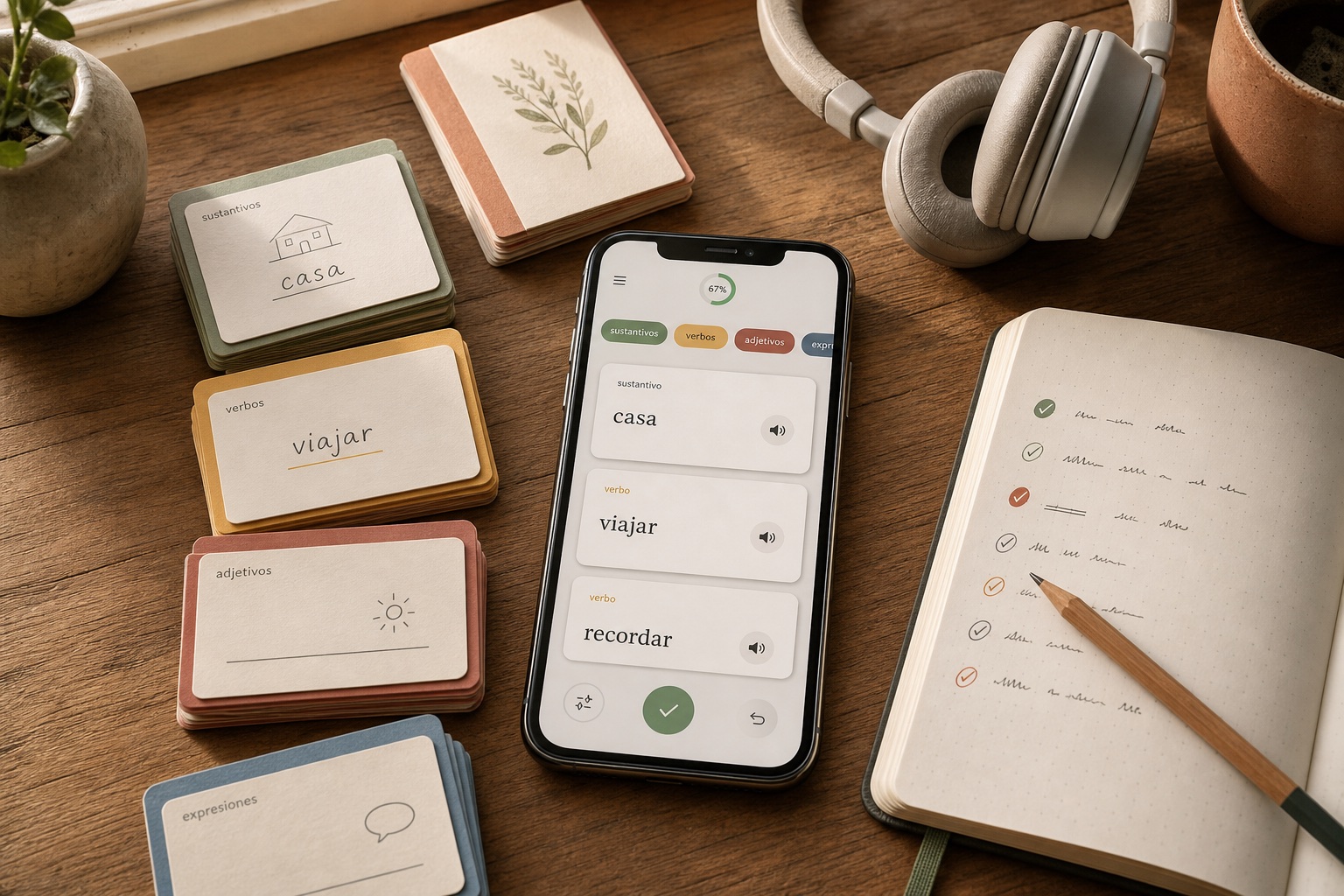
Hola Cards is a Spanish flashcard app from holacards.org for iOS and Android. It is free to download, requires no account, may show ads in the free version, while Premium removes ads, and works offline. The interface is available in 29 languages, including English, Russian, Portuguese and German; cards support translations in 29 languages, including English, Russian, Portuguese and German and 18 practice and game modes. You can import these fixed sentences into a custom group and practise them with Spanish audio, writing, pronunciation, and review modes. Hola Cards does not form gerunds or decide whether the progressive fits a context automatically, so check each sentence with this guide first.
Connect the progressive with the present tense, stem-changing verbs, reflexive pronouns, estar and sentence flashcards.
Present-tense endings Stem-changing verbs Reflexive pronouns Ser vs estar Flashcards with example sentences

A five-minute present-progressive routine
- Write estoy, estás, está, estamos, estáis and están from memory.
- Build hablando, comiendo and viviendo.
- Recall leyendo, oyendo, yendo, durmiendo, pidiendo and diciendo.
- Move one pronoun from before estar to the end of the gerund and add the accent.
- Contrast one action in progress with one habit in the simple present, then listen again.
Grammar references
The formation and uses were checked against primary RAE–ASALE and Instituto Cervantes sources.
- RAE–ASALE: estar followed by a gerund presents an action in progress
- Instituto Cervantes A2: estar + gerundio formation and practice
- Instituto Cervantes A1–A2 inventory: present actions in progress
FAQ
How is the Spanish present progressive formed?
Use the present of estar—estoy, estás, está, estamos, estáis, están—plus a gerundio: estoy hablando.
What are the regular Spanish gerund endings?
Use -ando for -ar verbs and -iendo for -er and -ir verbs.
What are common irregular gerunds?
Frequent forms include leyendo, oyendo, yendo, durmiendo, pidiendo and diciendo.
Where do object pronouns go?
Place them before estar or attach them to the gerund: lo estoy buscando or estoy buscándolo.
Is the Spanish present progressive used like English?
Not always. Spanish often uses the simple present for habits, schedules and general statements where English may use an -ing form.
Does Hola Cards create progressive forms automatically?
No. You can import and practise these fixed sentences; this page explains how to form and choose the construction.
Copy the 32 present-progressive examples into Hola Cards
Open word groups in Hola Cards, choose paste/import, and paste the block. The app recognises the title and “Spanish - translation” lines.
**Spanish present progressive: 32 examples**

Estoy hablando con Ana. - I am talking with Ana.
Estás comiendo muy rápido. - You are eating very quickly.
Lucía está viviendo en Lima. - Lucía is living in Lima.
Estamos aprendiendo español. - We are learning Spanish.
Estáis escribiendo un mensaje. - You all are writing a message.
Ellos están trabajando en casa. - They are working at home.
No estoy durmiendo. - I am not sleeping.
¿Qué estás haciendo? - What are you doing?
Estoy leyendo el informe. - I am reading the report.
Sofía está oyendo música. - Sofía is hearing music.
Ya estamos yendo a casa. - We are already going home.
El bebé está durmiendo. - The baby is sleeping.
Están pidiendo la cuenta. - They are asking for the bill.
Estamos diciendo la verdad. - We are telling the truth.
La sopa está hirviendo. - The soup is boiling.
¿Estás trayendo las llaves? - Are you bringing the keys?
Me estoy preparando. - I am getting ready.
Estoy preparándome. - I am getting ready.
Lo estoy buscando. - I am looking for it.
Estoy buscándolo. - I am looking for it.
La estamos esperando. - We are waiting for her.
Estamos esperándola. - We are waiting for her.
¿Te estás vistiendo? - Are you getting dressed?
¿Estás vistiéndote? - Are you getting dressed?
Ahora estoy estudiando. - I am studying right now.
Estudio español todos los días. - I study Spanish every day.
Marta está caminando por el parque. - Marta is walking through the park.
Marta camina al trabajo cada mañana. - Marta walks to work every morning.
Esta semana estamos trabajando en casa. - This week we are working at home.
Trabajamos en casa los viernes. - We work at home on Fridays.
El tren sale a las ocho. - The train leaves at eight.
Sé la respuesta. - I know the answer.
Review Spanish progressive sentences in Hola Cards
Practise the 32 fixed examples with Spanish audio, writing, pronunciation, custom groups, and review modes on iOS and Android.