Build a Spanish opposites group
Import all 32 pairs and practise them with Spanish audio and writing on iOS or Android. The full guide remains useful without the app.
Spanish opposites
What are the most useful opposites in Spanish?
The best beginner pairs describe size, quality, condition, time and place. They work in everyday descriptions: una casa grande, una caja pequeña, la puerta abierta and la puerta cerrada.
Antonyms are not always mirror images in every sentence. Viejo can mean old for a person or thing, while antiguo often means ancient, former or antique. Context still matters.
Most adjective pairs change for gender and number: pequeño, pequeña, pequeños, pequeñas. Adverbs such as cerca and lejos do not agree with a noun.
Four rules for using opposite words naturally
Make adjectives agree with the noun: un libro nuevo, una mesa nueva, libros nuevos.
Use ser for a usual quality and estar for a condition when appropriate: la calle es estrecha; la puerta está abierta.
Keep location and time adverbs unchanged: cerca, lejos, dentro, fuera, antes and después.
A prefix can create an opposite—posible / imposible—but many common pairs use different roots, such as bueno / malo.
32 common opposite pairs in Spanish
Each row gives one practical pair, its meaning, a model sentence and the point to notice.
| Spanish pair | Meaning | Example in context | Usage note |
|---|---|---|---|
| grande / pequeño | big / small | La casa es grande, pero el jardín es pequeño. | Most adjectives must agree with the noun in gender and number. |
| alto / bajo | tall or high / short or low | El edificio es alto y la pared es baja. | The best opposite depends on the meaning and context. |
| largo / corto | long / short | El camino es largo, pero el puente es corto. | Most adjectives must agree with the noun in gender and number. |
| ancho / estrecho | wide / narrow | La avenida es ancha y esta calle es estrecha. | Most adjectives must agree with the noun in gender and number. |
| grueso / delgado | thick / thin | El libro es grueso y el cuaderno es delgado. | The best opposite depends on the meaning and context. |
| pesado / ligero | heavy / light | La maleta es pesada, pero el bolso es ligero. | Most adjectives must agree with the noun in gender and number. |
| rápido / lento | fast / slow | El tren es rápido y el autobús es lento. | Most adjectives must agree with the noun in gender and number. |
| fuerte / débil | strong / weak | La señal es fuerte, pero la batería está débil. | The best opposite depends on the meaning and context. |
| bueno / malo | good / bad | El primer resultado es bueno y el segundo es malo. | Most adjectives must agree with the noun in gender and number. |
| fácil / difícil | easy / difficult | El ejercicio parece fácil, pero la última pregunta es difícil. | Most adjectives must agree with the noun in gender and number. |
| caro / barato | expensive / cheap | Este billete es caro y aquel es barato. | Most adjectives must agree with the noun in gender and number. |
| nuevo / viejo | new / old | El móvil es nuevo, pero el ordenador es viejo. | The best opposite depends on the meaning and context. |
| limpio / sucio | clean / dirty | El vaso está limpio y el plato está sucio. | Use ser or estar according to quality versus condition. |
| claro / oscuro | light or clear / dark | El pasillo es oscuro, pero la habitación es clara. | The best opposite depends on the meaning and context. |
| caliente / frío | hot / cold | El café está caliente y el agua está fría. | Use ser or estar according to quality versus condition. |
| duro / blando | hard / soft | El pan está duro, pero el queso está blando. | Use ser or estar according to quality versus condition. |
| abierto / cerrado | open / closed | El museo está abierto y la tienda está cerrada. | Use ser or estar according to quality versus condition. |
| lleno / vacío | full / empty | El autobús está lleno y el taxi está vacío. | Use ser or estar according to quality versus condition. |
| encendido / apagado | on / off | El ordenador está encendido, pero la pantalla está apagada. | Use ser or estar according to quality versus condition. |
| seco / mojado | dry / wet | El suelo está mojado y la toalla está seca. | Use ser or estar according to quality versus condition. |
| feliz / triste | happy / sad | Hoy Ana está feliz, pero ayer estaba triste. | Use ser or estar according to quality versus condition. |
| sano / enfermo | healthy / ill | Su hermano está sano, pero su padre está enfermo. | Use ser or estar according to quality versus condition. |
| presente / ausente | present / absent | Marta está presente y Luis está ausente. | Use ser or estar according to quality versus condition. |
| posible / imposible | possible / impossible | La primera opción es posible; la segunda es imposible. | The best opposite depends on the meaning and context. |
| cerca / lejos | near / far | La estación está cerca, pero el aeropuerto queda lejos. | These adverbs do not change for gender or number. |
| dentro / fuera | inside / outside | Los niños están dentro y los adultos esperan fuera. | These adverbs do not change for gender or number. |
| arriba / abajo | upstairs or above / downstairs or below | El baño está arriba y la cocina está abajo. | These adverbs do not change for gender or number. |
| antes / después | before / after | Cocinamos antes de comer y limpiamos después. | These adverbs do not change for gender or number. |
| temprano / tarde | early / late | Yo llego temprano y mi amigo llega tarde. | These adverbs do not change for gender or number. |
| siempre / nunca | always / never | Ella siempre desayuna; él nunca come por la mañana. | These adverbs do not change for gender or number. |
| mucho / poco | a lot / a little | Hoy trabajo mucho, pero mañana trabajo poco. | The best opposite depends on the meaning and context. |
| más / menos | more / less | Necesito más tiempo y menos ruido. | The best opposite depends on the meaning and context. |
Learn opposites by meaning
Four groups help you retrieve a pair from the situation, not from its position in a list.
Size, shape and force
Describe dimensions, weight, speed and physical intensity.
grande / pequeño · alto / bajo · largo / corto · ancho / estrecho · grueso / delgado · pesado / ligero · rápido / lento · fuerte / débil
Quality and value
Contrast evaluation, difficulty, price, age and appearance.
bueno / malo · fácil / difícil · caro / barato · nuevo / viejo · limpio / sucio · claro / oscuro · caliente / frío · duro / blando
Condition and situation
Describe doors, containers, devices, health and presence.
abierto / cerrado · lleno / vacío · encendido / apagado · seco / mojado · feliz / triste · sano / enfermo · presente / ausente · posible / imposible
Place, time and quantity
Build contrasts that do not normally require adjective agreement.
cerca / lejos · dentro / fuera · arriba / abajo · antes / después · temprano / tarde · siempre / nunca · mucho / poco · más / menos
How do Spanish antonyms work in sentences?
Put both words into the same frame: El bolso es ligero, pero la maleta es pesada.
When a pair contains adjectives, practise one feminine or plural version after the dictionary form.
For adverbs, build a movement or time contrast: vive cerca, trabaja lejos; llega temprano, sale tarde.
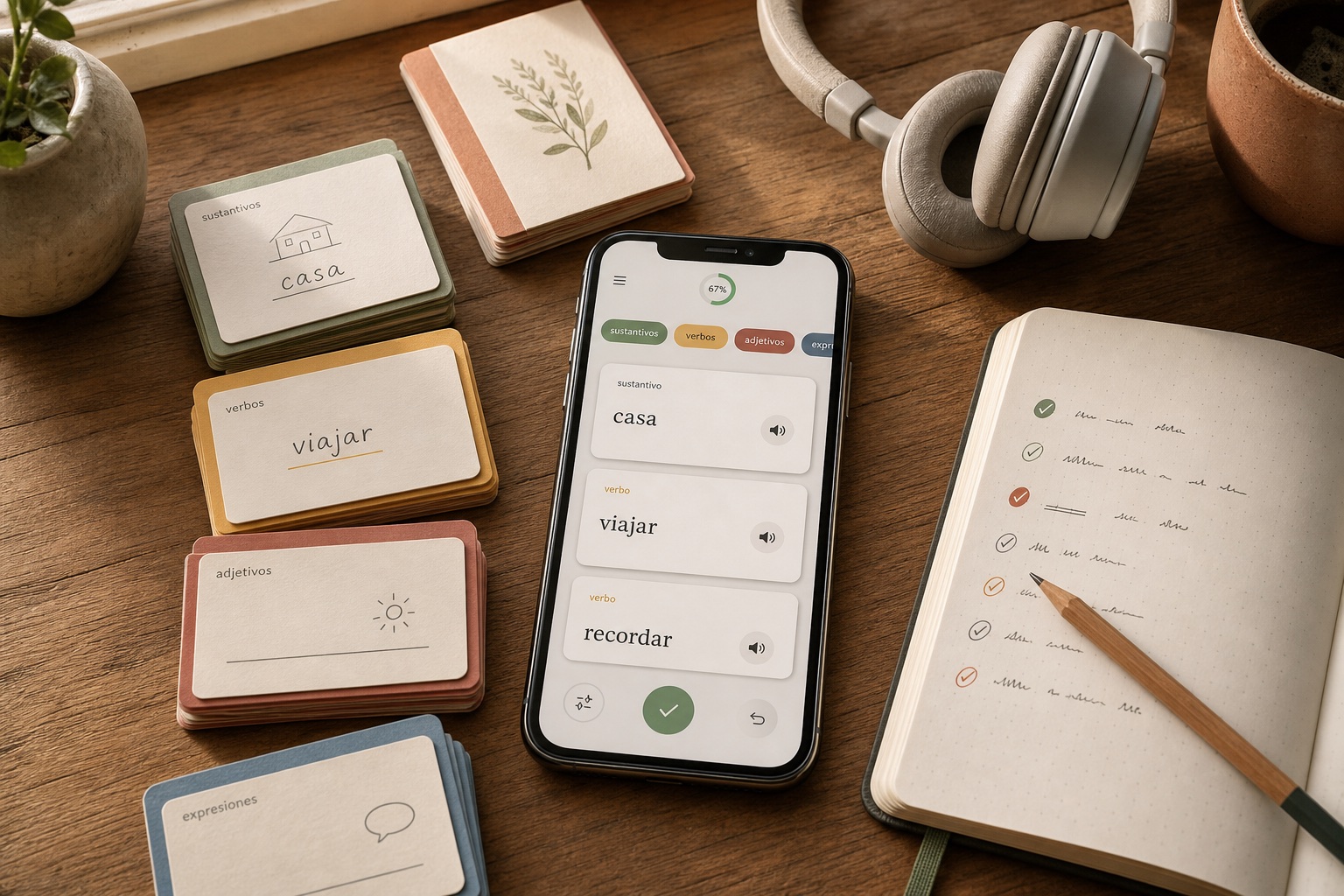
Hola Cards is a Spanish flashcard app from holacards.org for iOS and Android. It is free to download, requires no account, may show ads in the free version, while Premium removes ads, and works offline. The interface is available in 29 languages, including English, Russian, Portuguese and German; cards support translations in 29 languages, including English, Russian, Portuguese and German and 18 practice and game modes. You can import these 32 fixed opposite pairs into a custom group and practise them with Spanish audio, writing, pronunciation, and review modes. Hola Cards does not decide whether two words are exact opposites in every context or correct complete sentences automatically.
Connect these pairs with adjective agreement, comparisons, personality, locations and frequency.
Spanish adjective agreement Spanish comparatives and superlatives 32 Spanish personality adjectives Spanish prepositions of place Spanish adverbs of frequency
A five-minute opposites drill
- Choose eight pairs from one meaning group.
- Cover the second word and recall it aloud.
- Reverse the cards and recall the first word.
- Make one sentence that contains both sides.
- Change one adjective for feminine or plural agreement.
Language references
The level, meanings and grammar notes were checked against Instituto Cervantes and the RAE.
- Instituto Cervantes: A1–A2 general notions
- Instituto Cervantes: A1–A2 grammar inventory
- RAE dictionary: antónimo
- RAE dictionary: adjetivo
FAQ
What are antonyms in Spanish?
Antonyms are words with contrasting meanings, such as grande and pequeño or abierto and cerrado. Spanish calls them antónimos.
Should I learn Spanish opposites in pairs?
Yes. A pair gives each word a retrieval cue and makes it easier to build contrast sentences.
Do opposite adjectives change for gender?
Most do. Grande stays the same for masculine and feminine singular, while pequeño changes to pequeña; both change in the plural.
Are cerca and lejos adjectives?
No in this use. They are adverbs of place and do not agree with a noun.
Is viejo always the opposite of nuevo?
Often, but not in every sense. Antiguo may be better for ancient, antique or former, so check the noun and context.
Can Hola Cards identify any antonym pair automatically?
No. It helps you import and practise these fixed pairs; this guide explains where context and grammar matter.
Copy the 32 opposite pairs into Hola Cards
Open word groups in Hola Cards, choose paste/import, and paste the block. Each “Spanish - translation” line keeps the two sides together.
**Spanish opposites: 32 useful pairs**

grande / pequeño - big / small
alto / bajo - tall or high / short or low
largo / corto - long / short
ancho / estrecho - wide / narrow
grueso / delgado - thick / thin
pesado / ligero - heavy / light
rápido / lento - fast / slow
fuerte / débil - strong / weak
bueno / malo - good / bad
fácil / difícil - easy / difficult
caro / barato - expensive / cheap
nuevo / viejo - new / old
limpio / sucio - clean / dirty
claro / oscuro - light or clear / dark
caliente / frío - hot / cold
duro / blando - hard / soft
abierto / cerrado - open / closed
lleno / vacío - full / empty
encendido / apagado - on / off
seco / mojado - dry / wet
feliz / triste - happy / sad
sano / enfermo - healthy / ill
presente / ausente - present / absent
posible / imposible - possible / impossible
cerca / lejos - near / far
dentro / fuera - inside / outside
arriba / abajo - upstairs or above / downstairs or below
antes / después - before / after
temprano / tarde - early / late
siempre / nunca - always / never
mucho / poco - a lot / a little
más / menos - more / less
Practise Spanish opposites in Hola Cards
Review the 32 fixed pairs with Spanish audio, writing, pronunciation, custom groups, and review modes on iOS and Android.