24 practical Spanish expressions for entryways, routes, and seating
Rely on the phrases below to check specific architectural features prior to arriving or after reaching a destination. These examples feature widely recognized Spanish vocabulary, though local customs and terminology can vary by country.
| Spanish | English meaning |
|---|---|
| ¿Hay una entrada sin escalones? | Is there an entrance without steps? |
| ¿Por dónde se entra sin usar escaleras? | Which way can I enter without using stairs? |
| ¿La entrada está a nivel de la calle? | Is the entrance level with the street? |
| ¿Hay una rampa en la entrada? | Is there a ramp by the entrance? |
| ¿La rampa está abierta ahora? | Is the ramp open right now? |
| ¿Hay una entrada alternativa? | Is there an alternate entrance? |
| ¿Hay ascensor? | Is there an elevator? |
| ¿Funciona el ascensor? | Is the elevator working? |
| ¿El ascensor llega a todas las plantas? | Does the elevator stop at every floor? |
| ¿Dónde está el ascensor? | Where is the elevator located? |
| ¿Hay algún escalón en este recorrido? | Are there any steps along this route? |
| ¿Me puede indicar el recorrido sin escalones? | Could you point me toward the step-free route? |
| ¿Hay espacio para maniobrar? | Is there enough room to turn around? |
| ¿Puede dejar libre este pasillo? | Could you please keep this aisle clear? |
| ¿La puerta es lo bastante ancha para una silla de ruedas? | Is the doorway wide enough for a wheelchair? |
| ¿Se puede mover esta silla? | Can this chair be moved out of the way? |
| ¿Hay un baño accesible? | Is there an accessible restroom? |
| ¿Dónde está el baño accesible? | Where is the accessible restroom located? |
| ¿Hay una mesa con espacio debajo? | Is there a table with knee clearance underneath? |
| ¿Puedo reservar un asiento con más espacio? | May I reserve a seat with additional room? |
| ¿Hay un espacio reservado para sillas de ruedas? | Is there a designated area for wheelchairs? |
| ¿Puedo sentarme junto a mi acompañante? | Can I sit beside my companion? |
| ¿Me puede ayudar con la puerta, por favor? | Could you help me with the door, please? |
| Prefiero que me pregunte antes de ayudarme. | I prefer that you ask me before helping. |
Copy all 24 Spanish accessibility expressions
Export the full list of Spanish phrases and English definitions straight to your personal notes or study application, formatted with Spanish on the left for seamless importing.
Spanish accessibility phrases
Ask directly about the physical feature you require
While the adjective accesible serves as an easy starting term, pinpointing specific architectural elements produces far more dependable answers: inquire explicitly about flat entryways, functioning lifts, turnarounds, or adapted restrooms. Use the noun phrase silla de ruedas whenever specifying a wheelchair. Individuals and advocacy groups hold distinct preferences regarding disability terminology; always respect and adopt each person's preferred language when referring to them. Please note that these communicative phrases help you gather details and do not substitute for official verification that a venue complies with statutory standards.
Three guidelines for asking clear accessibility questions
Specify the exact accommodation: ¿Hay una rampa? Inquire whether the mechanism is operational and reaches your destination: ¿Funciona el ascensor? If you would like assistance, define the task before anyone begins: ¿Me puede ayudar con la puerta? Formulate respectful requests using the conditional marker ¿Podría…?, and append por favor to keep interactions polite.
Real-world dialogues in practical contexts
These concise scenario exchanges illustrate how to request information, verify physical details, and communicate personal requirements without relying on assumptions about a facility.
Confirming building access points
—¿Hay una entrada sin escalones? —Sí, la entrada lateral tiene rampa. —¿Está abierta ahora? —Sí; siga las señales hasta la puerta.
¿Hay una entrada sin escalones? · ¿Por dónde se entra sin usar escaleras? · ¿La entrada está a nivel de la calle? · ¿Hay una rampa en la entrada? · ¿La rampa está abierta ahora? · ¿Hay una entrada alternativa?
Locating and checking elevator operations
—¿Hay ascensor? —Sí, al final del pasillo. —¿Funciona? —Sí, llega a todas las plantas.
¿Hay ascensor? · ¿Funciona el ascensor? · ¿El ascensor llega a todas las plantas? · ¿Dónde está el ascensor? · ¿Hay algún escalón en este recorrido? · ¿Me puede indicar el recorrido sin escalones?
Navigating open hallways and facilities
—¿Puede dejar libre este pasillo? —Claro. —¿Hay un baño accesible? —Sí, está junto al vestíbulo.
¿Hay espacio para maniobrar? · ¿Puede dejar libre este pasillo? · ¿La puerta es lo bastante ancha para una silla de ruedas? · ¿Se puede mover esta silla? · ¿Hay un baño accesible? · ¿Dónde está el baño accesible?
Selecting accommodating tables and seats
—¿Hay una mesa con espacio debajo? —Sí, junto a la ventana. —¿Podemos sentarnos allí? —Claro, ahora se la preparo.
¿Hay una mesa con espacio debajo? · ¿Puedo reservar un asiento con más espacio? · ¿Hay un espacio reservado para sillas de ruedas? · ¿Puedo sentarme junto a mi acompañante?
Coordinating courteous and respectful assistance
—¿Le ayudo con la puerta? —Gracias. ¿Podría sujetarla mientras paso? —Por supuesto. —Muchas gracias; ya puedo seguir.
¿Me puede ayudar con la puerta, por favor? · Prefiero que me pregunte antes de ayudarme.
Polite structures and regional vocabulary variations
Straightforward inquiries generally begin with ¿Hay…? (Is there...?) or ¿Dónde está…? (Where is...?). To make an inquiry gentler, employ the conditional verb form ¿Podría…?, whereas ¿Me puede…? is typical across day-to-day hospitality and retail settings. While ascensor is standard in Spain and much of South America, elevador is widely heard across Mexico and parts of Central America. When a particular term causes confusion, describe the physical attribute directly: un espacio sin escalones (a space without steps).
Continue building your conversational confidence with these related Spanish guides:
Spanish Museum Phrases Spanish Directions Phrases Spanish Movie Theater Phrases
Strategies for mastering and retaining these phrases
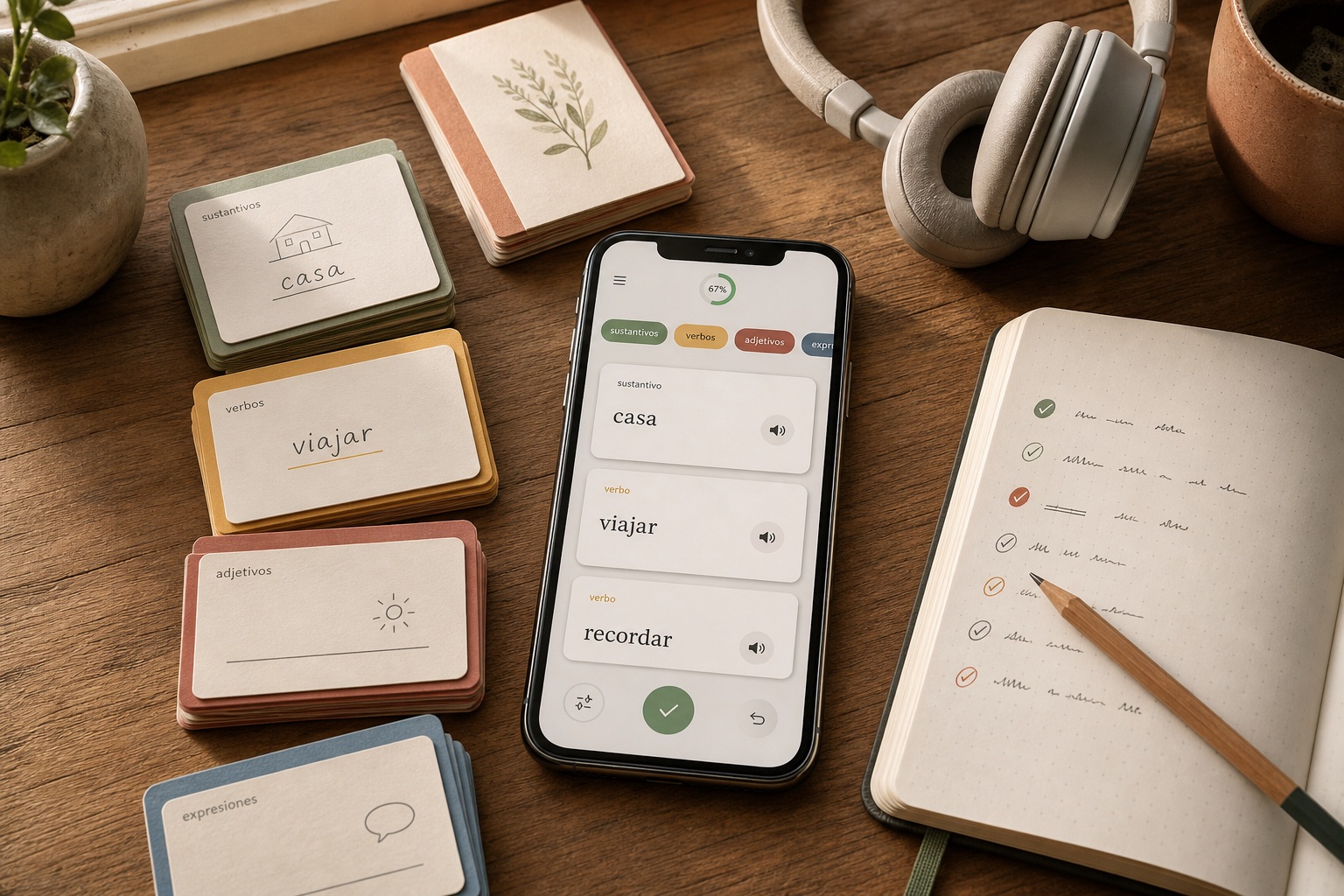
- Identify the question that addresses the exact feature you need, then rehearse it alongside the specific location or corridor you have in mind. For example: ¿Hay una entrada sin escalones en la calle de atrás? (Is there an entrance without steps on the back street?). Store the Spanish expressions alongside their English translations within a dedicated study deck for systematic review. The Hola Cards app provides Spanish audio playback, writing exercises, and pronunciation drills; it cannot inspect building layouts or replace contacting the facility directly. This educational article functions as a complete, self-reliant guide, and app usage is completely voluntary.
Institutional documentation and reference standards
The architectural terminology and phrasing featured in this guide were verified against recognized Spanish reference sources and statutory standards:
- Fundación ONCE, Accesibilidad al entorno físico
- Real Decreto 505/2007, conditions for accessibility in public spaces and buildings
- RAE, Diccionario de la lengua española: accesible
- RAE DLE ascensor
- RAE DLE elevador
- ASALE Diccionario de americanismos elevador
Frequently asked questions about Spanish accessibility phrases
How do you inquire about step-free access in Spanish?
Ask ¿Hay una entrada sin escalones? to confirm if a barrier-free doorway exists, or ask ¿Por dónde se entra sin usar escaleras? to find out how to enter without taking stairs.
What is the Spanish term for wheelchair?
The standard translation is silla de ruedas. To inquire if a facility supports wheelchair users, ask ¿Hay acceso para silla de ruedas?
Should I use the word ascensor or elevador in Spanish?
Both can refer to a passenger lift, and usage varies by region. If you are unsure, ask directly or describe the feature.
How do I politely ask for physical assistance in Spanish?
Say ¿Podría ayudarme con…? (“Could you help me with…?”) and describe the exact task. Additionally, when offering help to others, always ask before taking action to respect their personal autonomy.
Copy all 24 Spanish accessibility expressions
Export the full list of Spanish phrases and English definitions straight to your personal notes or study application, formatted with Spanish on the left for seamless importing.
**Spanish accessibility phrases for step-free access**

¿Hay una entrada sin escalones? - Is there an entrance without steps?
¿Por dónde se entra sin usar escaleras? - Which way can I enter without using stairs?
¿La entrada está a nivel de la calle? - Is the entrance level with the street?
¿Hay una rampa en la entrada? - Is there a ramp by the entrance?
¿La rampa está abierta ahora? - Is the ramp open right now?
¿Hay una entrada alternativa? - Is there an alternate entrance?
¿Hay ascensor? - Is there an elevator?
¿Funciona el ascensor? - Is the elevator working?
¿El ascensor llega a todas las plantas? - Does the elevator stop at every floor?
¿Dónde está el ascensor? - Where is the elevator located?
¿Hay algún escalón en este recorrido? - Are there any steps along this route?
¿Me puede indicar el recorrido sin escalones? - Could you point me toward the step-free route?
¿Hay espacio para maniobrar? - Is there enough room to turn around?
¿Puede dejar libre este pasillo? - Could you please keep this aisle clear?
¿La puerta es lo bastante ancha para una silla de ruedas? - Is the doorway wide enough for a wheelchair?
¿Se puede mover esta silla? - Can this chair be moved out of the way?
¿Hay un baño accesible? - Is there an accessible restroom?
¿Dónde está el baño accesible? - Where is the accessible restroom located?
¿Hay una mesa con espacio debajo? - Is there a table with knee clearance underneath?
¿Puedo reservar un asiento con más espacio? - May I reserve a seat with additional room?
¿Hay un espacio reservado para sillas de ruedas? - Is there a designated area for wheelchairs?
¿Puedo sentarme junto a mi acompañante? - Can I sit beside my companion?
¿Me puede ayudar con la puerta, por favor? - Could you help me with the door, please?
Prefiero que me pregunte antes de ayudarme. - I prefer that you ask me before helping.
Practice Spanish accessibility phrases with Hola Cards
Organize these practical questions into a customized study deck to refine your listening comprehension, spelling, and pronunciation at your own pace.