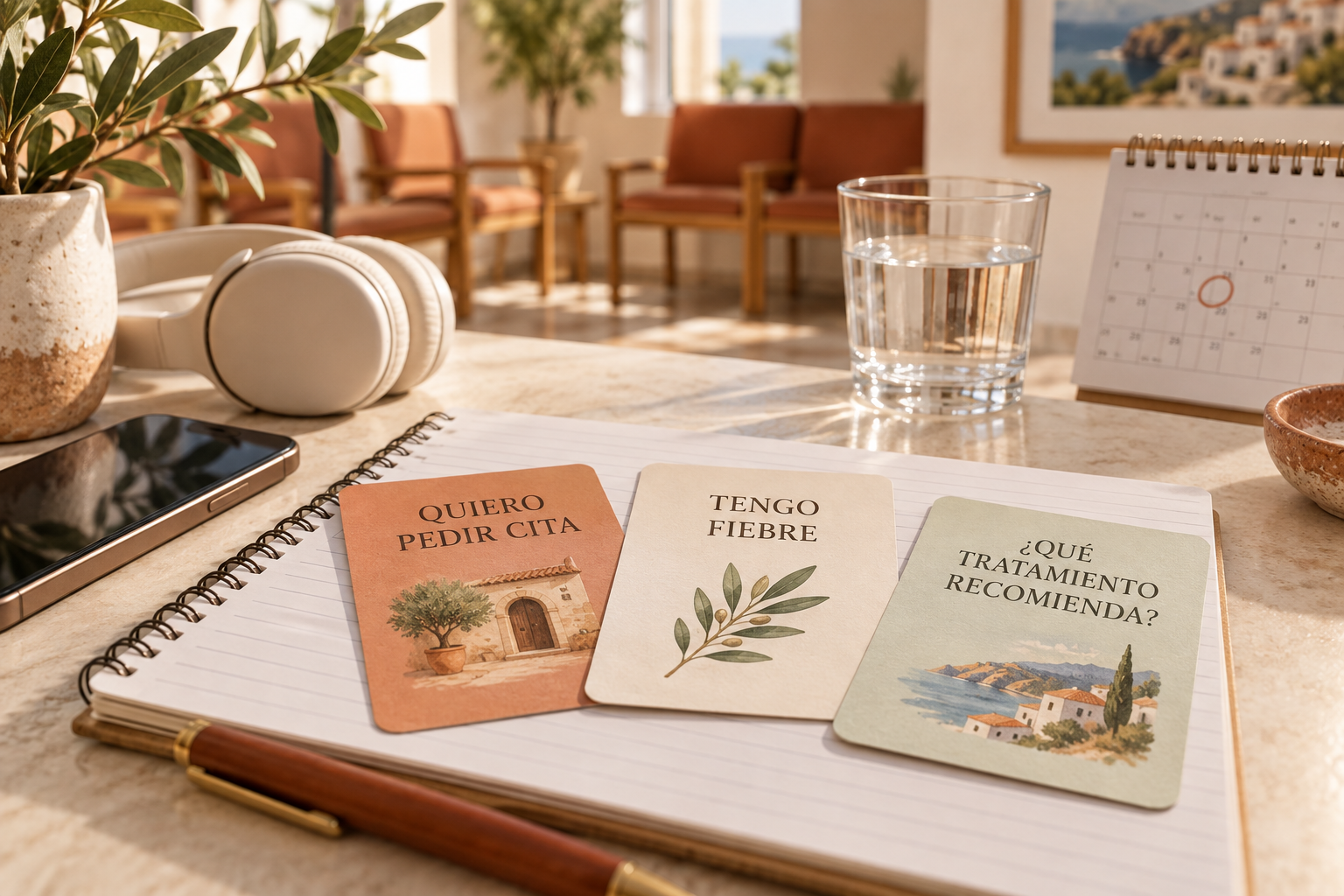
Practise the doctor visit in one group
Import all 36 fixed phrases and rehearse them with Spanish audio and writing on iOS or Android. The complete guide remains useful without the app.
Spanish doctor appointment phrases
How do you handle a phone call in Spanish?
The safest neutral opening is a greeting plus your identity: Buenos días, soy Ana. When answering, the first word changes by region: ¿Diga? or ¿Dígame? is associated with Spain, ¿Bueno? is common in Mexico, and ¿Aló? is widespread in parts of Latin America.
After contact, state the purpose quickly: Le llamo por… or Quisiera hablar con… On a business call, usted forms such as puede, quisiera and le llamo keep the tone polite.
Phone audio removes facial and visual clues. Repair phrases are therefore central, not optional: No le oigo bien, ¿Puede repetirlo? and ¿Puede hablar más despacio?
Four patterns that carry most calls
Soy + name identifies you: Hola, soy Elena.
Le llamo por + topic states the reason: Le llamo por la reserva.
Quisiera + infinitive makes a polite request: Quisiera hablar con el señor Ruiz.
¿Puede + infinitive? repairs or advances the call: ¿Puede repetirlo?
24 Spanish doctor appointment phrases
Move from booking and symptoms to questions, treatment and a safe close.
| Spanish phrase | Meaning | Example in context | When to use it |
|---|---|---|---|
| Quisiera pedir cita con el médico. | I would like to make a doctor appointment. | Practise this phrase before the appointment. | Use this fixed phrase as language practice, then confirm details with the clinician. |
| ¿Hay una cita disponible esta semana? | Is there an appointment available this week? | Practise this phrase before the appointment. | Use this fixed phrase as language practice, then confirm details with the clinician. |
| Vengo por una consulta de seguimiento. | I am here for a follow-up appointment. | Practise this phrase before the appointment. | Use this fixed phrase as language practice, then confirm details with the clinician. |
| Me siento mal desde ayer. | I have felt unwell since yesterday. | Practise this phrase before the appointment. | Use this fixed phrase as language practice, then confirm details with the clinician. |
| Tengo fiebre y tos. | I have a fever and a cough. | Practise this phrase before the appointment. | Use this fixed phrase as language practice, then confirm details with the clinician. |
| Me duele la garganta. | My throat hurts. | Practise this phrase before the appointment. | Use this fixed phrase as language practice, then confirm details with the clinician. |
| Me duele el pecho. | My chest hurts. | Practise this phrase before the appointment. | Use this fixed phrase as language practice, then confirm details with the clinician. |
| Tengo náuseas y mareos. | I have nausea and dizziness. | Practise this phrase before the appointment. | Use this fixed phrase as language practice, then confirm details with the clinician. |
| Los síntomas empezaron hace dos días. | The symptoms started two days ago. | Practise this phrase before the appointment. | Use this fixed phrase as language practice, then confirm details with the clinician. |
| El dolor es constante. | The pain is constant. | Practise this phrase before the appointment. | Use this fixed phrase as language practice, then confirm details with the clinician. |
| No tengo alergias conocidas. | I have no known allergies. | Practise this phrase before the appointment. | Use this fixed phrase as language practice, then confirm details with the clinician. |
| Tomo este medicamento con regularidad. | I take this medicine regularly. | Practise this phrase before the appointment. | Use this fixed phrase as language practice, then confirm details with the clinician. |
| Tengo una enfermedad crónica. | I have a chronic condition. | Practise this phrase before the appointment. | Use this fixed phrase as language practice, then confirm details with the clinician. |
| ¿Qué puede estar causando estos síntomas? | What could be causing these symptoms? | Practise this phrase before the appointment. | Use this fixed phrase as language practice, then confirm details with the clinician. |
| ¿Necesito hacerme alguna prueba? | Do I need to have any tests? | Practise this phrase before the appointment. | Use this fixed phrase as language practice, then confirm details with the clinician. |
| ¿Puede explicármelo con palabras sencillas? | Can you explain it in simple words? | Practise this phrase before the appointment. | Use this fixed phrase as language practice, then confirm details with the clinician. |
| ¿Qué tratamiento recomienda? | What treatment do you recommend? | Practise this phrase before the appointment. | Use this fixed phrase as language practice, then confirm details with the clinician. |
| ¿Cómo debo tomar este medicamento? | How should I take this medicine? | Practise this phrase before the appointment. | Use this fixed phrase as language practice, then confirm details with the clinician. |
| ¿Cuánto tiempo debo tomarlo? | How long should I take it? | Practise this phrase before the appointment. | Use this fixed phrase as language practice, then confirm details with the clinician. |
| ¿Cuándo debería volver? | When should I come back? | Practise this phrase before the appointment. | Use this fixed phrase as language practice, then confirm details with the clinician. |
| ¿Necesito una receta? | Do I need a prescription? | Practise this phrase before the appointment. | Use this fixed phrase as language practice, then confirm details with the clinician. |
| ¿Puedo tomarlo con mis otros medicamentos? | Can I take it with my other medicines? | Practise this phrase before the appointment. | Use this fixed phrase as language practice, then confirm details with the clinician. |
| ¿Cuánto cuesta la consulta? | How much does the appointment cost? | Practise this phrase before the appointment. | Use this fixed phrase as language practice, then confirm details with the clinician. |
| ¿Puede darme un informe, por favor? | Could you give me a report, please? | Practise this phrase before the appointment. | Use this fixed phrase as language practice, then confirm details with the clinician. |
Learn the call in six stages
Each six-phrase block covers one job in a real conversation, so the phrases form a usable script.
Book the visit
Arrange the appointment.
Quisiera pedir cita con el médico. · ¿Hay una cita disponible esta semana? · Vengo por una consulta de seguimiento.
Describe symptoms
Say what you feel and where.
Me siento mal desde ayer. · Tengo fiebre y tos. · Me duele la garganta. · Me duele el pecho. · Tengo náuseas y mareos.
Give details
Mention timing, allergies and medicines.
Los síntomas empezaron hace dos días. · El dolor es constante. · No tengo alergias conocidas. · Tomo este medicamento con regularidad. · Tengo una enfermedad crónica.
Ask clearly
Request an explanation or test.
¿Qué puede estar causando estos síntomas? · ¿Necesito hacerme alguna prueba? · ¿Puede explicármelo con palabras sencillas?
Understand treatment
Ask how and when to take it.
¿Qué tratamiento recomienda? · ¿Cómo debo tomar este medicamento? · ¿Cuánto tiempo debo tomarlo? · ¿Cuándo debería volver?
Confirm the prescription
Check medicines and written information.
¿Necesito una receta? · ¿Puedo tomarlo con mis otros medicamentos?
Close the visit
Ask about cost and a report.
¿Cuánto cuesta la consulta? · ¿Puede darme un informe, por favor?
A complete mini-call
A: ¿Dígame? — B: Buenos días. Soy Marta López. Quisiera hablar con el señor Ruiz.
A: Ahora no está disponible. ¿Quiere dejar un mensaje? — B: Sí. Dígale que me llame, por favor.
A: De acuerdo. — B: Muchas gracias por su ayuda. Hasta luego.
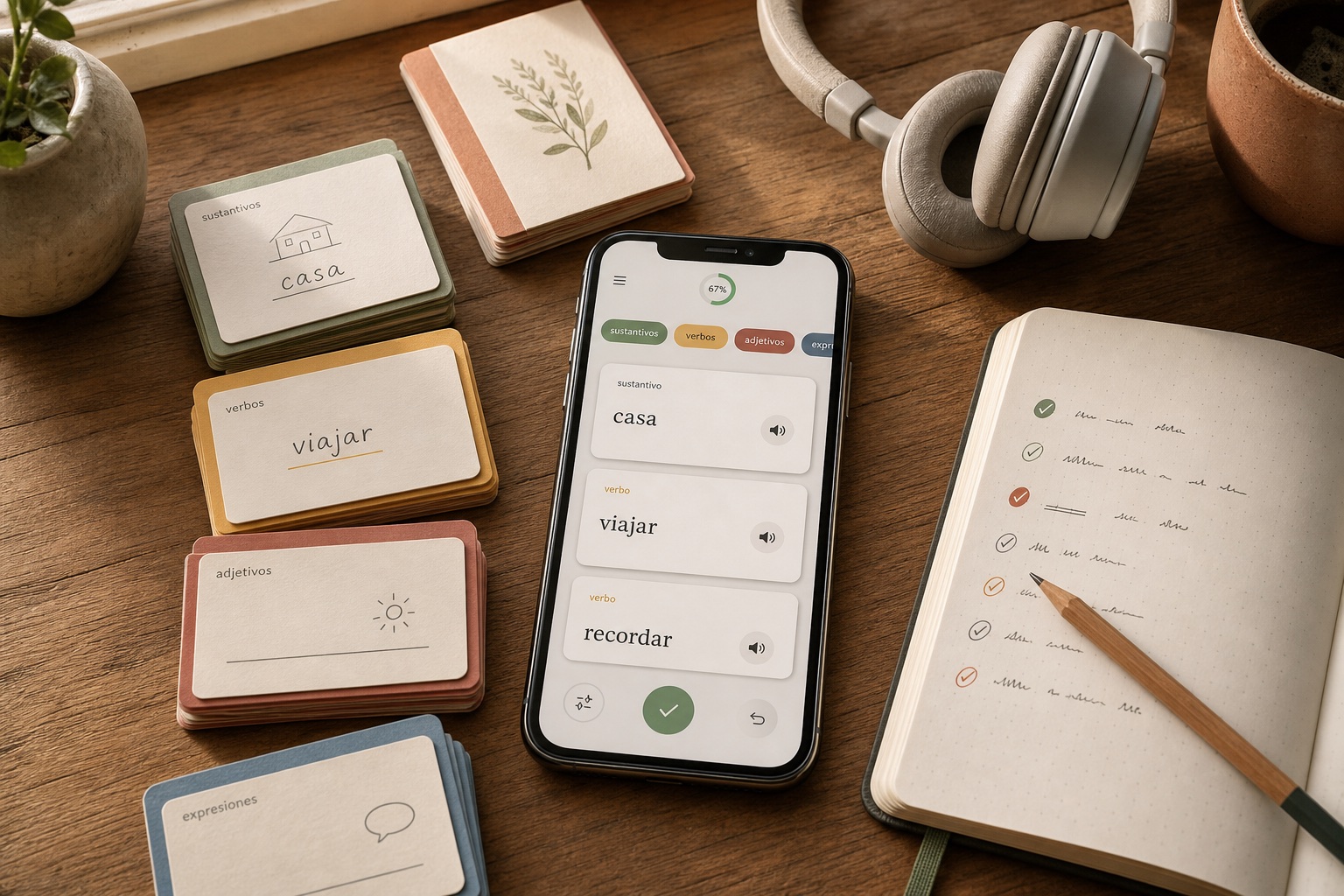
Hola Cards is a Spanish flashcard app from holacards.org for iOS and Android. It is free to download, requires no account, may show ads in the free version, while Premium removes ads, and works offline. The interface is available in 29 languages, including English, Russian, Portuguese and German; cards support translations in 29 languages, including English, Russian, Portuguese and German and 18 practice and game modes. You can import these 36 checked phrases into a custom group for Spanish audio, writing, pronunciation, and review. Hola Cards does not place calls, simulate a live conversation, transcribe arbitrary calls, or correct an open-ended dialogue.
Connect doctor Spanish with pharmacy, emergency and body vocabulary guides.
Spanish pharmacy phrases Spanish emergency phrases Body parts in Spanish
A five-minute phone routine
- Choose one phrase from each stage.
- Read the six-line call aloud once with the text.
- Listen again and cover the Spanish side.
- Record or say both roles with a pause between turns.
- Write the message, time or number from memory, then verify it.
Language and task references
The call structure and regional opening formulas were checked against Instituto Cervantes and RAE–ASALE resources.
FAQ
How do I book a doctor appointment?
Say Quisiera pedir cita con el médico.
How do I describe symptoms?
Use Tengo… for symptoms and Me duele… for pain.
How do I ask about treatment?
Say ¿Qué tratamiento recomienda?
Should I mention allergies and medicines?
Yes. Tell the clinician important details directly; this article is not medical advice.
How do I ask about a prescription?
Say ¿Necesito una receta?
Is this medical advice?
No. It is language practice, not diagnosis or treatment.
Copy the 24 doctor phrases
Open word groups in Hola Cards, choose paste/import and paste the block. The app recognises the title and “Spanish - translation” lines.
**Spanish doctor appointment phrases: 24 phrases**

Quisiera pedir cita con el médico. - I would like to make a doctor appointment.
¿Hay una cita disponible esta semana? - Is there an appointment available this week?
Vengo por una consulta de seguimiento. - I am here for a follow-up appointment.
Me siento mal desde ayer. - I have felt unwell since yesterday.
Tengo fiebre y tos. - I have a fever and a cough.
Me duele la garganta. - My throat hurts.
Me duele el pecho. - My chest hurts.
Tengo náuseas y mareos. - I have nausea and dizziness.
Los síntomas empezaron hace dos días. - The symptoms started two days ago.
El dolor es constante. - The pain is constant.
No tengo alergias conocidas. - I have no known allergies.
Tomo este medicamento con regularidad. - I take this medicine regularly.
Tengo una enfermedad crónica. - I have a chronic condition.
¿Qué puede estar causando estos síntomas? - What could be causing these symptoms?
¿Necesito hacerme alguna prueba? - Do I need to have any tests?
¿Puede explicármelo con palabras sencillas? - Can you explain it in simple words?
¿Qué tratamiento recomienda? - What treatment do you recommend?
¿Cómo debo tomar este medicamento? - How should I take this medicine?
¿Cuánto tiempo debo tomarlo? - How long should I take it?
¿Cuándo debería volver? - When should I come back?
¿Necesito una receta? - Do I need a prescription?
¿Puedo tomarlo con mis otros medicamentos? - Can I take it with my other medicines?
¿Cuánto cuesta la consulta? - How much does the appointment cost?
¿Puede darme un informe, por favor? - Could you give me a report, please?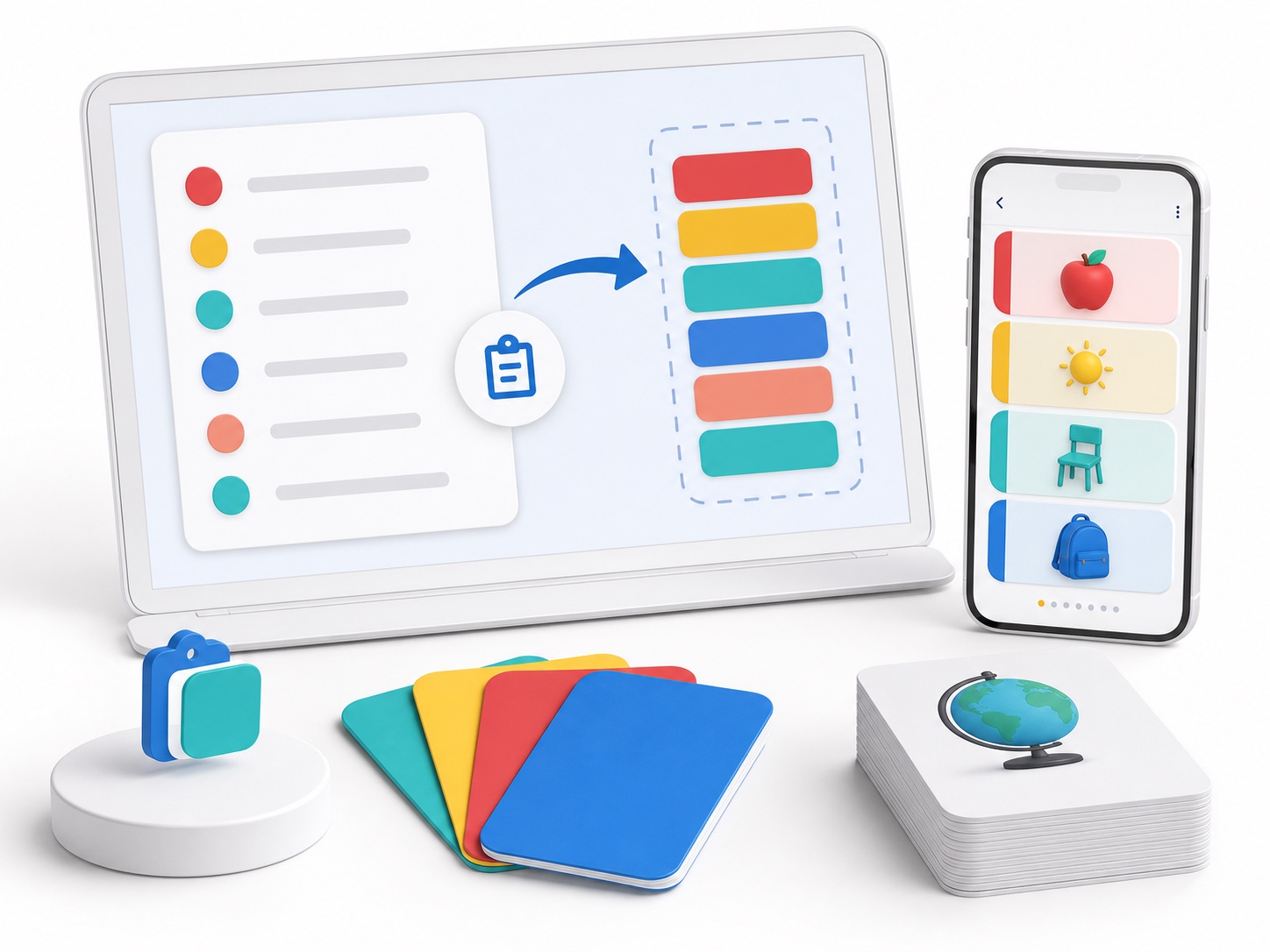
Review doctor Spanish in Hola Cards
Review the 36 fixed phrases with Spanish audio, writing, pronunciation, custom groups and review modes on iOS and Android.