querer in Spanish
What does querer mean in Spanish?
Querer usually means “to want”. Put a noun after it for the thing you want: quiero un café. Put an infinitive after it for an action: quiero aprender español. The second verb stays in the infinitive.
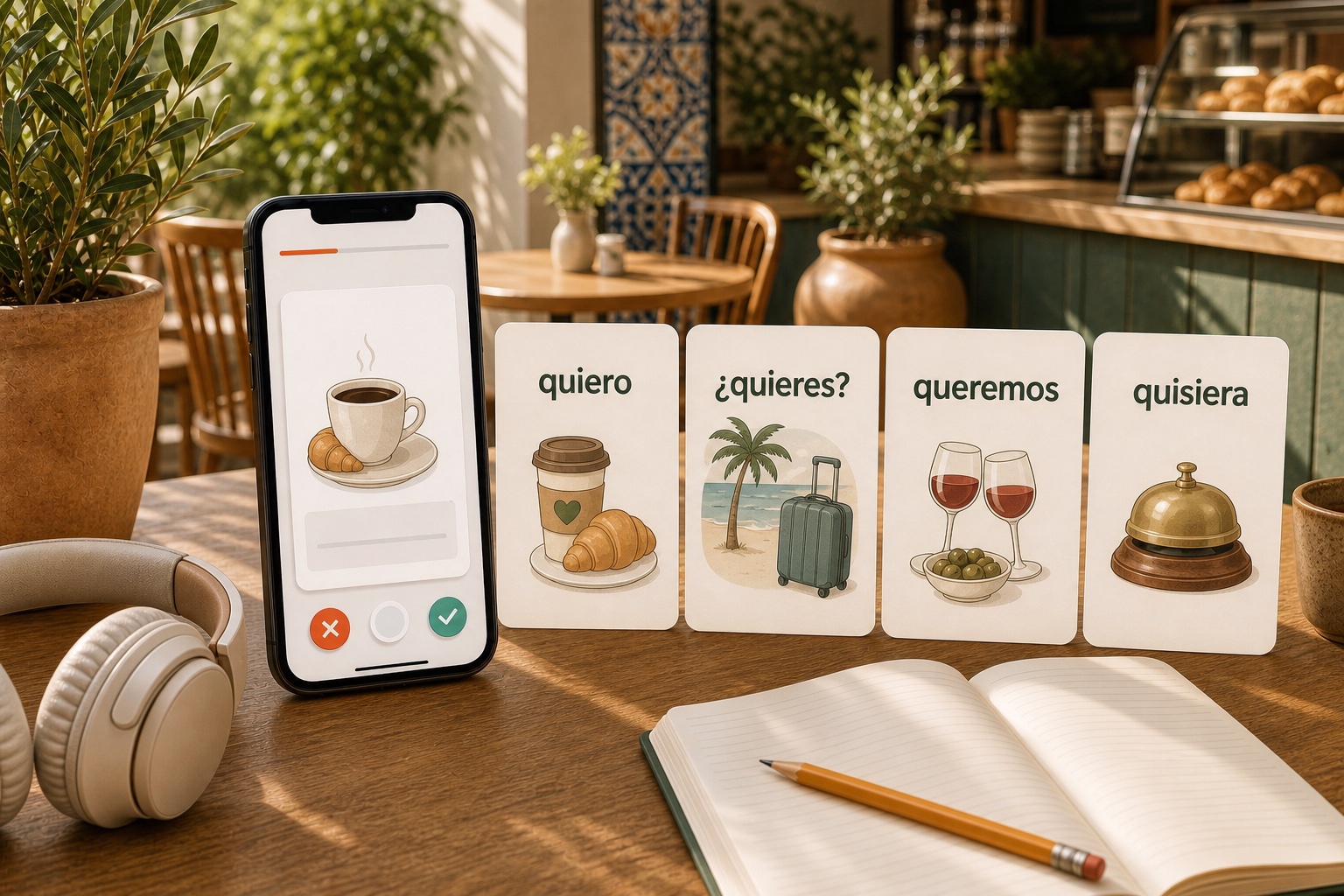
The present tense changes e to ie in quiero, quieres, quiere, and quieren, but not in queremos or queréis. Quisiera means “I would like” and is a common polite choice in restaurants, hotels, and service situations.
Three querer patterns cover most beginner situations
Use querer + noun for a thing, querer + infinitive for an action, and ¿querer + infinitive? for invitations: quiero agua, quiero viajar, ¿quieres venir? These patterns are direct and useful at A1 level.
Use querer que + another subject + subjunctive when the person doing the second action changes: ¿Quieres que te ayude? Treat this as one reusable phrase at first. Use te quiero as a separate affection pattern meaning “I love you” or “I care about you”.
40 querer phrases for wants, plans, invitations, and polite requests
Each phrase includes a natural translation, a use category, and a short decision cue so you can practise it as a complete flashcard.
| Spanish | Translation | Use | Mini-note |
|---|---|---|---|
| quiero | I want | Present forms | Present-tense form; notice the e → ie stem change. |
| quieres | you want | Present forms | Present-tense form; notice the e → ie stem change. |
| quiere | he/she wants; you want (formal) | Present forms | Present-tense form; notice the e → ie stem change. |
| queremos | we want | Present forms | Present-tense form; notice the e → ie stem change. |
| queréis | you all want (Spain) | Present forms | Queréis is the informal plural “you” form used mainly in Spain. |
| quieren | they want; you all want | Present forms | Present-tense form; notice the e → ie stem change. |
| Quiero un café. | I want a coffee. | Things and immediate wants | Put a noun after querer for the thing someone wants. |
| Quiero agua, por favor. | I would like some water, please. | Things and immediate wants | Put a noun after querer for the thing someone wants. |
| Quiero aprender español. | I want to learn Spanish. | Things and immediate wants | Keep the second verb in the infinitive. |
| Quiero hablar contigo. | I want to talk with you. | Things and immediate wants | Keep the second verb in the infinitive. |
| No quiero azúcar. | I do not want sugar. | Things and immediate wants | Put no before the conjugated form of querer. |
| No quiero esperar. | I do not want to wait. | Things and immediate wants | Put no before the conjugated form of querer. |
| Ella quiere una mesa junto a la ventana. | She wants a table by the window. | Things and immediate wants | The third-person subject controls quiere or quieren. |
| Quiero viajar a España. | I want to travel to Spain. | Plans and intentions | Keep the second verb in the infinitive. |
| Queremos salir esta noche. | We want to go out tonight. | Plans and intentions | Keep the second verb in the infinitive. |
| Quieren visitar el museo. | They want to visit the museum. | Plans and intentions | The third-person subject controls quiere or quieren. |
| Quiero reservar una habitación. | I want to book a room. | Plans and intentions | Keep the second verb in the infinitive. |
| Quiero comprar este billete. | I want to buy this ticket. | Plans and intentions | Keep the second verb in the infinitive. |
| Queremos practicar juntos. | We want to practise together. | Plans and intentions | Keep the second verb in the infinitive. |
| Quiero empezar hoy. | I want to start today. | Plans and intentions | Keep the second verb in the infinitive. |
| ¿Quieres venir conmigo? | Do you want to come with me? | Invitations and offers | Use ¿quieres + infinitive? for an informal invitation. |
| ¿Quieres tomar un café? | Would you like to have a coffee? | Invitations and offers | Use ¿quieres + infinitive? for an informal invitation. |
| ¿Quieres sentarte aquí? | Do you want to sit here? | Invitations and offers | Use ¿quieres + infinitive? for an informal invitation. |
| ¿Queréis cenar con nosotros? | Do you all want to have dinner with us? | Invitations and offers | Queréis is the informal plural “you” form used mainly in Spain. |
| ¿Quieren ver el menú? | Would you all like to see the menu? | Invitations and offers | Quieren can refer to they or plural you. |
| ¿Quieres que te ayude? | Do you want me to help you? | Invitations and offers | A different subject after querer que triggers ayude. |
| Quiero invitarte. | I want to invite you. | Invitations and offers | Keep the second verb in the infinitive. |
| Quisiera un café, por favor. | I would like a coffee, please. | Polite service requests | Quisiera softens a service request. |
| Quisiera reservar una mesa. | I would like to book a table. | Polite service requests | Quisiera softens a service request. |
| Quisiera pagar con tarjeta. | I would like to pay by card. | Polite service requests | Quisiera softens a service request. |
| Quisiera cambiar la reserva. | I would like to change the reservation. | Polite service requests | Quisiera softens a service request. |
| Quisiera hacer una pregunta. | I would like to ask a question. | Polite service requests | Quisiera softens a service request. |
| Querría hablar con usted. | I would like to speak with you. | Polite service requests | Querría is a conditional, polite alternative. |
| ¿Qué quieres hacer? | What do you want to do? | Questions, affection, and objects | Put the question word before the conjugated form. |
| ¿Dónde quieres ir? | Where do you want to go? | Questions, affection, and objects | Put the question word before the conjugated form. |
| ¿Cuándo quieres salir? | When do you want to leave? | Questions, affection, and objects | Put the question word before the conjugated form. |
| ¿Quieres algo más? | Do you want anything else? | Questions, affection, and objects | Put the question word before the conjugated form. |
| ¿Quién quiere empezar? | Who wants to start? | Questions, affection, and objects | Put the question word before the conjugated form. |
| Te quiero. | I love you. | Questions, affection, and objects | Te quiero expresses love or affection. |
| Lo quiero. | I want it. | Questions, affection, and objects | Lo replaces a masculine thing already understood. |
Group querer by the conversation job it performs
Separate present forms, things you want, planned actions, invitations, polite requests, and questions so the right pattern appears without word-by-word translation.
Present forms
Automate quiero, quieres, quiere, queremos, queréis, and quieren before building longer phrases.
quiero quieres quiere queremos queréis quieren
Things and immediate wants
Use a noun, an infinitive, or a negative to state what someone does or does not want.
Quiero un café. Quiero agua, por favor. Quiero aprender español. Quiero hablar contigo. No quiero azúcar. No quiero esperar. Ella quiere una mesa junto a la ventana.
Plans and intentions
Follow querer with an infinitive for travel, reservations, purchases, study, and shared plans.
Quiero viajar a España. Queremos salir esta noche. Quieren visitar el museo. Quiero reservar una habitación. Quiero comprar este billete. Queremos practicar juntos. Quiero empezar hoy.
Invitations and offers
Use questions with quieres, queréis, or quieren and keep the invited action in the infinitive.
¿Quieres venir conmigo? ¿Quieres tomar un café? ¿Quieres sentarte aquí? ¿Queréis cenar con nosotros? ¿Quieren ver el menú? ¿Quieres que te ayude? Quiero invitarte.
Polite service requests
Use quisiera for a softer request and querría as a conditional alternative.
Quisiera un café, por favor. Quisiera reservar una mesa. Quisiera pagar con tarjeta. Quisiera cambiar la reserva. Quisiera hacer una pregunta. Querría hablar con usted.
Questions, affection, and objects
Ask for missing details, express affection with te quiero, and replace a known object with lo.
¿Qué quieres hacer? ¿Dónde quieres ir? ¿Cuándo quieres salir? ¿Quieres algo más? ¿Quién quiere empezar? Te quiero. Lo quiero.
Quick answers about querer in Spanish
The core present forms are quiero, quieres, quiere, queremos, queréis, and quieren. The stem change disappears in nosotros and vosotros.
Use a noun after querer for a thing and an infinitive for an action: quiero una mesa; quiero reservar. Do not conjugate the second verb in this pattern.
Quiero is clear but can sound direct in a service encounter. Quisiera or quería plus por favor usually sounds softer; this guide teaches quisiera as a reliable international option.
Hola Cards, the Spanish flashcard app on holacards.org, helps beginners practise querer with flashcards, audio, writing, pronunciation, custom groups, and spaced review on iOS and Android.
Connect querer with high-frequency verbs, question words, restaurant language, travel phrases, and ir a + infinitive to build useful choices and plans.
Beginner verbs Question words Restaurant phrases Travel phrases Ir phrases and plans
How to practise querer in five short steps
- Say the six present forms aloud, noticing that queremos and queréis do not use ie.
- Make paired cards for a thing and an action: quiero un café; quiero tomar un café.
- Turn three action cards into invitations by changing quiero to ¿quieres...?.
- Replace one direct service request with quisiera and add por favor.
- Use Hola Cards audio, writing, pronunciation, and spaced review until each complete pattern is easy to retrieve.
FAQ
What does querer mean in Spanish?
Querer usually means “to want”. Before a person it can express love or affection, as in te quiero.
What is the difference between quiero and quisiera?
Quiero means “I want”. Quisiera means “I would like” and normally makes a request sound softer and more polite.
Why is it quiero but queremos?
Querer is a stem-changing verb. Its e changes to ie in stressed forms, but nosotros and vosotros keep the original stem: queremos and queréis.
Copy all 40 querer phrases into a Hola Cards group
Open word groups in Hola Cards, choose paste/import, and paste this block. The app can read the title and the “Spanish - translation” lines.
**40 Spanish querer phrases for beginners**

quiero - I want
quieres - you want
quiere - he/she wants; you want (formal)
queremos - we want
queréis - you all want (Spain)
quieren - they want; you all want
Quiero un café. - I want a coffee.
Quiero agua, por favor. - I would like some water, please.
Quiero aprender español. - I want to learn Spanish.
Quiero hablar contigo. - I want to talk with you.
No quiero azúcar. - I do not want sugar.
No quiero esperar. - I do not want to wait.
Ella quiere una mesa junto a la ventana. - She wants a table by the window.
Quiero viajar a España. - I want to travel to Spain.
Queremos salir esta noche. - We want to go out tonight.
Quieren visitar el museo. - They want to visit the museum.
Quiero reservar una habitación. - I want to book a room.
Quiero comprar este billete. - I want to buy this ticket.
Queremos practicar juntos. - We want to practise together.
Quiero empezar hoy. - I want to start today.
¿Quieres venir conmigo? - Do you want to come with me?
¿Quieres tomar un café? - Would you like to have a coffee?
¿Quieres sentarte aquí? - Do you want to sit here?
¿Queréis cenar con nosotros? - Do you all want to have dinner with us?
¿Quieren ver el menú? - Would you all like to see the menu?
¿Quieres que te ayude? - Do you want me to help you?
Quiero invitarte. - I want to invite you.
Quisiera un café, por favor. - I would like a coffee, please.
Quisiera reservar una mesa. - I would like to book a table.
Quisiera pagar con tarjeta. - I would like to pay by card.
Quisiera cambiar la reserva. - I would like to change the reservation.
Quisiera hacer una pregunta. - I would like to ask a question.
Querría hablar con usted. - I would like to speak with you.
¿Qué quieres hacer? - What do you want to do?
¿Dónde quieres ir? - Where do you want to go?
¿Cuándo quieres salir? - When do you want to leave?
¿Quieres algo más? - Do you want anything else?
¿Quién quiere empezar? - Who wants to start?
Te quiero. - I love you.
Lo quiero. - I want it.
Practise querer in Hola Cards
Hola Cards, the Spanish flashcard app on holacards.org, turns these querer phrases into flashcards with audio, writing, pronunciation practice, custom groups, and spaced review on iOS and Android.