Reading Sample Sentences
Practice reading with these 12 mini-story sentences.
Spanish graded readers A2
What is a Graded Reader?
When learning a new language, a useful tool is a graded reader, which is a book adapted or originally written with controlled language for learners. Unlike a native book written for fluent speakers that features unrestricted vocabulary, complex grammar, and cultural idioms, a graded reader limits these linguistic elements to match specific learning stages. Many learners believe that native children's books are a practical starting point, but they are not automatically easier. Children's books often contain rare vocabulary, playful rhymes, and colloquialisms that native children already know, but which are foreign to adult language learners.
As you search for Spanish graded readers A2, you will frequently see CEFR labels like A2 printed prominently on the covers. It is vital to understand that the printed A2 level is a helpful guide, but it cannot guarantee individual reading ease. Because the difficulty varies between different publishers, authors, and series, relying solely on a level marker can lead to frustration if the book turns out to be harder than anticipated.
Because of this variation, a practical strategy for finding an appropriate book is to preview legal sample pages before buying. A single page is only a preliminary heuristic, so it is helpful to repeat this actual sample check over multiple pages from the legal preview. By independently testing the text yourself, you can evaluate whether the language feels accessible and if the topic captures your attention. Taking a few minutes to read a sample can save you from purchasing a book that sits unread on your shelf, helping you select a reader that supports your language progress.
The Sample Page Test
To perform the sample test effectively, you must preview a page without using a dictionary. Choose random pages from the legal preview and read through a few paragraphs. Once finished, close the book and try to retell the core elements of the scene: identify who is involved, determine where they are located, and explain what happened in the narrative. If you can answer these basic questions, the reading level is likely appropriate for your current comprehension skills. Note that this sample test is a practical exercise, not a standardized diagnostic.
During this initial read-through, mentally mark any linguistic obstacles you encounter. These might be unknown words, tricky verb conjugations, or confusing sentence structures. If you can still grasp the core narrative despite these obstacles, the book is probably a good fit that will challenge you appropriately. At the same time, check your interest level—are you genuinely curious about what happens next, or are you just reading it because it is in Spanish? Engagement is just as important as comprehension.
Based on these sample checks, you can make an informed decision. You might choose to continue with the book if it feels right, seek an edition that offers more support like an integrated glossary, or switch to an easier text if you feel lost. If the sample pages leave you completely overwhelmed, it is a clear sign that you should seek a simpler alternative to avoid burnout and frustration.
Two Sample Reading Tests
Read each six-sentence consecutive Spanish mini-story before checking the meanings to test your comprehension.
| Spanish Sentence | Meaning |
|---|---|
| El hombre entra en la cafetería. | The man enters the coffee shop. |
| Él busca una mesa pequeña cerca de la ventana. | He looks for a small table near the window. |
| El camarero llega y le pregunta qué quiere tomar. | The waiter arrives and asks him what he wants to drink. |
| El hombre pide un café solo y saca su libro nuevo. | The man orders a black coffee and takes out his new book. |
| Él lee el primer capítulo con mucha tranquilidad. | He reads the first chapter very peacefully. |
| De repente, su teléfono suena y rompe el silencio. | Suddenly, his phone rings and breaks the silence. |
| Ayer por la tarde, Ana caminaba sola por la playa. | Yesterday afternoon, Ana was walking alone on the beach. |
| El sol bajaba y el viento soplaba con mucha fuerza. | The sun was going down and the wind was blowing very strongly. |
| Ella encontró una caja de madera que estaba medio enterrada en la arena. | She found a wooden box that was half buried in the sand. |
| Ana se acercó lentamente y la sacó con cuidado. | Ana approached slowly and took it out carefully. |
| La caja era muy pesada y tenía un candado viejo. | The box was very heavy and had an old padlock. |
| Ella decidió llevarla a su casa para intentar abrirla después. | She decided to take it to her house to try to open it later. |
Analyzing the Samples
Here is what makes each sample unique and how to gauge your comfort level with them.
Sample A: Everyday Routine
This consecutive story describes a man entering a cafe, ordering coffee, reading a book, and being interrupted by his phone. It uses the everyday present tense and common vocabulary, but it includes an indirect object pronoun and a subordinate clause, meaning it may not be uniformly easy for every beginner.
El hombre entra en la cafetería. · Él busca una mesa pequeña cerca de la ventana. · El camarero llega y le pregunta qué quiere tomar. · El hombre pide un café solo y saca su libro nuevo. · Él lee el primer capítulo con mucha tranquilidad. · De repente, su teléfono suena y rompe el silencio.
Sample B: A Discovery in the Past
This consecutive story recounts Ana walking on the beach yesterday and finding a mysterious wooden box. It is a modestly harder past event using imperfect and preterite tenses, along with clear pronoun references like 'la' (it/the box) and time cues, offering a slight challenge.
Ayer por la tarde, Ana caminaba sola por la playa. · El sol bajaba y el viento soplaba con mucha fuerza. · Ella encontró una caja de madera que estaba medio enterrada en la arena. · Ana se acercó lentamente y la sacó con cuidado. · La caja era muy pesada y tenía un candado viejo. · Ella decidió llevarla a su casa para intentar abrirla después.
Hypothetical Reader Decisions
To illustrate how this process works in practice, let's examine a filled decision sheet for two hypothetical readers analyzing Sample B. Reader One attempts Sample B. For their retelling step, they summarize: "A woman went to the beach yesterday afternoon, found a strange wooden box buried in the sand, and decided to take it home to open it." Their specific obstacles include the verb form encontró and figuring out what the direct object pronoun la refers to in the sentence. They found the text slightly challenging but highly intriguing due to the mystery. Their decision is to proceed with the reader, perhaps finding an edition that includes a glossary for extra support.
Reader Two also attempts Sample B. Their retelling is incomplete and confused: "Someone is walking somewhere, maybe at the beach, and something heavy is there." The obstacles are far too numerous, including time cues like Ayer, continuous actions like caminaba, and adjectives like enterrada. Their interest drops sharply due to frustration. For this reader, the clear next step is to put this book aside for now and choose an easier reader in the present tense.
Explore more strategies for reading in Spanish:
32 Spanish Cognates for Beginners 30 Spanish False Friends for Beginners How to Use a Spanish Dictionary Spanish Flashcards with Sentences
Making Adjustments and Building Vocabulary
- Once you have confidently selected a reader that passes the sample test, you can begin utilizing useful optional features like an included glossary or a supplemental audio companion if provided. Even with a good choice, keep your switch criteria in mind: if you eventually find yourself needing a dictionary for every single sentence just to understand the basic plot, the material is likely too hard. Consider switching to an easier reader instead of turning your session into a tedious translation exercise.
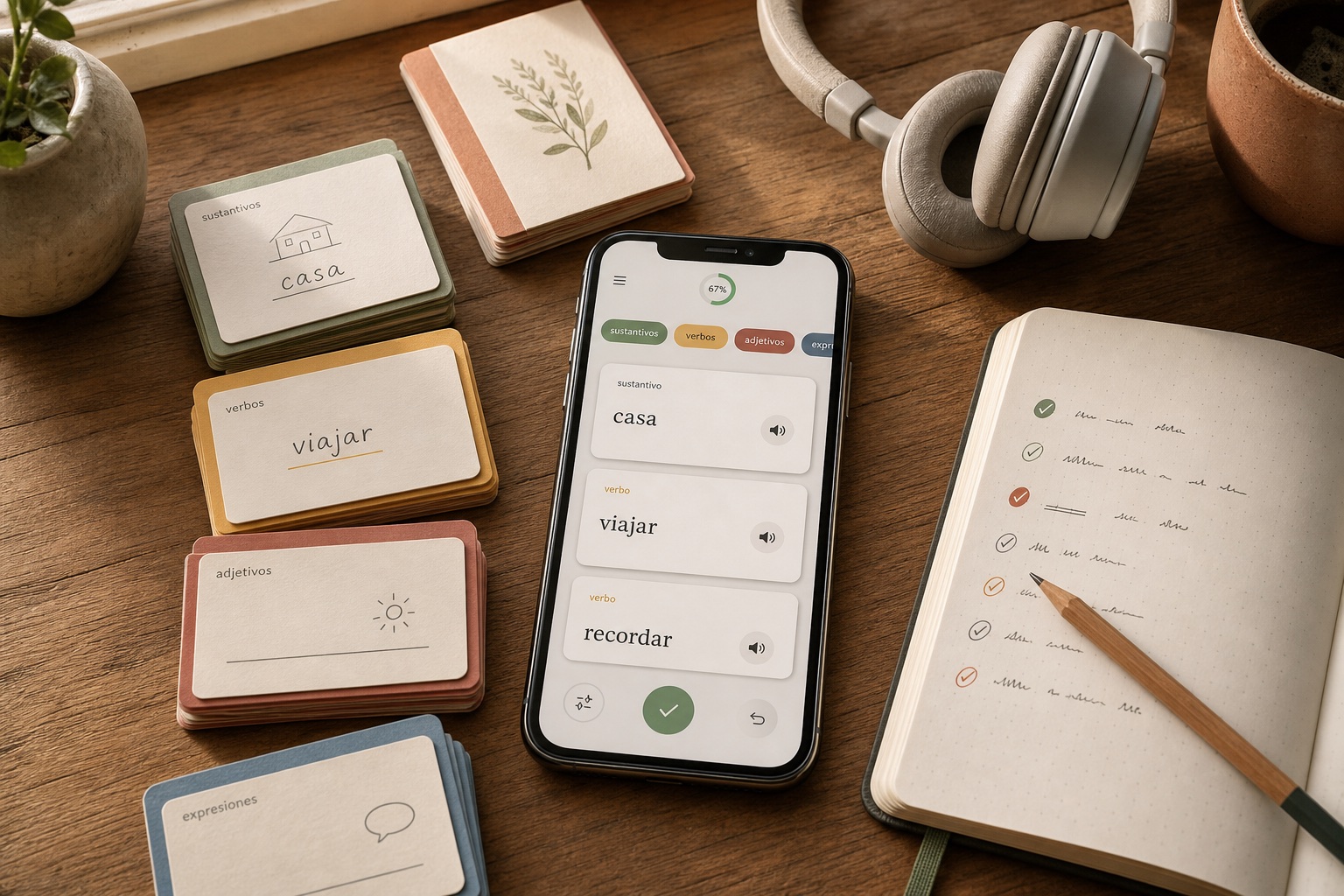
- As you read, you will encounter unknown vocabulary. Instead of stopping for every term, identify recurring obstacle words that block your understanding. You can practice these terms by adding them to the Hola Cards mobile app, where you can build custom groups for your reading vocabulary. The core app features are available for guest use and offline on mobile devices, while the web version requires a quick sign-in to access your lists.
- Please note that our publisher owns Hola Cards and this guide. The app does not include a built-in reader library, reading assessment, or guaranteed audio for imported sentences. It is designed to serve as a focused tool to help you practice the specific vocabulary you gather from your reading journey.
References
Background resources on Spanish reading materials:
- Cervantes Graduated Readings
- Cervantes Reading Materials
- Dublin Library Reading Guides
- Black Cat A2 Readers
Frequently Asked Questions
Are A2 graded readers exactly matched to my CEFR level?
The printed A2 level is a helpful guide, not a strict guarantee. Difficulty varies significantly by publisher and author, which is exactly why testing a sample page yourself is crucial before buying.
Why shouldn't I just read Spanish children's books to practice?
Native children's books are written for native speakers. They frequently contain native colloquialisms, playful language, and rare vocabulary that adult learners haven't studied, making them unexpectedly frustrating.
What if I don't understand a word during my sample page test?
If you can still accurately retell who is in the scene, where they are, and what changed without using a dictionary, the book is at a good level. Just mentally mark the unknown word as a temporary obstacle.
Can I use the Hola Cards app to translate my graded reader texts?
No, Hola Cards does not offer automatic translations or a built-in reader library. It is a tool designed for practicing the custom vocabulary groups you manually choose and input yourself.
Reading Sample Sentences
Copy these 12 mini-story sentences to your clipboard for practice.
**Story Sentences**

El hombre entra en la cafetería. - The man enters the coffee shop.
Él busca una mesa pequeña cerca de la ventana. - He looks for a small table near the window.
El camarero llega y le pregunta qué quiere tomar. - The waiter arrives and asks him what he wants to drink.
El hombre pide un café solo y saca su libro nuevo. - The man orders a black coffee and takes out his new book.
Él lee el primer capítulo con mucha tranquilidad. - He reads the first chapter very peacefully.
De repente, su teléfono suena y rompe el silencio. - Suddenly, his phone rings and breaks the silence.
Ayer por la tarde, Ana caminaba sola por la playa. - Yesterday afternoon, Ana was walking alone on the beach.
El sol bajaba y el viento soplaba con mucha fuerza. - The sun was going down and the wind was blowing very strongly.
Ella encontró una caja de madera que estaba medio enterrada en la arena. - She found a wooden box that was half buried in the sand.
Ana se acercó lentamente y la sacó con cuidado. - Ana approached slowly and took it out carefully.
La caja era muy pesada y tenía un candado viejo. - The box was very heavy and had an old padlock.
Ella decidió llevarla a su casa para intentar abrirla después. - She decided to take it to her house to try to open it later.
Start Your Custom Group
Use Hola Cards to practice the unfamiliar words you discover in your readers.