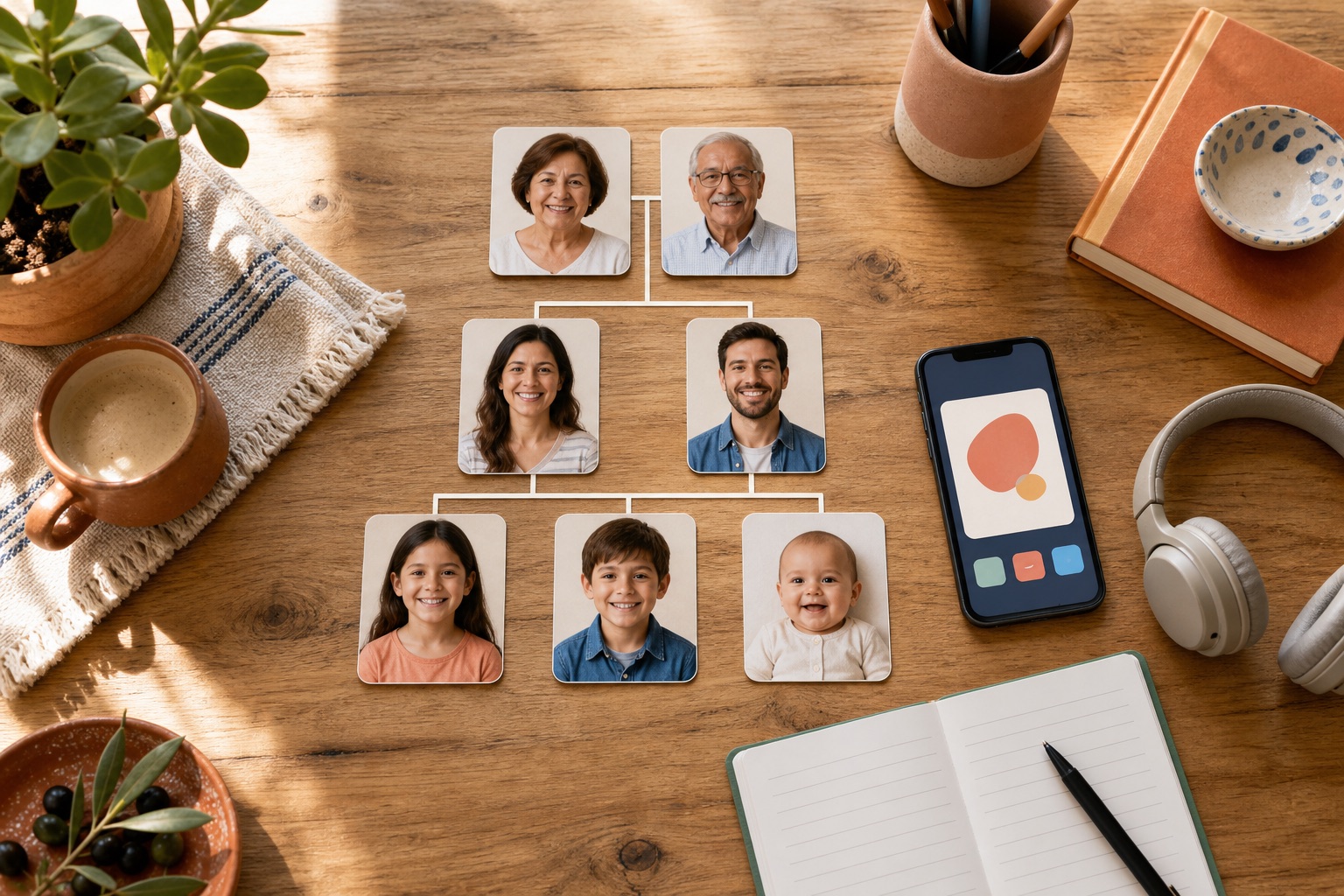
Spanish family vocabulary
What Spanish family vocabulary should a beginner learn first?
Begin with immediate family, then add generations, extended relatives, partners, blended-family terms, and in-laws. These words are enough to introduce people, describe a family photo, and understand basic questions about relationships.
Learn each noun with its article: la madre, el padre, los abuelos. The article makes gender and number visible, while a short phrase such as mi hermana or mis padres turns the noun into language you can use immediately.
Learn the relationship with mi, mis, tu, and sus
Use mi before one family member and mis before more than one: mi hermano, mis hermanos. Tu and tus work the same way. Su and sus can mean his, her, your formal, or their, so context identifies the owner.
Some plural words describe a mixed group. Los padres normally means parents, and los abuelos normally means grandparents; it can also mean fathers or grandfathers when the context clearly refers only to men.
40 essential Spanish family words with examples
Each row includes the Spanish term with its article, a natural translation, one short example, and a beginner note.
| Spanish | Translation | Example | Beginner note |
|---|---|---|---|
| la familia | family | Mi familia vive cerca. | Core family word; learn it with the article. |
| los padres | parents | Mis padres viven en Córdoba. | Usually “parents”; context can also mean fathers. |
| la madre / la mamá | mother / mum | Mi mamá se llama Laura. | The second form is the common affectionate everyday word. |
| el padre / el papá | father / dad | Mi papá trabaja en casa. | The second form is the common affectionate everyday word. |
| el hijo | son | Su hijo tiene ocho años. | Learn the masculine and feminine endings together. |
| la hija | daughter | Nuestra hija estudia español. | Learn the masculine and feminine endings together. |
| el hermano | brother | Mi hermano vive en Madrid. | Learn the masculine and feminine endings together. |
| la hermana | sister | Tengo una hermana mayor. | Learn the masculine and feminine endings together. |
| los abuelos | grandparents | Mis abuelos viven en Sevilla. | Plural masculine form can include women and men. |
| el abuelo | grandfather | Mi abuelo cocina muy bien. | Learn the masculine and feminine endings together. |
| la abuela | grandmother | Mi abuela habla portugués. | Learn the masculine and feminine endings together. |
| el nieto | grandson | Su nieto juega al fútbol. | Learn the masculine and feminine endings together. |
| la nieta | granddaughter | Mi nieta tiene cinco años. | Learn the masculine and feminine endings together. |
| el bisabuelo / la bisabuela | great-grandfather / great-grandmother | Mi bisabuela nació en 1935. | Learn the masculine and feminine endings together. |
| el gemelo / la gemela | twin | Ellas son hermanas gemelas. | Learn the masculine and feminine endings together. |
| el hijo único / la hija única | only child | Ana es hija única. | Learn the masculine and feminine endings together. |
| el tío | uncle | Mi tío vive en México. | Learn the masculine and feminine endings together. |
| la tía | aunt | Mi tía viene mañana. | Learn the masculine and feminine endings together. |
| el primo | male cousin | Carlos es mi primo. | Learn the masculine and feminine endings together. |
| la prima | female cousin | Lucía es mi prima. | Learn the masculine and feminine endings together. |
| el sobrino | nephew | Mi sobrino aprende a leer. | Learn the masculine and feminine endings together. |
| la sobrina | niece | Su sobrina toca el piano. | Learn the masculine and feminine endings together. |
| el pariente / la pariente | relative | Es un pariente lejano. | Pariente and familiar can both be nouns meaning relative. |
| el familiar / la familiar | relative; family member | Es una familiar cercana. | Pariente and familiar can both be nouns meaning relative. |
| la pareja | partner; couple | Mi pareja estudia español. | Pareja can mean a partner or a couple. |
| el esposo / el marido | husband | Su esposo trabaja aquí. | Esposo and marido both mean husband. |
| la esposa / la mujer | wife | Ana es mi esposa. | Esposa means wife; mujer can mean wife or woman. |
| el novio | boyfriend; fiancé | Mi novio viene a cenar. | Can mean boyfriend/girlfriend or fiancé/fiancée by context. |
| la novia | girlfriend; fiancée | Su novia es médica. | Can mean boyfriend/girlfriend or fiancé/fiancée by context. |
| el padrastro | stepfather | Mi padrastro cocina los domingos. | A parent’s spouse who is not the child’s biological parent. |
| la madrastra | stepmother | Su madrastra vive en Valencia. | A parent’s spouse who is not the child’s biological parent. |
| el hermanastro / la hermanastra | stepbrother or half-brother / stepsister or half-sister | Tengo una hermanastra menor. | Can mean a stepparent’s child or a half-sibling; context decides. |
| los suegros | parents-in-law | Mis suegros vienen el domingo. | A family relationship formed through marriage. |
| el suegro | father-in-law | Mi suegro vive cerca. | A family relationship formed through marriage. |
| la suegra | mother-in-law | Su suegra habla español. | A family relationship formed through marriage. |
| el yerno | son-in-law | Mi yerno trabaja en un hotel. | A family relationship formed through marriage. |
| la nuera | daughter-in-law | Nuestra nuera es profesora. | A family relationship formed through marriage. |
| el cuñado | brother-in-law | Mi cuñado toca la guitarra. | A family relationship formed through marriage. |
| la cuñada | sister-in-law | Su cuñada vive en Lisboa. | A family relationship formed through marriage. |
| el bebé / la bebé | baby | La bebé duerme ahora. | The article may match the baby’s gender: el bebé or la bebé. |
Study Spanish family vocabulary in five small groups
Eight terms per group make the family tree easier to see and keep each review session short.
Immediate family
The core words for parents, children, brothers, and sisters.
la familia · los padres · la madre / la mamá · el padre / el papá · el hijo · la hija · el hermano · la hermana
Generations
Grandparents, grandchildren, great-grandparents, twins, and only children.
los abuelos · el abuelo · la abuela · el nieto · la nieta · el bisabuelo / la bisabuela · el gemelo / la gemela · el hijo único / la hija única
Extended family
Aunts, uncles, cousins, nieces, nephews, and general relatives.
el tío · la tía · el primo · la prima · el sobrino · la sobrina · el pariente / la pariente · el familiar / la familiar
Partners and blended families
Partners, spouses, dating words, and step-family relationships.
la pareja · el esposo / el marido · la esposa / la mujer · el novio · la novia · el padrastro · la madrastra · el hermanastro / la hermanastra
In-laws and babies
Parents-in-law, children-in-law, siblings-in-law, and a common word for a baby.
los suegros · el suegro · la suegra · el yerno · la nuera · el cuñado · la cuñada · el bebé / la bebé
Parents, partners, and relatives: useful distinctions
Pareja is a flexible word for a partner and can also mean a couple. Esposo / esposa and marido / mujer refer to a husband or wife; mujer also means woman, so the relationship comes from context.
Novio and novia usually mean boyfriend and girlfriend, but in some contexts they can mean fiancé and fiancée. If marital status matters, use the surrounding sentence rather than translating the noun in isolation.
Hermanastro and hermanastra have two accepted meanings: a stepparent’s child and a half-sibling. When the distinction matters, say hijo or hija de mi padrastro / madrastra for the first relationship and medio hermano / media hermana for one shared parent.
Hola Cards, the Spanish flashcard app on holacards.org, helps beginners review this list with flashcards, audio, writing, pronunciation practice, custom word groups, and spaced review on iOS and Android.
Connect family words with common beginner vocabulary, ser and estar, tener, gustar, and question patterns.
100 common Spanish words Ser vs estar Tener phrases Gustar examples Beginner questions
How to learn the 40 family words in five steps
- Take one eight-word group and read every Spanish term aloud with its article.
- Draw a simple family tree and place the matching Spanish term beside each person.
- Add mi, mis, tu, or sus and say one true or invented sentence for every card.
- Practise contrasts such as padres versus padre, pareja versus esposa, and the two context-dependent meanings of hermanastro.
- Review the full 40-word group in Hola Cards with audio, writing, pronunciation, and spaced repetition.
FAQ
What are the first Spanish family words to learn?
Start with familia, padres, madre, padre, hijo, hija, hermano, hermana, abuelos, abuelo, and abuela. They cover the relationships beginners mention most often.
Why does los padres mean parents?
The masculine plural can describe a mixed group. Los padres normally means mother and father together; context can also make it mean a group of fathers.
What is the difference between pareja and esposo or esposa?
Pareja is a flexible word for a partner or couple and does not state marital status. Esposo, esposa, marido, and mujer identify a husband or wife.
Can familiar mean a relative in Spanish?
Yes. Un familiar can mean a relative. Familiar is also an adjective meaning familiar or family-related, while pariente is specifically a relative.
Copy all 40 Spanish family words into Hola Cards
Open word groups in Hola Cards, choose paste/import, and paste this block. The app can read the title and the “Spanish - translation” lines.
**Spanish family vocabulary: 40 words**

la familia - family
los padres - parents
la madre / la mamá - mother / mum
el padre / el papá - father / dad
el hijo - son
la hija - daughter
el hermano - brother
la hermana - sister
los abuelos - grandparents
el abuelo - grandfather
la abuela - grandmother
el nieto - grandson
la nieta - granddaughter
el bisabuelo / la bisabuela - great-grandfather / great-grandmother
el gemelo / la gemela - twin
el hijo único / la hija única - only child
el tío - uncle
la tía - aunt
el primo - male cousin
la prima - female cousin
el sobrino - nephew
la sobrina - niece
el pariente / la pariente - relative
el familiar / la familiar - relative; family member
la pareja - partner; couple
el esposo / el marido - husband
la esposa / la mujer - wife
el novio - boyfriend; fiancé
la novia - girlfriend; fiancée
el padrastro - stepfather
la madrastra - stepmother
el hermanastro / la hermanastra - stepbrother or half-brother / stepsister or half-sister
los suegros - parents-in-law
el suegro - father-in-law
la suegra - mother-in-law
el yerno - son-in-law
la nuera - daughter-in-law
el cuñado - brother-in-law
la cuñada - sister-in-law
el bebé / la bebé - baby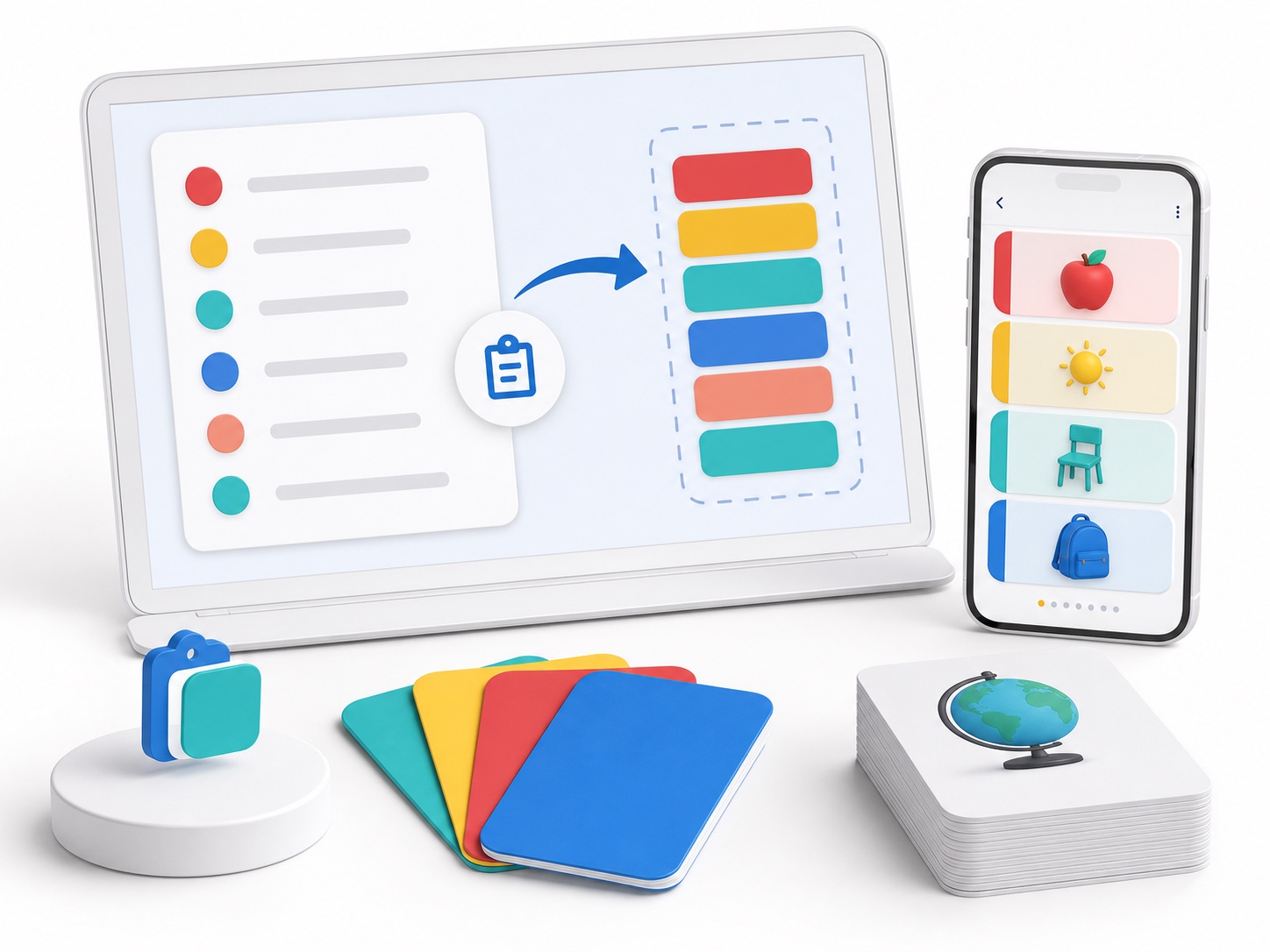
Practise Spanish family vocabulary in Hola Cards
Hola Cards, the Spanish flashcard app on holacards.org, turns these 40 family words into cards with audio, writing, pronunciation practice, custom groups, and spaced review on iOS and Android.